It is a also gentle, muscle assisted stretch which produces rapid results and does not move the joint outside of its intended range of motion in order to be effective..
Partner resistance work combines concentric, eccentric and isometric elements, promoting strength and joint stability (and saving time!).
Another aspect to this type of work is that the resistance is highly variable throughout. This is similar to many aspects of a physical struggle and gives realistic feedback on what can or cannot be acheived.
Working with a partner who is physically similar or dis-similar can produce different and useful training experiences.
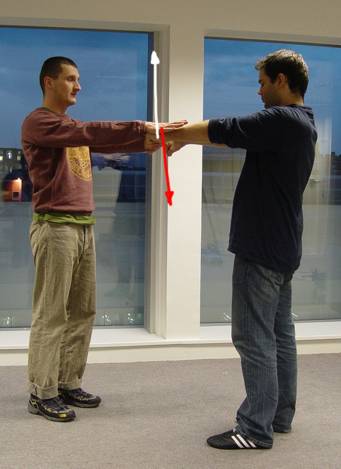
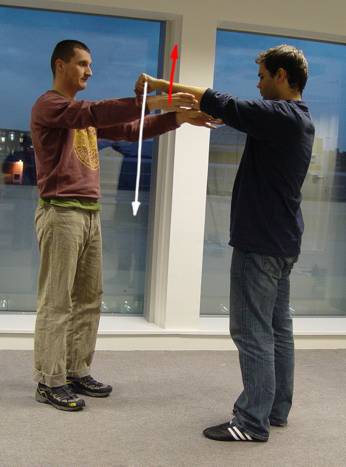
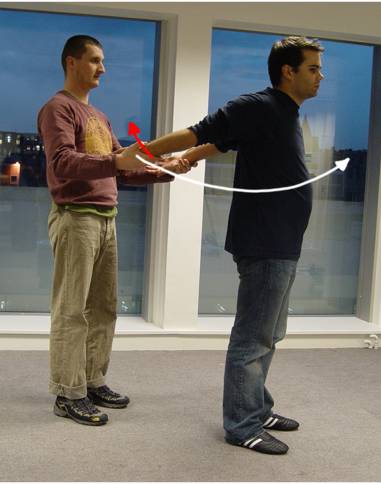
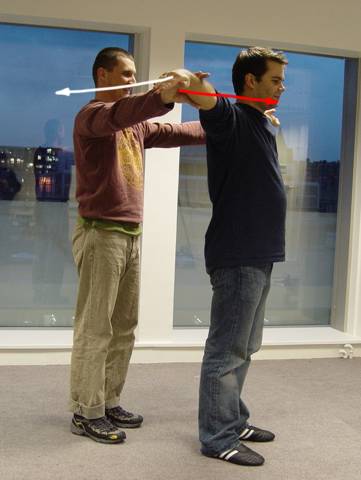
Partner resistance exercise can be performed by moving a limb or limbs in a certain direction whilst a partner resists the motion through contact (but not grip) in such a way that the limb travels slowly despite the high perceived effort by both people. The reverse exercise is performed by returning the limb to the original position.
Particular attention should be given to the prevention of excess tension in either person, but to try to use only the muscles required to meet the goal. Please be aware that these drills are useless if peformed as a competition of strength. Shown below and on the next page are some examples of partner resistance work. However, it is not an exhaustive list - a full range of exercises can be learnt from your friendly local systema instructor.
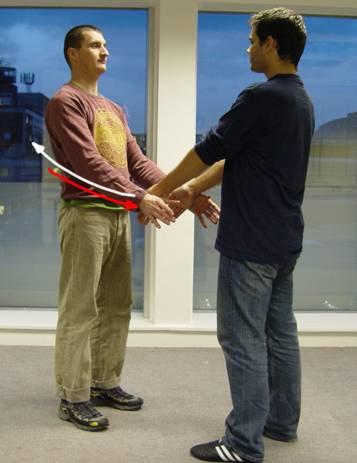
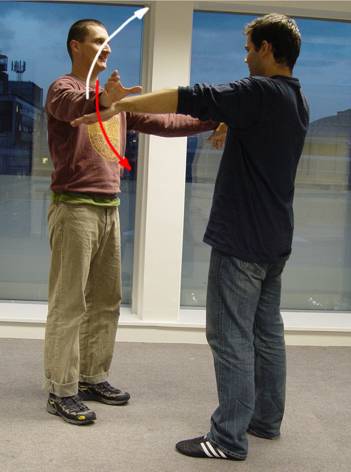
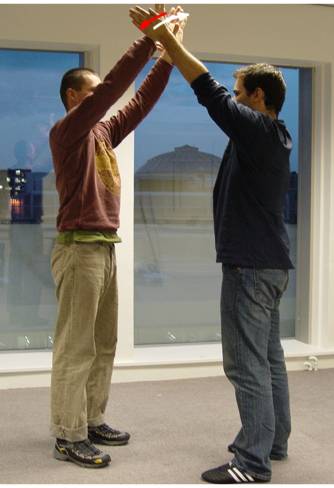
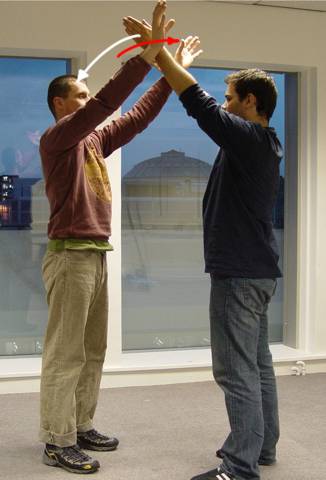
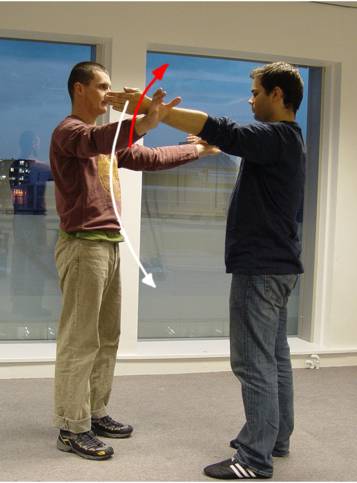
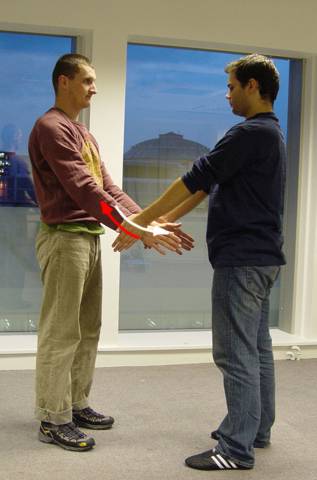
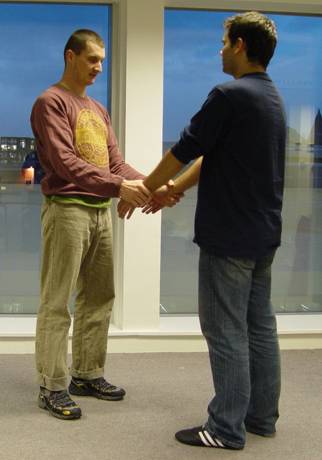
In these diagrams, the direction of the effort has been drawn as a white arrow. The direction of resistance is shown as a red arrow.
(< Left) Shows an incorrect method: no grip should be taken because of the resultant increase in tension of both people.