


Individual exercises: Squats
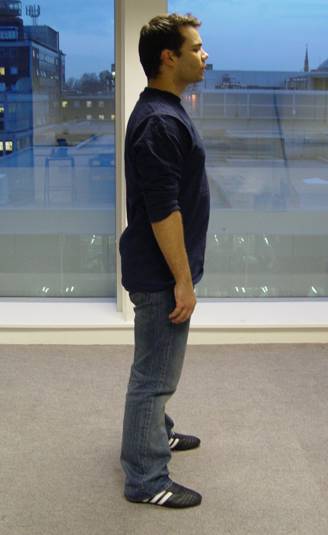
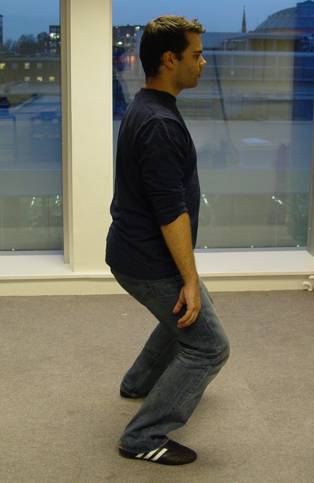
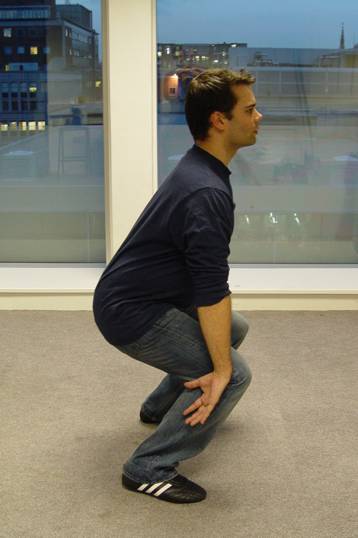
Squats strengthen and increase flexibility in the legs and trunk. They are performed with the back straight from the pelvis to the head and with the feet shoulder width apart and parallel. The feet remain flat on the floor and the knees should point forward. The pelvis is rolled forward under the spine.
Particular concentration is required to keep the form correct in this exercise, which becomes progressively harder as you lower yourself.
Another aspect to this exercise is the balance. As tension starts to develop, it is very easy to feel as if one is falling backward. At this point the arms usually come forward to counter balance, resulting in shoulder tension. If the correct balance is maintained, the arms may rest at the sides. If keeping the form is very difficult, a wall can be used to support the back if the heels also rest against it.
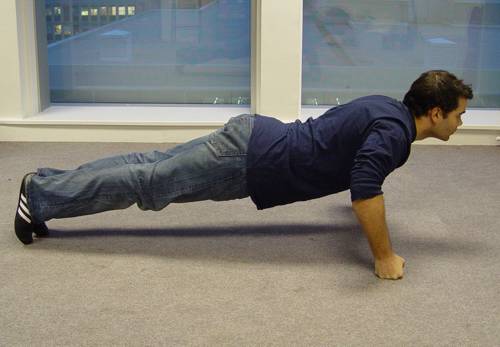
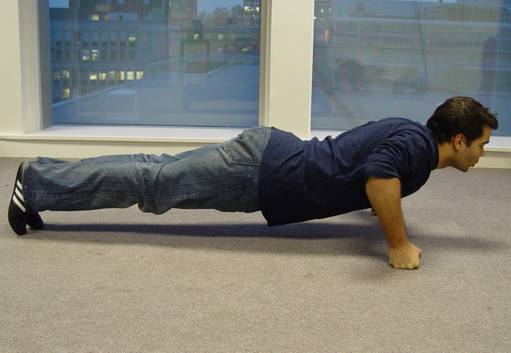
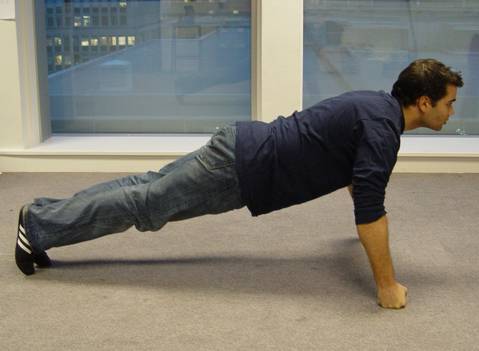
Press ups strengthen and increase the flexibility of the arms and trunk, with particular emphasis on the wrist and the shoulder. Press ups are an essential step in learning correct striking method. They are performed with a straight body from the feet to the shoulders, with the head looking upward. It is important not to let the body curve. At the straightest point, the arms should be slightly bent. As the arms bend, the elbow should not point outward, rather should remain close to the body. Although press ups may be done on the palm of the hand, to use the fists is best as it adds a degree of difficulty and improves wrist stability whilst striking. As the repetitions get high, it is possible to continue not only though correct breathing but also to consciously shift the muscle groups which are involved in the pushing action.
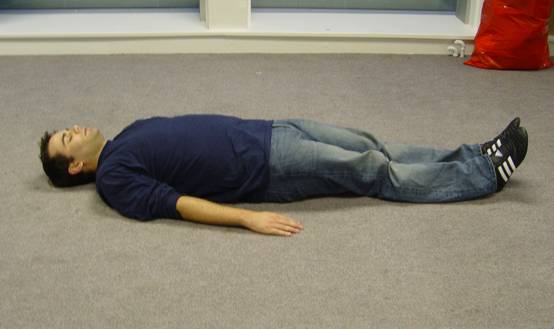
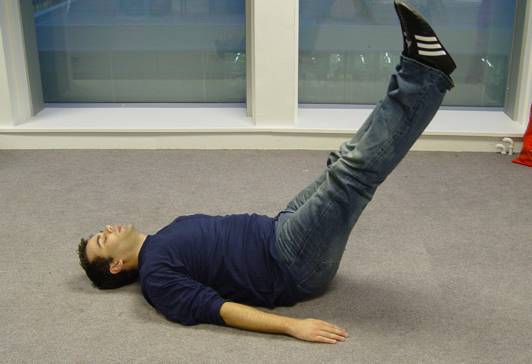
Leg raises strengthen and increase flexibility of the legs trunk and back. The leg raise is performed with the legs straight but not locked and the arms by the sides. The legs travel 180 degrees, reaching back over the head to touch the floor. It is important to recognise the development of lower body tension in which the lower back and lower abdomen muscles are working antagonistically and sometimes leads to arching of the back off the floor and tension in the neck.
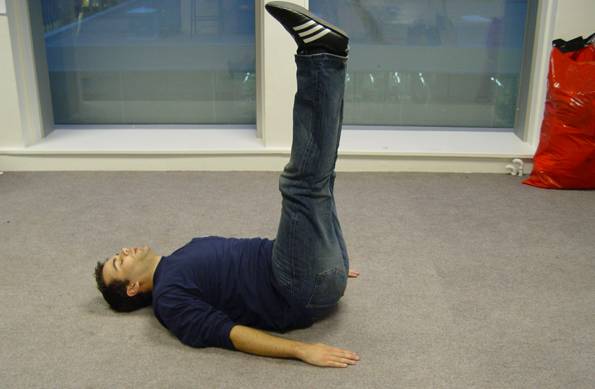
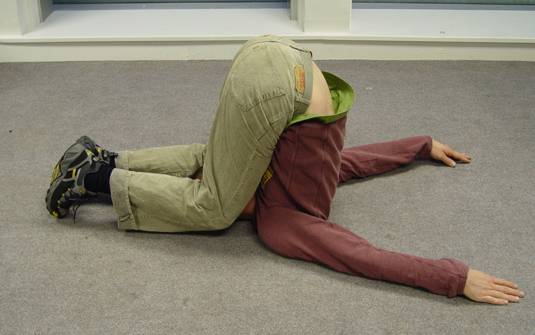
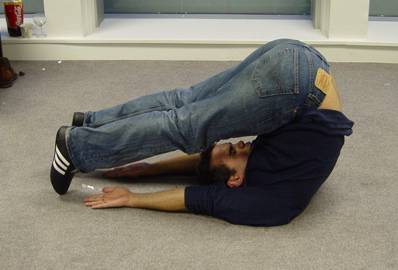
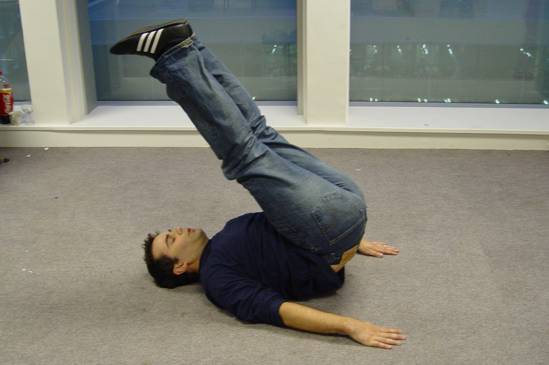
Generally the each exercise should be done slowly or very slowly, to either a number of repetitions or one single effort.
If using repetitions, the breathing should dictate the movement; for example exhaling during the eccentric effort or vice-versa. It is important to experience how breathing affects each movement. Ideally, each breath should begin slightly before the physical movement, so that the breathing is preparing the body for action, rather than playing aerobic 'catch-up'. A single or number of breathing cycles may be done during each exercise, for example breathing in and out during the eccentric movement and the same during the concentric.
By doing one slow press up, squat or leg raise, an isometric and stretching component is added to the exercise. In this case breathing should feed the exertion - most find that rapid panting in through the nose and out through the mouth (as it should always be) is effective in flushing the blood with oxygen and sustaining muscular effort. Breathing can also be used to shift tension around or from the body to share the effort among different muscle groups. It is the most important aspect of exercise in systema training. (continued >)