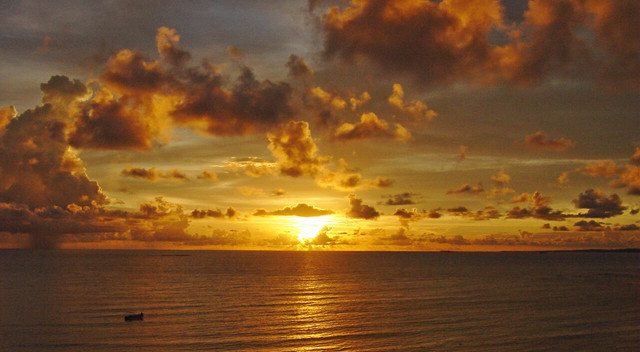
Beatiful sunset on the shores of Puerto Rico


The climate of Puerto Rico falls into the tropicalclimatic zone. Temperatures are moderate year round, averaging near 80 °F (27 °C) in lower elevations and 70 °F (21 °C) in the mountains. Easterly trade winds pass across the island year round. Puerto Rico has a rainy season which stretches from April into November. The mountains of the Cordillera Central are the main cause of the variations in the temperature and rainfall that occur over very short distances. The mountains can also cause wide variation in local wind speed and direction due to their sheltering and channeling effects adding to the climatic variation. About a quarter of the annual rainfall for Puerto Rico, on average, occurs during tropical cyclones, which are more frequent during La Nina events.


Temperatures range from 70 °F (21 °C) to 90 °F (32 °C) in the lower elevations, while higher elevations in the central part of the island experience temperatures between 60 °F (16 °C) and 80 °F (27 °C) year round. The temperature in the south is a few degrees higher than the north. Between winter and summer, there is only a temperature swing of around 6 F (4 C). This is mainly due to the warm waters of the subtropical Atlantic ocean, which significantly modify cooler air moving in from the north and northwest.

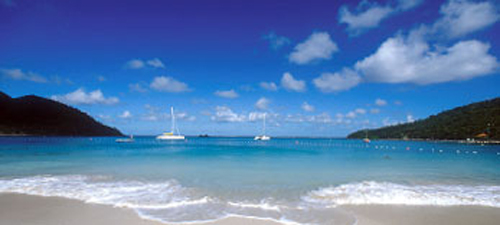
Beatiful view Puerto Rico's beaches

Hurricanes

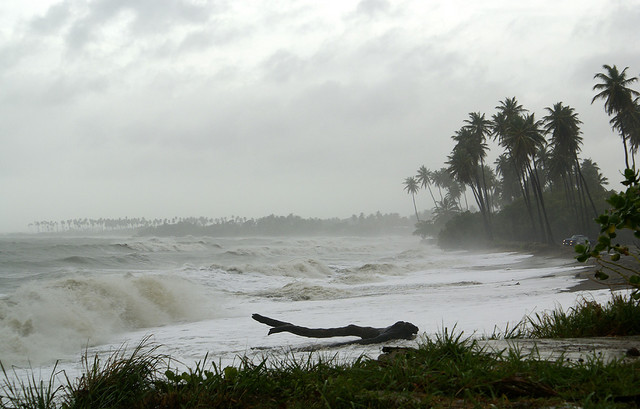
Puerto Rico experiences the Atlantic huriccane season, similar to the remainder of the Caribbean Sea and North Atlantic oceans. On average, a quarter of its annual rainfall is contributed from tropical cyclones, which is more prevalent during periods of La Niña than El nino. A cyclone of tropical storm strength passes near Puerto Rico, on average, every 5 years. A hurricane passes in the vicinity of the island, on average, every 11 years. Only one category 5 hurricane has struck the island since 1851, the lake Okeechobee Hurricane of September 1928. Sometimes, during showers and thunderstorms, watersprouts form off the coasts, frequently on the west coast. In the inner sea, tornadoes and hailstorms are possible. These thunderstorms can be a result from tropical waves, tropical cyclones , and frontal boundaries which become stationary across the region between fall and spring.
 

Hosted by www.Geocities.ws

1