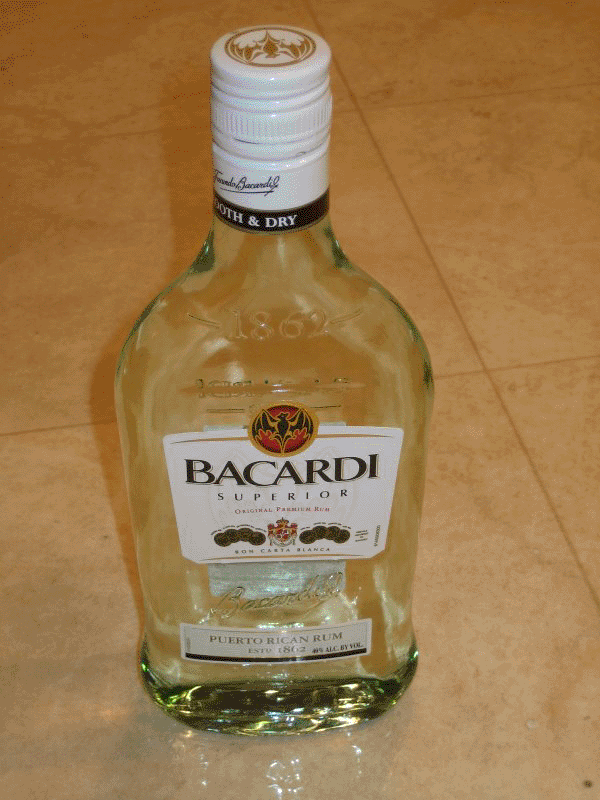
Rum is the national drink, and you can buy it in almost any shade. Puerto Rico is the world's leading rum producer; 80% of the rum consumed in the United States hails from the island.
Today's rum bears little resemblance to the raw and grainy beverage consumed by the renegades and pirates of the Spanish Main. Christopher Columbus brought sugarcane, from which rum is distilled, to the Caribbean on his second voyage to the New World, and in virtually no time it became the regional drink.
It is believed that Ponce de León introduced rum to Puerto Rico during his governorship, which began in 1508. In time, there emerged large sugarcane plantations. From Puerto Rico and other West Indian islands, rum was shipped to colonial America, where it lent itself to such popular and hair-raising 18th-century drinks as Kill-Divil and Whistle-Belly Bengance. After America became a nation, rum was largely displaced as the drink of choice by whiskey, distilled from grain grown on the American plains.
It took almost a century before the rum industry regained its former vigor. This occurred during a severe whiskey shortage at the end of the World War II. By the 1950s, sales of rum had fallen off again, as more and different kinds of liquor became available on the U.S. market. Rum had been a questionable drink because of inferior distillation methods and quality. Recognizing this problem, the Puerto Rican government drew up rigid standards for producing, blending, and aging rum. Rum factories were outfitted with the most modern and sanitary equipments, and sales figures (encouraged by aggressive marketing campaign) began to climb.