In the 1760�s, rather than offer allegiance to the despised George III and England, scores of Kaskaki�s residents were persuaded by young Auguste Chouteau to leave home and move to the west bank to occupy his new village called St. Louis. A secret treaty in 1764 put this land under the Spanish Crown but any government was better than the British government. Thus it should be no surprise to anyone that the Missouri French sided with colonist in the American Revolution. They preferred the crude, uncultured, often lawless Americans for neighbors rather than the British. They were probably unaware that the new American nation had unfinished business: slavery still existed, Catholics still suffered discrimination and women were denied equality. With their creed of tolerance, the Missouri French would have found their new neighbors� prejudices hard to accept. For their part, the Americans, who regarded shooting Indians as somewhat akin to squirrel hunting, did cause the marauding Osage to retreat to Western Missouri. The Americans were much better farmers and the Missouri French were much better at enjoying food and other finer things in life. They learned much form each other in the next two hundred years.
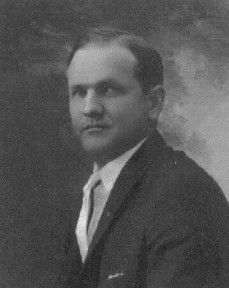
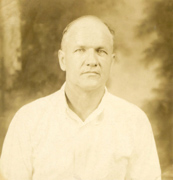
These early settlers loved nicknames. The lightheartedness of these French people was reflected in the nicknames they gave each other and their towns. Kaskaskia was �pouilleux� - - (lousy_. Cape Girardeau was �l�anse a� la Graisse� - - (greasy cove). St. Lousi was �Paincourt� - - (short of bread). The names they had for each other were not derogatory, not used behind one�s back, but indications of warmth and affection. Names like �Horse�, �Flakes�, �Possum�, �Bigfoot�, �Dizzy�, �Funny�. The custom still persists today. Dad�s nickname was �Buck� and it fit him well. He was short, about 5�8�, very strong and stocky, not fat, but barrel-chested with broad shoulders, a thick 16 �� neck, and piercing blue eyes. He was quick to jump into a fracas an stubbornly persistent in a cause.
The spelling of the last names has been changed over two and a half centuries, Americanized to read phonetically in English close to what they sounded like in French. In the Old Mines community some of the most common names can be traced back to Quebec, New Orleans, and even France. Names like Aubuchon, Becquette, DeGonia (originally DeGagner), DeClue (De Clos), Merseal, Pashia (originally Page), Sancoucie and Politte. But Boyer and Coleman are the most frequently found names. Dad�s cousins were Polittes and Boyers and his mother was Marys Katherine Coleman of La Vielle Mine (the old mine). A Catholic � of course! She spoke only French and never learned more than a few phrases of English. As recently as the early 1930�s, 90% of the parish member still used French as the domestic tongue. The early Missouri French nonchalantly bestowed their rugged pronunciations on other incoming nationalities and on places. The Blue-Bellied Yank would have been an American with land so poor his belly turned blue. Aux Arcs became Ozarks. This blending of cultures in pronunciations and the isolation of the Missouri French led to the development of a unique dialect probably difficult for the traditional French to understand. Dad always referred to this dialect and the people as Paw Paw French, once again there was the funloving insult � the reference to the Paw Paw Frenchman who had to live on paw-paw in the summer and possums in the winter.
|