| Era of Good Feeling | Missouri Compromise | Marshall Court | Monroe Doctrine | S econd Party System |
|---|

For a brief but alarming moment in 1819-1820, the increasing differences between the north and the south threatened the unity of the United States-until the Missouri Compromise averted a sectional crisis for a time. The force of nationalism continued to assert themselves, and the federal government began yo assume the role of promoter of economic growth.
Tallmadge Amendment
when Missouri applied for admission to the union as state in 1819, slavery was already established there. Even so, representative James Tallmadge, jr. of New York proposed an amendment to the Missouri statehood bill that would prohibit the further introduction of slaves into Missouri and provide for the gradual emancipation of those already there.The Tallmadge Amendment provoked a controversy that was to rage for the next two years.
Since the beginning of the republic, partly by chance and partly by design, new states had come into the union more or less in pairs, one from the north and another from the south. In 1819, there were eleven free states and eleven slave slates; the admission of Missouri would upset that balance and increase the political power of the north over the south. Hence the controversy over slavery and freedom in Missouri.
Missouri Compromise
Complicating the Missouri question was the application of maine for admission as a new state. Speaker of the house Henry clay informed northern members that if they blocked Missouri from entering the union as a slave state, southerners would block the admission of maine. But Maine ultimately offered a way out of the impasse, as the senate agreed to combine the maine and Missouri proposal into a single bill. Maine would be admitted as a free state, Missouri as a slave state. Then senator Jesse B. Thomas of Illinois proposed an amendment prohibiting slavery in the rest of the Louisiana Purchase territory north of the southern boundary of Missouri (the 36* 30' parallel). The senate adopted the Thomas Amendment, and speaker Clay, with great difficulty, guided the amend Maine-Missouri bill through the house.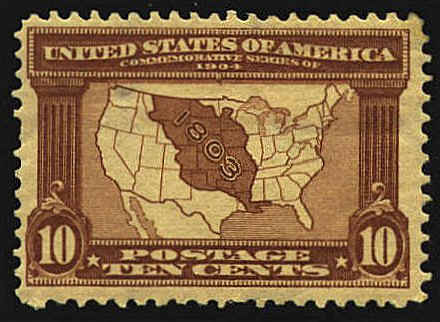
Louisiana Purchase
Nationalists in both north and south hailed this settlement which became known as the Missouri Compromise as a happy resolution of danger to the union. But the debate over it had revealed a strong undercurrent of sectionalism that was competing with. Although at the moment failing to derail the powerful tides of nationalism.
Era of Good Feeling | Missouri Compromise | Marshall Courts | Monroe Doctrine | Second Party System