
Content
Factsheet
Development of Gullah
Learning Gullah
Black English
Sea Island Culture
Photos
Reference
photo by Dennis Adams
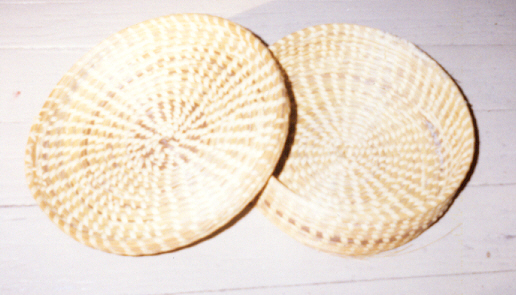
The most common material was formerly black rush (a marsh grass) bound with strips of white oak or saw palmetto stem. Sweetgrass become popular only at the beginning of the twentieth century, when a black community in Mount Pleasant (across the Copper River from Charleston) began making 'show baskets' from the material. There baskets provided welcome income in the aftermath of recent hurricanes and boll weevil infestation. Tourists bought so many of the baskets that sweetgrass won out over more traditional choices.
On St. Helena Island, however, rush work baskets continued into the first half of the twentieth century. Though the Penn School offered training in 'Native Island Basketry' for fifty years, today black rush is used mainly to strengthen and decorate certain types of sweetgrass baskets.
The early rice industry in the Lowcountry owed its success to a particular type of black rush basket, the 'fanner'. Slaves 'fanned' threshed rich into the air from the baskets to let the wind separate the chaff. On the plantations, the male slaves wove fences, granaries, traps, and heavy field baskets, while the women made the smaller, fancier baskets for the households.