
In 1708, slaves and whites equaled each other in number in South Carolina. After the Revolutionary War, however, Pierce Butler of the Beaufort District met opposition from other states' delegates when he tried to get a provision legalizing slavery put in the Constitution. The majority opinion was the slavery would be phased out as an instituion, and no enslaved Africans were legally imported from 1787 through 1804.
By 1795, the Sea Island economy was devoted to cotton (William Elliott of Hilton Head had grown the first sucessful crop on the islands in 1790). Two hundred people lived in the town of Beaufort in 1796, and at least five new mansions were built by rich cotton planters. Warehouses, taverns and shops clustered on the waterfront. Needing more labor, Sea Island planters petitioned the South Carolina legislature to repoen slave trade, and as a result 40,000 new Africans were imported between 1804 and 1808. Between 1800 and 1810, the slave population in St.Helena Parish grew by 86%. By 1860, the white population on St. Helena Island was 350, and there were more than 2,000 enslaved people. The Beaufort District as a whole had 33,339 blacks and 6,714whites.
There were four classes of slaves on the Sea Island plantations (in order of their economic and social importance):
Drivers, who, subject to their white masters and overseers, controlled the field hands, dealt out rations and even inflicted corporal punishment on the labourers. Drivers possessed a considerable degree of judgment and knowledge of plantaion economy (the owners spent relatively little time on their lands).
Tradesmen,who were often carpenters, wheelwrights and other skilled workers whom their owners could also hire out to neighbors.
House servants, who performed the domestic work reserved for slaves unable to do a full day's work elsewhere.
Field hands, who made up one third of the slave work force. Field hands labored under the 'task' system (a 'task' was 105 square feet and contained 21 or 22 rows), and each worker was required to 'list' a tast and a half (one fourth or three eighths of an acre). Field hands got about a quarter of an acre to cultivate corn and potatoes on their own. They were allowed pigs, chickens and ducks (generally sold to the owners), could shrimp and oyster and were relatively free to do as they please once they had finished working their 'task'.
On November 7, 1861, this history changed forever. After the Battle of Port Royal Sound, 12,000 Northern troops landed on Hilton Head Island and the landowners fled from Beaufort and the Sea Islands, leaving 33.000 slaves behind. United States Treasury officials were able to sell the abandoned property for non-payment of taxes, and , though Northerners bought most of the land, former slaves who had struggled to save enough to afford the low prices now bought property, too. The opportunities for African-Americans to buy land was far greater in Beaufort than elsewhere in the state. By controlling their own land and crops, the freed people of St. Helena's Parish were able to avoid the hardships of sharecropping and tenant farming.
In 1868, almost half of Beaufort County land was owned by African-Americans, and the 1870 census shows that 98% of the St. Helena population of 6,200 was black and that 70% owned their own farms. Blacks owned only 39% of the property, however, mostly in ten-acre lots, while whites owned 61%.
Population trends vary greatly from island to island. For instance, the population of Sea Islanders on James Island increased from 2,709 in 1940 to 6,173 in 1980. The number of Sea Islanders on Wadlamaw Island remained at about 1,800 during the same period. The more recent arrival of European Americans to the Sea Islands has also brought change: 80% of the residents of Johns Island were Sea Islanders in 1940, but that proportion had decreased to only 40% in 1990.
Content
Factsheet
Development of Gullah
Learning Gullah
Black English
Sea Island Culture
Photos
Reference
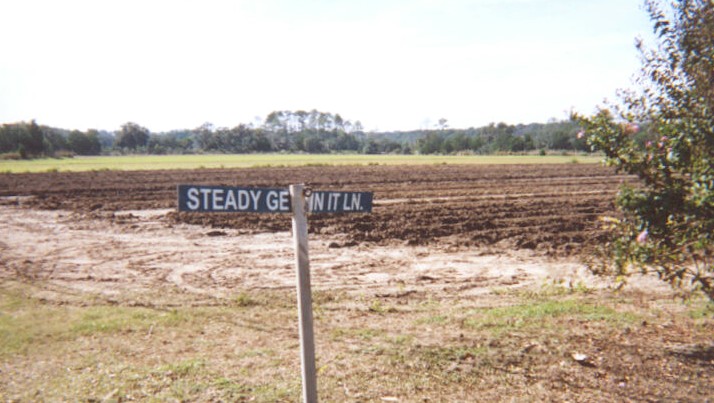
Photograph by Dennis Adams (Aug 13, 2002)