|
|
|
| |
Description
Ashenvale is a mighty forest that encompasses most of the northern half of Kalimdor. Its size and natural diversity is unmatched anywhere else in the world of Azeroth, save perhaps Stranglethorn Vale. Ashenvale became home to the night elves after the War of the Ancients, when 80% of the previous Kalimdor continent was smashed beneath the sea. The night elves who settled on Kalimdor after the Sundering hunted in Ashenvale's wilds but never settled within its borders. While certain areas of Ashenvale were horribly corrupted during the invasion of the Burning Legion, the forest as a whole continues to heal quickly, giving hope to the night elves and other protectors of nature that the Legion's scar will not be permanent. When the Burning Legion invaded in the Third War, the night elves ceased even hunting in order to battle the demons. The lack of hunting has allowed many creatures once more to live and thrive within the vast woodland, creating danger for all who venture into the forest.
Geography
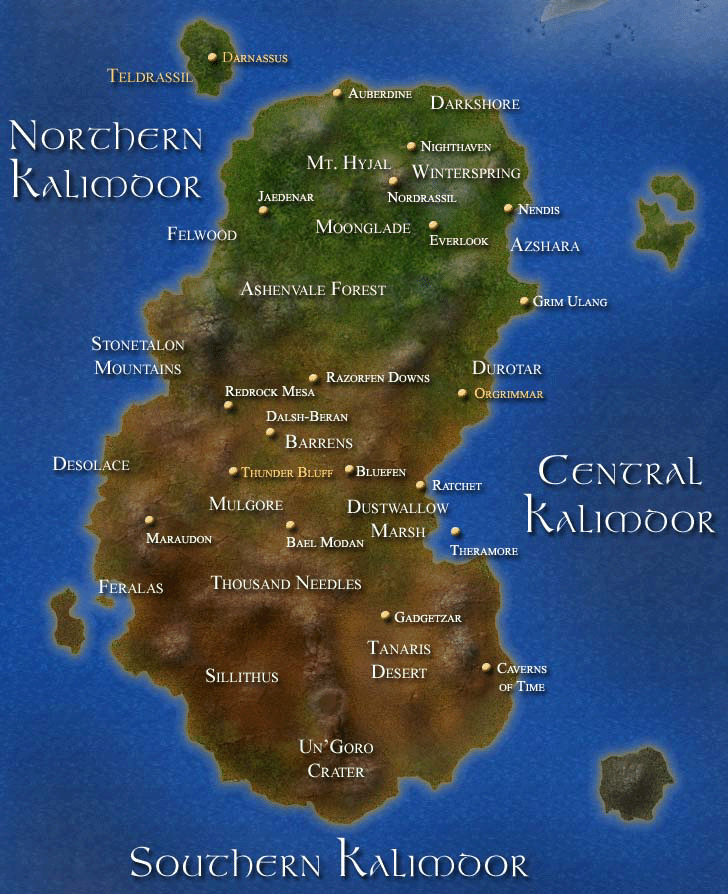
Ashenvale Forest runs in a great arc south of Mount Hyjal, with the Stonetalon Mountains to the southwest and the Barrens directly south. The ruined lands of Azshara lie across a river to the east.
Ashenvale is an old forest, with growth long untouched by any mortal race. The weather is fairly mild, though rain is almost constant. The woods are so old and thickly grown that only trickles of precipitation get through the dark canopy.
The forest has become ever wilder since left to its own devices after the start of the Third War. Any roads through it are overgrown, some even impassable. In contrast, the game trails see increased traffic as beasts living in the shelter of the massive trees grow in number and boldness. Those travelling through Ashenvale will wisely keep their guard up at all times.
Inhabitants
In addition to bears and great cats prowling the dense woodlands, hulking beak-faced wildkin forage throughout Ashenvale. Vicious harpies are known to make massive nests in the tops of the tallest trees. They hunt at dawn and dusk when the light filtering through the canopy throws the forest into a confusion of shifting shadows. Ancients - sentient trees who act as wardens of the forest - roam Ashenvale as well.
Ashenvale is under the protection of the ancients and the night elf sentinels. Neither has established a community as such within the forest, though, preferring to leave the vast woodlands in its natural state. Travelers through Ashenvale should treat these forces with respect, especially if they hope to reach their destination.
The Ancients and night elf sentinels guard Ashenvale zealously with constant patrols. Any who threaten the forest - cutting down live trees, poaching beasts of the forest, and the like - are met with the Ancients' powerful attacks and the sentinels' deadly arrows.
The only unified night elf presence dwelling in Ashenvale is a reclusive group of rangers. The Farstriders use the terrain and other inhabitants to train in their specialized skills. They hold a difference of opinion regarding strangers in Ashenvale. Some believe that their duty is to welcome and protect travelers, as long as they show no threat to the forest. Others see any strangers as unwelcome interlopers who must be "escorted" to the southern border. Still, whatever their opinion on Ashenvale, the Farstriders bow to the wishes of the ancients and the Sentinels.
There is little reason to try to take the forest, since it has no cities to invade and no treasures to plunder (that anyone knows of), but the rangers and the ancients remain vigilant nonetheless.
Areas:
-Farstrider Camp
-Goldcrease Mine
-Shrine of Aessina
-Windshear Pass
|
| |
| |
Description
Before the Great Sundering of the World, this shattered stretch of coast along Kalimdor's northern border was once part of the night elves' capital of Zin-Azshari. Then came the demons' expulsion from the world. The land was rent asunder and the sea thundered in, making the region into a watery grave and leaving naught but the ruins of once great city. The night elves who survived named this region - once glorious, now nothing but a shattered relic - Azshara, after their queen driven mad by demon influence.
Since that time, this place of rocky islands, jagged cliffs, and coral-choked seas has given birth to many tales. Some night elves suggest that not all of the demons were banished, lurking even now beneath the glittering waters of the Coral Sea and awaiting the time to strike back. Others claim that Queen Azshara was not drowned, but transformed into a hideous aquatic thing that will someday lead her accursed followers to retake the surface world. A few whisper that the Dark Portal that first brought the demons to Azeroth yet remains and rests under the sea waiting for someone to reopen it. Still others assert that the ancient Sundering awakened something that dwelled in the deepest part of the ocean, something that will eventually burst forth in a tidal wave of destruction. Whatever the truth, night elves agree that the region is cursed.
Geography
The coastal region of Azshara lies east of Ashenvale Forest and north of Durotar.
A river separates the primordial wood from what land there is. The terrain beyond the river is little more than a strip of green above fragmented cliffs that rise high over a stretch of ivory beach. The waves of the shallow Coral Sea sweep against this beach, and islands - little more than spires of jagged rock - jut from the water. A twisted expanse of reef creates a labyrinth of coral beneath the ocean surface, making sea travel here virtually impossible.
Inhabitants
The night elves consider the place cursed, and most other races find the constant storms unpleasant. There is but a single known habitation in Azshara, the orc trading village of Grim Ulang, its residents telling of creatures flitting about the ruins of Zin-Azshari further along the cliffs and murlocs and naga swimming in the Coral Sea. Bands of undead have appeared along the beach and at the fringes of Ashenvale Forest. As well, the dark chants of demon cultists have echoed along the cliffs in counterpoint to the thunder of storms. Steady rumors and sighting have led to frequent night elf patrols and an increased martial presence in Grim Ulang.
Areas:
-Coral Sea
-Grim Ulang
-Nendis
-Ruins of Zin-Azshari
|
| |
| |
Description
The vast region known as the Barrens was once a thriving forest under the protection of the night elves and their kind. Then came the Burning Legion and the Great Sundering, which shook ancient Kalimdor to the bedrock. This forested landscape transformed into a scorched plain is battered now each day by the sun's rays.
Geography
The Barrens is a sprawling and arid savannah that stretches between the Stonetalon Mountains to the west and Durotar to the east. The grasslands and mesas of Mulgore rise to the southwest, while the wetlands of Dustwallow Marsh lie to the southeast.
The majority of the region consists of vast plains. Mountains to the west hold in a mass of air heated constantly into swirling winds that rage across the plains. These windstorms stir up dust devils and tear apart anything larger than the small but tenacious scrub trees. Water is more valuable than gold in the Barrens, and the locations of hidden watering holes are among the residents' most closely held secrets. Dry riverbeds and a never-ending spider web of canyons make any journey across the Barrens a dangerous and winding trek. The central lands of Kalimdor - from Durotar on the east coast through the Barrens and Mulgore and on down to the Desolace in the southwest - are a rough place and not just because of the inhabitants. Large areas contain no established civilization and have an arid climate. The heat and lack of water sources can kill as quickly as a fall from Stonetalon Peak. The temperature in Desolace and the Barrens can reach up to 130 degrees Farenheit in the summer. Mulgore and Durotar are a little more temperate, but no more merciful to those foolish enough to travel without an adequate water supply and protection from the elements.
Inhabitants
Before the upheaval, several large Kaldorei cities stood here. Now, those brave few willing to scape out a life on the arid plains inevitably run afoul of centaur warbands or quilboar raiding parties. Despite its often uninviting terrain and hostile inhabitants, the Barrens receive a good deal of interest from the Alliance and Horde alike, as well as races native to Kalimdor. Trade routes crisscross the landscape leading to and from more inviting regions, most notably the Gold Road that runs north-south through the Barrens and beyond, and rumors suggest that precious minerals and ruins await those with the courage to investigate.
Centaur warbands are most often seen in the Barrens' canyons, though they roam as far as the river that forms its eastern border with Durotar. Fearlessly aggressive, the centaur are known for their savagery, especially against tauren and night elves. They are not above attacking trade caravans also, for the goods or just for the sake of violence. Travelers who survive the centaurs' battle lust are used as slave labor in the hardscrabble mines the Centaur carve into the hard-baked earth.
Displaced from Durotar by orcs, quilboar have built crude villages along the river that separates the orc nation from the Barrens. From there, they strike out across the river to raid settlements or deeper into the Barrens to attack caravans along the Gold Road. The caravan raids have hurt the goblin trade princes' profits, so they have started negotiations to pay the quilboar gold and goods to protect caravans against centaur warbands.
The quilboar have also erected a fortress called Razorfen Downs in the northwestern Barrens. Razorfen is a sprawling mass of giant, twisting thorns and crude mud huts. It serves as the center of quilboar society.
Other dangers include harpies who watch from perches atop mesas in the northern Barrens and large beasts such as lions and thunder lizards - though these creatures tend to avoid the Gold Road.
Native dangers have no stopped the Ironforge dwarves from establishing a stronghold near the Titan excavation site of Bael Modan. The centaur have made forays against it, but were repelled decisively each time. Scouts claim that the centaur are amassing other tribes to launch a major attack, but the dwarves are unconcerned. Each day that passes sees Bael Modan grow stronger as the inhabitants build up its defenses and new dwarves and some other Alliance members come to settle.
Areas:
-Bael Modan
-The Circle of Dust
-The Field of Giants
-The Gold Road
-Ratchet
-Shady Rest
-Southsea Freebooters
-Tidus Stairs
|
| |
| |
Description
After the Sundering of the World, some night elves settled in the continent's northern reaches, on and near Mount Hyjal, including this port at the mountain's northern foot. The night elves left Darkshore in the course of the Third War, moving to the safety of Mount Hyjal and Moonglade.
A small number of night elves has returned to the cold and desolate beach to revive the port. They dwell in the village of Auberdine and currently use it as a ferry outpost. The remainder of the seaside is left in ruins.
Geography
Darkshore covers northwestern Kalimdor. The tained land of Felwood rises toward Mount Hyjal to the south.
The rocky cliffs, sandy soil, and ever-present sea mist ensure that little worth noting grows in Darkshore. Kelp, seaweed, and rocks litter the beaches, and a few sparse trees dot the landscape away from the beach.
Once a thriving night elf settlement, it is now little more than a desolate beach dotted with ruined buildings. The weather is cold and stormy much of the time, with a wicked wind stirring up the waves. Rain and fog are prevalent for a good part of the year, allowing only the most talented sailors to navigate the dangerous waters. Shipwrecks of the less talented litter the shallower waters and beach.
The night elves currently living in Darkshore have focused their attention on rebuilding Auberdine. Most of the town is made of new buildings, as the night elves cleared away the ruins they could not restore. Many ruins remain outside Auberdine, and harsh winds and salt water continue to corrode the once sturdy buildings. These worn pillars and crumbling structures are not totally abandoned - stories abound that murlocs and naga are slowly taking the ruins for their own.
Inhabitants
The night elves have a limited presence in Darkshore. They spend much of their time keeping the area directly around the port town of Auberdine safe. The night elves subsist mainly on what they can catch in the ocean and what they can get through trade.
When not fighting one another, Naga and Murlocs that lurk elsewhere in the ruins of Darkshore attack any travelers who look like easy picking.
Furbolgs inhabit a series of caves beneath the port. Uncultured but friendly to night elves in the past, their time in the ruins has turned many of them feral.
Areas:
-Auberdine
-Black Fathom Bay
-Black Fathom Deep
-Darkshore Ruins
-The Master's Glaive
|
| |
| |
Description
Legends claim that the Centaur are descendents of a dark union between one of the demigod Cenarius' sons and a princess of the chaotic earth elementals. When the first khans were born of their union, it is said that they murdered their father, for shame of their misshapen appearance. They were born filled with rage and savagery and have not calmed in the centuries that followed. The first of their kind, the first khans, gave rise to the five tribes of the centaur. The race swept across Desolace and soon became legendary for its brutality. The diligent night elves held them in check for ages until the Burning Legion rained its destruction upon the world. The night elves left the centaur out of necessity for their own survival during the wars, allowing the twisted race to assume control of Desolace.
Though fortunate enough not to be scorched into oblivion in the demon wars, Desolace was savaged nonetheless due to the centaurs' ceaseless aggression. No longer threatened by night elves, the tribes plagued other plains races - chiefly, the peaceful tauren. This struggle endured for generations, until recently, when the tauren were at last driven from Desolace.
The centaur were never content with controlling Desolace and have followed their tribal khans in a series of clashes with the other races throughout southern and central Kalimdor.
Geography
The mountainous barriers of the Stonetalons lie to the north and the Thousand Needles to the southeast, isolating Desolace from much of the rest of Kalimdor. The grasslands and mesas of Mulgore stand directly east, and the land runs rugged and open to the storm-tossed coast to the west. The winds create waterspouts against the lowland hills along the shore. The western coastline of Desolace is lush in sad contrast to the wasteland of its interior.
Desolace is a gray, rocky wasteland littered with bones. It seems almost under a supernatural curse, its skies always black and stormy, with lightning and high winds a constant throughout the realm.
The surrounding mountains form a significant barrier to travel, a key reason why the centaur have never established more than a sporadic presence elsewhere on Kalimdor.
Inhabitants
Five barbarous centaur tribes dominate the entire region with the strength of overwhelming numbers and unequaled ferocity. Each tribe is led by one of the dreaded khans and is known by a distinctive tribal color - Black, Brown, Green, Red, and Yellow. Members use the color to mark their weapons and their faces. The khans who lead each tribe rarely have contact with each other except in times of war.
There are no other cultures of any note in all of Desolace. The centaur have run them all down in their unceasing lust for conquest. The only animals that can sustain themselves in this arid and violent land are beasts such as lions, raptors, sand serpents, and harpies.
Areas:
-Kodo Graveyard
-Maraudon
-Opal Ridge
-Realm of the Harpies
-Spearhold
|
| |
| |
Description
For many years, Durotar was home to the quilboar. Then Thrall, Warchief of the orcs, brought his race to Kalimdor in search of a new homeland. The quilboar were tenacious but ultimately no match for the unified might of the orc clans. The bristled "boar men" were driven back in a series of decisive orc victories along the northern canyons and ultimately pushed to the most remote regions of Durotar and even into the Barrens. The orcs claim the coastal realm as their own, but the quilboar vow to reclaim it someday.
Geography
The realm of Durotar - named by Warchief Thrall in honor of his father, Durotan - occupies the east coast of Kalimdor, just across the river from the Barrens. The goblin port of Ratchet stands to the south, with the ruined shores of Azshara some distance to the north.
The region is warm and rocky, but not as arid as the rest of the Barrens. A fair amount of vegetation grows thanks to the warm easterly winds blowing in from over the ocean, but truly fertile soil is rare, making farmland precious. Sagebrush on the plains and thin pine forests at higher elevations combine with rugged hills and canyons to break up the landscape.
Inhabitants
Orcs are by far the major inhabitants of Durotar. Quilboar cluster in the canyons along the northwestern borders and encroach from the Barrens to the west. Centaur warbands make the occasional foray, and furbolgs and undead have been seen in more than one instance. Herd animals such as deer and goats roam the land, preyed upon by wolves and coyotes.
A number of Horde settlements have been established throughout the region, but much of the land has yet to be tamed. The cities and towns scattered along the frontier are heavily fortified against attacks from quilboar raiders, centaur warbands, rogue furbolgs, and even sudden appearances by undead and the occasional demon. Caravans are common targets, creating a strong market for caravan guards.
The few large cities are distant from one another, with a variety of smaller encampments and villages scattered in between. Given that Durotar is the orcs' new homeland, Horde races and independents are welcome throughout the region. Alliance races risk their lives when they venture into Durotar.
Areas:
-Blackblood Gorge
-Drygulch Ravine
-Orgrimmar**
-Thunder Ridge
|
| |
| |
Description
Dustwallow Marsh was once a high plain filled with herd animals that thrived on the tall grasses. Then came the Great Sundering, and the plan was smashed down into a sundered valley. The water table bled up into the ruined landscape, creating the great marsh that exists today.
Geography
Dustwallow Marsh is located southeast of the Barrens and north of the Thousand Needles. The swamp curls to the east, forming a bay around the island of Theramore.
Dustwallow is a flood plain fed by underground springs and surrounded by the dry savannahs of the Barrens. The marsh is eternally wet, muddy, and hot, unfit for proper settlements and a haven for creatures that crave the wetness and humidity. Narrow banks of slippery mud separate endless stagnant pools and algae-choked channels, making Dustwallow a traveler's nightmare.
The roads that cross the fen are muddy and treacherous, and the surrounding swamp is even more dangerous to traverse. Those who mistake the thick, wandering bogs of the marsh for solid land may fall through, only to have the floating plants close above and trap them in the brackish water. Also, the Dustwallow teems with predators that lurk just beneath the surface of every pool and skulk behind every bush.
In the east, the turgid water of the marsh mixes with salt water from the sea. The rocky form of Theramore Isle lies just beyond in the bay. The marsh is the best way to approach Theramore by land, as jagged rocks outside the bay make sailing directly from the goblin city of Ratchet difficult.
The marsh's southern expanse grows rockier as it approaches the Thousand Needles. The pools are larger and far deeper, with half-submerged rocky outcrops. Many of these rock clusters have openings that lead into cave systems. The caves are often surprisingly dry and serve as lairs for a variety of beasts. Some conjecture whether the caves are interconnected with the underground river that keeps the swamp submerged or if they might even extend out into the sea.
Inhabitants
The hundreds of shallow pools that comprise the marsh hold creatures from the massive plant-eating kodo beasts to ambushing packs of raptors to territorial water-loving murlocs. The saltwater swamp east of Dustwallow is a popular breeding area for the murloc packs.
Indeed, the waters teem with aquatic creatures of all sorts. Humans and murlocs drag nets down the channels to harvest gigantic mudfish, but also pull in everything from alligators to eels. Poisonous snakes hang from the trees, and some of the larger specimens are known to drag the unwary up into the branches.
Of course, these dangers are nothing compared to those of the Dustwallow's southern region. The rocky outcroppings common to this area are ideal lairs for black dragons, and those creatures are so common in the area that it has earned the name "Wyrmbog."
Areas:
-Bluefen
-Blackenwall
-The Broken Giant
-Dragonmurk
-Theramore
-Witch's Hill
-Wyrmbog
|
| |
| |
Description
The Echo Isles are a small group of islands just off the Kalimdor coast, east of Orgrimmar. They remained uninhabited by any major race until just after the Battle of Mount Hyjal. The Darkspear trolls claimed the islands as their home when the Horde settled Durotar.
Geography
The Echo Isles lie east of Orgimmar, out in the Great Sea. The islands are close enough to Kalimdor to spot for threats to Durotar's eastern borders, however. The islands enjoy a warm tropical climate, and rains are frequent.
Inhabitants
The primary residents of the Echo Isles are the Darkspear trolls, who are accustomed to island life; Thrall found them on another island near the Maelstrom during the Horde's exodus to Kalimdor. After they assisted the Horde at the Battle of Mount Hyjal, Thrall granted the trolls permission to settle on the islands, provided they kept a close watch for threats to Durotar and Theramore. The Echo Isles were the first part of Kalimdor to be attacked by Grand Admiral Proudmoore's forces during Kul Tiras' attack on Durotar.
Areas:
None
|
| |
| |
Description
This lush and vibrant land of woods and meadows was tended by the Kaldorei and protected by the demigod Cenarius. Bubbling streams ran through quiet, grassy meadows, and the summer sun was tempered by the whispering breeze and the cooling rain. The leafy corridors of the forest rang out with the music of songbirds. It was as close to a paradise as the world has ever known. Then the Burning Legion befouled the land. Any trees and creatures that escaped outright destruction became forever cursed in the demons' rampage.
Geography
Felwood lies south of Darkshore, curling around the lower slope of Mount Hyjal to the southeast.
Known to have felt the cursed touch of the Burning Legion, Felwood is an eerie, dark, and haunted region of scattered gloomy woodlands and tainted vales, all of it teeming with evil. The meadows of Felwood retain the sickly, charred look they took on when the demons cursed the land thousands of years ago. Nothing grows there. The mighty Ancients that once guarded the land now roam blindly, their limbs twisted and their bark hides bleeding fell poisons. The once tranquil rivers and streams now boil with poison and noxious gasses.
Felwood is a dismal and dangerous land to all who enter. Most cross into Felwood only out of necessity, for it lies directly along the road to Hyjal Summit. Armed travelers are usually safe if they pass along the main road by day, but they have no guarantee of safety if they leave the trail or if they venture into Felwood after nightfall.
The night elves feel constant shame that they failed to protect this noble land. All their efforts to restore health to the woods and meadows through divine magic have failed. Despite the lingering curse of 10,000 years, the night elves refuse to cease in their efforts to lift it.
Some thing that the key to healing the blighted land lies with Illidan, brother to the night elf hero Malfurion Stormrage. Illidan was known to have consumed the artifact called the Skull of Gul'dan, which strengthened the blight upon the forest. Only powerful divine magic can likely save the land, however.
Inhabitants
Felwood has no village, no people of its own. The land is a cursed relic, a danger to all within its bounds. Even creatures united in evil are not safe from the depredations of one another. Explosions and flashes of arcane brilliance erupt throughout Felwood as druids clash with the warlocks they have come to destroy. The ground shakes from the footsteps of accursed Ancients who prowl in search of victims. Twisted furbolgs and satyrs range through Felwood in bloodthirsty packs, and savage beasts lie in wait for the unwary.
Felwood is home to many beasts, with bears, wolves, and panthers the most numerous. As herbivores refuse to eat the cursed vegetation, the carnivores have turned to feeding on each other. Combined with the great curse, this development has created in each creature a brutal rage - a rage that the beasts turn on one another and any who dare to enter their territory.
Cursed furbolgs roam the forest, looking for an end to their torment. They are hardy enough to survive drinking the cursed waters of Bloodvenom Falls, but the water only increases their madness. Cursed Ancients lurk near night elf ruins and will attack anyone they see. They are stronger than their healthy counterparts, empowered by evil. The Ancients hold a special grudge against the night elves who abandoned them and will unleash special savagery upon anyone remotely resembling an elf. Satyrs dwell by tainted moon wells, their dark magics twisting Felwood's curse ever deeper into the land. Rumors circulate that the shadowy satyrs work as scouts and assassins for the Shadow Council in Jaedenar.
The undead Scourge and what demons survived the Third War have also made a home in Felwood. These recent arrivals have stirred the other residents into turmoil, making the region even more violent than before.
Druids of the wild make forays into Felwood with the aid of elven rangers, hunting down the greatest evil they can find and attempting healing magic upon the land. High elves and paladin warriors have likewise come to Felwood to cleanse it of undead and root out the reclusive Shadow Council.
Areas:
-Bloodvenom Falls
-Jaedenar
-Petrified Forest
-Timbermaw Hold
|
| |
| |
Description
Moonglade was the druids' home for thousands of years. When the Burning Legion ran rampant over the land in ancient times, Moonglade remained untouched. The night elf druids went into deep meditation in the secure caves of the Barrow Dens, sending their minds into the plane of the Emerald Dream. The remaining night elves built the town of Nighthaven.
Geography
During the Third War, Moonglade again remained the safe haven of the elves. Although battles were fought here, the land was not befouled. Most of the night elves' population who did not move to Teldrassil remains in Moonglade, surrounded by the old forest trees and the ancients, preferring solitude over communion with the other races.
Inhabitants
The sacred forest of the night elves is home to many beasts both dangerous and friendly. The Kaldorei themselves live in cautious harmony with the wildlife, such as the black tigers and the bears that prowl and hunt in the woods. The elves often capture and tame the proud saber cats to use as mounts, but encountering one in the wild is dangerous.
Less harmony is enjoyed with the forest's more dangerous denizens. Satyrs - cursed, deranged night elves - also lurk here and plague the night elves' solitude frequently. Some furbolgs, drive feral by drinking the foul waters of Felwood, will attack travelers as well. Fierce dire wolves and hippogryphs have also been reported in the area.
In addition to these animals are the Ancients: sentient trees that act as protectors of the forest. Treants, the smaller tree-men cousins to the Ancients, roam throughout Moonglade. These beings act as fierce protectors of the forest. They do not hesitate to unleash their might upon any who would damage the trees or otherwise harm nature. Many Ancients live in the forest near Nighthaven. These sentient trees once had the vital task of channeling forces of the land to sustain the Night Elves' immortality. They now aid in the elves' warrior training and help protect their village.
The Keepers of the Grove, powerful druids said to be the direct offspring of the demigod Cenarius, roam Moonglade as ever-vigilant protectors. The night elves send their own patrols out, though they focus primarily on defending Nighthaven and the Barrow Dens.
Areas:
-Barrow Dens
-Moon Weels
-Nighthaven
|
| |
| |
Description
The Kaldorei have long held this great mountain sacred. When the first Well of Eternity was destroyed in the first demonic invasion, the resulting implosion triggered a cataclysm that made the world shudder. Mount Hyjal endured, however, and the night elves emerged to rebuild their society - though without arcane magic this time.
One of the fleeing night elves - Illidan Stormrage, brother to the mighty druid Malfurion Stormrage - had taken a portion of water from the Well of Eternity. Illidan could not bear to live without the Well's magic. After the cataclysm, he poured this water into a lake at the peak of Mount Hyjal, creating a second Well of Eternity. The night elves were outraged at this act, for it was the first Well's energies that originally brought the demons to Azeroth. Illidan was imprisoned, and Malfurion met with three great dragons to create the World Tree, Nordrassil.
The World Tree grew over the Well to obscure and protect it. In the centuries that followed, the night elves were a constant presence, nurturing and protecting the World Tree that stood in the valley between the twin peaks of Mount Hyjal. The Burning Legion targeted the Tree in the Battle of Mount Hyjal, but, infused with the combined power of Azeroth's mortal races, it blasted the demon lord Archimonde and freed the world of the demon menace.
Geography
Hyjal Summit rises high above northern Kalimdor, surrounded by Winterspring, Moonglade, and Felwood.
The mountain's twin peaks are the highest points on Kalimdor and home to Nordrassil, the massive World Tree. The climb to the peak takes travelers past everything from dense forests at the foot to rocky meadows with sparse growth as the grade gets steeper. Nordrassil's sheer enormity strikes awe into any who have the rare honor of approaching it. The root system spreads over the entirety of Hyjal's peak, and its vast, charred branches seem to touch the sky. Damaged in the recent war, it heals itself at a rapid rate.
Although the World Tree rests upon a high mountain peak, its magic keeps the weather pleasant and warm - until this past year, when Hyjal saw its first winter. Otherwise, the air remains warm and crisp and the sky is always a dark blue peppered with a blanket of stars. The night elves hope that the regenerating tree will begin to regulate the weather again soon.
Inhabitants
Few elves live at the peak of Mount Hyjal, but the mountain and the World Tree shelter the night elves in the forests and shores at the foot of the mountain.
The forests and rocky mountain slopes harbor many dangerous beasts. With the magic of the Well of Eternity and the World Tree saturating the air and infusing the groundwater, the creatures of the forests are stronger and smarter than those anywhere else on Kalimdor.
Deadly black tigers and bears prowl the forests, as do powerful stags. These creatures do not fear fights; they even seek them if the prey looks weak enough. Even smarter and deadlier beasts inhabit the forests. Hippogryphs and chimaera are a common enough sight among the forested peaks of the Summit. Hippogryphs, magical beasts that look like a stag crossed with a raven, patrol the skies and attack anyone they deem a threat to the forests. Although friendly to night elves, they do not show kindness to strangers or to those they consider a menace. Wild dire wolves also lurk on the mountain slopes. They have no natural enemy and are fearless even when met with several armed hunters.
The forests on Hyjal are also known to be home to the occasional treant and stray Ancient. These sentient, motile trees protect the night elves' towns and the surrounding forests.
Areas:
-Eternity Bridge
-The Well of Eternity
-The World Tree
|
| |
| |
Description
This rich plain was once used by the night elves as prime hunting grounds. When the Great Sundering shattered the world, mountains pierced the earth and the night elves fled north. The mighty tauren made their home upon the low valleys and high plateaus after the night elves left. In time, the ash of upheaval disappeared and the once fertile grasslands returned.
The aggressive centaur claim the right to the fertile grasslands and have warred constantly against the tauren for supremacy of the land, but the tauren's mesa strongholds have so far proved impregnable.
Geography
Mulgore is a landlocked region, with Desolace to the west and the Barrens to the east, the Stonetalon Mountains to the north and the Thousand Needles to the south.
Mulgore is the ancient homeland of the tauren, who live on the windswept mesas and roam the grassy valleys. Below the mesa's ridgeline are the vast emerald plains, which hold an abundance of life including prairie wolves, young kodo beasts, and tallstriders.
Inhabitants
The centaur horde mercilessly hounds the tauren throughout Mulgore. The tepee-like tents and crude hide huts that comprise tauren towns stand in stark contrast to the turning windmills and pulley structures that keep the tauren grainmills operating. Large, ornately carved totems dot every street and stand above every major structure.
Toward the eastern border, quilboar displaced from Durotar have started creating dens with thorned hedgerow barriers. For now, it is a small concern for the tauren, but if the bristly "boar men" encroach too far, there will be a price to pay. At present, the tauren are far more interested in what the centaur are up to.
Mulgore is filled with a variety of antelopes, rabbits, and wild boar, making it an ideal place for game hunting. A tauren pastime involves hunting these animals to improve one's combat skills. The tauren rarely eat their prey, preferring to graze on the wheat and grass that grow wild in the valley.
Areas:
-Dalsh-Beran
-Grassmount
-Lake Stonebull
-Monolith Glen
-The Por-ah Stone
-Redrock Mesa
-Thunder Bluff**
|
| |
| |
Description
The Stonetalon Mountains were once a low set of hills giving a gentle view to the ocean waves in the west. The Sundering that tore apart the world drove great sandstone cliffs and mountain peaks high in the air. Water from the eastern coast poured into the newly created chasms and gorges. With the aid of erosion from the Blackwolf River, the Stonetalon Mountains have expanded into a vast network of canyons and cliff openings that invites adventurers and beasts alike to explore the virgin lands.
Geography
The Stonetalons rise in central Kalimdor, south of Ashenvale Forest and north of Desolace. The mountain range feeds into the bleak expanse of the Barrens to the east.
The atmosphere of the Stonetalon Mountains can best be described as extreme. At the lower elevation it is windy, hot, and dry. It is a harsh place where food cannot grow and flash floods are commonplace in the early summer months. Moisture from the ocean builds up into huge rain clouds, but the towering peaks are too high for the clouds to pass inland. They crash against the mountains' western side and pour massive sheets of water upon the slopes to run through narrow canyons and back into the ocean or into a valley to dry up in a marshy sink. When the weather turns to rain, the ground grows slick and gray. Walking on a slope or a cliff in the rain is treacherous - water seeps through the sandstone and threatens to send even careful travelers plummeting to their deaths.
Oftentimes, when the clouds expel all their moisture, hot winds push them farther up the slope, surrounding the Stonetalon Peak in a shroud of thundering mist.
An immediate feature any visitor notices - aside from the sheer cliffs and deep crevasses - is the constantly blowing wind. Sometimes a gentle breeze carries fresh air in from the ocean and other times a violent gale stirs up vicious dust devils or brings a storm in from the western mountains.
Inhabitants
The rugged mountains are home to many wild beasts and only a few civilized habitations. Hippogryphs roost near Mirkfallon Lake in cave complexes high on the slopes. Their nests are defended by large bramble hedgerows, making access nearly impossible without flying. Other creatures found throughout the mountains are striders, hyenas, kobolds, swoops, crag panthers, and even rock elementals and the rare sabertooth cat.
Further up the Stonetalon Peak, on its eastern side, are the chaotic lands of the wyverns and drakes. These ancient "flying lizards" have long been rivals for supremacy of the skies. Every once in a while, when other races threaten to intervene, the two will set aside their differences long enough to deal with the interlopers.
Agents of the goblin-run Venture Company have also been sighted in the area, searching for potential tracts to deforest and streams of precious ore to plunder with their mining machines.
Areas:
-Mirkfallon Lake
-Stonetalon Peak
-Valley of the Bloodfurys
-Windshear Crag
|
| |
| |
Description
The Tanaris Desert has been an endless sea of sand for aeons. Nozdormu, the great dragon of time, was said to make this land his home since time immemorial, thriving in the solitude of oppressive heat and miles of sand.
Geography
The Tanaris Desert covers a vast expanse of southern Kalimdor, just south of the Thousand Needles.
It is a blazing hot expanse of rolling sand dunes under a cloudless sky. The southern region is more mountainous, with large cavern networks - some extending deep beneath the surface.
A vast realm, the Tanaris Desert holds many secrets. The land is mostly desert, with many huge creatures such as kodo beasts, sand worms, and tallstriders roaming about looking for food. Below the ground are gigantic tunnel networks. They remain largely unexplored, for few have the fortitude to venture into such a harsh landscape. Still, rumors tell of all manner of creatures that hide within the tunnels and slaughter trespassers without hesitation.
Inhabitants
Although the sea of dunes does not look as if it would support a variety of wildlife, kodo beasts, tallstriders, lions, and massive birds of prey are quite common. Drakes and the occasional dragon are also seen soaring on the thermals that swirl over the great desert.
Areas:
-The Abyssal Sands
-The Caverns of Time
-Gadgetzar
-Northrock
-Uldum
|
| |
| |
Description
Kalidar is an island off the northern coast of Kalimdor, near Darkshore. It was raised only recently by the powerful druids, who hope to use the island as a sanctuary for the Kaldorei while Ashenvale is cleansed of demonic taint.
Geography
Kalidar, moderated with magical energies, enjoys a warm, comfortable climate year round. The island is locked into an eternal twilight, the night elves' preferred environment.
Inhabitants
Kalidar is primarily inhabited by night elves, save for a few forest creatures that have been transplanted from Ashenvale and Moonglade.
Areas:
-Darnassus**
-Teldrassil (Tree)
|
| |
| |
Description
Before the great Cataclysm, the region of the Thousand Needles was a river canyon, the spires of sandstone shaped from the years of rushing water. The water flowed to the sea from a large lake to the east, fed by an underground tributary. Then came the demons and the destruction that threw the entire world into upheaval. The canyon was thrust above the water table; the eastern lake dried into a vast salt flat and the Thousand Needles became a sandy gorge.
Geography
The Thousand Needles rise south of Dustwallow Marsh and serve as a channel to Desolace to the west or the Tanaris Desert to the south.
The long canyon stands as a natural divide between central and southern Kalimdor. The realm gets its name from the dozens of giant, cylindrical columns of sandstone that rise from the bottom of the canyon in a forest of sandstone. Bridges have been constructed atop many of the spires, connecting pathways across the canyon from one side of the surrounding mountains to the other.
To the east of the Thousand Needles, the canyon opens out into a large, dry lakebed. This dried-out salt flat is actually below sea level. At its center stands an alkaline lake with ten times the salt of any ocean.
Inhabitants
The sere region is so hot, dry, and salty that few creatures venture here. Lizards, scorpions, vultures, and birds of prey are not uncommon and neither are centaur warbands. A contingent of goblins mines for oil in the Scorched Basin.
The spire bridge allows travelers to traverse the canyon without running into the barbaric centaur who patrol the canyon floor. The bridges are not entirely safe, however, as birds of prey will attack the unwary. Larger birds have even sabotaged the bridges from time to time.
Areas:
-The Scorched Basin
|
| |
| |
Description
Thousands of years ago, this valley upon the slopes of Mount Hyjal served as a place for the night elves to start anew in the wake of the Sundering. A realm of perpetual winter, the valley has long been involved in a struggle between malevolent blue dragons and the fearsome white Frostsaber cats.
Geography
Winterspring is above Moonglade and is the last stop along the road that winds up to Hyjal Summit.
The valley is separated from Moonglade, lower on the mountain slope, by a thick, white cloud bank. Winterspring is a cold realm consistently covered with snow and frost. Once above the clouds, the air is crisp and clean and the sun shines often when the snow is not falling. The trees of Winterspring were bent and twisted into odd positions during the climatic Battle of Mount Hyjal. Many of the World Tree's massive roots are also exposed here, towering overhead like massive oak archways.
Inhabitants
This otherwise cold and serene place shakes with the periodic conflict between the forces of the sorcerer-dragon Cobaltann and the night elves who strive to drive them from the slopes of Mount Hyjal. Snow cats, bears, and other creatures of the wild are seen here on occasion, only rarely due to the high altitude.
Areas:
-Caverns of Mazthoril
-Darkwhisper Gorge
-Everlook
-Frostsaber Rock
|
| |
| |
Description
Night elf rangers created this outpost from several large trees that were hollowed out and attached by suspension bridges. The night elves maintain regular trade with their people in Nighthaven and Darnassus.
Hostiles:
|
| |
| |
Description
Orcs mined this site in eastern Ashenvale not long after settling on Kalimdor. They since abandoned it due to the logistical difficulties in transporting the gold from the mine to frequent encounters with beasts of the woods, including outraged Farstriders. Animals have since started using the excavated tunnels for shelter.
Hostiles:
|
| |
| |
Description
Built ages ago by the night elves, this ancient shrine to the wilderness spirit Aessina lies in the midst of a forest glade in Ashenvale's heart. The shrine is a clear forest pool with a statue of Aessina standing beside it, clothed only in ivy. Dryads are known to visit the shrine to venerate Aessina.
Hostiles:
|
| |
| |
Description
Along the southern border of Ashenvale lies the entrance to Windshear Crag. The winding path leads from the wilds of the primordial forest into the stormy canyons of the Stonetalon Mountains, where harpies roost.
Hostiles:
-Harpy
|
| |
| |
Description
This shallow sea is home to an abundance of fish and underwater plants that illuminate the brilliant waters, creating an eerily beautiful contrast to the storm clouds that often loom over the area. The labyrinthine coral reef that gives the sea its name makes boating impossible; however, the reef has vast stretches that lie close to the surface, and even some portions that lie exposed. Only the brave (or foolhardy) would attempt travel along the coral, especially since murlocs and naga are known to attack those who venture away from shore.
Hostiles:
-Murlocs
-Naga
|
| |
| |
Description
This Horde outpost was established to compete with goblin merchants. It offers goods and weapons for everyone from dwarven explorers to high elves hunting undead.
Hostiles:
|
| |
| |
Description
This small night elf town is the only Kaldorei settlement in Azshara. The souls who settle here are a hardy breed, given the region's dark history. The night elves who live here patrol the coastline for both undead and naga, seeking to keep their eastern border clear of invaders.
Hostiles:
|
| |
| |
Description
The cataclysm caused most of this ancient city to crumble to the oceans below. A cluster of ruins clings to the eastern cliffs, long shunned by the night elves. More recently, treasure hunters and dwarf exploration teams have made tentative forays into the ruins. They have consistently been repelled by ferocious bands of naga who appear to have claimed Zin-Azshari for their own.
Hostiles:
-Naga
|
| |
| |
Description
The largest settlement in the central Barrens is marked by the sturdy stone walls and guard towers blocking the mouth of a cavern into the mountain that the Ironforge dwarves have named Bael Modan - "the red mountain." An encampment just inside the wall offers shelter to Alliance caravans and travelers crossing the Barrens. The stores of food and supplies at Bael Modan are a tempting target to centaur warbands and quilboar raiders, but thus far the dwarves' trusty rifles and mortars have proven more than able to withstand such attacks.
Behind a second wall is the largest dwarven archeological dig in all of Kalimdor. Nearly a thousand dwarves dig around the clock to uncover the most significant set of Titan ruins discovered since Uldaman on the continent of Lordaeron. Travelers are welcome in Bael Modan, but not within the Titan ruins. Few non-dwarves ever receive such an honor. The Ironforge dwarves are otherwise forthcoming with hospitality, offering a meal and a place to sleep and asking only a good tale in return. Still, dwarven riflemen patrol the streets and keep a close eye on all visitors, fearful of thieves so close to Titan artifacts.
Those who visit discover that the dwarves have not forgotten their traditional weapons since the invention of gunpowder. The dwarves of Bael Modan have established a midwinter tournament, with the highest prize - elaborate bronze helms - given to those most skilled with the axe and hammer.
Hostiles:
|
| |
| |
Description
In the heart of the Barrens is a deep, semi-circular canyon the centaur call the Circle of Dust. The centaur gather on the rim of the Circle to watch the dust devils roll in off the savannah, believing that the earth writes their destiny in the whirling sand. They also believe that the earth can be appeased with offerings and throw gold and jewels into the dust devils as they collapse into the canyon. The accumulated offerings have proved nearly irresistible to passing orcs and goblins, although most potential thieves are caught by the centaur, who behead the intruders and post their heads around the rim of the Circle of Dust as a warning.
Hostiles:
-Centaur
|
| |
| |
Description
In the south Barrens, near the Thousand Needles, spreads an open plain where termites have constructed hundreds of mounds, some towering more than 60 feet tall. The tops of these spires are popular perches for lions that keep watch over the surrounding terrain and prey upon those passing below. The misshapen mud pinnacles take the vague form of giants, hence the name.
Centaur consider this a holy place, with tribes making regular journeys to leave totems upon the field. A popular sport among young tauren involves stealing these centaur offerings and even leaving insulting icons in their place.
Hostiles:
-Lion
-Centaur
|
| |
| |
Description
This trade route is named for the trade caravans that travel regularly along the highway from Ratchet in the south all the way to Nighthaven in the north.
Hostiles:
-Quilboar
|
| |
| |
Description
Built from equal parts of industry and decadence, the goblin port city of Ratchet sprawls along nearly a mile of coastline where the eastern Barrens poke between Durotar and Dustwallow Marsh to the sea.
Ratchet is the pride of the goblins, a trade city where you can find almost anything your heart desires - and if something is not in stock, you can bet the goblins can order it. Ratchet also has regular ferries that traverse the safe though roundabout route to the island stronghold of Theramore to the south.
Ratchet is a city where creatures who were once the butt of jokes now reign supreme. Its streets wander without rhyme or reason through neighborhoods dedicated to one activity: commerce. Ramshackle warehouses stand next to stately stone homes. Fine shops press cheek to jowl with mud huts. Ware of every type imaginable - and some beyond the imagination - are on display in markets and in exclusive boutiques.
Ratchet is run by a corporate group know as the Venture Company, a collection of greedy entrepreneurs who keep both eyes on the bottom line at all times.
Goblins welcome anyone with gold or items of value and a willingness to trade them for their wares and services. Merchants throng the marketplace each day, selling everything from silks to slaves, and even at night the stores lining the twisting streets and alleys remain open for business. Those with the money can listen to skilled musicians while drinking fine ales and eating food prepared by expert chefs. For those with earthier tastes, the streets along the wharf teem with whorehouses, taprooms, and casinos.
In addition to commerce, Ratchet hosts a series of arenas that sponsor gladiatorial tournaments. These enormously popular tourneys are open to all comers, and winners can reap enormous prizes. The princes of the Golden Circle often hire those who distinguish themselves in the arenas, either as bodyguards or as caravan escorts.
Ratchet is the largest port on Kalimdor, with as many ships bringing cargo in as there are ships heading out for other sites around Kalimdor. In addition to legitimate trade vessels, pirate craft receive amnesty while in the port of Ratchet as long as they can pay the stiff docking fees. This situation makes many merchant captains furious, but they cannot hope to stay in business if they boycott Ratchet. Moreover, the Lawkeepers and hired mercenaries prowling the waterfront are eager to deal with anyone looking to cause trouble.
The skies about Ratchet are almost as busy as the harbor, full of goblin zeppelins, dwarf flying machines, and other aerial contraptions. The aircraft provide merchants and travelers with quick airborne transport to anywhere in Kalimdor - though when the regular cargoes of the trade princes need to be bumped, stiff premiums are charged well above the normally high cost of such a service.
Hostiles:
|
| |
| |
Description
This inn is a welcome sight for weary travelers taking the Gold Road. Though no shade can be found here, a day's travel south of Ashenvale, the inn is built next to a deep natural well and is popular for its soft beds, warm meals, cold drinks, and standing garrison that protects against centaur or quilboar raids. Minstrels have immortalized the Shady Rest's proprietor in the chorus of a ballad: "He'll bring you mead, he'll bring you beer / A grinning face from ear to ear / He's served us all from year to year / We'll call him Smiling Jim."
Most visitors, however, do not know that the standing garrison is secretly Quarvel's Raiders, bandits who attack Horde caravans traveling on the Gold Road.
Hostiles:
|
| |
| |
Description
This small fleet of goblin pirates has no landward home - at least none that the authorities have found - but it is a common sight along the coast of the Barrens and in the free port of Ratchet. These scoundrels are just one of a number of pirates who roam the trade routes from Darkshore to Theramore in search of fortune and plunder.
Hostiles:
|
| |
| |
Description
A half-day's travel north of Ratchet is the coastal fishing village of Tidus. The town is unremarkable except for the set of ancient stone stairs that extend from the beach and vanish beneath the waves. Local legend says that they descend to a Kaldorei city that fell into the ocean after the collapse of the first Well of Eternity. Adults and children of the village dive down as deep as they can manage, but thus far none has found anything but a continuing staircase.
Hostiles:
|
| |
| |
Description
Auberdine is the sole warm haven amid the desolate land of Darkshore. The oppressive weather and the creatures that lurk in the shadows make much of Darkshore inhospitable, but this thriving trading post is a safe place for heroes to restock and rest. The town has about 200 residents, mostly night elves. Visitors can stop at the Fish Eye Tavern for a hot bite to eat, purchase supplies at Tassik's Tradepost, or, if they have a knack for sailing, rent a skiff at Syran's Boat House. Residents are quite outgoing for night elves and free with advice, whether offering tips on sailing or advising on travel through Darkshore. Auberdine is also one of the very few night elf settlements that will tolerate a high elf's presence.
Auberdine is a small town with little to defend except a safe way of life. The residents' jovial demeanor is but a thin veneer covering a grim determination to protect their homes. There are few armed forces in a military sense, but local scouts and rangers serve as a ready militia and are prepared to defend their quiet hamlet to the death.
Hostiles:
|
| |
| |
Description
On the northernmost side of Darkshore like Black Fathom Bay, an area of harsh, salty marshes. It is uninhabited but for the rare trapper and woodsman. A variety of nasty bay-dwelling beasts make the salt marsh their home, stalking one another and feeding upon those who get caught in the thick mud of the banks.
Hostiles:
|
| |
| |
Description
This series of ruins and caverns is built into the side of a cliff directly south of Black Fathom Bay. Many dangerous creatures lurk within - including, if tales at the Fish Eye Tavern are to be believed, ghosts of heroes who fell to some nastiness while within the Deeps. Others suggest that this place, once a night elf temple to Elune, is now the headquarters of the vile warlocks known as the Shadow Council!
Hostiles:
|
| |
| |
Description
These ruins, located south of the Master's Glaive, are ancient, far older than the other portions of Darkshore that have gone to seed. Not even the night elves know who built the extensive underground complex or when. Whatever the ruins' origins, furbolgs now make their home in the crumbling caves.
Hostiles:
|
| |
| |
Description
To the west of Darkshore stands a mysterious monument, a massive adamantine glaive buried in an unmovable boulder called the Old God Skull. The night elves consider this a sacred area, as they believe the mysterious Titans, creators of the world, are the only ones who could have wielded the gigantic glaive.
Hostiles:
|
| |
| |
Description
Mighty as the reptilian kodo beasts are, they are not immortal. Those that feel the approach of death make their way through the Thousand Needles to the plains in eastern Desolace, where they eventually perish. No one knows why the kodo beasts come to this particular place, but it is a habit long maintained. The area is filled with bones as well as the sick and the dying. It is far from peaceful, however, as everything from scavenging raptors to mighty lions come to feast upon the aged kodo beasts.
Hostiles:
-Lion
-Raptor
|
| |
| |
Description
Although each of the five centaur tribes maintains its own stronghold elsewhere in Desolace, this is the region's capitol. A vast gathering of palatial tents surrounded by a palisade, Maraudon acts as a cultural center and meeting place for all centaur. Behind a series of spiked barriers in the center of this mesa stands Terramok, an ancient Titan vault. This place is rumored to hold Theradras, former princess of the vile earth elementals and legendary mother of the centaur race. Some even claim that Theradras guards the tomb of her husband, the Keeper of the Grove killed by the very first khans.
The only permanent centaur resident is Krullaran the Prophet. The centaur of Desolace turn to the khans for protection, but they look to Krullaran for guidance. Many believe he communes with the Titans and possesses insight to the glorious return that the centaur will someday make to the northern lands.
Hostiles:
-Centaur
|
| |
| |
Description
Prisoners captured by the centaur are forced to work deep underground, mining opals in the heart of Desolace. Centaur use the gemstones to adorn their weapons and armor or to trade with the goblins or quilboar for needed supplies. The mine's existence was a secret until recently, when a dwarf escaped and whispered about his captivity. He died before offering any indication of where the mine is, but this mystery has not stopped expeditions from heading out in search - some to liberate the prisoners who remain, others to take control of the mine and its supposedly limitless riches.
Hostiles:
-Centaur
|
| |
| |
Description
As with most names bestowed by the centaur, this area has a clear if unimaginative label. Harpies call this rocky stronghold their own and use it as a staging point to attack the weak and unwary.
Hostiles:
-Harpy
|
| |
| |
Description
The centaur of Red Tribe call this ruined fortress theirs. Standing atop a rounded hill, Spearhold has many buried spears jutting out the base of its walls. Dangerous though the spears can be, enemies should fear the arrows. Some say that Temuejin, the Second Khan, has so great a supply of arrows in his armory that his archers could volley for three days before exhausting their ammunition.
Hostiles:
-Centaur
|
| |
| |
Description
This expanse of jagged canyons and narrow valleys in northern Durotar is the last bastion for the region's quilboar. Cut-throats and thieves also hide in these twisting canyons. Orc hunting parties from Orgrimmar raid the area regularly, both for matters of security and for sport.
Hostiles:
-Quilboar
|
| |
| |
Description
Centaur warbands have assumed control of this canyon in western Durotar. The violent creatures use the many twists and folds within the canyon to hide out from Horde patrols in between their periodic raids.
Hostiles:
-Centaur
|
| |
| |
Description
This breathtaking gorge is untamed by humanoids as yet. Thunder lizards give the place its name, dominating the landscape for some distance. Tallstriders are also seen hanging out on the fringes with an eye out for an easy lunch.
Hostiles:
-Tallstrider
-Thunderlizard
|
| |
| |
Description
This small village stands on the damp border between the Barrens and Dustwallow Marsh. The area is known for a plant that the locals boil to produce distinctive, bright blue dyes. The powdered form of the dye is popular in markets for its supposed use in mystic tattoos they wear.
Hostiles:
|
| |
| |
Description
A large and shadowy fen along the western edge of Dustwallow Marsh, Brackenwall has become infamous for the number of explorers who have entered it and never returned. The tauren refuse to go near Brackenwall and blame disappearances on what they call "the hungry mists." The tauren have even erected a series of stone pillars inscribed with protective runes along the border that Brackenwall shares with their homeland of Mulgore.
Hostiles:
|
| |
| |
Description
In the northern reaches of Dustwallow Marsh, dwarven explorers were thrilled to discover the remains of a Titan statue, broken off at the knees. Despite months of study, the statue yielded no information to help in the investigation of their Titan heritage. This dead end has not stopped other Ironforge dwarves from making a pilgrimage to lay their hands on the statue's 20-foot wide sandals, convinced that it will bring them luck and prosperity.
Hostiles:
|
| |
| |
Description
Only a few abandoned huts remain of the tauren outpost that once stood in the deepest and darkest parts of Wyrmbog. The inhabitants either fled or were consumed when Onyxia, an enormous black dragon, claimed the nearby cave system as the home for herself and her many children. Onyxia bore the tauren no specific ill; they just had the bad luck to be in the way. She carries great malevolence toward the Alliance, which she believes is behind the recent disappearance of her father, the ancient black dragon Deathwing. Travelers through the marsh tell tales of unfortunates abducted and tortured by Onyxia and her brood.
Hostiles:
-Black Dragon
|
| |
| |
Description
The main human settlement on Kalimdor is not actually on Kalimdor. Theramore is a rocky island east of Dustwallow; the humans' walled city bears the same name as the island. It was built primarily as a military fortress, but has grown somewhat to serve as a trading post. It was originally settled with the sole purpose of survival. Yet the time since the Third War has seen the city prosper, making for a natural progression from mere subsistence to a desire to restore the glory of old.
Approach from the sea is extremely difficult due to the jagged rocks jutting out of Dustwallow Bay, leaving travelers to journey on foot through the marsh to one of the villages that run ferries out to the island. Fearful of pirates from Ratchet and elsewhere, the cannon of Theramore will fire without warning on any ship approaching the island unannounced.
Inside the thick walls of Theramore, the people have labored hard to recreate a piece of Lordaeron. Graceful towers rise high above clean, cobblestone streets lined with shops and homes. At the center of the city lies the Foothold Citadel, a squat keep housing the chambers of the Alliance Assembly. Though the streets recall the quiet serenity of the Alliance of Lordaeron, the meetings of the Assembly reveal the considerable strain among the city's residents. After years of near-paternal guidance of the humans of Lordaeron, the high elves resent being forced to rely on the hospitality of the younger race since arriving on Kalimdor. As humans hold five of the seven seats on the Alliance Assembly, both the elves (with two seats) and the dwarves (with none) feel underrepresented in the rulership of both Theramore and the Alliance in general. As the dwarves continue to accumulate more evidence of their Titan heritage that they want to present to their king in Khaz Modan, their protests that the Alliance does little to return across the sea grow louder and louder.
Despite this internal debate, the Alliance places a high value on law and order in Theramore, and city guards make regular patrols to maintain the peace. When skirmishes break out between high elves and night elves or Alliance veterans decide to settle old debts upon an orc visiting the city, the guards are quick to round up the offenders for a speedy trial at the Foothold Citadel and imprisonment in Ironclad Prison, the dungeons of which are along tunnels dug deep into the rock of the island. Sentences for fighting and disturbing the peace tend to be light (usually only a few days' incarceration), but sentences for more serious violations of the Alliance's code of law, such as high robbery or murder, can be much more severe.
Hostiles:
|
| |
| |
Description
Tauren tell of a murloc witch who lives in a hut on a high hill and speaks nothing but the truth. Those who have braved the swamp's dangers did find the oracle, but it is not the witch. She takes a supplicant's question and repeats it in a surprisingly strong voice - and the hill gives its reply. In truth, it is not a hill at all but a giant turtle that hears only the witch's voice and replies in an unknown tongue. The witch translates the oracle's words for a fee, and its pronouncements are remarkably accurate.
Hostiles:
|
| |
| |
Description
The southern reaches of Dustwallow Marsh are called "Wyrmbog" for all of the black drakes and dragon whelps that lurk among the shadowed rocks and slither across the waters to attack anything foolish enough to come near. Alliance and Horde often come into conflict with the dragonkind as they skirt the edges of Wyrmbog on the way to other parts of Kalimdor.
Hostiles:
-Black Dragon
|
| |
| |
Description
Once a shimmering waterfall fed by pure springs, these falls now spew putrid water. Venomous poisons pump out of a cursed earth, spilling over a rocky edge into a pool of sinister jade. The night elves claim that drinking the waters will kill you, and being doused by the waters burns like acid - if you're lucky, that is. Rumors suggest that the vile water twists those it touches, birthing evil creatures to wreak havoc upon the countryside.
Hostiles:
|
| |
| |
Description
Though no habitable villages are found in Felwood, the Shadow Council and its warlock agents have taken up residence in a series of ancient night elf ruins somewhere within the cursed region. They have named this place Jaedenar, after the great demon Kil'jaeden. The Shadow Council purportedly seeks to spread the region's corruption and evil to the rest of Ashenvale Forest, thereby finishing the Legion's dire plans for Kalimdor's destruction.
Hostiles:
|
| |
| |
Description
This expanse at the southern end of Felwood consists of trees and Ancients turned to stone. The stone corpses of the sentient trees have looks of terror forever etched upon their granite faces, and they are frozen in poses that suggest they were caught in some nightmarish explosion.
Hostiles:
|
| |
| |
Description
This ancient furbolg fortress is located near Felwood's eastern border. It is a vast and rambling place, rumored to run deep into the slopes of Mount Hyjal. No one knows for sure how big it is, since the furbolgs abandoned it in ages past. Undead and satyrs may now wander the shadowed corridors... along with whatever cursed furbolgs still roam the depths. Wise travelers would bypass the site entirely if it were not the only passage through to Winterspring and Hyjal Summit.
Hostiles:
-Crazed Furbolg
-Ghoul
-Satyre
-Skeleton
|
| |
| |
Description
The northeastern corner of Moonglade holds the Barrow Dens. This area is sacred to the druids and is also formerly home to the late demigod Cenarius. The Barrow Dens are an ancient underground fortress, with passages and caves containing the living and working chambers for the druids of the wild. The dome in the center of the hill holds Cenarius' Lair, now a shrine to the valiant demigod.
Hostiles:
|
| |
| |
Description
Enchanted pools throughout Moonglade give the night elves their spiritual power and feed the World Tree that stands atop Hyjal Summit. The shimmering waters wihin give off a blue light, causing the moon wells to glow slightly in the night. They are scattered throughout the forest, often near giant standing stones covered in ancient runes.
Hostiles:
|
| |
| |
Description
This city holds the largest concentration of night elves anywhere save Darnassus. Massive trees, Ancients, and many forest beasts fill the surrounding woods. Nighthaven has survived for centuries despite demon and undead attacks, and the Night Elves protect their home fiercely.
They are very cautious of whom they let enter the village. High elves are not allowed under any circumstances, and anyone smelling of arcane power is likewise turned away. Those allowed entry find Nighthaven hospitable, though a subdued and even eerie place. Night elves run the inns, taverns, and shops, and their way of life is rooted in nature. This spiritual heritage manifests itself in many small ways that foreigners may find unsettling - from how the buildings are constructed to mesh with the surrounding woods to a wildness that seems to lurk just beneath a quiet demeanor.
While visitors may come and go as they please for the most part, they are never allowed near moon wells. In addition, any high elves seen near a moon well are attacked on sight!
Hostiles:
|
| |
| |
Description
This ornately worked ivory bridge arcs from the south shore of the Well to the massive roots of Nordrassil. The bridge is wide and strong, but dangerous beasts occasionally attack travelers as they cross.
Hostiles:
|
| |
| |
Description
The glowing, swirling pool was once a sizeable lake. It extends around Nordrassil, creating a layer of protection around the Tree. Its mystic power is so potent that none who attempt to drink from it - or, foolishly, swim in it - can hope to survive, assuming that the ambassadors would let anyone get close enough to make the attempt.
Hostiles:
|
| |
| |
Description
The key point of interest on Hyjal is Nordrassil ("Crown of the Heavens"), the World Tree. It stands thousands of feet high, and its vast canopy almost blocks out the sky. Although the tree suffered much damage in the last war, it is healing itself. It did not flower or grow leaves this past year, but the druids hope that this coming year it will begin to grow again.
Hostiles:
|
| |
| |
Description
The tauren do not build cities like other races do. Instead, they build many smaller communities that trade on the barter system. With the growing presence of other settlements, the tauren leaders established the settlement of Dalsh-Beran near the Barrens and let the Horde construct one building where they can reside and conduct business. All races are welcome to trade here, but those not of the Horde are discouraged from wandering around town, especially at night. Dalsh-Beran has grown from a small trading outpost to a large fortified city, capable of maintaining the trade routes passing north to south and to the east through the Barrens.
Hostiles:
|
| |
| |
Description
This trio of grassy hills is a favorite encampment of the tauren. A series of tombs surround the Grassmount, monuments to tauren who have fallen in battle against the centaur. Among these monuments is the tomb of the legendary Lazur Hornblade, whose spirit is said to protect all who camp at Grassmount.
Hostiles:
|
| |
| |
Description
Mulgore is home to the only major source of water in western Kalimdor. The lake is named after the mighty tauren who fell battling the Burning Legion. Water fills the lake from underground rivers stretching as far north as Ashenvale Forest.
Hostiles:
|
| |
| |
Description
The most fascinating area in Mulgore, and some say in all of Kalimdor, is the mysterious Monolith Glen. This small grove of upright obsidian black stones was set by the night elves aeons ago. The massive stones are covered in ancient Kaldorei runes and are avoided by the local centaur and the tauren. No one knows why the night elves chose this spot to be hallowed ground, and research has so far not uncovered any clues.
Hostiles:
|
| |
| |
Description
Shamans have interpreted wall paintings in a network of caves outside of Thunder Bluff, paintings that speak of the ancient tauren artifact called the Por-ah Stone. The paintings suggest the Stone can be used to communicate with the elder tauren of days before the Sundering. Many chieftains have argued whether they should search out the Por-ah Stone. Some say the elders could use the Stone to guide the tauren better in the old ways, restoring the tribes to their former glory. Others proclaim it to be the work of arcane magic - which might therefore destroy the tribes. With no tribal decision made yet, the Por-ah Stone remains undiscovered. Whatever its true function, it would likely fetch a high price if found, even if sold by someone other than the tauren.
Hostiles:
|
| |
| |
Description
This training ground is found along Mulgore's northern border, in the foothills of the Stonetalon Mountains. It is used to train young tauren in hunting skills and combat to make them prominent warriors within tauren society
Hostiles:
|
| |
| |
Description
This lake, high in the Stonetalon range, is home to the tallest waterfall in Kalimdor. Aside from the breathtaking falls, one can also find the legendary hippogryphs, which migrate here from the cooler north.
Hostiles:
|
| |
| |
Description
The highest point in the mountain range, this peak was actually made hollow with numerous eruptions in the great Sundering. The caves have become home to several wayward beasts, which gain entrance through an opening to the south.
The Horde knows of their leader Thrall's passage through the legendary caves, but he explored only one of the many twisting routes of empty lava tubes that fill Stonetalon Peak.
The Guardian Medivh, after his reincarnation following the purging of Sargeras from his soul, brought Jaina Proudmoore and Thrall to the Peak in order to unite them just prior to the Battle of Mount Hyjal.
Hostiles:
|
| |
| |
Description
This canyon stronghold is the home of the infamous and hated harpy brood. The canyon walls are lined with giant harpy nests and guano. Few living creatures have survived an encounter with the harpies, as food is hard to come by in the mountains. Treasure is abundant thanks to the number of dead that litter the valley floor. Some adventurers have bragged that they crept in to gather treasure and left before the harpies ever noticed. For those who listen closely to such tales, one theme is constant: stealth.
Hostiles:
|
| |
| |
Description
This cut in the mountains leads from the southern border of Ashenvale into the stormy canyons of the Stonetalons.
Hostiles:
|
| |
| |
Description
This endless dune sea is said to be home to the sand-dwelling silithid. The creatures reportedly live in hive tunnels just beneath the surface, waiting for the unwary traveler.
Hostiles:
-Silithid
|
| |
| |
Description
Relics of past ages lie half-buried in the sands near the entrance to this vast cave system. The bronze drakes of the mighty dragon Nozdormu patrol the borders, making sure that no mortals enter the sacred grounds at the caverns' entrance. Those who somehow slip past the drake guardians and enter the caverns have never returned quite the same - tale describe how some appear as old men, while others are reduced to infancy by the caverns' strange energies.
Hostiles:
-Bronze Dragon
|
| |
| |
Description
The neutral trading outpost of Gadgetzar - goblin owned and operated, of course - is the only spot of civilization in the entire desert. Explorers can find most gear that they need here, as well as a place to escape from the blistering sun and other dangers of the desert.
Hostiles:
|
| |
| |
Description
The northernmost point in the Tanaris Desert, Northrock is home to a large population of kodo beasts that feed upon the shrub grasses poking up in the area. Their presence brings many tallstriders and lions hoping to nab a straggler in the herd.
Hostiles:
-Lion
-Tallstrider
|
| |
| |
Description
Fragments of notes unearthed from Bael Modan suggest that a great Titan city lies deep within the rocky expanse of the southern desert. So far, dwarven expeditions have yet to track down the location of Uldum, but they are confident that it's only a matter of time.
Hostiles:
|
| |
| |
Description
Teldrassil ("Crown of the Earth") is the second World Tree of the night elves. With its sibling Nordrassil still recovering from the Burning Legion's onslaught, Teldrassil enjoys an eternal summer on the island whose name it shares. The night elf city of Darnassus sits in the branches of Teldrassil, protected from outside threats by the magical tree and the druids.
Hostiles:
|
| |
| |
Description
Thanks to goblin prospecting, the large salt flat is actually a rich source of oil. The goblins have ventured to the basin in great numbers to collect and refine the "black gold." The otherwise amiable goblins are not very hospitable in this region and maintain guards to ensure no one steals their claim.
Hostiles:
|
| |
| |
Description
Within these caverns lies the true stronghold of a renegade faction of blue dragons, the forces of Cobaltann. Guarding this stronghold is an entire legion of dragonspawn sworn to protect Mazthoril. Night elf forces - including those rare few who can tame the feral Frostsaber cats - often clash with the dragonspawn legion, using blade and fang in an attempt to rid themselves of these malevolent dragons.
Hostiles:
-Blue Dragon
-Blue Dragonspawn
|
| |
| |
Description
This treacherous cavern lies along Winterspring's southern slope. Poisonous green vapors bubble out of acid pools deep within the bottom of this gorge. Malevolent sounds echo from a cave at the furthest end of the gorge, leading some night elves to believe that demons may have taken refuge in the toxic depths.
Hostiles:
|
| |
| |
Description
This town is the last point of civilization before reaching Hyjal Summit. It is run by goblins as a trading post and is officially neutral to all races and factions. Even so, pilgrims allowed to venture up to the World Tree stop here, but otherwise this is the highest that merchants and explorers may venture without the night elves' permission. Everlook would offer a commanding view of Kalimdor, if it were not at such a high altitude that clouds constantly shroud the mountain's lower flanks.
Hostiles:
|
| |
| |
Description
This site is home to a great pride of sabertooth cats, ruled by the gargantuan female named Shy'Rotam.
Hostiles:
|
| |
|
| | | | |


