View Page Stats View Page StatsSee who's visiting this page. |
|
 |
|
|
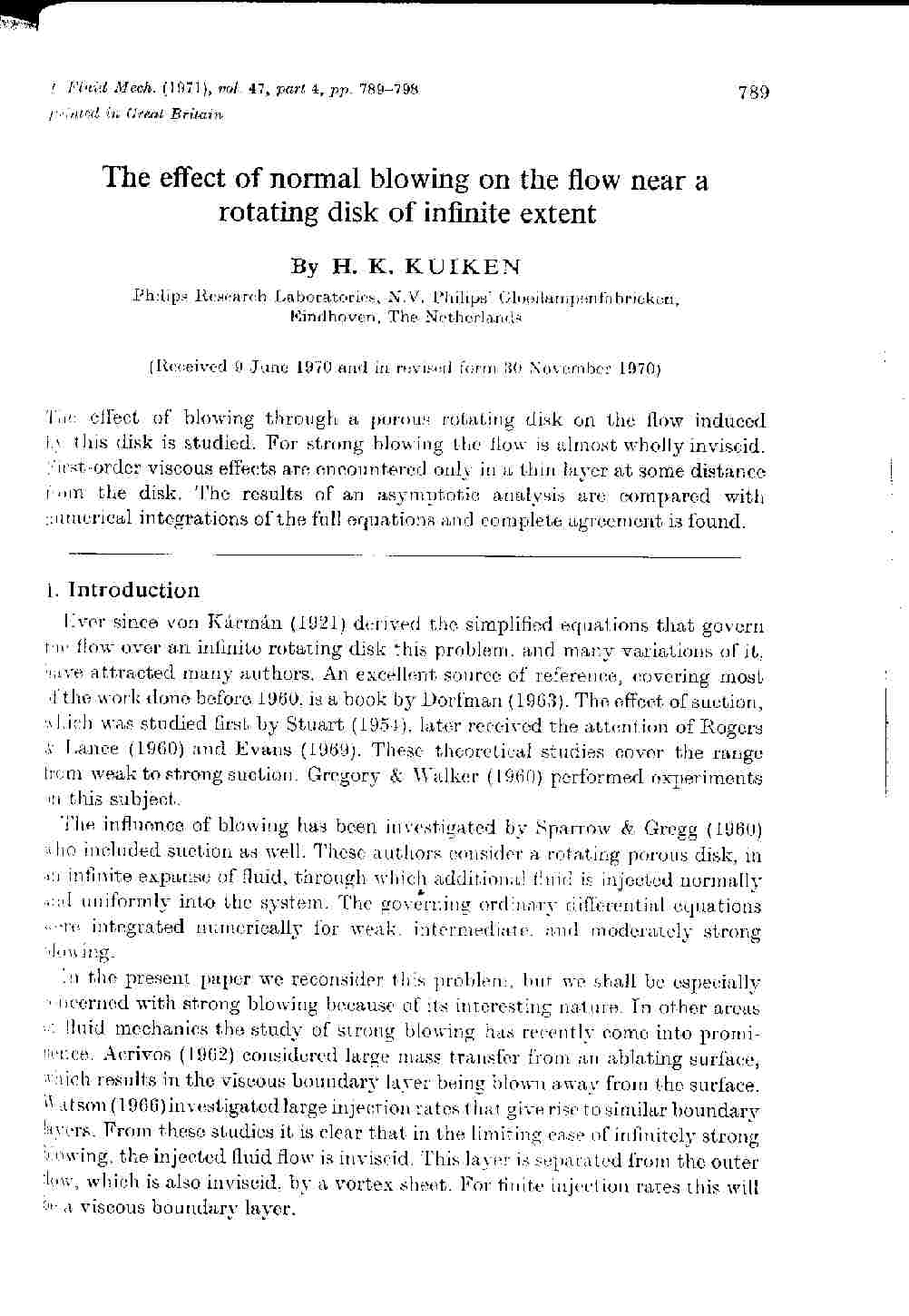
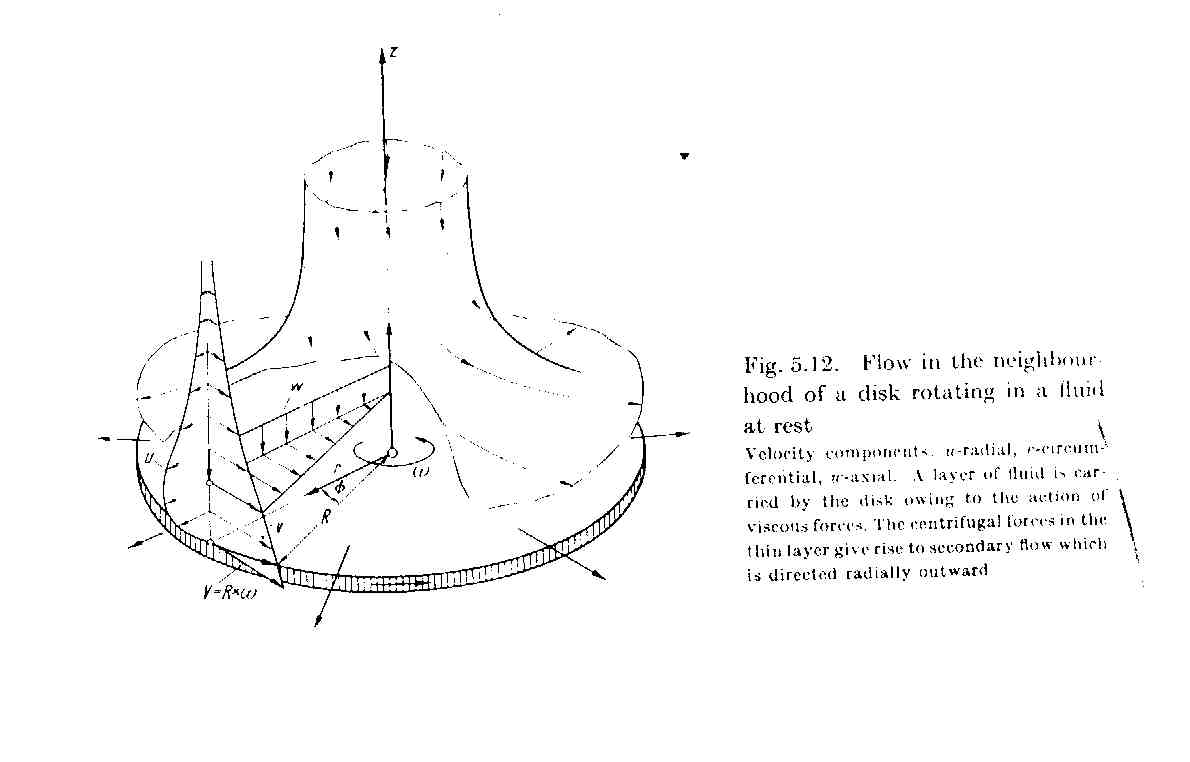
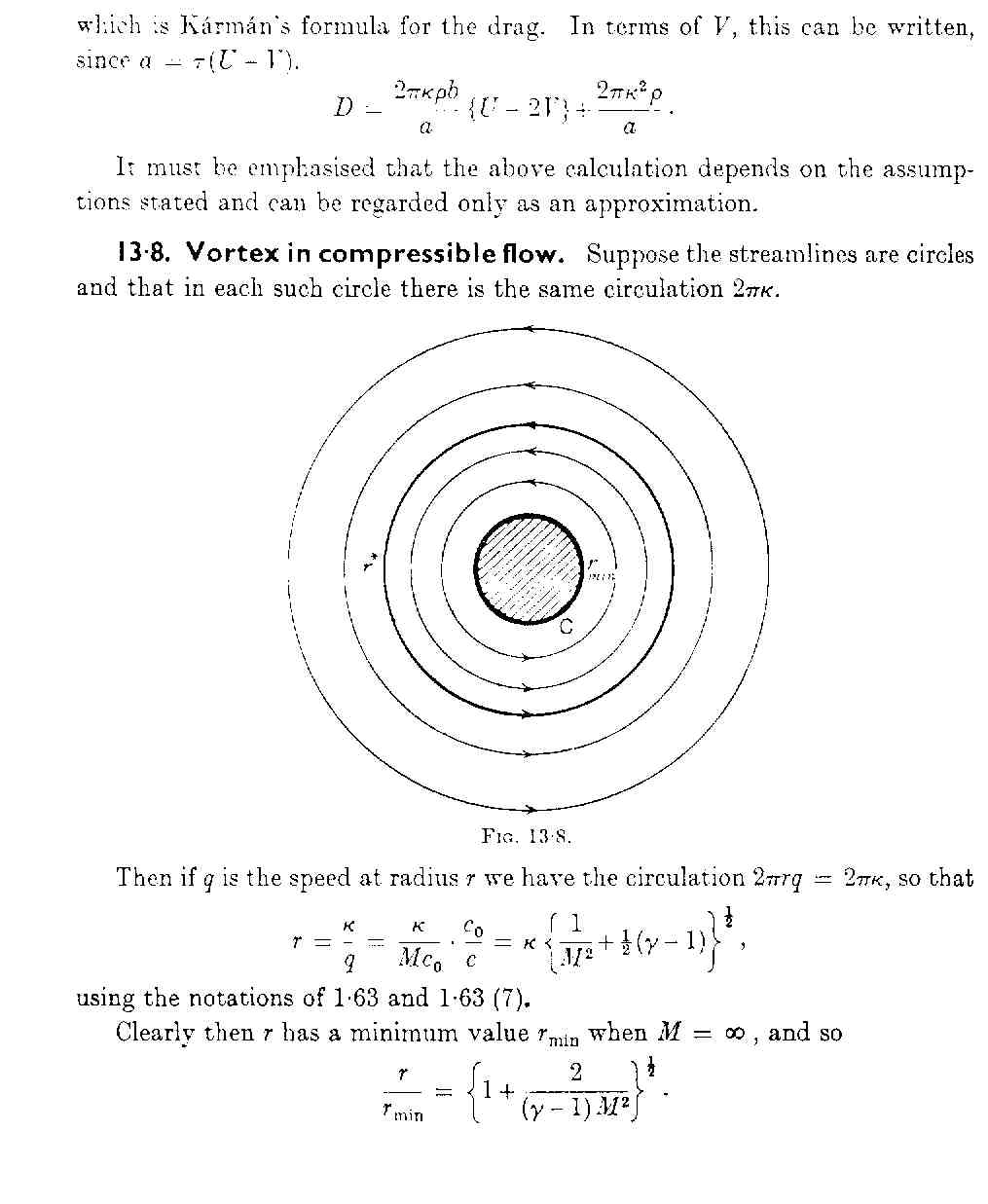
Disk Physics Several people expressed doubt at my claim (August 17 in rec.sport.disc) that HJ Kukuk was based on an actual real live engineer. Therefore I have placed an image of the first page of his almost famous article on the web at http:/www.geocities.com/gregu10/diskphysics.html The citation for the article is: HK Kuiken, "The effect of normal blowing on the flow near a rotating disk of infinite extent" Journal of Fluid Mechanics, Vol 47, Part 4, pp 789 to 798. Note that in papers like this the "infinite" assumption is made to simplify theoretical development and seems to be the origin of the practice of measuring things "to the wall" "Off the wall" would be a shock wave. As far as I believe Ed Headrick was not a part of Wham-O public relations during the time of the HJ Kukuk prank, but he returned to Wham-O afterwards. Some other images are available on the site, specifically the diagram from Schlichting's book on Boundary Layers that depicts the flows near a rotating disk, and the diagram from Milne-Thomson's book Theoretical Hydrodynamics that explains the equations of circular streamlines in compressible flow. Kuiken's conclusions include that the radial flow is entirely due to viscosity and centrifugal forces do not cause the flow. But Schlichting shows that most of the flow due to rotation is axial and not radial. Frankly, I think the Sparrow and Gregg article is more interesting, but that's just me. Also see my frisbee page, my Hall effect page, or my main page. Blog page. *** Other articles that relate to different parts of the flying disk problem include: Sparrow and Gregg, "Mass Transfer, Flow and Heat Transfer about a Rotating Disk" Gregory and Walker, "Experiments on the effect of suction on the flow due to a rotating disk" This article seems to show "prior art" for the Headrick patent 3,359,678 Goldstein, "On backward boundary layers and flow in converging passages" (such as cones) Rogers and Lance "The rotationally symmetric flow of a viscous fluid in the presence of an infinite rotating disk" Roberts and Shipman "Computation of flow between a rotating and a stationary disk" If you are working on your PhD, you will not want to neglect: Vaszonyi, "On Rotational Gas Flows" Scherberg, "Regions of Infinite Acceleration and Flow Realms in a Compressible Fluid" Stewart, "The Aerodynamics of a Ring Airfoil" (This is the Aerobee, but the math also relates to the rim of the Frisbee) Weinstein, "On axially symmetric flows" Benton, "Three dimensional flows inside a cylinder" (the rim again) Lugt and Schwiderski, "Temperature distributions in rotating flows normal to a flat surface" Batchelor, "Note on a class of solutions of the Navier-Stokes equations representing rotationally-symmetric flow" Holt, "A vortical singularity in conical flow" Carter, "On Unstable Vortex Motion" *** The heat transfer aspect is important for applications such as those envisioned by US Patent 5,836,543, and others. After browsing these articles it seems to me that the primary features of the Frisbee, in order of importance, are: 1)The stepped wing shape created by the leading edge of the rim, according to Klein-Fogelman wings. 2)The conical shaping of the bottom rim, which forces the radial flow from the bottom of the disk into a downward focused vortex. 3)The spoilers, Headrick ridges, or bumps along the outer half of the upper or lower surface that reduce the rotational flow Reynolds number which stabilizes the flow in the vortex. 4)The curvature of the edge of the upper surface which acts sometimes as a Bernoulli lifting surface and acts always to pull some of the top air downward through viscosity, and into the vortex, according to Coanda. Bernoulli forces seem to be important only in eliminating flutter and seeking a slightly nose up trajectory. *** The result is a stable flying object that flies at a constant velocity until the rotation is exhausted at which time it begins to curve and falls to the ground. Incidentally, early Frisbees such as the Pluto Platter had stepped upper plates, raised inner ridges called eskers, and "portholes" The stepped plates and eskers would have increased the focus of the upper radial flow. If the portholes had been punched out it would have created suction as envisioned by the Sparrow and Gregg article. This would control turbulence in the same way that the Headrick ridges do, and could also be used to provide thrust. Schlichting points out (page 649) that Goldstein's torque equation for a rotating disk is identical in form to the equation for friction in the universal pipe-resistance formula. I believe this means that a rotating disk in the absence of blowing needs to overcome the same resistance it would have if it were being forced up a pipe. Then it will rise at a constant speed, like fluid in a pipe. Let me know if you would like to obtain the full citation for any of these articles, or if you are a professor and would like to use them as teaching aids. Greg Utrecht [email protected] September 19, 2002 |