 FRUITFLY FACTS
Fruitfly Life Cycle
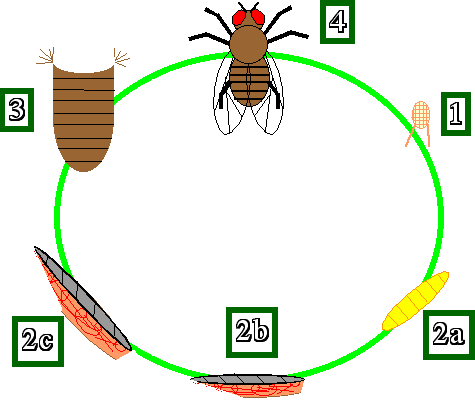
1. Egg - The eggs resemble an oval with two tails on one end ( the tails are called filaments ). Flies in the experiment lay their eggs on the clear medium in the vials and hatch after only one day.
2.( a, b, c) Larva - The larva have black mouth parts that help with it�s continuous eating. They begin to tunnel through the medium and the presence of these tunnels can tell you whether or not your fly population is large. There are three stages of larva development due to the shedding of it�s skin twice.
3. Pupa - A pupa is defined as a mature larva. These usually ascend the sides of the vial or the mesh in the middle. After a period of a time the outside of the pupa hardens and becomes a pupa case. Inside this the adult fly begins to form in a process called metamorphosis.
4. Adult - After the process of metamorphosis an adult fly emerges. They are very vulnerable when they have first emerged and should be stronger and darker after a few hours of drying. The flies can live for about a month and the females cannot mate until about twelve hours has passed. Female flies used must be virgins because they store sperm from mating to use later to fertilize. So if they are not virgins they may have sperm from a previous mating that could change the results of your experiment.
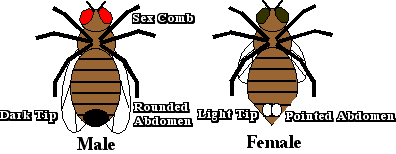
How To Sex Fruitflies
Mutations
1. Brown eyes - a recessive trait for eye color
2. Vestigial wings - cause the fly to have the inability to fly and is characterized by short, shriveled wings
Crosses
1. Sex-linked - When the inheritance originates form a gene on a sex chromosome, more specifically a X-chromosome.
2. Monohybrid - When the inheritance originates from a single characteristic that is contrasting.
3. Dihybrid - When the inheritance originates from two characteristics that are contrasting and simultaneous.
| Fruitfly Discussion | Fruitfly Facts | Fruitfly Graphs |
| Home | Books | Poet's Corner | Quotes | Artist's Pallet | Photographer's Dream | Science Lab | Favorite Links |