Capability Analysis:
How is it made?
Step 3 Sketch the distribution
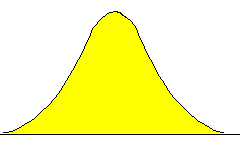
a. Draw the axis and normal curve.
Sketch a picture of the distribution. Begin by drawing a horizontal line (axis) about
3-5 inches long. Next, draw a normal (bell-shaped) curve centered on the horizontal axis.
The example completed through this point is shown below.
b. Draw in a vertical line to represent the grand average.
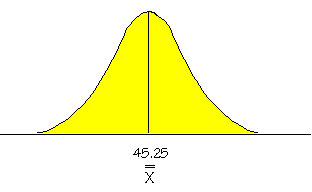
Draw a vertical line from the horizontal axis through the center of the curve, cutting
it in half. This line represents the grand average of the data, which is always located in
the center. Label the line with the value for the grand average and its symbol as shown
below. The value of the grand average in the example is 45.25. The example is shown below.
c. Determine the location of the tails.
Now that the curve is drawn, determine where (at what value) the tails or ends of the
curve are located. These values, where the tails of the curve are located, can be roughly
estimated by adding and subtracting three times the standard deviation (sigma hat) from
the grand average. Remember that for a normal distribution, plus or minus 3 times sigma
hat from includes 99.73% of the area under the curve. The standard deviation for the
example was calculated to be .45 and is 45.25, thus the values for the left and right hand
tails are:
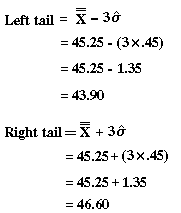
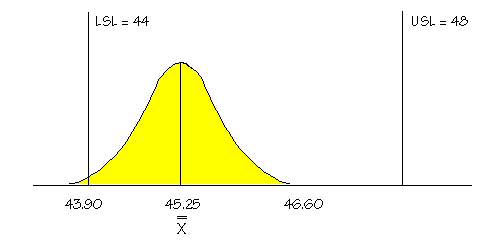
Label each tail with its value. The example completed through this step is shown below.
d. Draw the specification lines.
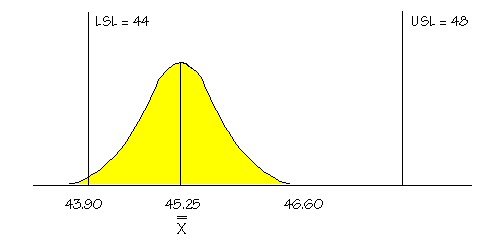
Draw vertical lines to represent the lower and upper specification limits. In the
example, the lower specification limit (LSL) is 44 and the upper specification limit (USL)
is 48. Estimate where the two lines would be located in reference to and the tails of the
curve. Draw the two vertical lines at these spots. Label each specification with its
abbreviation and value. The example completed through this step is shown below.
Previous�
����� �� Next
������������� How is it made Menu |
