 |
| Page 7 |
| "There are many afflictive emotions such as conceit, arrogance, jealousy, desire, lust, closed-mindedness, and so on. But of all of these, hatred or anger is singled out as the greatest evil. This is done for two reasons. One is that hatred or anger is the greatest stumbling block for a practitioner who is aspiring to enhance his or her altruism and attain a good heart. Second, when hatred or anger are generated they have the capacity to destroy one's virtue and calmness of mind. "I love friends, I want more friends. I love smiles. That is a fact. How to develop smiles? There are a variety of smiles. Some smiles are sarcastic. Some smiles are artificial-diplomatic smiles. These smiles do not produce satisfaction, but rather fear or suspicion. But a genuine smile gives us hope, freshness. If we want a genuine smile, then first we must produce the basis for a smile to come." The Dalai Lama |
 |
 |
| "Before my Enlightenment, while I was still only an unenlightened Bodhisattva, I thought: In the case of material form, of feeling (of pleasure, pain or neither), of perception, of formations, of consciousness, what is the gratification, what is the danger, what is the escape? Then I thought: In the case of each, the bodily pleasure and mental joy that arise in dependence on these five aggregates are the gratification; the fact that these things are all impermanent, pain-ful, and subject to change is the danger; the disciplining and abandoning of desire and lust for them is the escape. As long as I did not know by direct knowledge, as it actually is, that such was the gratification, such the danger, and such the escape, in the case of these five aggregates affected by clinging, so long did I make no claim to have discovered the Enlightenment that is supreme in the world with its desires, its Maras (the personification of all temptations to evil and distractions from training) and its divinities, in this generation with its monks and Brahmans, with its princes and men. But as soon as I knew by direct knowledge, as it actually is, that such is the gratification, such the danger, and such the escape, in the case of these five aggregates affected by clinging, then I claimed to have discovered the Enlightenment that is supreme in the world with its deities, its Maras and its divinities, in this generation with its monks and Brah-mans, with its princes and men. Being myself subject to birth, aging, ailment, death, sorrow, and defilement, seeing danger in what is subject to those things and seeking the unborn, unaging, unailing, deathless, sorrowless, undefiled supreme surcease of bondage, Nirvana, I attained it. The knowledge and vision was in me: My deliverance is unassail-able; this is my last birth; there is now no renewal being. Seeking but not finding the House Builder, I traveled through the round of countless births; O painful is birth ever and again. House Builder, you have now been seen; you shall not build the house again. Your rafters have been broken down; your ridgepole is shattered. My mind has attained the peace of Nirvana and reached the end of every kind of craving." Buddha |
|
| Beneath the sala trees at Kusinagara, in his last words to his disciples, the Buddha said: "Make of yourself a light. Rely upon yourself: do not depend upon anyone else. Make my teachings your light. Rely upon them: do not depend upon any other teaching. Consider your body: Think of its impurity. Knowing that both its pain and its delight are alike causes of suffering, how can you indulge in its desires? Consider your 'self'; think of its transiency: how can you fall into delusion about it and cherish pride and selfishness, knowing that they must all end in inevitable suffering? Consi-der all substances; can you find among them any enduring 'self'? Are they not all aggregates that sooner or later will break apart and be scattered? Do not be confused by the universality of suffering, but follow my teaching, even after my death, and you will be rid of pain. Do this and you will indeed be my disciples. My disciples, the teachings that I have given you are never to be forgotten or abandoned. They are always to be treasured; they are to be thought about, they are to be practiced. If you follow these teachings, you will always be happy. The point of the teachings is to control your own mind. Keep your mind from greed, and you will keep your behavior right, your mind pure and your words faithful. By always thinking about the transiency of your life, you will be able to resist greed and anger, and will be able to avoid all evils. If you find your mind tempted and so entangled in greed, you must suppress and control the tempta-tion; be the master of your own mind. A man's mind may make him a Buddha, or it may make him a beast. Misled by error, one becomes a demon; Enlightened, one becomes a Buddha. Therefore, control your mind and do not let it devi-ate from the right path. You should respect each other, follow my teachings, and refrain from disputes; you should not, like water and oil, repel each other, but should, like milk and water, mingle together. Study together, learn together, practice my teachings together. Do not waste your mind and time in idleness and quarreling. Enjoy the blossoms of En-lightenment in their season and harvest the fruit of the right path. The teachings which I have given you, I gained by following the path myself. You should follow these teachings and conform to their spirit on every occasion. If you ne-glect them, it means that you have never really met me. It means that you are far from me, even if you are actually with me; but if you accept and practice my teachings, then you are very near to me, even though you are far away. My disciples, my end is approaching, our parting is near, but do not lament. Life is ever changing: none can escape the dis-solution of the body. This I am now to show by my own death, my body falling apart like a dilapidated cart. Do not vain-ly lament, but realize that nothing is permanent and learn from it the emptiness of human life. Do not cherish the un-worthy desire that the changeable might become unchanging. The demon of worldly desires is always seeking chances to deceive the mind. If a viper lives in your room and you wish to have a peaceful sleep, you must first chase it out. You must break the bonds of worldly passions and drive them away as you would a viper. You must positively protect your own mind. My disciples, my last moment has come, but do not forget that death is only the end of the physical body. The body was born from parents and was nourished by food; just as inevitable are sickness and death. But the true Buddha is not a human body: - it is Enlightenment. A human body must die, but the Wisdom of Enlightenment will exist forever in the truth of the Dharma, and in the practice of the Dharma. He who sees merely my body, does not truly see me. Only he who accepts my teaching truly sees me. After my death, the Dharma shall be your teacher. Fol-low the Dharma and you will be true to me. During the last forty-five years of my life, I have withheld nothing from my teachings. There is no secret teaching, no hidden meaning; everything has been taught openly and clearly. My dear disciples, this is the end. In a moment, I shall be passing into Nirvana. This is my instruction." |
 |
| It is hard, indeed, to feel humble, to know respect and honor, to get rid of all attachments, to keep pure in thought and deed, and to become wise. As a knight guards his castle gate, so one must guard one's mind from dangers outside and dangers inside; one must not neglect it for a moment. The sky holds no trace of bird or smoke or storm; an evil teaching carries no Enlightenment; nothing in this world is stable; but an Enlightened mind is undisturbed. It is easy to point out the mistakes of others, while it is hard to admit one's own mistakes. A man broadcasts the sins of others without thinking, but he hides his own sins as a gambler hides his extra dice. Everyone is the master of himself, he is the oasis he can depend on; therefore, everyone should control himself above all. The sun makes the day bright, the moon makes the night beautiful, discipline adds to the |
| dignity of a warrior; so quiet meditation distinguishes the seeker for Enlightenment. The first steps toward spiritual freedom from the worldly bonds and fetters are to control one's mind, to stop idle talk, and to be somewhat pensive. He who is unable to guard his five senses of eyes, ears, nose, tongue and body, and becomes tempted by his surroundings, is not the one who can train for Enlightenment. He who firmly guards the gateways of his five senses and keeps his mind under control is the one who can successfully train for Enlightenment. He who is influenced by his likes and dislikes can not rightly understand the significance of circumstances and tends to be overcome by them; he who is free from attachments rightly understands circumstances and to him all things become new and significant. "I find that giving a discourse based on religious texts is a good way of showing that religion has a lot to tell us, no matter what situation we find ourselves in. However, I am better at it now than I was in the beginning. In those days I lacked confidence, although it improved every time I spoke in public. Also, I found, as every teacher does, that there is nothing like teaching to help one learn. "Whoever excludes others will find himself excluded in turn. Those who affirm that their God is the only God, are doing something dangerous and pernicious, because they are on the way to imposing their beliefs on others, by any means possible." The Dalai Lama |
 |
|
|
 |
 |
| Let no one be discouraged by the belief there is nothing one man or woman can do against the enormous array of the world's ills - against misery and ignorance, injustice and violence... few will have the greatness to bend history itself, but each of us can work to change a small portion of events, and in the total of all those acts will be written the history of this generation... It is from numberless, diverse acts of courage and belief that human history is shaped. Each time a person stands up for an ideal, or acts to improve the lot of others, or strikes out against injustice, he sends forth a tiny ripple of hope, and, crossing each other from a million different centers of energy and daring, these ripples build a cur-rent that can sweep down the mightiest walls of oppression and resistance. JFK |
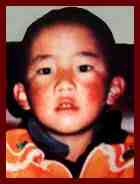
| Support The Dalai Lama and Tibet. Contact your government's representatives now and tell them to work for a free Tibet and to also seek the release of the 11th Panchen Lama - Gendhun Choekyi Nyima, who has been held by China, in seclusion, since May 17, 1995. He is now 12 years old. Gendhun Choekyi Nyima is considered the youngest political prisoner in the world! |
 |
|
| "To worry in anticipation or to cherish regret for the past is like the reeds that are cut and wither away." |
|
| FAITH Those who seek refuge in the three treasures, the Buddha, the Dharma and the Sangha, are called the disci-ples of Buddha. The disciples of Buddha observe the four parts of mind-control - the precepts, faith, offering and wis-dom. The disciples of Buddha practice the five precepts: not to kill, not to steal, not to commit adultery, not to lie, and not to take intoxicants of any kind. The disciples of Buddha have faith in the Buddha's perfect wisdom. They try to keep away from greediness and selfishness and to practice offering. They understand the law of cause and effect, keeping in mind the transiency of life and conform to the norm of wisdom. A tree leaning toward the east will naturally fall east-ward and so those who listen to the Buddha's teaching and maintain faith in it will surely be born in the Buddha's Pure Land. It has rightly been said that those who believe in the three treasures of the Buddha, the Dharma and the Sangha are called the disciples of Buddha. The Buddha is the one who attained perfect Enlightenment and used His attainment to emancipate and bless all mankind. The Dharma is the truth, the spirit of Enlightenment and the teaching that ex-plains it. The Sangha is the perfect brotherhood of believers in the Buddha and Dharma. We speak of Buddhahood, the Dharma and the Brotherhood as though they are three different things, but they are really only one. Buddha is man-ifested in His Dharma and is realized by the Brotherhood. Therefore, to believe in the Dharma and to cherish the Brotherhood is to have faith in the Buddha, and to have faith in the Buddha means to believe in the Dharma and to cherish the Brotherhood. Therefore, people are emancipated and Enlightened simply by having faith in the Buddha. Buddha is the perfectly Enlightened One and He loves everyone as though each were His only child. So if anyone re-gards Buddha as his own parent, he identifies himself with Buddha and attains Enlightenment. Those who thus regard Buddha will be supported by His wisdom and perfumed by His grace. Nothing in the world brings greater benefit than to believe in Buddha. Just hearing Buddha's name, believing and being pleased even for a moment, is incomparably re-warding. Therefore, one must please oneself by seeking the teaching of Buddha in spite of the conflagration that fills all the world. It will be hard to meet a teacher who can explain the Dharma; it will be harder to meet a Buddha; but it will be hardest to believe in His teaching. But now that you have met the Buddha, who is hard to meet, and have had it ex-plained to you what is hard to hear, you ought to rejoice and believe and have faith in Buddha. On the long journey of human life, faith is the best of companions; it is the best refreshment on the jealousy; and it is the greatest posses- sion. Faith is the hand that receives the Dharma; it is the pure hand that receives all the virtues. Faith is the fire that consumes all the impurities of worldly desires, it removes the burden, and it is the guide that leads one's way. Faith re-moves greed, fear and pride; it teaches courtesy and to respect others; it frees one from the bondage of circumstances; it gives one courage to meet hardship; it gives one power to overcome temptations; it enables one to keep one's deeds bright and pure; and it enriches the mind with wisdom. Faith is the encouragement when one's way is long and weari-some, and it leads to Enlightenment. Faith makes us feel that we are in the presence of Buddha, and it brings us to where Buddha's arm supports us. Faith softens our hard and selfish minds and gives us a friendly spirit and a mind of understanding sympathy. Those who have faith gain the wisdom to recognize the Buddha's teaching in whatever they hear. Those who have faith gain the wisdom to see that everything is but the appearance that arises from the law of causes and conditions, and then faith gives them the grace of patient acceptance and the ability to conform to their con-ditions peacefully. Faith gives them the wisdom to recognize the transiency of life and grace not to be surprised or grieved at whatever comes to them or with the passing of life itself, knowing that, however conditions and appearances may change, the truth of life remains always unchanged. Faith has three significant aspects: repentance, a rejoicing |
| ture; it is difficult to maintain a pure mind in the constant rise and fall of greed, anger and worldly passion; yet faith enables one to do it. Within the forest of the poisonous Eranda trees, only Eranda trees are said to grow, but not the fragrant Chandana. It is a miracle if a Chandara tree grows in an Eranda forest. Likewise, it is often a miracle that faith in Buddha grows in the heart of the people. Therefore, the faith to believe in Buddha is called a "rootless" faith. This is, it has no root by which it can grow in the human mind, but it has a root to grow in the compassionate mind of Buddha. Thus, faith is fruitful and sacred. But faith is hard to awaken in an idle mind. In particular, there are five doubts that lurk in the shadows of the human mind and tend to discourage faith. First, there is doubt in the Buddha's wisdom; second, there is doubt in the Buddha's teaching; third, there is doubt in the person who explains the Buddha's teachings; fourth, there is doubt as to whether the ways and methods suggested for following the Noble Path are reli-able; and fifth, there is a person who, because of his arrogant and impatient mind, may doubt the sincerity of others who understand and follow the Buddha's teachings. Indeed, there is nothing more dreadful than doubt. Doubt separates people. It is a poison that disintegrates friendships and breaks up pleasant relations. It is a thorn that irritates and hurts; it is a sword that kills. The beginnings of faith were long ago planted by the compassion of Buddha. When one has faith, one should realize this fact and be very grateful to Buddha for His goodness. One should never forget that it is not because of one's own compassion that one has awakened faith, but because of the Buddha's compassion which long ago threw its pure light of faith into human minds and dispelled the darkness of their ignorance. He who enjoys the present faith has entered into their heritage. Even living an ordinary life, one can be born in the Pure Land, if he awakens faith through the Buddha's long continued compassion. It is, indeed, hard to be born in this world. It is hard to hear the Dharma; it is harder to awaken faith; therefore, everyone should try one's best to hear the Buddha's teach-ings. |
 |
| and sincere respect for the virtues of others, and a grateful acceptance of Buddha's appearance. People should cultivate these aspects of faith; they should be sensitive to their failings and im-purities; they should be ashamed of them and confess them; they should diligently practice the recognition of the good traits and good deeds of others and praise them for their sake; and they should habitually desire to act with Buddha and to live with Buddha. The mind of faith is the mind of sincerity; it is a deep mind, a mind that is sincerely glad to be led to Buddha's Pure Land by His power. Therefore, Buddha gives a power to faith that leads people to the Pure Land, a power that purifies them, a power that protects them from self-delusion. Even if they have faith only for a moment, when they hear Buddha's name praised all over the world, they will be led to His Pure Land. Faith is not something that is added to the worldly mind - it is the manifestation of the mind's Buddha-nature. One who understands Buddha is a Buddha himself; one who has faith in Buddha is a Buddha himself. But it is difficult to uncover and recover one's Buddha na- |
|
| Happiness follows sorrow, sorrow follows happiness, but when one no longer discriminates between happiness and sorrow, a good deed and a bad deed, one is able to realize freedom. The secret of health for both mind and body is not to mourn for the past, not to worry about the future, or not to anticipate troubles, but to live wisely and earnestly for the present. Do not dwell in the past, do not dream of the future, concentrate the mind on the present moment. It is worthy to perform the present duty well and without failure; do not seek to avoid or postpone it till tomorrow. By acting now, one can live a good day. Wisdom is the best guide and faith is the best companion. One must try to escape from the darkness of ignorance and suffering, and seek the light of Enlightenment. If a man's body and mind are under control he should give evidence of it in virtuous deeds. This is a sacred duty. Faith will then be his wealth, sincerity will give his life a sweet savor, and to accumulate virtues will be his sacred task. On life's journey, faith is nourishment, virtuous deeds are a shelter, wisdom is the light by day and right mindfulness is the protection by night. If a man lives a pure life, nothing can destroy him; if he has conquered greed, nothing can limit his freedom. One should forget oneself for the sake of one's family; one should forget one's family for the sake of one's village; one should forget one's village for the sake of the nation; and one should forget everything for the sake of Enlightenment. Everything is changeable, everything appears and disappears; there is no blissful peace until one passes beyond the agony of life and death. Disclaimer: All articles and/or images retain the original copyrights of their original owners. Buddha's Teaching courtesy Bukkyo Dendo Kyokai, Tokyo. |
| December 19, 2004 |
 |