| Page 6A |
 |
 |
| December 19, 2004 |
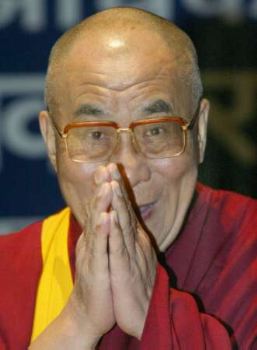
| "One of the most important practices is that of tolerance, patience. Tolerance can be learned only from an enemy; it cannot be learned from your guru. At these lectures, for instance, you cannot learn tolerance, except perhaps when you are bored! However, when you meet your enemy who is really going to hurt you, then, at that moment you can learn tolerance. Shantideva makes a beautiful argument; he says that one's enemy is actually a good spiritual guide because in dependence upon an enemy one can cultivate patience, and in dependence up patience one accumulates great power of merit. Therefore, it is as if an enemy were purposefully getting angry in order to help you accumulate merit. "Inner development comes step by step. You may think 'Today my inner calmness, my mental peace is very small,' but still, if you compare, if you look five, ten, or fifteen years back, and think, 'What was my way of thinking then? How much inner peace did I have then and what is it today?' - comparing it with what it was then, you can realize that there is some progress, there is some value. This is how you should compare - not with today's feeling and yesterday's feeling, or last week or last month, even not last year, but five years ago. Then you can realize what improvement has occurred internally. Progress comes by maintaining constant effort in daily practice. "When we speak of mental awareness, it does not always refer only to the |
 |
| subtle awareness. From the time of conception to the time of death, the body is obviously functioning in some way, but when the body ceases to function as a body, there is still a very subtle form of consciousness and that is independent of the body. The fact that the body is able to act as a basis for mental events is dependent on the pre-existence of a subtle form of consciousness. "Let's say that I compare myself to an insect. I am a follower of the Buddha, and a human being equipped with the capacity to think and, supposedly, to be able to judge between right and wrong. I am also supposed to have some knowledge of the fundamental teachings of the Buddha, and theoretically I am committed to these practices. Yet when I find certain negative tendencies arising in me, or when I carry out negative actions on the basis of these impulses, then from that point of view there is certainly a case to be made that I am in some ways inferior to the insect. After all, an insect is not able to judge between right and wrong in the way humans can, it has no capacity to think in a long-term way and is unable to understand the intricacies of spiritual teachings, so from the Buddhist point of view, whatever an insect does is the result of habituation and karma. By comparison, human beings have the ability to determine what they do. If, despite this, we act negatively then it could be argued that we are inferior to that innocent insect! So when you think along these lines, there are genuine grounds for seeing ourselves as inferior to all other sentient beings." The Dalai Lama |
 |
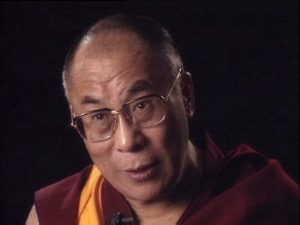 |
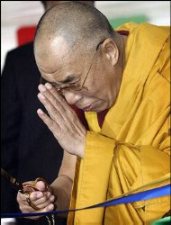
| What is Renunciation? We would all like to be free from ego mind and the bondage of sams�ra, but what is it that binds us to sams�ra and makes us unhappy? It�s not having renunciation. So, what is renunciation? What makes us renounced? The reason we are unhappy is that we have extreme craving for sense objects, samsaric objects, and we grasp at them. We are seeking to solve our problems, but we are not seeking in the right place. The right place is our own ego grasping; we have to loosen that tightness, that�s all. According to the Buddhist point of view, monks and nuns are supposed to hold renunciation vows. The meaning of monks and nuns renouncing the world is that they have less craving for and grasping at sense objects. But you cannot say that they have already given up sams�ra, because monks and nuns still have stomachs! The thing is that the English word "renounce" is linguistically tricky. You can say that monks and nuns renounce their stomachs, but that doesn�t mean that they actually throw their stomachs away. So, I want you to understand that renouncing sensory pleasure doesn�t mean throwing nice things away. Even if you do, it doesn�t mean you have renounced them. Renunciation is a totally inner experience. Renunciation of sams�ra does not mean you throw sams�ra away because your body and your nose are sams�ra. How can you throw your nose away? Your mind and body are sams�ra - well, at least mine are. So I cannot throw them away. Therefore, renunciation means less craving; it means being more reasonable instead of putting too much psychological pressure on yourself and acting crazy. The important point for us to know, then, is that we should have less grasping at sense pleasures, because most of the time our grasping at and craving desire for worldly pleasure does not give us satisfaction. That is the main point. It leads to more dissatisfaction and to psychologically crazier reactions. If you have the wisdom and method to handle objects of the five senses perfectly such that they do not bring negative reactions, it�s all right for you to touch them. And, as human beings, we should be capable of judging for ourselves how far we can go into the experience of sense pleasure without getting mixed up and confused. We should judge for ourselves; it is completely up to individual experience. It�s like French wine - some people cannot take it at all. Even though they would like to, the constitution of their nervous system doesn�t allow it. But other people can take a little; others can take a bit more; some can take a lot. Now, I want you to understand why Buddhist scriptures completely forbid monks and nuns from drinking wine. It is not because wine is bad; grapes are bad. Grapes and vines are beautiful; the color of red wine is fantastic. But because we are ordinary beginners on the path to liberation, we easily get caught up in negative energy. That�s the reason. It is not that wine itself is bad. This is a good example for renunciation. Who was the great Indian saint who drank wine? Do you remember that story? I don�t recall who it was, but this saint went into a bar and drank and drank until the bartender finally asked him, "When are you going to pay?" The saint replied, "I�ll pay when the sun sets." But the sun didn�t set and the saint just kept on drinking. The bartender wanted his money but somehow the saint controlled the sun, and didn�t allow it to set. These kinds of higher realization - s we can call them miraculous or esoteric realizations - are beyond the comprehension of ordinary people like us, but the saint in this story was able to control the sun and drank perhaps thirty gallons of wine. And he didn�t even have to pee! Now, my point is that renunciation of sams�ra is not only the business of monks and nuns. Whoever seeks liberation or enlightenment needs renunciation of sams�ra. If you check your own life, your own daily experiences, you will see that you are caught up in small pleasures - we Buddhists consider such grasping to be a tremendous hang-up and of very little value. However, the Western way of thinking - "I should have the best; the biggest" - is similar to our Buddhist attitude that we should have the best, most lasting, perfect pleasure rather than spending our lives fighting for the pleasure of a glass of wine. Therefore, you need to abandon your grasping attitude and other useless actions and actualize things that make your life meaningful and liberated. However, I don�t want you to understand only the philosophical point of view. We are capable of examining our own minds and comprehending what kind of mind brings everyday problems and is not worthwhile, both objectively and subjectively. This is the way that meditation allows us to correct our attitudes and actions. Don�t think, "My attitudes and actions come from my previous karma, therefore I can�t do anything." That�s a misunderstanding of karma. Don�t think, "I am powerless." Human beings do have power. We have the power to change our lifestyles, change our attitudes, and change our habits. We can call that capacity Buddha potential, God potential or whatever you want to call it. That�s why Buddhism is simple. It is a universal teaching that can be understood by all people, religious or non-religious. The opposite of renunciation of sams�ra - to put what I�m saying another way - is the extreme mind that we have most of the time: the grasping, craving mind that gives us an overestimated projection of objects, which has nothing to with the reality of those objects. But you should understand that Buddhism is not saying that objects have no beauty whatsoever. They do have beauty - a flower has a certain beauty, but that beauty is only conventional, or relative. The craving mind, however, projects onto an object something that is beyond the relative level, which has nothing to do |
| with that object, that hypnotizes us. That mind is hallucinating, deluded and holding onto a mistaken entity. Without intensive observation or introspective wisdom, we cannot discover this. For that reason, Buddhist meditation includes checking. We call checking in this way "analytical meditation." It involves logic; it involves philosophy. So, Buddhist philosophy and psychology help us see things better. Therefore, analytical meditation is a scientific way of analyzing our own experience. Finally, I also want you to understand that monks and nuns may not be renounced at all. It�s true, isn�t it? In Buddhism, we talk about superficial structure and universal structure. So when we say monks and nuns renounce, it means we�re trying, that�s all. Westerners sometimes think monks and nuns are holy. We�re not holy; we�re just trying. That�s reasonable. Don�t overestimate again, on that. Lay people, monks and nuns - we�re all members of the Buddhist community. We should understand each other well and then let go; leave things as they are. It�s unhealthy to have overestimated expectations of each other. (By Lama Thubten Yeshe. Used with permission from Dr. Nicholas Ribush - www.lamayeshe.com) |
|
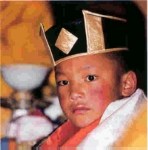
| A Joyful Aspiration: Sweet Melody for Fortunate Ones... (Somewhere between Lhasa and Dharamsala - appx. January, 2000) "One night in the illusory appearance of a dream, on a lake bathed in clear moonlight and rippled with blooming lotus flowers serving as a seat for three Brahmins who appeared wearing pure white silk and playing a drum, guitar, flute and other instruments." by His Holiness The Seventeenth Karmapa. Om Swasti. The right-turning conch of pure compassion in body, speech, and mind pours forth a stream of good intentions that never change. Thereby, may a sweet, resonant melody beyond compare, such music for the ears, open the lotus petals of virtue, excellence, and goodness. It has the supreme name of the Wish Fulfilling Tree, the ambrosial one. Musical tones of this stainless tree, granting every wish, are dulcet and pleasing. Throughout its branches the gems of lasting happiness nestle among their leaves. Sovereign in our realm, may the world be resplendent with the beauty of this tree. Aspiration for Tibet... A chain of fragrant flowers, these snow mountains are tranquil and fresh. In a healing land where white incense rises sweet, may the gracious beauty of luminous moonbeams, light of the spiritual and temporal worlds, conquer all strife, the darkness of the shadow side. Aspiration for the Dalai Lama,,, Inspiring festivals of merit in the Land of Snow, you are the Supreme One holding a pure white lotus. With the beauty of all good qualities, a treasure for eyes to behold, May your life be long, steadfast as a diamond vajra. Aspiration for Culture and Knowledge,,, The most excellent virtue is the brilliant and calm flow of culture: Those with fine minds play in a clear lotus lake; through this excellent path, a song line sweet like the pollen's honey, may they sip the fragrant dew of glorious knowledge. Aspiration for the World... Over the expanse of the treasured earth in this wide world, may benefit for beings appear like infinite moons' reflections, whose refreshing presence brings lasting welfare and happiness to open a lovely array of night-blooming lilies, signs of peace and joy. Conclusion... Descending from a canopy of white clouds, the gathering of two accumulations, may these true words, like pearled drops of light or pouring rain, falling in a lovely park where fortunate disciples are free of bias, open the flowers of friendship so that well-being and joy blossom forth. These words of aspiration, sprung from a sincere intention, were written down by Ugyen Trinley, the one who bears the noble name of the Karmapa, while he was escaping from Tibet. "One night in the illusory appearance of a dream, on a lake bathed in clear moonlight and rippled with blooming lotus flowers serving as a seat for three Brahmins who appeared wearing pure white silk and playing a drum, guitar, flute and other instruments. Created in pleasing and lyric tones, their melodious song came to my ears, and so I composed this aspiration prayer with a one-pointed mind, filled with an intense and sincere intention to benefit all the people of Tibet. Within a beautiful and auspicious chain of mountains, this land of Tibet, may the sun rays of the supreme aspiration for awakening swiftly appear." |
 |
|
| "NAMASTE" This simple word uttered with a gesture of folded hands is among the finest salutations mankind has ever been able to vocalize. It simply means: "I honor the place in you In which the entire Universe dwells. That place of Love and Light and of Truth and of Peace. When you are in that place in you, and I am in that place in me, we are One." "Through many births I sought in vain, the Builder of this House of Pain. Now, Builder, you are plain to see, and from this House at last I'm free; I burst the rafters, roof and wall, and dwell in the Peace beyond them all." Buddha "How sure his pathway in this wood, who follows truth's unchanging call! How blessed, to be kind and good, and practice self-restraint in all! How light, from passion to be free, and sensual joys to let go by! |
| And yet his greatest bliss will be when he has quelled the pride of 'I'. "Finish each day and be done with it. You have done what you could; some blunders and absurdities have crept in; forget them as soon as you can. Tomorrow is a new day; you shall begin it serenely and with too high a spirit to be encumbered with your old nonsense." -Ralph Waldo Emerson |
|
| Visit Our Main (Dalai Lama) Sites. More information, images and no pop-ups. |
| What is a Religious Person?... It is a common mistake to think that a religious person is someone who is afraid of new and potentially challenging situations that might threaten their beliefs. As true religion is the very light of wisdom, why should a religious person ever be afraid of darkness? Similarly, the clean, clear light of wisdom-knowledge cannot be disturbed by confused and foggy states of mind. Nor is the spirit of scientific investigation in any way contrary to true religion. After all, scientific experiments do not contradict the light of the sun and moon, so why should they be opposed to the light of inner wisdom? The weak - those who lack the discriminating eye of wisdom - accept religious beliefs passively. Having no background in philosophic thought and ignorant of the reasons supporting their faith, they experience great uneasiness when someone questions their beliefs. Such people often live closely guarded lives, fearful of encountering someone or something that might shatter their insecure spiritual foundation. This attitude, however, is not the fault of religion, but of their own limited understanding. True Dharma leads in exactly the opposite direction. It enables one to integrate all the many diverse experiences of life into a meaningful and coherent whole, thereby banishing fear and insecurity completely. Of course, the type of philosophy and logical thinking that underlies true religious belief is not exactly the same as that taught in schools. Mathematical logic, for instance, enables you to deal with a certain strictly defined external problem in a reasonable manner. The problem is restricted in scope and the solution that is found completely satisfies. Dharma logic, on the other hand, has a much higher and more encompassing goal. It deals with inner problems and looks for solutions to the most important questions in life: how to find happiness and avoid suffering for oneself and others. When you arrive at solutions using such Dharma logic you find that you have not merely answered one isolated problem but have discovered the interrelatedness of many inner processes previously thought to be unconnected. This type of reasoning, therefore, is very demanding for you must continually cheek up and investigate the many bows and whys you uncover. But it is also ultimately more satisfying because it affects the very quality of your life. How do you apply this inner Dharma logic? Perhaps you feel unhappy and as a result the thought of hatred starts to arise within you. Rather than observing this process passively or being swept along by it involuntarily, you should investigate what is happening. Try to discover why you are unhappy and cheek to see if hatred is an appropriate response. In other words, ask yourself whether what you are about to express will improve your situation or not. Making such an analysis is not an act of neurotic self-preoccupation. Rather, it is a way to reveal the light of an answer to your problems. Such questioning then is a process of causation in that it leads to a solution. It is the same as a scientist trying experiment after experiment in order to come up with the best answer to his problem. While making inner experiments, you should ask yourself a series of questions in the same way. By doing this properly you will develop and mature spiritually and as a result will overcome the uneasiness and dissatisfaction gnawing at your life. You will be able to analyze your growing hatred, for example, and discover not only its causes but an effective way to disperse and eventually eliminate it. We often suffer from strong desire or craving for something. This arises from uncontrolled happy feelings experienced in relation to that object. When such feelings arise you have to check up and see clearly what is happening. It is very important to investigate why these happy feelings produce the uneasiness of craving and desire. Similarly, when you are unhappy try to discover why such a feeling leads automatically to hostility. Sometimes you feel neither happy nor unhappy about something. This medium feeling often leads to mental fogginess, an ignorant state in which you do not wish to be bothered about considering the object at all. These three ways of responding to your experiences are not always gross and obvious but often so subtle as to be barely noticeable. As humans we are under their influence at all times even though we are usually unaware of it. Therefore, if you wish to train your mind, you must sharpen your wisdom and become more conscious of what is actually happening within. When you look closely at the main characteristics of your feelings and see how they function, you discover something very interesting. If I can make a statement here: All psychological problems come from feelings. When a happy one arises your uncontrolled mind is tossed here and there by it. When it is an unhappy feeling then of course your mind is uncontrolled and it is obvious that problems arise in its wake. Even medium feelings, which are not particularly pleasurable or painful, lead eventually to problems and sufferings. You wish to ignore whatever aroused those in-between feelings and therefore you avoid exploring its reality. This reaction of closing yourself off from something is the very nature of ignorance and is totally contrary to the development of liberating wisdom-knowledge. While it's true that feelings produce desire, hatred and other psychological problems, this is only half the story. These psychological states in turn arouse further disturbing feelings. It is a circle. Each is the cause of the other and they all spin endlessly in our consciousness occupying nearly all our time and energy. (By Lama Thubten Yeshe. Used with permission from Dr. Nicholas Ribush - www.lamayeshe.com) |
|
| Bardo, the State Between Lives... The following excerpts are drawn from a Tibetan classic on death and dying entitled Liberation through Hearing in the Intermediate State, attributed to Padmasambhava. According to the tradition, it was hidden by Padmasambhava and rediscovered by the "treasure finder" Karma Lingpa in the fourteenth century. The book describes the "intermediate state" (bardo; translated here as "the between") that all beings are said to enter after death. During the process of dying, the physiological changes that occur are accompanied by mental changes in which the coarser levels of mind drop away, revealing progressively more subtle aspects of consciousness. At the moment of death, the most subtle level of mind dawns. This is called the "mind of clear light," and compared to it all other minds are adventitious. At this point one enters the intermediate state and experiences strange and terrifying sights. These are all said to be aspects of one's own mind, and they include visions of mild and terrifying beings, deafening sounds, and other intense sense experiences. The intermediate state is a time of great opportunity, however, and if one is able to maintain awareness and focus on the clear light nature of mind and perceive all experiences as merely aspects of mind, one may become a Buddha, or at least attain rebirth in the pure land of a Buddha. In such places the conditions are optimal for beings who seek Buddhahood. If one is unable to maintain mindfulness, one will be reborn in accordance with one's accumulated karma. Hey! Now when the life between dawns upon me, I will abandon laziness, as life has no more time, unwavering, enter the path of learning, thinking, and meditating, and taking perceptions and mind as a path, I will realize the Three Bodies of Enlightenment! Conscious of dreaming, I will enjoy the changes as clear light. Not sleeping mindlessly like an animal, I will cherish the practice merging sleep and realization!... Now when the death-point between dawns upon me, I will give up the preoccupations of the all-desiring mind, enter unwavering the experience of the clarity of the precepts, and transmigrate into the birthless space of inner awareness; about to lose this created body of flesh and blood, I will realize it to be impermanent illusion!... I will enter into the recognition of all objects as my mind's own visions, and understand this as the pattern of perception in the between; come to this moment, arrived at this most critical cessation, I will not fear my own visions of deities mild and fierce!... Now courage and positive perception are essential. Milarepa on Meditation... Milarepa, one of the most influential figures in Tibetan Buddhism, was born into a fairly well-to-do family, but his greedy aunt and uncle took everything away from him, his mother, and sister. Overcome by rage, his mother coerced Milarepa into learning black magic and sending a curse on the aunt and uncle, with the result that a number of people died, but not the primary objects of his revenge. Milarepa, terrified of the consequences of his evil deeds, searched for a spiritual guide (lama) who could help him escape the consequences of his actions. He eventually found Marpa, who gave Milarepa a series of difficult and dispiriting tasks, which cleansed his negative karma. After this Milarepa spent many years living in a cave and practicing solitary meditation, which culminated in his attainment of awakening. He is considered in Tibet to be the supreme example of the attainment of Buddhahood in one lifetime through tantric practice. Look up into the sky, and practice meditation free from the fringe and center. Look up at the sun and moon, and practice meditation free from bright and dim. Look over the mountains, and practice meditation free from departing and changing. Look down at the lake, and practice meditation free from waves. Look here at your mind, and practice meditation free from discursive thought. The Joys of Solitude... In the following poem, Milarepa celebrates the joy of solitary meditation. His biography reports that during his stay in the wilderness, a number of people tried to convince him that such a life was unpleasant, to which he replied that because he had discovered the natural luminosity of mind all phenomena appeared as the interplay of luminosity of emptiness, and that as a result he lived in a constant state of sublime happiness. This mountainous area is a happy place, a place of meadows and bright flowers. The trees move in the forest; it is a place in which monkeys play. The birds sing various kinds of songs, and bees whirl and hover. Day and night a rainbow shines, and in summer and winter a gentle rain falls. In spring and fall a mist moves in. In this sort of solitude Mila, wearing cotton clothes, has found happiness. Because I perceive the clear light and contemplate the emptiness of phenomena. I am happy when things appear before me, And happier when more [appear], because my body is free from evil actions. The realm in which a strong mind wanders is a happy one, and I find happiness in my spontaneous strength. |
| Selections from Tibetan Buddhist Texts - Ultimate Reality... The "great completion" (dzogchen) tradition of Tibetan Buddhism is practiced by all of the four main schools -- Nyingma, Kagyu, Sakya, and Geluk --but most closely associated with the Nyingma. In this system all phenomena are said to be creations of mind that, like mind, are a union of luminosity and emptiness. In the following passage, the appearances of things to the mind are compared to the reflections of forms in a mirror. Ultimate reality is the mandala of the perfectly pure expanse of emptiness. It is like a magic mirror. What unimpededly appears on it are the things of relative reality, your mind included. These things appear naturally on this 'magic' mirror, through and to your mind. There is no third reality of a truly existing mind or objects juxtaposed to the ultimate reality of the mirror and the relative reality of the images in it. |
 |
| Niguma on Mahamudra... Niguma is said by Tibetan tradition to have been the founder of the Shangpa lineage of the Kagyu tradition. In the following passage she describes the view of Mahamudra (literally, "great seal"), which is said by the Kagyu school to be the supreme form of Buddhist practice. In Mahamudra, one dispenses with the visualizations and rituals of tantra and focuses on the natural state of mind, which is said to be a union of clear light and emptiness. All phenomena are viewed as the spontaneous play of mind, and by cultivating this awareness it is said that the meditator moves quickly toward the attainment of Buddhahood. Don't do anything whatsoever with the mind -- Abide in an authentic, natural state. One's own mind, unwavering, is reality. The key is to meditate like this without wavering; experience the great [reality] beyond extremes. In a pellucid ocean, bubbles arise and dissolve again. Just so, thoughts are no different from ultimate reality. So don't find fault; remain at ease. Whatever arises, whatever occurs, Don't grasp -- release it on the spot. Appearances, sounds, and objects are one's own mind; there's nothing except mind. Mind is beyond the extremes of birth and death. The nature of mind, awareness, uses the objects of the five senses, but does not wander from reality. In the state of cosmic equilibrium there is nothing to abandon or practice, no meditation or post-meditation period. Disclaimer: All images and articles retain the original copyrights of their original owners. 12/17/04 |
 |
 |
 |