 |
 |
| Page 8 |
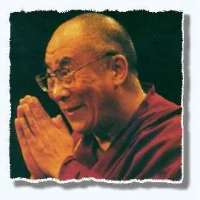
| BLESSED ARE THE MEEK (An interview with His Holiness The Dalai Lama.) ERIC: If meekness and non-violence walk hand in hand, then they follow in the foot-steps of His Holiness the Dalai Lama, spiritual and temporal leader of Tibet. "How many bat-talions has The Pope?" Stalin famously sneered. "The Dalai Lama has none." Believ-ing that not even the occupation of His country by a colonial power, and the systematic destruction of its people and culture can justify resorting to violence. As a result, He has become a familiar walk-on-player on the world's stage preaching his pacific mes-sage to those who will listen. There has been a clutch of humanitarian awards, which culminated in the 1989 Nobel prize. But international peace prizes, however prestigi-ous, do not win freedom. Yet the Dalai Lama's faith in meekness and non-violence remains undimmed. |
| DALAI LAMA: Sometimes I do feel the very way the people who follow non violence with patience with determination, it is sign of strength. Those people or those individuals who have less patience, then deep down no self confidence and some kind of, how you say, fear. ERIC: A fear that can sometimes express itself in violent aggression. In 1950, when the Chinese invaded Tibet, the Da-lai Lama was only fifteen. The invasion heralded decades of misery for His homeland. Many of his subjects were killed and others fled into exile. There began a calculated destruction of a culture and a way of life. The Chinese communists were determined to root out the Buddhist faith, and the society it had created. Most of the monasteries were destroyed, and the Dalai Lama, the spiritual leader, was forced to flee making the journey that many Tibetans have followed since, across the Himalayas to exile in India. There was little or no armed resistance, and there is none today. No freedom fighters, no terrorists. DALAI LAMA: I think now today the non-violent struggle is more effective, so in case our own situation. I noticed one of the reasons more people showing concern and sympathy is because we are following non-violent method. Now today the concept of non-violence I think, much wider sort of awareness. Basically, I believe that is the proper way to solve conflict between humanity. ERIC: Non-violence may be they way to solve humanities conflicts, but on the face of it, it doesn't seem to have done the Dalai Lama and his people much good. He remains, physically at least, exiled from Tibet, even if he is tantalizingly close here at Dharamsala in northern India, with only the awesome Himalayas between him and his homeland. Yet, for all the frustrating years of exile, he refuses to see the Chinese as enemies. DALAI LAMA: In my mind there is no enemy. [Laughs] But so called enemy, so you see it is very useful, very helpful to deal with such people, usually people consider as the enemy, basically our brother, my descendent being, and they also have the right to achieve their own goal, their own right, so you see this very helpful to develop respect for others view. I always admire Mahatma Gandhi's pacifism or non violence principle, although in Gandhi's time the... Gandhi... how you say... was fought with imperialist. Of course that you see British imperialist, of course bad, still the communist totalitarian imperialist even much worse. ERIC: Totalitarian tyranny, you might have thought, could not have gotten any worse than the invasion itself, but then came the Cultural Revolution. DALAI LAMA: In 1959 and early 60's and also during Cultural Revolution, then during those periods, you see we never give up our hope. ERIC: At times like the Cultural Revolution and in the face of the triumph of the occupiers, it must have been hope against hope. But for the Dalai Lama and his people, their Buddhist faith remained a potent source of strength. DALAI LAMA: The Buddhist faith very helpful to sustain my peace of mind and also very helpful to keep determina-tion. ERIC: One of the ironies of the invasion is that far from destroying Tibetan Buddhism it has been given a new life, and free from the barrier of the Himalayas, it has become one of the worlds foremost Faiths. Thousands of pilgrims now make their way to Dharamsala where they can experience Tibetan society in microcosm. It's as if exile had intensified the Tibetans' faith and belief in themselves. Here are kept the cherished remains of the national archive. And from Dharamsala, the Tibetans run a very efficient Government-in- exile. At the center of the administration complex is this monument to all the Tibetans who perished during the Chinese occupation. It is not just a memorial, but a symbol of a people's enduring faith. DALAI LAMA: The most important thing is survival or preserve Tibetan culture, culture which have potential to pro-vide in the mind - peace, tranquillity, friendship, that is more important, than is political sort of freedom or indepen-dence. Tibet is a separate country historically, linguistically, culturally, racially, geographically, historically. However, I'm not thinking about what is past - past is past. Now I am thinking, I am looking forward, so I do not consider much importance about what you call sovereign or these things, the important thing is how to preserve Tibetan culture. ERIC: That culture, even before the new found interest in the tenets of Buddhism, has always fascinated the west. It has always been our Shangri-La, a land of eternal truths uncovered over thousands of years in an unchanging society. That was all brutally shattered by the invasion. Yet these truths have found new fertile soils. Tibetan Buddhism is one of the fastest growing Faiths in western Europe. Monks are returning from retreat to a temple in the Scottish Borders, a temple which equals in size any temple in Tibet itself. Buddhist practices, in particular meditation, have found a ready response in troubled western minds. DALAI LAMA: Meditation means something like mobilizing your emotions, so you see constant meditation itself is just like an instrument. After all the pains and pleasure is our internal sort of experience, the ultimate source must be written ourselves External, if we expect this deep satisfaction, happiness, come from outside, its wrong. I always feel the materialistic way of life, very good, but not sufficient. We must pay more attention about our inner world. If you make more balance, the using physical comfort, material facility, at the same time check inner world, think more in-ner world about the mental stability, nature of the mind, this is very useful. I think as a Buddhist monk, in my view, I think, some of the... some of today's problems, which essentially are man made problems, these very much indeed weaken heart and human mind. |
| DALAI LAMA: At the moment you see, they consider me something like head of snake. I don't know, they say bye bye my Buddhist, my attitude, as a Buddhist practitioner. I don't see much difference whether Tibetan, China or Indian, af-ter all we are same human being. We have to live on this small planet, side by side, and especially China and Tibet. For a thousand years, we live side by side. It would be much better to live harmoniously with mutual trust, mutual re-spect. ERIC: For all the Dalai Lama's refusal to hate the Chinese invaders, he remains fiercely critical of the communist re-gime. DALAI LAMA: Their overall attitude, too much harsh, or hard line attitude towards Hong Kong, towards there own dis-sident, and toward Taiwan, and towards the British also. Towards almost everyone, you see, who speak some uncomfort-able word to the Chinese. So they have policy now, this moment is something quite, how you say, harsh, this won't help China for long run. So only question of time, this will change. So as soon as the Chinese war attitude becoming more soft, more reasonable, I am quite sure, you see, we can talk and then I see clearly, we can help millions of young Chi-nese who, at this moment is lost. I think the deeper human value , the Chinese traditional sort of Confuscianism, how you say, the tradition now much damaged. So now they sort of, full of confusion. ERIC: There's little of the traditions of Confuscious to be found in contemporary Tibet. The Tibetan children are being educated in new secular schools, and the country hasn't been spared China's strict birth control programs. Yet the Da-lai Lama refuses to despair. DALAI LAMA: So the Chinese authoritarians, you see the communist authoritarian system, this rigid system, I do not think can remain for long. I prefer, the change written, how you say... change written or China's communism gradual-ly change I prefer, because if it is a dramatic change takes place and total collapse happen, then I think, much chaotic situation may develop and in that case there is real danger of blood shed. ERIC: This fear of blood shed is very real to the Dalai Lama. An aging political leadership in China is in danger of be-ing pushed aside by the military, already flexing its muscles over Taiwan. But the Dalai Lama has a longer view of world history. DALAI LAMA: I think we are passing through very important period. Now we are enering twenty first century. During this century, twentieth century humanity learned I think many experiences. I think one important thing in this cen-tury, I think the greatest number of humanity, I mean guilt or died through our own action, men made the action. I think human, the negative emotions, such as hatred and greed, I think these two have, I think, complete freedom; as a result I feel more disaster, we already experienced, so therefore, next century look here also political boundary but due to economy, this south of world and northern world, this gap. And also you see each nation, within one nation also this gap, rich and poor. This not only morally wrong but practically, also, you see, very dangerous. In future I think you see, contentment and add genuine sense of brotherhood, sisterhood. I think that is the only way to survive humanity more peacefully. If you remain genuine, honest and humble, then on that level you can communicate much easier. That is my experience. So, I think, humbleness or meekness, I think, will be great role in the future world. But in any case, I believe humanity, I think and a sort of, how you say.. potential intelligence, to work on our problems if we properly use our emotions and our intelligence. |
 |
| ERIC: These man made problems include, of course, the remorseless spread of western consumerism. But it is in Tibet itself that consumerism is at its most militant. Aspects of life have appeared which are quite alien to Tibetan culture. Prostitution and gambling for example. Vices equally alien to the pre-Revolutionary traditions of Chinese thought. DALAI LAMA: After all, Buddhism is not alien to the Chinese mind. In China already, there are indications with some intellegent Chinese, including like the young professors of some university, they are showing keen interest in Buddhism in general, particularly Tibetan Buddhism. So therefore, my basic sort of attitude or basic sort of thinking is not complete separation but some kind of mutually agreeable solution. ERIC: At the moment that seems a long way away. Refugees still struggle across the Himalayas to find safety, and the Dalai Lama remains the target of the Chinese regimes most venomous propaganda. |
 |
 |
 |
| WHEN the Blessed One had passed away into Nirvana, the disciples came together and consulted what to do in order to keep the Dharma pure and uncorrupted by heresies. Upali rose, saying: "Our great Master used to say to the brethren: 'O Bhikkhus! After my final entrance into Nirvana you must revere and obey the law. Regard the law as your master. The law is like unto a light that shines in the darkness, pointing out the way; it is also like unto a precious jewel to gain which you must shun no trouble, and be ready to bring any sacrifice; even, should it be needed - your own lives. Obey the Dharma which I have revealed to you; follow it carefully and if as in no way different from myself.' Such were the words of the Blessed One. The law, accordingly, which the Buddha has left us as a precious inheritance has now become the visible body of the Tathagata. Let us, therefore, revere it and keep it sacred. For what is the use of erecting dagobas for relics, if we neglect the spirit of the Master's teachings?" Then Anuruddha arose and said: "Let us bear in mind, O brethren, that Gotama Siddhartha has revealed the truth to us. He was the Holy One and the Perfect One and the Blessed One, because the eternal truth had taken abode in him. The Tathagata taught us that the truth existed before he was born into this world, and will exist after he has entered into Nirvana. The Tathagata said: 'The truth is omnipres-ent and eternal, endowed with excellencies innumerable, above all human nature, and ineffable in its holiness.' Now let us bear in mind that not this or that law which is revealed to us in the Dharma is the Buddha, but the entire truth, the truth which is eternal, omnipresent, immutable, and excellent. Many regulations of the Sangha are temporary; they were prescribed because they suited the occasion and were needed for some transient emergency. The truth, however, is not temporary. The truth is not arbitrary nor a matter of opinion, but can be investigated, and he who earnestly searches for the truth will find it. The truth is hidden to the blind, but he who has the mental eye sees the truth. The truth is Buddha's essence, and the truth will remain the ultimate standard. Let us, then, revere the truth; let us in-quire into the truth and state it, and let us obey the truth. For the truth is Buddha our Master, our Teacher." And Kas- sapa rose and said: "Truly thou hast spoken well, O brother Anuruddha. Neither is there any conflict of opinion on the |
| meaning of our religion. For the Blessed One possesses three personalities and each of them is of equal importance to us. There is the Dharma Kaya. There is the Nirma-na Kaya. There is the Sambhoga Kaya. Buddha is the all-excellent truth, eternal, om-nipresent, and immutable: this is the Sambhoga Kaya which is in a state of perfect bliss. Buddha is the all-loving teacher assuming the shape of the beings whom he teaches: this is the Nirmana Kaya, his apparitional body. Buddha is the all-blessed dis-pensation of religion; he is the spirit of the Sangha and the meaning of the commands left us in his sacred word, the Dharma: this is the Dharma Kaya, the body of the most excellent law. If Buddha had not appeared to us as Gotama Shakyamuni, how could we |
 |
| have the sacred traditions of his doctrine? And if the generations to come did not have the sacred traditions preserved in the Sangha, how could they know anything of the great Shakyamuni? And neither we nor others would know any- thing about the most excellent truth which is eternal, omnipresent, and immutable. Let us then keep sacred and revere the traditions; let us keep sacred the memory of Gotama Shakyamuni, so that people may find the truth." Then the brethren decided to convene a synod to lay down the doctrines of the Blessed One, to collate the sacred writings, and to establish a canon which should serve as a source of instruction for future generations. |
|
| "Wisdom is the best guide and faith is the best companion. One must try to escape from the darkness of ignorance and suffering, and seek the light of Enlightenment. If a man's body and mind are under control, he should give evidence of it in virtuous deeds. This is a sacred duty. Faith will then be his wealth, sincerity will give his life a sweet savor, and to accumulate virtues will be his sacred task. On life's journey, faith is nourishment, virtuous deeds are a shelter, wisdom is the light by day and right mindfulness is the protection by night. If a man lives a pure life, nothing can destroy him; if he has conquered greed, nothing can limit his freedom. "When we take the Buddha as an authority, as a reliable teacher, we do so on the basis of having investigated and examined his principal teaching, the Four Noble Truths. It is after having investigated the validity and reliability of this doctrine that we accept the Buddha, who propounded it, as a reliable teacher." The Dalai Lama |
|
| CONFIDENCE Ultimately, spiritual confidence is a quiet, gentle sense of peace. It fills your heart and nurtures your spirit. It allows you to travel your path knowing that you are on the right road, and trusting that wherever you are is just where you need to be... Any lack of confidence you feel is simply an illusion. You are a magnificent, perfect child of the Universe. You are powrful beyond measure. The more you manifest your true beauty and express your unique gift, the more the Universe will rejoice. That's why you are here to be as extraordinarily outrageous as "you" as possible. When you limit your dreams, you limit your life. True confidence doesn't come from your not having any fear. It comes from trusting yourself to act in spite of your fear. One of the biggest 'payoffs' you receive by living without confidence is that you have a permanent excuse for being lazy and not doing anything. Becoming a confident person means developing your confidence equally in all three areas - behavioral, emotional and spiritual - so that you're living a life that is balanced as well as powerful. Remember: the most important key to developing behavioral confidence is to keep taking action. The more you trust yourself to go forward, the more confidence you'll feel. What are you waiting for? |
|
| "The fetter, which makes slaves of us all, is attachment - that is, craving. In the abandonment of that fetter lies bliss - and, ultimately, even Nirvana. All human beings, the Buddha says, are filled with desires brought about by sense-conact with material objects. The Buddha does not suggest we should try to remove ourselves to some place where desires do not arise; a monastery or a convent would not do, and we might seek throughout the Cosmos without ever finding such a place. Yet such a place exists within ourselves, the Buddha taught, and finding peace calls for an abandonment of the fetter called craving. Desire is one thing - it merely |
| "I believe that to meet the challenge of the twenty-first century, all human beings will have to develop a greater sense of universal responsibility. Each of us must learn to work not just for his or her own self, family, or nation, but for the benefit of all mankind. It is very old-fashioned to think in terms of my nation, or my country. Universal responsibility is the real key to human survival. Large human movements spring from individual initiatives. Thus, it is the individual working for the common welfare who makes the difference. "I have found that the greatest degree of inner tranquility comes from the development of love and compassion. The more we care for the happiness of others, the greater is our own sense of well being. Cultivating a close, warmhearted feeling for others automatically puts the mind at ease. It is the ultimate source of success in life." "People who fight with other human beings out of anger, hatred, and strong emotion, even if they gain victory over their enemies in battle, are not in reality true heroes. What they are doing is slaying corpses, because human beings, being transient, will die. Whether or not these enemies die in the battle is another question, but they will die at some point. So, in reality, they are slaying those already destined to die. The true hero is the one who gains victory over hatred and anger." The Dalai Lama |
 |
|
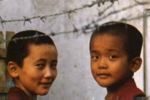
| "The barbed wire is always there - whether seen or unseen." Gotaro |
| arises and passes away. Craving is another - it is clinging to desire. It is precisely in this that suffering lies." "The smooth-spoken man is an enemy because he says only soothing things to you about the past and about the future, because he tries to win you over with empty promises, and because he shows his shortcomings whenever there's anyhing to be done." "There are four types of men who should be looked upon as enemies who disguise themselves as friends: a grasping man; a smooth-spoken man; a man who only says what you want to hear, and a man who helps you waste your money." "There are six dangers in idleness: a man says 'it's too cold' and doesn't work; or he says 'it's too hot;' or 'it's too early;' or 'it's too late;' or 'I'm too hungry;' or 'I'm too full.' And so all this time he won't do what he ought to do, earns no new wealth, but fritters away that which he has already earned." "There are six dangers in gambling: the winner is hated; the loser regrets the loss of his money; there is obvious loss of wealth; a gambler's word is not respected in courts of law; he is scorned by friends and counselors, and he is not cultivated by decent people who wish to find husbands for their daughters, for a gambler who is always dicing isn't fit to keep a wife." "There are six dangers in addiction to drink: one may actually lose one's health; one is more likely to quarrel; one is liable to illness; one's reputation is lowered; one is likely to act foolish and indecent; and one weakens one's intelligence." (Buddha) |
|
| "To this sage who sees what is good I have come supplicatingly with a question, 'How is anyone to look upon the world so as not to be seen by the king of death?'" "Look upon the world as empty, O Mogharagan," said the Buddha, "being always wakeful; having destroyed the view of oneself as really existing, one may overcome death; the king of death will not see the person who thus regards the world." "All of the different religious faiths, despite their philosophical differences, have a similar objective. Every religion emphasizes human improvement, love, respect for others, sharing other people's suffering. On these lines, every religion has more or less the same viewpoint and the same goal. "Human potential is the same for all. Your feeling, "I am of no value", is wrong. Absolutely wrong. You are deceiving yourself. We all have the power of thought - so what are you lacking? If you have will-power, then you can change anything. It is usually said that you are your own master." The Dalai Lama Disclaimer: All images and/or articles retain the original copyrights of their original owners. |
| April 18, 2004 |
 |