 |
 |
| Page 47 |
| THE BUDDHA & THE FARMER KASIBHARADVAJA - Once the Buddha was in the village of Ekanala in Magadha. The rain had fallen and it was planting time. In the early morning when the leaves were still wet with dew, the Buddha went to the field where Kasibharadvaja, a Brahmin and farmer, had five hundred ploughs at work. When the Blessed One arrived, it was the time for the Brahmin to distribute food to the workers. The Buddha waited there for his alms food, but when the Brahmin saw |
| him he sneered and said: "I plough and sow, and having ploughed and sown, I eat, O ascetic. You also should plough and sow, and having ploughed and sown, you should eat." "O Brahmin, I too plough and sow. And having ploughed and sown, I eat," replied the Buddha. The puzzled Brahmin asked, "You claim that you plough and sow, but I do not see you ploughing?" The Buddha replied: "I sow faith as the seeds. My discipline is the rain. My wisdom is my yoke and plough. My modesty is the plough-head. The mind is the rope. Mindfulness is the ploughshare and the goad. I am restrained in deeds, words and food. I do my weeding with truthfulness. The bliss I get is my freedom from suffering. With persever-ance I bear my yoke until I come to Nirvana. Thus I have done my ploughing. It brings the fruit of immortality. By ploughing like this, one escapes all suffering." After this explanation, the Brahmin realised his error, and said, "May the Venerable Gotama eat the milk-rice! The Venerable Gotama is a farmer since his crops bear the fruit of Deathless-ness!" So saying, the Brahmin filled a large bowl with milk-rice and offered it to the Buddha. The Buddha refused the food saying that He could not accept food in return for His preaching. The Brahmin fell at the feet of the Buddha and asked to be ordained into the Order of monks. And not long after, Kasibharadvaja became an Arahant. KING PASENADI OF KOSALA - A Royal Supporter of the Buddha King Pasenadi Kosala was the king of Kosala, which was north of Magadha ruled by King Bimbisara. The capital of the kingdom of Kosala was Savatthi. One of his sisters was the chief queen of King Bimbisara, and hence he was the brother-in-law of King Bimbisara. King Pasenadi Kosala became a follower of the Buddha very early in the Buddha's ministry, and had remained a loyal supporter ever since. His chief queen was Mallika, a wise and religious queen who was well versed in the Dharma and acted as his religious guide on several occasions. The first time the King met the Buddha, he asked, "How is it that Master Gotama claimed that He has gained Full Enlightenment? Master Gotama is both young in years and young as a monk." The Buddha replied, "Great king, there are four things that should not be looked down upon and despised because they are young. They are a noble warrior, a serpent, a fire and a Bhikkhu (holy man). An enraged young warrior may ruthlessly cause harm to others. The bite of even a small snake may kill. A little fire may become a huge fire that destroys buildings and forests. Even a young monk may be a saint." Hearing this, King Pasenadi Kosala understood that the Buddha was indeed a wise teacher and decided to become his follower. King Pasenadi liked going to the Buddha for advice. Even during his official |
| duties, he found time to speak to the Buddha. When talking to the Buddha one day, he received news that his wife, Queen Mallika, had given birth to a daughter. The king was not pleased with the news because he wanted a son. The Buddha, unlike any other religious teacher, spoke well of women. He said, "Some women are better than men, O king. There are women who are wise, good, who regard their mothers-in-law as goddesses, and who are pure in word, thought and deed. They may one day give birth to brave sons who would rule a country." Once, the king came to hear that the Buddha had said, "Dear ones whom we love bring sorrow and lamentation, pain, grief and despair." The king ask-ed Queen Mallika whether she agreed with the Buddha. She said that if the Buddha had said so, it must be true. But the king was not satisfied. "How can a loved one bring sorrow?" wondered the |
 |
| king. Queen Mallika approached a Brahmin to ask the Buddha to explain this. After hearing many stories to explain this, the Brahmin related them to the queen. She then asked the king, "Sire, what is your opinion, is Princess Vajira, your daughter, dear to you?" "Yes, Mallika, she is very dear to me," said the King. "If some misfortune were to happen to Princess Vajira, would that bring sorrow and lamentation, pain, grief and despair?" "Yes," said the King. "Sire, it was with reference to this that the Blessed One said that dear ones whom we love, bring sorrow and lamentation, pain, grief and despair." "Mallika," said the King, "it is wonderful, it is marvellous, how far the Blessed One sees with understand-ing." When King Kosala lost to his nephew and had to retreat to his capital at Savatthi, the Buddha commented to his disciples that neither the victor nor the defeated would experience peace: "Victory breeds hatred. The defeated lives in pain. Happily the peaceful live, giving up victory and defeat." In a later battle, the two kings fought and King Kosala not only won, but he also captured King Ajatasattu alive with all his elephants, chariots, horses and soldiers. King Kosala thought that he would release his nephew, but not his horses, elephants and others. He wanted the satisfaction of keep-ing these material possessions as the prizes of victory. On hearing about this, the Buddha told his disciples that it would have been wiser for King Kosala not to have kept anything for himself. The truth of this statement still applies to this modern war-weary world: 'A man may plunder, as he will. When others plunder in return, he who is plundered will plunder in return. The Wheel of Deeds turns round and makes the ones who are plundered plunderers.' King Pasenadi Kosala passed away in his eightieth year when his son Vidudabha revolted against him. |
 |
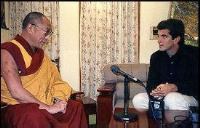
| "Actually, genuine compassion and attachment are contradictory. According to Buddhist practice, to develop genuine compassion you must first practice the meditation of equalization and equanimity, detaching oneself from those people who are very close to you. Then, you must remove negative feelings towards your enemies. All sentient beings should be looked on as equal. On that basis, you can gradually develop genuine compassion for all of them. "Naturally emotions can be positive and negative. However, when talking about anger, etc., we are dealing with negative emotions. Negative emotions are those which immediately create some kind of unhappiness or uneasiness and which, in the long run, create certain actions. Those actions ultimately lead to harm to others and this brings pain or suffering to oneself. This is what we mean by negative emotions. "Our experiences and feelings are mainly related to our bodies and our minds. We know from our daily experience that mental happiness is beneficial. For instance, though two people may face the same kind of tragedy, one person may face it more easily than the other due to his or her mental attitude." The Dalai Lama |
| His Holiness the Dalai Lama on Tibetan Medicine: "One of the factors common to all living beings is the basic wish to achieve happiness and avoid suffering. The desire for health, for complete physical and mental well-being, is an expression of this, for everyone wants to be well and no one wishes to be sick. When we fall ill we take whatever measures we can to help us recover. When we are unwell we not only feel miserable, but our ability to function normally is impaired. Consequently, health is not a matter of merely personal interest, but a universal concern for which we all share some responsibility. I believe that the Tibetan medical system can contribute substantially to maintaining a healthy mind and healthy body. Like the traditional Indian and Chinese systems, Tibetan medicine views health as a question of balance. A variety of circumstances such as diet, lifestyles, seasonal and mental conditions can disturb this natural balance, which gives rise to different kinds of disorders. In diagnosing these disorders the Tibetan physician em-ploys his own senses to examine the patient's pulses, urine and general appearance. He assesses the individual's general balance of health as a whole. Treatment involves dietary and behavioral advice, medication and accessory therapies. Medicines are obtained from natural sources, such as herbs, minerals and organic products and prepared under control-led conditions. These ingredients are inexpensive and easily available. The medicines themselves have few side-effects, are not symptomatic and have a preventive as well as a curative effect. Tibetan medicine is deeply integrated with Bud-dhist practice and theory which stresses the indivisible interdependence of mind, body and vitality. The ideal doctor is one who combines sound medical understanding with strong realization of wisdom and compassion. I strongly believe that our medical system is one of the means by which we Tibetans can contribute to the well being of others, even while we ourselves live as refugees." |
|
|
 |
| and no one returned to tell the other prisoners what had happened, the prisoners were forced each day to go into the forest. Soon the prison became empty. How was the king to fulfil his promise of sending a person each day to be eaten by the Demon? His ministers advised him to drop packets of gold in the streets. Those found picking the packets would be caught as thieves and sent to Alavaka. When the word got around, nobody dared to pick the packets. As a last re-sort, the king started catching children for offering. The terrified subjects fled the city, leaving it deserted. There was only one more boy left - and he was the king's son. With much reluctance, the king ordered that the prince should be sent to Alavaka the following morning. That day, the Buddha happened to be near the city. When he surveyed the world with His Divine Eye that morning, He saw what was going to happen. Out of compassion for the king, the prince and Alavaka, the Buddha travelled the whole day to the Demon's cave and in the evening He arrived at the entrance of the cave. The Demon was away in the mountains, and the Buddha asked the gatekeeper if He could spend a night at the cave. When the gatekeeper had gone to inform his master about the request, the Buddha went into the cave, sat on the seat of the Demon and preached the Dhamma to his wives. When the Demon heard what had happened from his ser-vant, he hurried home, very angry. With his extraordinary power, he created a terrifying thunderstorm which shook and lighted up the forest with thunder, lightening, wind and rain. But the Buddha was unafraid. Alavaka then attacked the Buddha by throwing his spear and club at Him, but before the weapons could touch Him, they fell at the feet of the Blessed One. Unable to frighten the Buddha, Alavaka asked: "Is it right that you, a holy man, should enter and sit amongst his wives when the owner of the house is away?" At this, the Buddha got up to leave the cave. Alavaka thought, "What a fool I am to have wasted my energy trying to frighten this ascetic." So he asked the Buddha to enter the cave again. The Demon ordered the Buddha three times to get out and three times to enter the cave with the hope that he could kill the Buddha with fatigue. Each time the Buddha did as He was ordered. But when the Demon asked the Buddha to leave for the fourth time, the Buddha refused to do so, and said, "I'm not going to obey you, Alavaka. Do whatever you can but I'm going to remain here." Unable to force the Buddha to do what he wanted, Alavaka changed his tactics and said, "I will ask you some questions. If you can't answer I'll split your heart, kill you and throw you over to the other side of the river." The Buddha told him calmly, "There is no one, Alavaka, whether man or deva, ascetic, bra-hma or brahmin who can do such things to me. But if you want to ask anything, you may do so." Alavaka asked some questions, which he learned from his parents who had, in turn, learned them from their parents. He had forgotten the answers, but he had preserved the questions by writing them on gold leaves. The questions were: "What is the greatest wealth for a man? What brings the highest bliss when well mastered? What is the sweetest of all tastes? Which is the best way of life?" The Buddha answered: "The greatest wealth for a man is confidence. The true doctrine when well mastered brings the highest bliss. The sweetest taste is truth. Wise living is the decent way of life." Alavaka asked many more questions all of which the Buddha answered. The final question was: "Passing from this world to the next, how does one not grieve?" The Buddha's reply was: "He who possesses these four virtues - truthfulness, good morals, courage and generosity - grieves not after passing away." Understanding the meaning of the Buddha's words, Alavaka said, "Now I know what is the secret of my future welfare. It is for my own welfare and good that the Buddha came to Alavi." Alavaka prostrated before the Buddha and begged to be accepted as a disciple. The next morning when the offi-cers of Alavi came with the king's young son, they were surprised at the sight of the Buddha preaching to Alavaka who was listening attentively to the sermon. When the boy was handed to Alavaka, he was ashamed of himself to receive the boy as an offering. Instead he stroked the boy on the head, kissed him and handed him over to the officers. After that the Buddha blessed the child and Alavaka. Indeed, the conversion of Alavaka the cannibal showed how the Buddha, with his great wisdom and compassion, could tame a savage and change him into a gentle disciple. |
| ALAVAKA, THE DEMON - Alavaka, living near the city of Alavi, feasted on human flesh. So fierce, powerful and crafty was he that he was known as the 'Demon.' One day, the King of Alavi went hunting for deer in the jungle when Alavaka caught him. The king begged to be released, but in return for his freedom he had to send one person everyday into the jungle as offering for Alavaka. Everyday a prisoner would be sent into the forest with a plate of rice. He was told that to gain freedom he had to go to a certain tree, leave the plate there and he could go free. At first many prisoners volunteered to go on that 'simple' mission. But as the days went by |
|
 |
| dhist symbols. Numerous sculptures of Buddha can be found on the southern and northern slopes of the eastern peak. Most are thousand-Buddha figures, but there are also images of the Dharma guard, Buddha's warrior attendant, Tara and historic personages including Master Born-In-Lotus and Tsongkapa. People have imaginatively painted these fig-ures, rendering them more lifelike. The carvings can be traced back to the 7th century. It is recorded in Tibetan Kings and Officials, written by the Fifth Dalai Lama, that "Songtsan Gampo invited craftsmen from Nepal to carve figures of Buddha and the words 'Om mani padme hum' on Medicine King Hill." Songtsan Gampo (617-650) is the greatest figure in Tibetan history. He founded the powerful Tubo Kingdom, centered in Lhasa, around which a united Tibet was formed. Moreover, he played a crucial role in introducing Buddhism to Tibet and with two Buddhist princesses, one from Nepal and the other from another part of China, he built the first temples. People have been making carvings on Medicine King Hill for over one thousand years. Even today craftsmen and pious believers continue the tradition. Buddhism was introduced to Tibet simultaneously from Nepal, India and other parts of China, and over time developed into a unique form, Tibetan Buddhism. Meanwhile, the art of stone-carving arose, with strong influences from southern Asia and oth-er parts of China. By incorporating local elements, over time, an unrivaled Tibetan style of carving was established. Re- ligious sculptures can also be seen on other hills around Lhasa and along the roads leading to the capital city. The prac-tice of sculpting on cliffs is said to have come from the northwestern part of the Indian subcontinent, especially from Swat which has stone carvings similar to those found in Tibet. Since early times, the two places have been associated and have had frequent cultural and commercial contacts. Tibetans also inscribe passages and images of Buddha on slabs or blocks of stone. One area of Medicine King Hill has been set aside for such activity and is presided over by a lama from the Tibetan inhabited area of Sichuan Province. The finished works are stacked up into a high platform, making an im-posing sight. Mani stone inscriptions are also often seen around Lhasa. Along the roads leading to holy places, hills, lakes and temples stand many stone piles, large or small and closely spaced. These are the mani piles. On the pilgrimage routes, figures of Buddha and mani piles serve as sign-posts to guide people and to spur them on - fatigue seems to dis-appear with the help of the Buddha. Mani is an abbreviation of "Om mani padme hum." The stones of mani piles are inscribed with "Om" or images of the Buddha, or simply left blank. When a believer passes a pile, he will throw another stone onto it. At the three most famous temples in Lhasa, Potala Palace and areas around Medicine King Hill there are many mani piles with inscriptions far more elaborate than those in the wilderness. According to legend, Sakyamuni was born in the fourth month of the Tibetan calendar, which is therefore called "Buddha Month." Worshipping becomes in-tense in this time period and pilgrims crowd the holy city of Lhasa reciting scriptures. Since Medicine King Hill is on the pilgrimage path, many believers bow before the inscribed cliffs for a long time, and lamas from other places chant sutras and ask for alms there. New stones are continually added to the mani piles. In Tibetan Buddhism, chanting "Om mani padme hum" is one way to pray for this and the next life. Throwing a stone on a mani pile is equal to one recitation. |
| Stone Carvings In Lhasa... Pilgrimage to Lhasa seeking Enlightenment. Every Tibetan Buddhist yearns to visit the holy city of Lhasa. And Tibetans have long carved in stone as an expression of their religious beliefs. In the hope of being blessed, they sculpt figures of Buddha and inscribe scriptures on cliffs and large rocks. Such typical stone carvings can be seen at Medicine King Hill to the southeast of the Potala Palace. From top to bottom, the whole mountainside is covered with images of Buddha, passages from scripture and Bud- |
 |
 |
| violence. As evidence I have not only my spiritual practice and the understanding of human existence based on Buddhist teachings, but now also the work of scientists. For the last 15 years I have engaged in a series of conversations with Western scientists. We have exchanged views on topics ranging from quantum physics and cosmology to compassion and destructive emotions. I have found that while scientific findings offer a deeper understanding of such fields as cosmology, it seems that Buddhist explanations - particularly in the cognitive, biological and brain sciences - can sometimes give Western-trained scientists a new way to look at their own fields. It may seem odd that a religious leader is so involved with science, but Buddhist teachings stress the importance of understanding reality, and so we should pay attention to what scientists have learned about our world through experimentation and measurement. Similarly, Buddhists have a 2,500-year history of investigating the workings of the mind. Over the millenniums, many practitioners have carried out what we might call "experiments" in how to overcome our tendencies toward destructive emotions. I have been encouraging scientists to examine advanced Tibetan spiritual practitioners, to see what benefits these practices might have for others, outside the religious context. The goal here is to increase our understanding of the world of the mind, of consciousness, and of our emotions. It is for this reason that I visited the neuroscience laboratory of Dr. Richard Davidson at the University of Wisconsin. Using imaging devices that show what occurs in the brain during meditation, Dr. Davidson has been able to study the effects of Buddhist practices for cultivating compassion, equanimity or mindfulness. For centuries Buddhists have believed that pursuing such practices seems to make people calmer, happier and more loving. At the same time they are less and less prone to destructive emotions. According to Dr. Davidson, there is now science to underscore this belief. Dr. Davidson tells me that the emergence of positive emotions may be due to this: Mindfulness meditation strengthens the neurological circuits that calm a part of the brain that acts as a trigger for fear and anger. This raises the possibility that we have a way to create a kind of buffer between the brain's violent impulses and our actions. Experiments have already been carried out that show some practitioners can achieve a state of inner peace, even when facing extremely disturbing circumstances. Dr. Paul Ekman of the University of California at San Francisco told me that jarring noises (one as loud as a gunshot) failed to startle the Buddhist monk he was testing. Dr. Ekman said he had never seen anyone stay so calm in the presence of such a disturbance. Another monk, the abbot of one of our monasteries in India, was tested by Dr. Davidson using electroencephalographs to measure brain waves. According to Dr. Davidson, the abbot had the highest amount of activity in the brain centers associated with positive emotions that had ever been measured by his laboratory. Of course, the benefits of these practices are not just for monks who spend months at a time in meditation retreat. Dr. Davidson told me about his research with people working in highly stressful jobs. These people - non-Buddhists - were taught mindfulness, a state of alertness in which the mind does not get caught up in thoughts or sensations, but lets them come and go, much like watching a river flow by. After eight weeks, Dr. Davidson found that in these people, the parts of their brains that help to form positive emotions became increasingly active. The implications of all this are clear: the world today needs citizens and leaders who can work toward ensuring stability and engage in dialogue with the "enemy" - no matter what kind of aggression or assault they may have endured. It's worth noting that these methods are not just useful, but inexpensive. You don't need a drug or an injection. You don't have to become a Buddhist, or adopt any particular religious faith. Everybody has the potential to lead a peaceful, meaningful life. We must explore as far as we can how that can be brought about. I try to put these methods into effect in my own life. When I hear bad news, especially the tragic stories I often hear from my fellow Tibetans, naturally my own response is sadness. However, by placing it in context, I find I can cope reasonably well. And feelings of helpless anger, which simply poison the mind and embitter the heart, seldom arise, even following the worst news. But reflection shows that in our lives much of our suffering is caused not by external causes but by such internal events as the arising of disturbing emotions. The best antidote to this disruption is enhancing our ability to handle these emotions. If humanity is to survive, happiness and inner balance are crucial. Otherwise the lives of our children and their children are more likely to be unhappy, desperate and short. Material development certainly contributes to happiness - to some extent - and a comfortable way of life. But this is not sufficient. To achieve a deeper level of happiness we cannot neglect our inner development. The calamity of 9/11 demonstrated that modern technology and human intelligence guided by hatred can lead to immense destruction. Such terrible acts are a violent symptom of an afflicted mental state. To respond wisely and effectively, we need to be guided by more healthy states of mind, not just to avoid feeding the flames of hatred, but to respond skillfully. We would do well to remember that the war against hatred and terror can be waged on this, the internal front, too. Tenzin Gyatso is the 14th Dalai Lama. (Disclaimer: All images and/or articles retain the original copyrights of their original owners.) |
| The Monk in the Lab - Is there a hope that human-kind could overcome its destructive tendencies? The Dalai Lama seems to think so.... By Tenzin Gyatso April 26th, 2003 DHARAMSALA, India. These are times when destructive emotions like anger, fear and hatred are giving rise to devastating problems throughout the world. While the daily news offers grim reminders of the destructive power of such emotions, the question we must ask is this: What can we do, person by person, to overcome them? Of course such disturbing emotions have always been part of the human condition. Some - those who tend to believe nothing will "cure" our impulses to hate or oppress one another - might say that this is simply the price of being human. But this view can create apathy in the face of destructive emotions, leading us to conclude that destructiveness is beyond our control. I believe that there are practical ways for us as individuals to curb our dangerous impulses - impulses that collectively can lead to war and mass |
 |
 |
| September 24, 2004 |
 |
 |
| Visit our main Buddhism site. More information, images, and, NO pop-ups! (click above) |