 |
 |
| Page 46 |
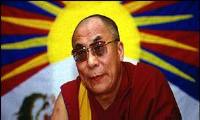
| In hate, what goes around, comes around... A terrorist attack. An anthrax outbreak. And to further rattle our nerves, a horrific plane crash in Queens, NY. These days it's hard to listen to calls for peace when it seems that evil incarnate is roaming the Earth. I want to fight back, stomp it out and obliterate the enemy. In the famous words of Tina Turner, it's hard to see 'what love's got to do with it.' "But real power is in compassion, not in hate," Rinpoche Nawang Gehlek corrected me last week. And judging from the terror he's survived, he should know. Rimpoche was born in 1939 in Tibet, which was once an independent kingdom in southwest China, on the rim of the Himalayas. The Communist Chiese overran the nation in the 1950s, imprisoning, exiling or murdering its Buddhist leadership. The most famous of them to go into exile was the 14th Dalai Lama, Tenzin Gyatso. Trained by the same monks who trained the Dalai Lama, Rinpoche is on a mission: To teach the power of love to the rest of the world. Anger continued to gnaw... I couldn't catch Rinpoche, a title that means "Precious One," at Jewel Heart, the center for Tibetan Buddhism and Culture he founded in Ann Arbor. There also are national and international chapters. Right now he's traveling, lecturing about his new book. "Good Life, Good Death." I talked to him from his hotel room in Denver and asked him how to overcome the fear and anger we've harbored since Sept. 11, 2001. "Anger," laughed Rimpoche, his voice raspy. "That's a hard one." Rinpoche himself admits that anger has continued to gnaw at his bones. In 1959, he was thrown out of Tibet after an uprising. Both of his parents were imprisoned. His father survived, but his mother, who was in her late 40s, was releas-ed three days before she died. Every bone in her body had been broken. Five years ago, Rinpoche traveled to Beijing. He thought he'd come to understand that the Chinese were good people who had suffered as much as he had under Communism. But in the Singapore airport, he had to exchange his money for Chinese currency. He looked with horror as the face of the late Chairman Mao Tse-tung gazed at him from each bill. "It gave me the creeps to put the money in my pocket," he said. "I knew then that my anger was still there." The source of real power... It shows, he said, how addictive anger can become. We can become invested in our right to be angry, in our search for revenge. Eventually, we can become the people we hate, capable of our own crimes against humanity. "We need to learn to confront our own anger, jealousy, hatred and depression," he said, replacing these emotions with active compassion. "Active compassion means that we stop the aggression and protect wrongdoers, even from themselves," he said. "I agree with the bombing of Afghanistan, but I don't rejoice in it. We have to make sure that hatred is not driving our decisions, and that we don't let fear take over. I look at the lives of Mother Teresa, Martin Luther King Jr., Jesus and Buddha and I have proof. On an everyday level, we can never forget that true power is not with hatred but with compassion." (By and courtesy of Desiree Cooper, Free Press Columnist. Courtesy Detroit Free Press http://www.freep.com/) |
| "To be aware of a single shortcoming within oneself is more useful than to be aware of a thousand in somebody else. Rather than speaking badly about people and in ways that will produce friction and unrest in their lives, we should practice a purer perception of them, and when we speak of others, speak of their good qualities. "Just as you have the instinctive natural desire to be happy and overcome suffering, so do all sentient beings. So on what exact grounds do you discriminate?" The Daily Lama |
| "The basic fact is that all sentient beings, particularly human beings, want happiness and do not want pain and suffering. On those grounds, we have every right to be happy and to use different methods or means to overcome suffering and to achieve happier lives. It is worthwhile to think seriously about the positive and negative consequences of these methods. You should be aware that there are differences between short-term interest and long-term interest and consequences - and the long-term interest is more important. Buddhists usually say that there is no absolute and that everything is relative. So we must judge according to the circumstances. |
| Beware of the man who works hard to learn something, learns it, and finds himself no wiser than before," Bokonon tells us. "He is full of murderous resentment of people who are ignorant without having come by their ignorance the hard way. Kurt Vonnegut, Jr. |
|
|
 |
| Every man gets a narrower and narrower field of knowledge in which he must be an expert in order to compete with other people. The specialist knows more and more about less and less and finally knows everything about nothing. Konrad Lorenz |
| Every fool knows you can't touch the stars, but it doesn't stop a wise man from trying. Harry Anderson A great many people think they are thinking when they are merely rearranging their prejudices. William James |
| Only two things are infinite, the universe and human stupidity, and I'm not sure about the former. Albert Einstein The art of being wise is the art of knowing what to overlook. William James The eternal mystery of the world is its comprehensibility. Albert Einstein The further the spiritual evolution of mankind advances, the more certain it seems to me that the path to genuine religiosity does not lie through the fear of life, and the fear of death, and blind faith, but through striving after rational knowledge. Albert Einstein The important thing is not to stop questioning. Curiosity has its own reason for existing. Albert Einstein The intelligent man finds almost everything ridiculous, the sensible man hardly anything. Johann Wolfgang von Goethe |
| Noc. 18, 2004 |
 |
 |
| Hinayana, the lesser vehicle. The term "lesser" (actually "little") does not mean "inferior." People often hearing the term think this must be an inferior form of Buddhism; so, obviously, it won't be of any help and I'd better go for the better kind. It is not the case that the result of it is in any way inferior or that the teachings are in any way inferior. The term "little" or "lesser" is comparative only in the sense of the gradation of progress through the path. It's the first vehicle that is practiced, like entering the first grade. It is the basic vehicle or the fundamental vehicle, and it is called lower in the same way that one would call the foundation of a house lower than the walls or the roof. But just as the first thing that has to be established if one wants to build a house is the foundation, in the same way, the Hinayana is the only possible foundation for the Mahayana and Vajrayana presentations and practices. It may be more helpful to think of it as the basic vehicle rather than as the lower or lesser vehicle. The Hinayana What the Buddha taught in the basic vehicle or the Hinayana is fundamentally the cause and result of samsara and the cause and result of Nirvana. He showed that the cause of samsara is the false imputation of a truly existent self and the resultant three poisons or the three root mental afflictions and that the result of the presence of this imputation of the self and the mental affliction is all the varying sufferings of samsara, the pain and fear of the six realms. He also presented the Cause of Nirvana, the cause of liberation from this suffering, which is the method one uses to free oneself from this, the path, which consists of the application of the four noble truths and the twelve links of interdependence. And he taught the result of this path which is the cessation of suffering or the transcendence of misery, Nirvana. This presentation is essentially the presen-tation of the four noble truths, two of which present the cause and result of samsara, and the latter two which present the cause and result of Nirvana. All the Hinayana teachings can basically be included in the four noble truths. The main practice in the Hinayana is the discipline of renunciation. This depends entirely upon the recognition that samsara is suffering and the resultant disgust. If you want to have genuine renunciation, you must recognize the presence and per-vasiveness of suffering. Obviously, if you do not recognize the presence of suffering, you will have no reason to earnest-ly seek liberation. So the basic practice first of all is to recognize the nature of samsara to be the three sufferings, which produces genuine renunciation. It is for this reason that the Buddha's first teaching, the first truth presented among the four noble truths, is a clear presentation of the presence of suffering. Generally speaking, we all know that there's lots of suffering in samsara, but it's hard sometimes to recognize appearances of pleasure as being essentially suffering as well. Essentially, suffering is fear. Even when we are enjoying something, experiencing pleasure or happiness, we are filled with fear because when we possess or enjoy something pleasurable, we fear losing it. If we have a position or wealth, we live in fear of losing it. It doesn't matter how much you have or how little you have, fear is fundamentally the same. If you are the ruler of a country, you fear losing that position, if you are a homeless beggar on the street, you fear losing that position. The fear of suffering, the fear not only of losing what you enjoy, but of encountering what you especially do not enjoy, is the same for a king or for a beggar. So if you clearly understand the pervasiveness of fear, then you understand how the basic nature of samsara is suffering. If, therefore, you understand the truth of suffering (the first noble truth) and you recognize the presence of suffering, you will have genuine renunciation. This is basically the recognition that wherever you are born, whatever your circumstances are, in samsara, it's basically an experience of suffering. This renunciation is an absolutely necessary basis as well for the practice of the Mahayana, the great vehicle. Without genuine renunciation, genuine compassion is impossible. Compassion fundamentally consists of recognizing the suffering of others and as a result generating the intense desire that they be free from that suffering. If you do not see your own suffering and thereby do not recognize the pervasiveness of suffering, it is impossible for you to see or to em-pathize with the suffering of others. So if you do not have some degree of genuine renunciation, you cannot have genu-ine or stable compassion. For that reason, renunciation is very important for Mahayana practice. Genuine renunciation leads to genuine compassion, which becomes the genuine aspiration to bring all beings to full awakening. So the main practice in the Hinayana is the cultivation of renunciation and the study of the four noble truths, leading to one's indi-vidual liberation. The Mahayana and Special Mahayana (Vajrayana) The practice of Mahayana has two aspects to it. These are the general Mahayana and the special Mahayana. The general Mahayana is the practice of the six perfections, therefore it is called the paramitayana or vehicle of the perfections. The special Mahayana is the practice of mantra or Tantra or Vajrayana. Vajrayana is not considered a vehicle separate from Mahayana, but a variety of Mahayana. The Mahayana path starts when you generate genuine bodhicitta. Bodhicitta here is fundamentally altruism, the genuine de-sire for the benefit and welfare of others. On the basis of bodhicitta, one can practice the general path of Mahayana, which is the cultivation of the six paramitas or the six perfections. To practice the special Mahayana or the Vajrayana, two things are necessary: first, genuine bodhicitta, as in general Mahayana, and second, receiving abhisheka (empower-ment), on the basis of which one cultivates the main body of the path, working with the iconography of deities, mantras, and wisdom. |
| Buddhist Traditions: The Hinayana, Mahayana and Vajrayana - The Buddhist teachings are described as consisting of 84,000 different types of presentation, which are all varying remedies to varying types of mental afflictions. If all of these are sum-med up, they consist of what are called the three vehicles. The three vehicles can also be summed up further as just two. The Two Main Vehicles Of Buddhism The two vehi-cles consist of what Is called the Hinayana (the lesser or the basic vehicle) and the Mahayana (the great vehicle). There is a fairly common misunderstanding of the term |
| cess Bhrkuti who bring Buddha images. 641-650 Construction of Potala Palace, and Jokang and Ramoche temples to house Buddha images. 773 King Trisong Detsen (r.755-797) invites Shantarakshita to Tibet. 774 King Trisong Detsen in-vites Padmasambhava, yogin of Swat, to Tibet, and construction of Samye begins (775). c785 Samye, Tibet's 1st monas-tery, built by Trisong Detsen and Padmasambhava. Great convocation, 3000 monks ordained. Translating begins. 792 Ex-ponents of Indian Buddhism prevail in debate with Chinese at Samye. 840 Persecution of Tibetan Buddhism under King Lang Darma, period of conflict and civil strife begins. 877 Destruction of Tibetan Dynasties. Buddhism almost complete-ly wiped out in Tibet. 978 Commencement of second Buddhist period in Tibet. 1038 Atisha comes to Tibet and founds the Kadampa school (which later becomes the Gelugpa order). c1039 Marpa the translator founder of the Kargyu school, travels to India, studies under Naropa. 1040 Birth of Milarepa, 2nd hierarch of Kagyu order and a renowned poet. 1055 Birth of Marchik Labdron (1055-1153), founder of the Chod lineage, the main lineage founded by a woman. 1073 Found-ing of Sakya, the first monastery of the Sakya monastic order. 1247 Sakya Pandita submits to Godan Khan; beginning of the first priest/patron relationship between a Tibetan Lama and a Mongol Khan. 1261 Tibet is reunited with Sakya Pandita, Grand Lama of Sakya, as king. 1350 King Changchub Gyaltsen defeats Sakya and founds a secular dynasty. 1409 Ganden, 1st Gelug monastery, built by monastic reformer Tsongkhapa. 1435 In prolonged warfare, Karmapa sup-porters gain control of royal court. 1578 Gelug-pa leader gets the title of Dalai ("Ocean") from Altan Khan. 1642 Gushri Khan enthrones the 5th Dalai Lama as temporal ruler of Tibet. 1653 "Great Fifth" Dalai Lama meets Qing Emperor Shunzhi near Beijing. 1682 Fifth Dalai Lama dies; regent conceals death for the next 14 years. 1716-21 Italian Jesuit priest, Ippolito Desideri studies and teaches in Lhasa. 1717 Dzungar Mongols invade Tibet and sack Lhasa; Fifth Dalai Lama's tomb looted. 1720 Dzungars driven out; Qing (Chinese) forces install Kesang Gyatso as the 7th Dalai Lama. 1721 The position of Amban is created by a 13-point Qing decree on Tibet. 29-point Qing decree prescribes "golden urn" lottery for picking Dalai Lama and Panchen Lama, bans visits by non-Chinese, and increases Amban's powers. 1904 British troops under Colonel Younghusband enter Tibet and occupy Lhasa. 1910-12 Chinese troops occupy Tibet, shoot at unarmed crowds on entering Lhasa. 1911 Bogh Haan, the Urga "Living Buddha," proclaims Mongolia independent. 1913 13th Dalai Lama proclaims Tibet a "religious and independent nation." 1924-25 Pressure from monks causes Dalai Lama to dismiss his British-trained officers. 1933 Truce ends China/Tibet fighting; the 13th Dalai Lama dies at age 58. 1934 Reting Rimpoche named regent. China permitted to open Lhasa mission. 1940 The five-year-old Tenzin Gyatso is enthroned as the 14th Dalai Lama. 1941 Unable to keep celibacy vow, Reting is replaced as regent by Taktra. 1945 Newly opened English-language school is closed after monks protest. 1950 Red China invades Tibet; Tibetan army destroyed in battle at Chamdo. 1951 17-point agreement between China and Tibet; Chinese occupy Lhasa. 1956 Tibetans in Kham and Amdo (Qinghai) begin revolt against Chinese ruler. Dalai Lama visits India for 2,500th anniversary of the Buddha's birth. 1959 Dalai Lama flees to India; 87,000 Tibetans die in anti-Chinese revolt. 1960 International Commission of Jur-ists: "acts of genocide [have] been committed... to destroy the Tibetans as a religious group." 1963 Dalai Lama approves a democratic constitution for the Tibetan exile community. 1964 The Panchen Lama is arrested after calling for Tibetan independence. 1978 Visitors find 8 temples left in TAR, down from 2,700 in 1959. 1979-80 China allows a series of three delegations from Dalai Lama to visit Tibet. 1989 Dalai Lama receives the Nobel Peace Prize. 1995 Dalai Lama recognizes six-year-old Gedhun Choekyi Nyima as 11th Panchen Lama. China denounces the Dalai Lama's choice. 1999 The Karmapa (Urgyen Trinley Dorje) flees Tibet to join the Dalai Lama in exile. |
 |
| Major Events in Tibetan Buddhism - 200 C.E. Buddhism begins to percolate into Tibetan regi-on and teachings affect Bon religion in kingdom of Shang-Shung (South Tibet). 3rd century Buddhist scriptures begin to reach early Tibetan Kingdoms (North Tibet) during reign of King Lhatotori Nyent-sen. King Songtsen Gampo unifies Tibet and marries Chinese princess Wen Cheng and Nepalese Prin- |
| The only thing necessary for the triumph of evil, is that enough good men do nothing. |
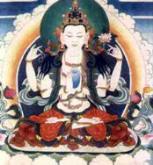
| Tara? Tara is any of a group of twenty-one female deities or symbolic figures used as sup-ports during meditation, two of whom (the Green and White Taras) also figure in Buddhism at the popular level as the patron deities of Tibet and Mongolia respectively. Tara is the most b- eloved of deities, particularly for the Tibetans. Legend has it that once, as a person just like us, she has served countless Buddhas. And ages ago she took the Bodhisattva Vow, to work for the benefit of all beings until every one of us is Enlightened. In her Tibetan form, as Mother Goddess, she arises out of many times and places - Durga and Tara in India or Demeter, Arte- mis, and Isis in Rome - who were later overshadowed by the Virgin Mary. Tara is quite well known to the West through Her Tibetan manifestations, but some are unaware of the impor- |
| tant position She occupies in the Hindu tantrik pantheon. She is the second of the ten Mahavidyas. Erich Neumann, a former student of Carl Jung, discusses the highest form of the feminine archetype, the Goddess of Spiritual Transfor-mation, and views Tara as the highest evolution of this universal aspect of consciousness. Radically defying the tradition of assuming only male rebirths after taking the Bodhisatva Vow, she made a second vow - to work for others forever in the form of a woman. At the turn of the second millenium, as the feminine archetype arises out of intense planetary need, Tara lives and works intimately in the world as a Bodhisattva. In contrast to most of the Buddhist Tutelary Dei-ties, she is directly accessible to the uninitiated, a characteristic which contributes to her popularity. Among the Bud-dha's many human and divine disciples, there were four great celestial or angelic Bodhisattvas, Enlightenment Heroes, who are believed to have taken a special interest in Tibet and the Tibetans. These are the female Boddhisattva Tara, Lady of Miraculous Activities, and the usually male Bodhisatvas - Lokeshvara, Lord of Compassion, Manjushri, Lord of Wisdom, and Vajrapani, Lord of Power. These Boddhisattvas are only in one sense disciples of the Buddha; in another sense they are themselves already perfect Buddhas. They became perfect Buddhas innumerable world-eons before our universe and vowed to manifest as disciples of all Buddhas in all world systems in order to mediate between those Bud-dhas and the human populations of those worlds. |
 |
 |
| Disclaimer: All articles and/or images retain the original copyrights of their original owners. "Sometimes due to misunderstanding the doctrine of karma one has a tendency to blame everything on karma and try to exonerate oneself from responsibility or from the need to take personal initiative. One could quite easily say, 'This is due to my negative past karma. What can I do? I am helpless.' This is a totally wrong understanding of karma, because although one's experiences are a consequence of one's past deeds, that does not mean that one has no choice, nor that there is no room for initiative to bring about change. This is the same in all areas of life. One should not become passive and try to excuse oneself from having to take personal initiative on the grounds that everything is a result of karma. If we understand the concept of karma properly, we will understand that karma means "action," and is a very active process" The Dalai Lama |
 |
 |
 |
 |