 |
| Page 35A |
| DEATH AND DYING IN TIBETAN BUDDHISM.. According to traditional stories of the life of the Buddha, he first decided to leave his home and seek Enlighten-ment after encountering the "four sights"-(I) a sick person, (2) an old person, (3) a corpse, and (4) a world renouncer. The first three epitomize the sufferings to which or-dinary beings are subjects and the last indicates that one can transcend them through meditation and religious practice. The greatest problem of all is death, the final cessa-tion of all our hopes and dreams, our successes and failures, our loves, hates, worries, and plans. From its inception, Buddhism has stressed the importance of death, since awareness of death is what prompted the Buddha to perceive the ultimate futility of worldly concerns and pleasures. Realizing that death is inevitable for a person who is caught up in worldly pleasures and attitudes, he resolved to renounce the world and de-vote himself to finding a solution to this most basic of existential dilemmas. After years of diligent and difficult practice he became Enlightened, and through this he transcend-ed death. His life provides his followers with a model to emulate, and even today Bud- dhist teachers strongly advise their students to meditate on death and impermanence, since they are powerful counteragents to short-sighted concern with the present life and one's own transitory happiness. Buddhist teachers also point out that according to tradi-tion, Buddha began his teaching career discussing death and impermanence in his first |
 |
 |
| sermon on the four noble truths, and he also ended his career with teachings on death and impermanence, which indi-cates how important they are in Buddhist teaching and practice. Tibetan Buddhism places a particularly strong emphasis on instructions concerning death, and Tibetan literature is full of admonitions to be aware of the inevitability of death, the preciousness of the opportunities that a human birth presents, and the great value of mindfulness of death. A per-son who correctly grasps the inevitability, of death becomes more focused on religious practice, since he or she realizes that death is inevitable, the time of death is uncertain, and so every moment counts. An example of this attitude can be found in the bioraphy of Milarepa, who began his meditative practice after having killed a number of people through black magic. The realization of his impending death and the sufferings he would experience in his next lifetime prompt-ed him to find a lama who could show him a way to avert his fate. His concern with death was so great that when he was medititing in a cave his tattered clothes fell apart, but he decided not to mend them, saying, "If I were to die this even-ing, it would be wiser to meditate than to do this useless sewing." This attitude epitomizes the ideal for a Buddhist prac-titioner, according to many teachers. Atisha is said to have told his students that for a person who is unaware of death, meditation has little power, but a person who is mindful of death and impermanence progresses steadily and makes the most of every precious moment. A famous saying of the school he founded, the Kadampa, holds that if one does not meditate on death in the morning, the whole morning is wasted, if one does not meditate on death at noon, the after-noon is wasted, and if one does not meditate on death at night, the evening is wasted. In stark contrast to this attitude, most people frantically run after transitory pleasures and material objects, foolishly believing that wealth, power, friends, and family will bring lasting happiness. This is particularly prevalent in western cultures, which emphasize superficial images of happiness, material and sensual pleasures, and technological innovation as avenues to fulfillment. We are taught to crave such things, but inevitably find that the wealthy and powerful die just as surely as the poor and powerless. We try to cover up the signs of aging through cosmetics and surgery, and we attempt to hide the reality of death by putting makeup on corpses to make them appear "lifelike." We are even taught to avoid discussion of death, since this is seen as being inappropriate in polite company and overly morbid. Instead, people tend to focus on things that turn their attention from death and surround themselves with images of superficial happiness. As Dr. Richard Kal-ish states, death is blasphemous and pornographic. We react to it and its symbols in the same way that we react to por-nography. We avoid it. We deny it exists. We avert our eyes from its presence. We protect little children from observ-ing it and dodge their questions about it. We speak of it only in whispers. We consider it horrible, ugly and grotesque. From its inception, Buddhism has taken a far different course. Anyone who has studied with a Tibetan lama has been regularly reminded of the importance of mindfulness of death. Teachings on death and impermanence are found in every facet of Tibetan Buddhist teaching, and any student who tries to overlook them is soon reminded that Dharma practice requires a poignant awareness of death. Buddhist teachings emphasize the idea that although one's destiny is always influenced by past karma, every person has the ability to exercise free will and influence the course of both life and death. We all shape our own destinies, and in every moment there are opportunities for spiritual advancement. Ac-cording to many Buddhist texts, death presents us with a range of important possibilities for progress. MEDITATION ON DEATH.. Buddhist meditation texts point out that we have ample evidence of death all around us, since everything is changing from moment to moment. A person wishing to ponder death need not go to a cemetery or a funeral home: death is occurring everywhere and at all times. Even the cells of our bodies are constantly being born and dying. All of us are inexorably moving toward physical death in every moment. Since every created thing is impermanent, everything we see, hear, touch, taste, love, despise, or desire is in the process of dying. There is nothing to hold onto, nothing that remains unchanged from moment to moment, and so anyone who tries to find happiness among transient created things is doomed to disappointment. This transiency is the reason why we are prone to unhappiness and suffering, since every-thing we desire eventually breaks down, and we often have to put up with things that we find unpleasant. Imperman-ence is also essential for liberation, since the constant changing nature of cyclic existence makes progress possible. Every moment presents opportunity to train the mind in the direction of Enlightenment, and since there is no fixed ele-ment to personality, every person is constantly engaged in the process of becoming something else. We do, of course, tend to fall into patterns of behavior, and it is all too easy to become caught up in negative patterns, but since every mo-ment is a rebirth, there is always an opportunity to initiate change. A wise person, according to Chagdud Tulku Rinpo- |
 |
| emotions change in response to our experiences and perceptions, and even our most cherished ideas and aspirations are subject to change. Thus, for a person who has awareness of death, every moment becomes a lesson in death and imper-manence. Our dreams also provide an opportunity for mindfulness of death. In Tibetan Buddhist death literature it is said that at the moment of falling asleep one experiences a moment of clear light like the one that arises at the time of death. Moreover, the dream state is like the bardo, since in dreams one often conceives of oneself in a body and under-goes vivid experiences that are creations of mind, just as beings in the bardo do. Waking from a dream is similar to re-birth, since the illusory dream body passes away and we awaken to a new "reality." Because of these similarities, dream yoga is said to be an important method for gaining control over the production of mental images, a skill that is extreme-ly useful in the bardo. DEVELOP MINDFULNESS OF DEATH.. A person wishing to develop mindfulness of death should first cultivate awareness of its inevitability. Everyone who has ever lived has died, and there is no reason to suppose that anyone presently alive will be able to escape death. Even the Buddhas, Bodhisattvas, and Buddhist saints of the past have all died, and so it should be clear to a person who thinks on this that the same fate awaits us all. This understand-ing should not result in passivity, resignation, or morbidity; rather, it should spur us to greater diligence in religion practice. Every moment should be viewed as being infinitely precious, and we should make the utmost effort to use our time to the best advantage. After making this decision, the meditator considers the uncertainty of the time of death and decides that it might occur at any moment, which should lead to a resolve to begin practicing Dharma immediately. Practice should not be put off until the future, but should begin right now. A person who thinks, "I'll wait until the children are grown," "After I finish this semester I'll begin meditating," or "I just don't have enough time right now" will probably never get around to meditation, and even if he does, meditation will most likely be halfhearted. A person who wishes to make real progress must feel a strong, sense of urgency, like a person caught in a burning house looking, for a way out. The next stage in this process is coming to understand that at the time of death only spiritual accomplish-ments will be of any worth. Material possessions, friends and relatives, worldly acclaim and power all vanish at the time of death, leaving nothing behind. None of these can be carried over into the next life. Moreover, one's future birth will be determined by one's actions in this life, and so one should resolve to practice meditation and other religious activities diligently. It is also important not to think that in one's next lifetime one will necessarily be born as a human. Accord-ing to Buddhist teachings on rebirth, a human life is very rare, and it is much more likely that one will be born in some other life situation, and if this happens one's chances for becoming aware of the problems of cyclic existence and seek-ing a solution are greatly diminished. Humans are uniquely situated in cyclic existence: we are intelligent enough to recognize the problems and sufferings of cyclic existence (unlike lower types of beings such as animals), and we are not so overwhelmed by either suffering or happiness that we are blinded to the realities of cvclic existence. A person who understands this situation should become keenly aware of death and resolve to "extract the essence" of the present life. Types and Causes of Death.. According to treatises on death, there are two kinds of death: (1) untimely death, which is the result of violence or accidents, and (2) death that is the result of the natural end of one's lifespan. The natural end. |
| che, understands the imminence of death and plans ahead. Warned of a hur-ricane, we don't wait until the storm pounds the shore before we start to pre-pare. Similarly, knowing death is looming offshore, we shouldn't wait until it overpowers us before developing the meditation skills necessary to achieve the great potential of the mind at the moment of death. Each moment is said to give us a glimpse of the bardo (bar-do, antarabhava), the intermediate state between death and rebirth, since every moment of mind passes away and is re-placed by a successive moment. Reflection on one's own mental processes graphically indicates the fleeting nature of consciousness: thoughts flow along in unending succession, each one giving way to its successor. Thoughts and |
 |
| "One is not low because of birth nor does birth make one holy. Deeds alone make one low, deeds alone make one holy. "With his wealth collected justly, won through his own efforts, he shares both food and drink with beings who are in need. "By doing evil, one defiles oneself; by avoiding evil, one purifies oneself. Purity and impurity depend upon oneself: no one can purify another. "Above, across or back again, wherever he goes in the world let him carefully scrutinise the rise and fall of compounded things. "With firm resolve, guard your own mind! Who so untiringly pursues the Dharma and the Discipline shall go beyond the round of births and make an end of suffering. "Who gives, his virtues shall increase; who is self-curbed, no hatred bears; who so is skilled in virtue, evil shuns, and by the rooting out of lust and hate and all delusion, comes to be at peace. "Who is energetic and not indolent, in misfortune unshaken, flawless in manner and intelligent, sSuch a one to honour may attain. "Just as a tree, though cut down, sprouts up again if its roots remain uncut and firm, even so, until the craving that lies dormant is rooted out, suffering springs up again and again. "Freedom from lust is happiness in the world, the going beyond all sensual desires. But the crushing out of the conceit "I am" - this is the highest happiness. "Learn this from the waters: in mountain clefts and chasms, loud gush the streamlets, but great rivers flow silently. "Abstain from all unwholesome deeds, perform wholesome ones, purify your mind - this is the teaching of the Buddhas. "The past should not be followed after and the future not desired; what is past is dead and gone and the future is yet to come. "If one, longing for sensual pleasure, achieves it, yes, he's enraptured at heart. The mortal gets what he wants. But if for that person - longing, desiring - the pleasures diminish, he's shattered, as if shot with an arrow. "Life is swept along, next-to-nothing its span. For one swept to old age no shelters exist. Perceiving this danger in death, one should drop the world's bait and look for peace. The Buddha |
|
 |
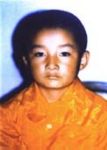
| Photo of Tibet's Missing Panchen Lama Confirms Boy Alive: First Photograph Seen in the West Since Boy Taken Into Custody - (October 9, 2001) Washington, D.C. - The International Campaign for Tibet has obtained a new photo of Gedhun Choekyi Nyima, the 11th Panchen Lama and one of Tibet's most important spiritual figures. It is the only known photo of the 12-year-old boy to come from Tibet since he and his family were detained by Chinese authorities in 1995. Their whereabouts and conditions of detention are still unknown. "This is a phenomenal development and will be greeted with a great out-pouring of emotion by Tibetans - both in exile and inside Tibet," said Bhuchung Tser-ing, Director of the International Campaign for Tibet. "However, because this photo is a formal por-trait, we cannot rule out the possibility that it could have been leaked by the Chinese, themselves," |
 |
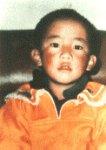 |
| said Tsering. "They may have leaked the photo as a way to address tremendous international pressure for information on the safety and condition of the Panchen Lama. Regardless, by virtue of its existence this photograph shows that the Panchen Lama - one of the world's youngest political prisoners - was still alive at the time it was taken," said Tsering. China has long claimed that Gedhun Choekyi Nyima, recognized by the Dalai Lama and the vast majority of Tibetans as the reincarnation of the 10th Panchen Lama, is only an ordinary boy while their selection is the real Panchen Lama. The photo is likely to be banned inside Tibet by Chinese authorities, although it is likely to be in high demand and circu-lated widely amongst Tibetans. There have been conflicting reports about the whereabouts and well being of the Panchen |
| Lama, ranging from rumors of his death in late 1999 to a set of photos that Chinese officials display-ed briefly, but did not hand over, to European human rights officials. These photos reportedly showed the Panchen Lama playing table tennis and writing Chinese characters on a blackboard. The United States, other governments, U.N. representatives, and humanitarian non-governmental organizations have repeatedly requested access to the 11th Panchen Lama. The Chinese government has denied all requests to date. "We hope that this photo will be used in the bilateral U.S.-China human rights dia-logue that began today in Washington," said Tsering "We also hope the discovery of the photo will lead to greater transparency about the status of the Panchen Lama and that Beijing will now allow ac-cess to him by international rights monitors." |
|
| BUDDHIST ATTITUDE TO LIFE - Those of us who believe in one or another religion have seen the benefits of religious practices if and when we practice them properly ourselves. We have also seen the danger and suffering which come out of direct misuse of religious beliefs, power and religious fanaticism. The benefit or harm caused by religion in everyday life is not in the merit or demerit of the religions. It is entirely dependent on the behaviors of the people who profess themselves to be religious. Since the problems of the world are created by human beings they can only be corrected by human beings, by properly following the fundamental principles of human values, taught and practiced by wise men and women of the world. Let us not be in the illusion that there were only one or few such wise people who came as saviors of the world. We must credit ourselves and thank others for the good things we enjoy in life and be responsible for the bad things we experience. According to Buddhism, Religion or "the Dharma" is no more than a raft or a path for people who wish to journey on it. If we have an accident on the road it is not the road's fault and if we travel well, we do not thank the road. However if we stand in the middle of the road and tell other people that they do not know how to walk, that is not just an accident, it is sheer arrogance and ignorance. Buddhism and its teachings respects all other religions |
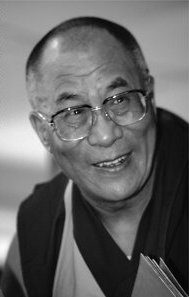
| "When I was in Tibet I had little information, through books or from personal contact, about the nature and value of other traditions. Since I've become a refugee, I have had more opportunity to have closer contact with other traditions, mainly through individuals, and I have gained a much deeper understanding of their value. As a result, my attitude now is that each one is a valid religion. Of course, even from the philosophical viewpoint, I still believe that Buddhist philosophy is more sophisticated, that it has more variety or is more vast, but all other religions still have tremendous benefits or great potential. So on both bases, I think my attitude towards other religions is greatly changed. Today, wherever I go and whenever I meet someone who follows a different religion, I deeply admire their practice and I very sincerely respect their tradition. "For people who have the problem of self-hatred or self-loathing, for the time being it is advisable that they not think seriously about the suffering nature of existence or the underlying unsatisfactory nature of existence. Rather they should concentrate more on the positive aspects of existence, such as appreciating the potentials that lie within oneself as a human being and the opportunities that one's existence as a human being affords. In the traditional teaching, one speaks about all the qualities of a fully endowed human existence. By reflecting upon these opportunities and potentials, one will be able to increase one's sense of worth and confidence. "As we analyze our mental experiences, we recognize that the powerful emotions we possess (such as desire, hatred, and anger) tend not to bring us very profound or long-lasting happiness. Fulfilled desire may provide a sense of temporary satisfaction; however, the pleasure we experience upon acquiring a new car or home, for example, is usually short-lived. When we indulge our desires, they tend to increase in intensity and multiply in number. We become more demanding and less content, finding it more difficult to satisfy our needs. In the Buddhist view, hatred, anger, and desire are afflictive emotions, which simply means they tend to cause us discomfort. The discomfort arises from the mental unease that follows the expression of these emotions. A constant state of mental unsettledness can even cause us physical harm. "Buddhism does not accept a theory of God, or a creator. According to Buddhism, one's own actions are the creator, ultimately. Some people say that, from a certain angle, Buddhism is not a religion but rather a science of mind. Religion has much involvement with faith. Sometimes it seems that there is quite a distance between a way of thinking based on faith and one entirely based on experiment, remaining skeptical. Unless you find something through investigation, you do not want to accept it as fact. From one viewpoint, Buddhism is a religion, from another viewpoint Buddhism is a science of mind and not a religion. Buddhism can be a bridge between these two sides. Therefore, with this conviction I try to have closer ties with scientists, mainly in the fields of cosmology, psychology, neurobiology and physics. In these fields there are insights to share, and to a certain extent we can work together." The Dalai Lama |
|
| and in fact, in Buddhism, it is a transgression to speak ill of anybody or a group of people or their philosophical or religious ideas. Condemning other people or their religion is consider-ed non-religious conduct and is an idle-talk which is one of the ten non-virtues deeds one must abandon. There is no devil outside other than one's own inability to accept and respect other religions. There is no external god other than the kindness and compassion that can flow through us to other living beings. A mother dog that shows her kindness to her puppy is a much better example of compassion for one to emulate than propagating teachings which discriminate against color, race, religion or gender. If one religion cannot tolerate another how can it teach to tolerate anything in this world? Religious intolerance and narrow-mind-edness among Church and religious leaders have let down many of their adherents who call themselves "free thinkers." These are not the benefits of religious practice but the failure to understand and practice religion. Many regard religion as that which narrows their think- |
| ing and limits their freedom to reason. Many modern thinkers, who have otherwise distanced themselves from strict religious dogma have become attracted to the Buddhist way of life and its powerful ideas, have regarded Buddhism as a way of life rather than a religion. Many non-Tibetans I have known, who consider themselves as Buddhists have become interested in Buddhism and have adopted its non-pressured approach to life, mainly because they do not have to believe in things they have not examined and experienced themselves. They are taught to think for themselves rather than have a blind faith in something and are not even allowed to think of it logically. They are encouraged to find a safe way for themselves rather than accept the one and only ready-made highway. There is no one highway to Enlightenment, but there are different footsteps of past masters we can follow if we wish. Learn from everybody and every circumstance and take what it means most to you, but let us not be over-ambitious and try to make a highway to lead everyone. This is how the seeds of religious fanaticism are planted. Several years ago there was a big inter-religious conference in Lon-don which was represented by all major religions. Buddhism was represented by a Sri Lankan monk. The conference was held in a beautiful Church and most of those attending were Christians. All the speakers sat on the stage and the Sri Lankan monk who was the smallest in physical size was asked to speak first. The first remark he made was nothing but a few minutes of total silence and the people in the audience thought he was not going to say anything and the Mas-ter of the Ceremony acted rather anxiously. Then the monk smiled towards the Master of the ceremony and nodded as if he was going to say something after all and then he said: "I am sorry, Ladies and Gentlemen, there is no God." Well, I am not going to repeat it here but such comments do raise questions as to what Buddhism is all about and the role of Buddha for Buddhists. To be frank, Buddha was a great critic of the idea of creation of the world by some supreme God-Head and the idea of the original sin and eternal heaven and hell. To the Buddha, the most important thing was "now," the present moment and how we go from here rather than what happened in the past and what might or will happen in the future. Past is gone and future is not yet due except what we are creating now. He did this not out of believing in some theory but examining it for himself through analysis and rationality. Buddha came up with four fundamental prin-ciples, which he thought was universal to all human problems. Even to his most faithful disciples, the Buddha after his Enlightenment, warned of the danger of "blind faith" and asked them not to believe everything he said just because he taught them. He emphasized the importance of individuals to test and examine the authenticity of his teaching through personal experience, not through mere belief. These four principles are called the four Noble Truths. The first is called the Truth of Suffering. When people face suffering in their lives, the first thing they do is deny it, reject it and worst of all they try to avoid it. This he said was the obvious reason why we suffer in life, because we fail to see the truth, the meaning and its purpose of suffering. Although nobody desires suffering, they always get it, not because of the suffering itself, but because they fail to apply the correct antidote to the problem. He explained that people fail to apply the anti-dotes to their suffering, not because they do not want to but because they do not know the causes of the suffering. We think that the cause of our problem is something or someone outside us and this, he says "is barking up the wrong tree" as the saying goes. We must remember that suffering is a mental phenomenon and it can only be changed or eliminated by correct perception and transformation of our mental attitude. For instance if a person called John loves his friend Barry, and Barry has become very fond of Chris, who John dislikes, John will be upset. This experience of upset, John believes is due to the behavior of his friend Barry who has become fond of Chris. But if we examine it care-fully, the cause of upset is largely due to John's own dislike, resentment and hatred towards Chris, rather than the re-lationship of Barry and Chris. If friendship is to be admired and desired, then one must be able to rejoice in other's friendship. That which is causing John to be upset is because of his feeling of insecurity and jealousy provoked by his own anger which he had not dealt with effectively in the past. Let's elaborate this from the point of view of the impor-tance of solving a problem at hand rather than of the distant past. If a man is shot by an arrow into his eyes, what should he do? Most people fail to remove the arrow struck in their eyes but instead waste time trying to apprehend and convict the accused. They are more interested to find out what happened before the arrow struck in the eye than to re-move the arrow from the eyes. If the hurt is caused by the arrow in the eye, then obviously the arrow must be removed first. But we don't. We want to find out the beginning of the problem how it all started from scratch, i.e. "the creation." The spillover of this way of dealing with suffering is so epidemic and extremely hard to overcome. We deny and disap-prove the hurt that we have already experienced but attempt to bring similar if not heavier hurt upon someone else, whether proven guilty or innocent. Blaming the past and the way we were treated in our childhood by our parents does not address the problem at hand but makes the individual feel more resentful towards their past to the extent of devel-oping self-hatred. This takes us to the second Truth, the truth of the origin of the suffering. In Buddhism, the basic ig- |
 |
| and understanding of this second truth is crucial to be able to do something about the upset which I referred to earlier. When we become aware that all human beings are victims of their own poisons of the mind, we have no time to become angry at the other person, but instead we feel empathy for the other person. This feeling of empathy brings ourselves to the same level as the other person and become more connected. By doing this we will not dwell in our own misery to deepen and enlarge it, but it sharpens one's focus on the other person's needs. If the cause of the hurt is the event of the past, it has already gone and is not happening now except oneself playing it back in one's own mind as if it was un-forgettable. The moment we express our feelings and care for the other person, we will discover that he is in a similar if not worse mental state than we were. There will be an instant cure of the hurt that one has been experiencing out of misunderstanding. This changes the mental climate of anger into compassion and one will feel powerful to bring this change in one's mind without feeling powerless and hopeless. His Holiness the Dalai Lama has said that anger does not help us to solve the problem at hand, but robs us of our sleep, appetite and make us unable to appreciate the good things we have in life. Compassion is taught in all religions but compassion without wisdom is likened in Buddhism to a bird with only one wing. While we all believe in compassion and its virtues, we mustn't use anything to impose upon others in the name of compassion. If someone does not want our compassion, we must have the wisdom to accept the re-jection of our compassion but at the same time not to be discouraged by such experiences. This raises the importance and need of balance and moderation in whatever we do in our lives, be it religious, compassionate or otherwise. If we go into extremes, religion can bring more suffering than it can benefit the world, as we all know. There are certain things we should not be too certain about. So let the law of cause and effect take its own course of reality. Some things we just have to accept. They will change in their own time for nothing is permanent in the world. No matter how hurtful it may have been, it will pass or it mustn't have happened at all. So do not dwell on the past whether good or bad for it may ob-scure the good things which surrounds you now. The ability to maintain the mind in a free and accepting state is an art of happiness, joy and love. This is called the truth of the path, the third noble truth. It is also the path known as "The Middle Way." This comprises of eight fold paths: 1. Right View: All things are in a state of dissatisfaction, whether you are young or old, have a partner or do not have a partner, or you have a job or do not have a job and so forth. Even if you obtain something you desire, it will never remain the same as all things are impermanent. If we wish things were permanent instead, you are asking for more trouble. If you are enjoying this meeting, that is because it was not here before and it will soon be over. If we sit here longer than it is comfortable, we will be in heaps of trouble, so we must move on. Reflection on the law of impermanence can resuscitate you when you are short of breath in certain problems of life and help to cultivate right view. 2. Right Thought: Through the correct attitude that things are not as real, satis-factory and durable as it appears or we want them to be, it will enable us to let go of things so we can become more flexible and less rigid and thus experience less stress. This helps us to sort out the thoughts and to get rid of certain thoughts which are harmful to dwell on. Certain thoughts such as kindness, impermanence and compassion towards other living beings can become a very powerful way of directing one's energy. Lots of the sufferings come from one's selfishness and the inability to think of positive things. Therefore, it is important to choose the right things to think about. We see and hear what is in our mind. 3. Right Concentration: This way we will sort out the priorities in our lives and we will not waste time on trivial matters. There will be a sense of focus and discipline in life which will inject much needed motivation to live and help others rather than cherish for one's own welfare. This requires the adoption of a practice of meditation which one should learn from qualified teachers; not from books or people who have not invested devotion and faith in teachers, and lineage in which such teachings are kept, but teach from books without any experi-ence and authority. Like a camera, one's mind has to be carefully focused through attentive concentrated meditation to see the clear picture of reality as it is. If the camera of mind is out of focus, then our mental lens will project the incom-petence of the cameraman who may in turn blame the object for being too close or far. His picture will be unclear if any. 4. Right Action: One will have the ability to restrain one's senses (particularly when things are going into extremes) and refrain from inflicting lots of unnecessary suffering by sheer carelessness and indulgence. By conserving all the physical energy one will carefully utilize them to benefit others but not to cause any injury to their life, health, property and re-lationship. A person practicing right action, who is able to give so much to others enjoy good health and will be full of energy. He will not feel worn out or exhausted. 5. Right Speech: Exercising restraint over one's physical energy will en-able one to conserve one's energy. So much suffering in our lives are created by our mouth's Karma. So if we under-stand the meaning of right speech we should watch out for our mouth. Go for a short retreat and see how much peace there is in silence and see how much garbage we talk every day. Gain some power over your speech so that no hurtful words will slip out of your mouth. Say what is good for the many and that which is only truthful and helpful. When you do this, you will hear both praise and blame as the echo of void-ness and oneself will be unaffected by other's verbal abuse. Rather they will become objects of compassion. 6. Right Livelihood: This world is for all creatures not just for |
| norance, greed and hatred in our minds are called "the three poisons." The benefits of religious prac-tice can only be appreciated if individuals take full responsibility for their own poisons of the mind. The events of the past are not happening now, except by oneself playing it back in one's own mind. We can see how our mental problems are created from small factors. To reduce or eliminate suffering caused by one's own poisons of the mind, one must not see them as bad or eternally evil. People who do not know anything about poison become its victims. There are also large numbers of people who know the danger of the poisons of the mind but they suppress them without becoming able to detoxify them. Familiarity |
| human beings and the powerful ones. We must give a fair go and act decently towards other living beings. It is not considered clever to take advantage of others who are weaker than ourselves. Culti-vate the ability to treat others with respect as an individual just as oneself desires to be happy. Think of animals and their welfare if you cannot deal too many unruly human beings. Focus on what you can do without causing direct harm on others and share things you have with others who need them most. Give to the needy and do not hoard wealth for it will only become one's own prison and create many enemies. You cannot take anything with you when you die anyway. 7. Right Mindfulness: We know we should be fair to others but without deliberate mindfulness we are often very forgetful to do the very things we want to do ourselves. We may become angry with ourselves just because we were not mindful enough to bring the key left on the table before closing the door. You may become very cranky and may have a very hard day at work. This will create a very bad working environment for your colleagues who will blame it on your temper and so forth. Mindfulness practice requires consis-tent daily meditation practice on how to integrate it into every day life. In one Sutra it says: "One |
 |
| with mindfulness is happy and one without is unhappy." 8. Right Effort: One must be diligent to change one's habitual patterns. Just as weight conscious people get up early in the morning to jog and do exercise, likewise one who is consci-ous of the actual health of mind, one must employ right effort to break the negative habitual pattern of one's attitude to life and its problems. The effort to read this can be regarded as right effort but you must implement what you have learnt from this reading. You do not learn these things in school, college, university, on the soccer field or in the pub. One should create an environment in the house to change one's habits, in the bed room, in the kitchen and wherever you are by yourself. Develop strong will inside you and this undying will and courage to do good for the benefit of many will be of great benefit whether you regard yourself as religious or not. If we have individuals who adopt this theory of the eight noble paths they will experience the fourth noble truth, the truth of the cessation of suffering. Whether you believe in god or you are an atheist, or believe in reincarnation or in an eternal heaven and hell, it does not matter. You will only experience what you deserve. You will be a kind and sincere person, that is the purpose of religion. Who cares what we believe in? It largely depends on how we conduct our everyday lives. That is the essence of religious practice, the eight noble paths are one of the many ways to practice it. In brief, do not be too happy when everything is fine with you for there are many less fortunate beings who are suffering at this very moment. Do not forget the poor, sick, aban-doned children, the lonely and aged people. Share your happiness by thinking of their welfare. Think of those caught in wars throughout the world and do something useful with compassion instead of indulging in your own fortune. Also do not be too sad when things are not going well with you. You are one of the many fortunate people in the world. Appreci-ate and be grateful for the things you have, this will reduce your sufferings. In order to experience the cessation of suf-fering, the fourth noble Truth, learn to be durable like the earth, fluid like the water, creative and light like the air and free and vast like the sky. Learn these qualities you yearn to cultivate from Mother Nature, if one fails to find any hu-man being devoid of fault. Finally, may the ills of humanity not defile the ever shining truth of the Enlightened ones, like the lotus flower untainted by the soil in which it grows. Accept what you can now, for this cannot be repeated again. What you can not accept now, do not reject it straight away, for you might find it useful later on. Let there be aware-ness, compassion and tolerance among all living beings. Disclaimer: All images and articles retain the original copyrights of their original owners. |
 |
 |
 |
| Visit our main Buddhism site. More information, images, and, NO pop-ups! |
 |
 |
| Last Update: 11/30/04 |