 |
| Page 28A |
 |
 |
| 'THE GREAT MOTHER' TAKING REFUGE AND GENERATING BODHICITTA... Until we achieve Enlightenent, I and all sentient beings, go for refuge to the Buddha, Dharma and Sangha. Trough the virtues I collect by giving and the other perfections, may I become a Buddha for the benefit of all. (3X) NAMO - Guru, Teacher, Blessed One and the Great Mother Prajnaparamita, surrounded by your Sons, the |
| Buddhas of the ten directions and all Bodhisattvas; I prostrate to this assembly, make offerings and go for refuge, please empower me with your blessings. THE SUTRA OF THE HEART OF THE PERFECTION OF WISDOM Arya-Bhagavati-prajnaparamita-hrdaya-sutram (Homage to the holy Perfection of Wisdom!) Thus I have heard: At one time, the Blessed One was dwelling in Rajagriha on Massed Vultures Mountain, together in one method with a great assembly of monks and a great assembly of Bodhisattvas. At that time the Blessed One was absorbed in the concentration of the countless aspects of phenomena called Profound Illumination. At that time also, Superior Avalokiteshvara, the Bodhisattva, the Great Being, was looking perfectly at the practice of the profound perfection of wisdom, perfectly looking at the emptiness of inherent existence of the five aggregates also. Then, through the power of Buddha, the venerable Sariputra said to the Superior Avalokiteshvara, the Bodhisattva, the Great Being; "How should a son of the lineage train who wishes to engage in the practice of the profound perfection of wisdom?" Thus he spoke, and the Superior Avalokiteshvara, the Bodhisattva, the Great Being, replied to the venerable Sariputra as follows: "Sariputra, whatever son or daughter of the lineage wishes to engage in the practice of the profound perfection of wisdom should look perfectly like this: subsequently looking perfectly and correctly at the emptiness of inherent existence of the five aggregates also. Form is emptiness; emptiness is form. Emptiness is not other than form; form also is not other than emptiness. Likewise, feeling, discrimination, compositional factors and consciousness are empty. Shariputra, like this, all phenomena are merely empty, having no characteristics. They are not produced and do not cease. They have no defilement and no separation from defilement. They have no decrease and no increase. Therefore, Shariputra, in emptiness there is no form, no feeling, no discrimination, no compostional factors, no consciousness. There is no eye, no ear, no nose, no tongue, no body, no mind, no form, no sound, no smell, no taste, no tactile object, no phenomenon. There is no eye element and so forth, upto no mind element, and also upto no element of mental consciousness. There is no ignorance and no exhaustion of ignorance, and so forth, upto no ageing and death and no exhaustion of ageing and death. Likewise, there is no suffering, origin, cessation or path; no exalted wisdom, no attainment and also no non-attainment. Therefore, Shariputra, because there is no attainment, all Bodhisattvas rely on and abide in the perfection of wisdom; their minds have no obstructions and no fear. Passing utterly beyond perversity, they attain the final state beyond sorrow. Also, all the Buddhas who perfectly reside in the three times, relying upon the perfection of wisdom, become manifest and complete Buddhas in the state of unsurpassed, perfect and complete Enlightenment. Therefore, the mantra of the perfection of wisdom, the mantra of great knowledge, the unsurpassed mantra, the equal-to-the-unequalled mantra, the mantra that thoroughly pacifies all suffering, since it is not false, should be known as the truth. The mantra of the perfection of wisdom is proclaimed: TAYATHA: OM GATE GATE PARAGATE PARASAMGATE BODHI SVAAHAA "Sariputra, a Bodhisattva, a Great Being, should train in the profound perfection of wisdom like this." Then the Blessd One arose from that concentration and said to the Superior Avalokiteshvara, the Bodhisattva, the Great Being, that he had spoken well. "Good, good, O son of the lineage. It is like that. Since it is like that, just as you have revealed, the profound perfection of wisdom should be practiced in that way, and the Tathagatas will also rejoice." When the Blessed One had said this, the venerable Shariputra, the Superior Avalokiteshvara, the Great Being, that entire assembly of disciples, as well as the worldly beings - gods, humans, demi-gods and spirits -, were delighted and highly praised what had been spoken by the Blessed One. RECITING THE MANTRA - TAYATHA OM GATE GATE PARAGATE PARASAMGATE BODHI SOHA REQUESTS TO OVERCOME HINDRANCES: Great Mother, Prajnaparamita, and all the Buddhas and Bodhisattvas of the ten directions, through the power of your blessings may these true words of mine be achieved. Just as before, when by contemplating the profound meaning of the perfection of wisdom and reciting its words, Indra overcame all the harm of maras, non-humans and so forth, in the same way, by my contemplating the profound meaning of the perfection of wisdom and reciting its words: May all the harm of maras, non-humans and so forth be overcome.(clap) May they become non-existent. (clap) May they be pacified.(clap) May they be thoroughly pacified.(clap) DEDICATION PRAYER - May all kinds of interferences, diseases and possessing spirits be pacified, may we be separated from unfavourable conditions, and may we achieve favourable conditions and everything excellent. Through this fortune may there now be happiness and health. (Printed on several of our sites.) |
 |
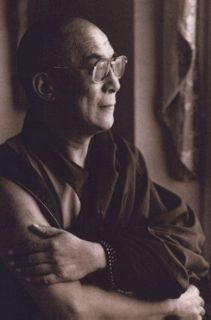 |
| "According to the Madhyamika school, every subject or phenomenon has two qualities: its conventional quality and its ultimate quality. In other words, it has a temporary quality and a lasting, real or permanent one. These two qualities are inevitably present in one object, and have some entity. When exponents of the mind-only or Cittamatra school explain the Two Truths, they start by explaining the three characteristics or signs and base their explanation on the Two Truths on that."The purpose of explaining the Two Truths is that we are basically confused and ignorant about reality. In order to identify that ignorance and eradicate that confusion, one has to know the real nature of phenomena. Thus, the Two Truths play an important role in understanding reality. "Inner development comes step by step. You may think: "Today my inner calmness, my mental peace, is very small," but still, if you compare, if you look five, ten, or fifteen years back, and think: "What was my way of thinking then? How much inner peace did I have then and what is it today?"- comparing it with what it was then, you can realize that there is some progress, there is some value. This is how you should compare - not with today's feeling and yesterday's feeling, last week, last month, or not even last year, but five years ago. Then you can realize what improvement has occurred internally. Progress comes by maintaining constant effort in daily practice." The Dalai Lama |
|
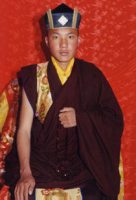
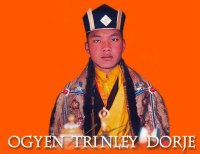
| VEN. 9TH KHENCHEN THRANGU RINPOCHE Talks on The Karmapa Controversy... There is this controversy on the identification of the 17th Karmapa within the Kagyu Lineage. Two senior disciples of the 16th Karmapa have identified two different boys as the reincarnation of the 16th Karmapa. Tai Situ Rinpoche has identified Urgyen Trinley Dorje from Tibet, whereas Sharma Rinpoche has identified Thaye Dorje from India. As a result, there now appears to be two 17th Karmapas. This has given rise to much confusion amongst the disciples. What is worse is that when the Khenpos and Rinpoches of the Kagyu Lineage were asked to clarify the situation by their disciples, they mostly said they recog-nised both of them. But Tai Situ Rinpoche and Sharma Rinpoche do not recognise each other�s choice as the reincarna-tion of the 16th Karmapa. I think controversial matter of this kind should be clarified by religious elders of the Kagyu Tradition. Recently, I was honoured with an opportunity to interview Thrangu Rinpoche. Not only is he a religious elder, he was also a religious teacher of Situ Rinpoche and Sharma Rinpoche. I think he is the best qualified Kagyu religious elder to clarify and inform us the truth. Q. Has there ever been such a problem within the Karmapa Lineage? A. H.H. The Karmapa is the first to reincarnate in the history of mankind. (A reincarnation is known as a Tulku in Tibetan) His Holiness has the longest lineage and the present Karmapa is the 17th reincarnation. Upon his passing, every Karmapa will go to the pure land and then in keeping with his aspirations, he will return to this world. There were questions as to who was the real Karmapa during the 8th, 10th and 12th reincarnations. However, by relying on their faith in the Kar-mapa and their determination to support and protect His Holiness, the disciples were able to resolve the matter on all the three different occasions. In the end, none of the incidents became a big problem. Q. Why were there controversies and why did they not become problems? What were the reasons? A. Usually, at the beginning of such a problem, there are two groups of people. Those in the first group do not have the capability and the psychic ability to identify the rein-carnation of the Karmapa. Neither do they have the wisdom. What they rely on is their gift of the gab and mundane skill. So they doubt and question who really is the Karmapa. Those in the other group are true practitioners with accom-plishment. Their wisdom enables them to know very clearly who is the real Karmapa. The moment there are these two different groups of people, there will be disagreement. The Karmapa is the embodiment of Sakyamuni Buddha and all the Boddhisatvas and their spiritual activities and accomplishment. Therefore, he is supra-mundane and is not at all disturbed by such disagreements. Consequently, none of them ever became a problem. Q. According to Rinpoche, the controversy will eventually be resolved owing to the quality and merits of the Karmapa. But before that, disciples of the Karmapa are thrown into a state of disarray and confusion. Therefore, it is hoped that religious elders of the Kagyu Tra-dition, like Rinpoche, will enlighten the Kagyu followers. From Rinpoche�s point of view, how do they ascertain exactly who is the real Karmapa? If they do not know how to do it, they may not know their real Karmapa for the rest of their life. A. This is an important matter. It is a matter concerning the lineage of the whole tradition. I would like to use a simple analogy as an illustration. Assuming that there are two apples on the table, one of them is a real apple and the other, a fake. Should we be hungry for food, it would be good if we picked the real apple and threw away the fake. If we had done otherwise, we would go hungry. It is the same with the case of ascertaining correctly who is the real Karmapa and who is not. The consequences of a mistake are grave. Who has the ability to identify the real Karmapa and to teach the disciples how to differentiate? It is my duty and also the duty of the religious elders and senior Rinpoches within the Kagyu Lineage. I want to take up this responsibility now. I want to inform all my disciples unambiguously who is the real Karmapa and who is the Karmapa they must follow in their Dharma practice. At the moment, two Karmapas have surfaced, one from India and the other from Tibet. In terms of worldly affairs, I have nothing to do with them. I am in Nepal. But in the course of my lineage practice, I constantly prayed to the 16th Karmapa for his help to enable me to know clearly and deeply in my mind who is the real 17th Karmapa. Praying with pure motivation and with the blessings of the 16th Karmapa, I have concluded with absolute certainty that Urgyen Trinley Dorje from Tibet is the 17th Karma-pa. I have reached this conclusion from my own practice and the blessings of the Karmapa. We could also determine who is the real 17th Karmapa from the following: First, there was a great Tibetan terton by the name of Chogyur Ling-pa. In the record of his vision of the prophecies revealed to him, there are clear descriptions of various events in the life of the 1st to the 21st Karmapa. These descriptions include place of birth of the Karmapas and the names of their respec-tive parents. According to this record of prophecies, Urgyen Trinley Dorje of Tsurphu Monastery is the real Karmapa. Secondly, when I was with the 16th Karmapa, he wrote a prediction letter about his reincarnation when he was on his way to India from Tibet. After he arrived at Rumtek Monastery in Sikkim, he also wrote a letter in poetic form predict-ing his reincarnation. I had read both the letters myself. The first of the two letters stated clearly that Urgyen Trinley Dorje of Tibet is the 17th Karmapa. The second letter written in Rumtek, which I had read, again stated clearly that Urgyen Trinley Dorje of Tibet is the 17th Karmapa. Thirdly, all the highly realized monks of the Vajrayana Buddhism, like H.H. the Dalai Lama, H.H. Sakya Trizin and many other compassionate religious practitioners, have in their wis-dom said that Urgyen Trinley Dorje of Tibet is the 17th Karmapa. I feel very fortunate to have obtained so much pure evidence; to have found the 17th Karmapa; to be able to prostrate to him. I hope all of you will generate pure motiva-tion and also hope all of you will know that Urgyen Trinley Dorje is the 17th Karmapa. Consciously discard the fake apple. Reach for the real one. You will reap tremendous benefit. Q. Rinpoche said that the great terton master Chogyur |
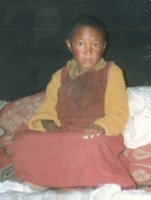 |
| Young Urgyen Trinley Dorje |
 |
| Lingpa had written down prophecies about the 1st to the 21st Karmapa. What had he written about the prophecy for the 17th Karmapa? A. Chogyur Lingpa was a contemporary of the 13th Karmapa. The predic-tions were really for the 14th through to the 21st reincarnations. On the prediction about the 17th Karmapa, not much was written. Never-theless, several important points were recorded. The first important point in the record mentions that the Karmapa was together with Tai Situ Rinpoche on a mountain with plenty of rocks and lush trees. Their minds are inseparably joined as one. On the 15th Karmapa, the record states that he achieved great accomplishment in his yoga practice of meditating on the bindus. The fact that the 15th Karmapa had dakinis with him showed that he did engage in the yoga practice mentioned in the prediction. The prediction on the 16th Karmapa was rather special. |
| The record mentions a double storey building. The 16th Karmapa, Rangjung Rigpe Dorje was seated on the ground floor and a statue of Sakyamuni Buddha was placed on the first floor. This illustration clearly shows that the 16th Karmapa was a very pure bikkhu. It also shows that the 16th Karmapa had many pure bikkhu disciples. The description that the 17th Karmapa is together with Tai Situ Rinpoche is meant to show there is disagreement in this reincarnation and the mind of the 17th Karmapa and the mind of Tai Situ Rinpoche are inseparable from each other. Q. On the basis of the predictions made by Chogyur Lingpa, Rinpoche has concluded that Urgyen Trinley Dorje, who is together with Tai Situ Rinpoche, is the real Karmapa. In addition, Rinpoche has mentioned that you had read the two letters written by the 16th Karmapa. Could Rinpoche kindly tell us in detail the contents of these two letters? A. The first letter consisting of two pages was written by the 16th Karmapa when he was in Tibet. After his arrival in Sikkim, he asked a printing com-pany called Camata to print quite a number of copies. Many had the chance to read this letter. The second letter was written in Rumtek, Sikkim. Again many had the chance to read it. After reading it himself, the Abbot of the Rumtek Monastery asked the Karmapa for permission to have the second letter printed for wider circulation. Not agreeing to have too many copies around, the Karmapa allowed only 50 copies to be made. The common salient point in these two letters was the mention of the return of the 16th reincarnation to Tibet. In particular, the first letter said, �I am now in India, but I will return to Tibet very soon.� The second letter also mentioned he would return to Tibet very soon. How-ever, in his conversation with his disciples, he usually said, �I will not go back to Tibet.� But in both his letters, he said, �I will return to Tibet very soon.� Later on, his disciples realized that the main reason for him to say he would return to Tibet soon was to state his prediction that he would be enthroned in Tibet. Q. Rinpoche has given such invaluable infor-mation and insights to prove that Urgyen Trinley Dorje is the real Karmapa. Since it has been proven as such, how is Sharmapa able to oppose it? As he is a former student of Rinpoche, what reasons does he have to oppose and insist on different views from his former teacher? A. Before the 17th Karmapa was identified, I had spoken to Sharma Rinpoche regarding identifying the reincarnation. I had advised him not to do it (carrying out a different identification); not to create problem. For the sake of our master and for the sake of making a decision on this important matter, I hope all involved will disregard their own views and self-interest. But his relative (who has since passed away) was adamantly against my suggestion. Sharma Rinpoche did not accept my advice any more. Owing to those factors, I do not feel I should advise him again after that. This is because a practitioner of any Vajrayana method has no need to argue with anyone in his search for his master and refuge. This is very important. Q. I heard that Sharma Rinpoche had wanted to have the letter written by the 16th Karmapa examined by scientific methods. What was his reason that prompted him to make such a demand? A. The two letters mentioned earlier were not the prediction documents that Sharma Rinpoche wanted examined. Regarding forensic examination of the prediction documents, I personally think it is unnecessary, because the documents on reincarnation left by the past 15 Karmapas had never been subjected to forensic examina-tion. Whenever there was a controversy, the disciples would finally resolve it with their faith in the Karmapa and his blessings. Similarly, in the present case, there is no need to have the documents examined by forensic experts. As a matter of fact, many high ranked monks and practitioners have through their compassion and wisdom pointed out clearly who is the Karmapa. All we need to do is to abide by what they say. Furthermore, forensic examination is used against criminals. The documents of prediction left behind by Karmapas are not only sacred but also blessed. Examining them as though they are documents left behind by criminals is rather strange from the religious point of view. On the basis of these two reasons, forensic examination of the documents is unnecessary. Q. Now there are two Karmapas in India. One of them is real and the other is not. Has Rinpoche considered enthroning Urgyen Trinley Dorje, wearing the black hat, at Rumtek Monastery in a ceremony attended by Their Holinesses, Rinpoches and Khenpos invited from the various schools of the Vajrayana Tradition in order to obtain their recognition? Is there such a plan? A. On the crown-ing with the black hat, it will be accomplished in due course, irrespective of whether we work hard towards it or we do not. Why? Because of his compassion and his aspiration to carry on with his Dharma activities to liberate all sentient beings, the Karmapa has returned to our fold of his own free will. With the power of such blessing, all Dharma activities of this nature will naturally come to fruition. There is no need for us to worry. Q. Quite a number of Karma Kagyu dis-ciples are followers of Sharmapa. If after hearing your teaching, and they believe Urgyen Trinley Dorje is the real Kar-mapa, how are they going to face their teacher Sharmapa? A. The crux of the matter is the Karmapa lineage. It has to do with the purity of the whole Kagyu Lineage. This is because of the fact that in the Kagyu Lineage, the continuous transmission of all the blessing, Dharma practice, method, initiation, oral transmission, mantra and teaching come from the unbroken lineage of the Karmapas. In other words, if the Karmapa Lineage from the first to the 17th reincarnation is pure, then we will receive pure blessing in our practice. We can thus see that purity in the lineage is extremely im-portant. This is the reason why we want to follow Karmapa Urgyen Trinley Dorje. If disciples of Sharmapa Rinpoche rea-lise that the person chosen by him is not the real Karmapa and still think it is fine for them for as long as they follow Sharma Rinpoche because the issue of the real and fake Karmapa is immaterial to them, then their thinking is very wrong. As a matter of fact, they are cheating themselves. If you believe Urgyen Trinley Dorje is the Karmapa, your faith and the blessing of your master will quite naturally take you close to Karmapa Urgyen Trinley Dorje. In such a situation, you will naturally leave Sharma Rinpoche. At this juncture, I must clarify that I am not giving this teaching from the side of Tai Situ Rinpoche. I am not saying all this to show support for Tai Situ Rinpoche or Gyaltsab Rinpoche. Neither am I trying to criticize Sharma Rinpoche or negate his stand. The real purpose of this discussion today is to ex-plain clearly that in Vajrayana practice, in whom we take refuge is the most important matter. The person/image to whom we express our aspiration and say our prayer must be a clear and pure one. This is very important. A clear and pure person/image will be of tremendous help to the practitioners. If the person in whom we take refuge and to whom we say our prayer is a wrong one, then there will not be much good result in our practice. This point is what I want to stress very strongly today. My purpose is to let Karma Kagyu practitioners know where their true refuge is. I hope all of you understand clearly the purpose of today�s discussion is about true refuge. This topic is being discussed from the angle of Dharma practice. Q. According to Rinpoche�s teaching, Karma Kagyu practitioners take refuge in the Karmapa |
 |
| and visualize him as their Root Guru. If they take Sharmapa as their master and also believe Thaye Dorje as the Karmapa, then there should not be any problem. In the case of Karma Kagyu disciples who do not believe in Thaye Dorje but believe in Urgyen Trinley Dorje as the Karmapa, are they then betraying their master? How should they resolve this in their practice? A. I do not take side, but I want to tell Kagyu disciples they must determine the correct spiritual path they want to follow in their Dharma practice. This is the most important thing to do. If we are Sharmapa�s disciples on the one hand and are doubtful about his ways on the other, we still have no need to criti-cize him. There is also no need for us to stay put and continue to learn Dharma from |
| him. If you have faith in Urgyen Trinley Dorje, you will immediately and naturally turn to him for Dharma teaching. Q. If disciples of Sharma Rinpoche take refuge in Urgyen Trinley Dorje in their Dharma practice, from which Khenpos and Rinpoches should they learn Dharma? A. There is no need for them to criticize Sharma Rinpoche, but they can learn Dharma from many Rinpoches of Urgyen Trinley Rinpoche. How does one find a new guru? In order to find a guru, one must keep on observing. When the speech, conduct and Dharma teaching of a teacher make you feel that his lineage is pure, you will develop the confidence to learn Dharma from him. If a Rinpoche says, �come, be my disciple,� then something is not quite right with that Rinpoche. If one is not able to tell who is the real Karmapa and who is not, can one visualize both of them as Karmapas in one�s practice? There is a Tibetan saying: �one cannot succeed with two minds; one cannot sew with two needles.� Two minds means the absence of single-mindedness; one therefore cannot hope to achieve much. It is the same with visualizing Karmapa in Dharma practice. There are two types of people who visualise two Karmapas. The first type is made up of people who have no faith in either one, but have the belief that one of the two is the real Karmapa. As a result, their motivation for practice is only 50%. Their result reaped in the future will not be complete. Those in the second type are people who practiced under the 16th Karmapa. They are not sure if the 16th Karmapa has reincarnated and returned to the human realm. They think that whatever the situation is, it is best for them to follow the 16th Karmapa. Since he already passed away, they now visualize two 17th Karmapas and seek refuge under both. Their thinking is very erroneous. Nobody should visualize seeking refuge with a muddled head. There must be clear conviction in only one Karmapa and also in his return. In the 17th Karmapa one should take ref-uge. I am Thrangu Tulku. Whether my reincarnation is one or many does not affect the Karma Kagyu Tradition very much. In the case of Karmapa, all along there is only one reincarnation at any one time. This is what the disciples must firmly believe. Q. Assuming that every disciple of the 16th Karmapa feels that since he took refuge in the 16th Karma-pa and received the methods and Sadhanas from him, so he does not need to care who is the 17th Karmapa and in his practice, he just follows everything the 16th Karmapa taught him, can he do that? A. This is illogical. Take an example. I had faith in my father when I was of the age of 1 to 30. From 30 to 40 years old, I did not have faith in him. Then you tell me I still have faith in my father! Maybe. In the case of the Karmapa Lineage, Karmapa�s disciples must have sin-cere faith in the first Karmapa and in all his reincarnations, as well as the firm belief that the lineage is continuous and unbroken. Q. Rinpoche has repeatedly said that there is only one Karmapa. But I have heard recently that Karmapa could have body, speech, and mind reincarnations. There could be many Karmapa reincarnations. Is there only one Kar-mapa (at any one time) or are there many? In the Karmapa history, were there cases of a Karmapa giving rise to many reincarnations after he passed away? A. When some lamas took rebirth, they manifested body, speech, and mind rein-carnations in order to expand their work of liberating all sentient beings wider. As for Karmapa, there is only one rein-carnation at a time. Q. Lastly, there have been many Khenpos and Rinpoches who spread the Dharma. When asked who is the real Karmapa, they will as a rule not say whom they support. The reason is that they are on good terms with Sharma Rinpoche and do not wish to offend anybody. What are Rinpoche�s views on these lamas? A. There are indeed many Karma Kagyu lamas who give people the impression that they are neutral, not offending either parties. Lamas of this category do not really care for the practice of their disciples. They also do not really want to teach their disciples the correct Dharma. When you tell your disciples a particular Dharma teaching is correct, you cannot tell them in an am-biguous manner. You cannot have hesitation and reservation. Personally, I am not bothered by people�s criticism that I am always for the protection of Urgyen Trinley Dorje. My genuine concern is whether every of my disciples can follow a pure lineage and from this pure lineage, develop boddhicita and compassion for the attainment of Enlightenment. My aspiration in giving Dharma teaching is to look after and care for every sentient being. |
|
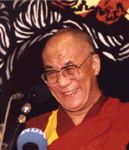
| Karma - by H.H. the 14th Dalai Lama... Pleasure and pain come from your own former actions (karma). Thus, it is easy to explain karma in one short sentence: If you act well, things will be good, and if you act badly, things will be bad. Karma means actions. From the viewpoint of how actions are done, there are physical, verbal, and mental actions. From the viewpoint of their effects, actions are either virtuous, non-virtuous, or neutral. In terms of time, there are two types - actions of intention which occur while thinking to do something and the intended actions which are the expres-sions of those mental motivations in physical or verbal action. For instance, based on a motive, I am now speaking and |
| self. This means that pleasure and pain arise from virtuous and non-virtuous actions which come not from outside but from within yourself. This theory is very useful in daily life, for once you believe in the relationship between actions and their effects, whether there is an external policeman or not, you will always be alert and examine yourself. For example, if there were some money or a precious jewel here and no one was around, you could take it easily; however, if you be-lieve in this doctrine, since the whole responsibility for your own future rests on yourself, you will not. With respect to the effects of actions, many different types are explained. One type is called "effects which are fruitions." For instance, if someone, due to a non-virtuous action, is born in a bad transmigration as an animal, that rebirth is an effect which is a fruition in another life. Another type is called an "effect experientially similar to its cause;" for instance, if after be-ing reborn in a bad transmigration due to an act of murder you were subsequently reborn as a human, you would have a short life, - the effect, a short life being similar in terms of experience to the cause, cutting short someone else's life. Another type is called "effect functionally similar to its cause;" an example would be naturally to have tendencies to-ward the same non-virtuous action, such as murder. Examples for all of these can similarly be applied to virtuous ac-tions. Also, there are actions the effects of which are shared - many beings having similarly done similar types of ac-tions and thereby undergoing effects in common, such as enjoying a certain physical environment together. The impor-tant point is that such presentations of Buddhist theories about actions can make a positive contribution to human soci-ety. It is my hope that whether religious or not, we will study each other's systems to gather helpful ideas and tech-niques for the betterment of humankind. Disclaimer: All images and/or articles retain the original copyrights of their original owners. |
 |
| thereby accumulating a verbal action of karma. With gestures of my hands, I am also accumulat-ing physical karma. Whether these actions become good or bad is mainly based on my motiva-tion. If I speak from a good motivation out of sincerity, respect, and love for others, my actions are good, virtuous. If I act from a motivation of pride, hatred, criticism, and so forth, then my verbal and physical actions become non-virtuous. Karmas, therefore, are being made all the time. When one speaks with a good motivation, a friendly atmosphere is created as an immediate result; also, the action makes an imprint on the mind, inducing pleasure in the future. With a bad motivation, a hostile atmosphere is created immediately, and pain is induced for the speaker in the future. Buddha's teaching is that you are your own master; everything depends on your- |
 |
 |
 |
| January 27, 2004 |
| Click at left to visit our Main Buddhism site. More information and images. And, NO pop-ups! |
 |