 |
| Page 27 |
 |
| One sits in meditation because one knows that one is suffering but does not know why. In the search for the cause, one discovers that that cause is greed, hate and delusion, all of which are caused by ignorance; immorality and amorality are two of the worst causes of ignorance. One day, by accident, one discovers that it is not good to steal, not good to kill, not good to covet, not good to be incestuous, not good to be overindulgent in sexuality and all the other ramifications of these. In discovering this, one discovers the Precepts. When one knows the Precepts, and makes them into one's blood and bones, one sits properly in meditation. 2- Suffering's Cause When you sit with the mind of a Buddha, which is the mind of the Precepts, you see the heart, and know the heart, of a Buddha. If you would see Buddha, you must look with the eyes of Buddha: if you would hear Buddha, you must listen with the ears of Buddha: if you would feel Buddha, you must be receptive to Buddha. This is only possible when you have found the cause of suffering, therefore one sits, knowing the True Buddha within and willing to look at that which clouded Buddha. That which clouded Buddha is past wrong doing, past akusala karma. If you do not study this karma with great care, if you do not study it with the mind of a Buddha from the point of view of every aspect of the Precepts, you will not fully comprehend suffering's cause. When you comprehend suffering's cause as a result of looking care-fully at one's past karma in one's past lives, knowing that these past lives are not real, only that which is left, like a perfume or a smell of the past, when you understand this, you will know, see and hear the Buddha within. If any of your past karma is so horrendous that you feel fearful of ever being able to cleanse it, call with utter trust on the Eter-nal and offer up that karma to Him, Her or It. 3- The Cessation of Suffering After one knows the Buddha within and practices the Precepts with all one's might and with all one's heart and has made those Precepts into one's blood and bones, then the Buddha within, which is the True Child of the Lord, shall come to full fruition and you will know your Real Body, as the result of the cessation of suffering. This Baby Buddha is the Real You, and in meditation you will not only find It, you will know It with a certainty never before realized. You must be very careful when the certainty comes for you must not slip over into pride: spiritual pride will dash one down to hell. 4- The Noble Eightfold Path Now we come to how to live, knowing the certainty of the Buddha within, knowing that you are, indeed, the Child of the Lord. In order to do this, you must never cease your training, never cease your meditation. Be sure you get a quiet time in the morning, and a quiet time at night, in a place where you are, indeed, undisturbed, even if that quiet time is only for a few seconds or a few minutes. Learn the eight steps of the path well. The steps are: Right Understanding, Right Thought, Right Speech, Right Action, Right Livelihood, Right Effort, Right Mindfulness, Right Concentration. This Noble Eightfold Path, together with pure, real meditation, will lead to the perpetuation of True Eternal Life, not as you are now, in the sense of the fleshly body, but as you were truly meant to be, one with the Great Eternal. |
| Why Practice Buddhism? The reason people follow Buddhist teachings and practice meditation is to become free from suffering and find happiness. This is summed up in the most well known and fundamental teaching of Buddhism, the Four Noble Truths which were Buddha's first teaching after he attained Enlightenment. Buddha said that we should test his teach-ings as we would test gold: subject them to fire and beat them to see if their nature remains pure and true. If we find that they satisfy our personal scrutiny, then it is appropriate to investigate further by exploring meditation and also trying out the wisdom of these Buddhist teachings in our daily lives. The Four Noble Truths: 1- The existence of suffering 2- The causes of suffering 3- The cessation of the causes of suffering 4- The path that leads to the cessation of the causes of suffering 1 - Suffering Exists |
 |
 |
 |
| The great depend on their heart, not on their purse. Emerson The man who makes no mistakes does not usually make anything. E.J. Phelps It is always possible to approach a goal by a detour. Theodore Reik One is happy as a result of one's own efforts, once one knows the necessary ingredients of happiness: simple tastes, a certain degree of courage, self-denial to a point, love of work, and above all, a clear conscience. George Sand Complaining only makes matters worse. Whatever energy you send out, that's what you get back. If you're negative, you will get negative back. But if you're positive, well the sky's the limit. Anon What would life be if we had no courage to attempt anything? Vincent van Gogh Creative work carries with it a form of intense love. Lin Yutang Practice yourself, for heaven's sake, in little things; and thence proceed to greater. Epicetus A song is no song unless the circumstance is free and fine. Emerson To keep the body in good health is a duty, otherwise we shall not be able to keep our mind strong and clear. Buddha Into each life some rain must fall, some days must be dark and dreary. Henry Wadsworth Longfellow As in the physical world, so in the spiritual world, pain does not last forever. Katherine Mansfield Wounds we inflict on ourselves are the most difficult to heal. Theodore Reik |
 |
|
| finally organize into a harmonious Brotherhood. Thus, the true teaching is the fundamental requirement of a perfect organization and, as mentioned above, it is the light which enables people to recognize one another, to become adjusted to one another and to smooth out the rough places in their thinking. Thus, the organization that is formed on the per-fect teachings of Buddha can be called a Brotherhood. They should observe these teachings and train their minds ac-cordingly. Thus, the Buddha's Brotherhood will theoretically include everyone, but, in fact, only those who have the same religious faith are members. The Buddha's Brotherhood will have two types of members: there will be those who are teaching the lay members, and those who are supporting the teachers by offering the needed food and clothing. They together will disseminate and perpetuate the teaching. Then, to make the Brotherhood complete, there must be perfect harmony among the members. The teachers teach the members and the members honor the teachers so that there can be harmony between them. Members of the Buddha's Brotherhood should associate together with affectionate sympathy, being happy to live together with fellow-followers, and seeking to become one in spirit. There are six things that will help to lead a Brotherhood to harmony. They are: first, sincerity of speech; second, sincerity and kindness of action; third, sincerity and sympathy of spirit; fourth, equal sharing of common property; fifth, following the same pure precepts; and sixth, all having right views. Among these things, the sixth or "all having right views" forms the nucleus, with the other five serving as wrappings for it. There are two sets of seven rules to be followed if the Brotherhood is to be a success. The first is, as a group: 1. they should gather together frequently to listen to the teachings and to discuss them; 2. they should mingle freely and respect one another; 3. they should revere the teaching and respect the rules and not change them; 4. elder and younger members are to treat each other with courtesy; 5. they should let sincerity and reverence mark their bearing; 6. They should purify their minds in a quiet place which they should, nevertheless, offer to others before taking if for themselves; 7. They should love all people, treat visitors cordially, and console the sick with kindness. A Brotherhood that follows these rules will never decline. The second is, individually each should: 1. maintain a pure spirit and not ask for too many things; 2. maintain integrity and remove all greed; 3. be patient and not argue; 4. keep silent and not talk idly; 5. submit to the regulations and not follow different teachings; and 7. be thrifty and frugal in daily living. If its members follow these rules, the Brotherhood will endure and never decline. As mention-ed above, a Brotherhood should maintain harmony in its very essence; therefore, one without harmony cannot be called a Brotherhood. Each member should be on guard not to be the cause of discord. If dis cord appears, it should be re-moved as early as possible, for discord will soon ruin any organization. Bloodstains can not be removed by more blood; resentment can not be removed by more resentment; resentment can be removed only by forgetting it. (Note: Even though the above are 'rules of conduct' for monks in a community, they can be followed by a group of lay people who gather together at specified times of the week or month.) |
| THE BROTHERHOOD OF organizations - there are three kinds. First, there are those that are organized on the basis of the power, wealth or authority of great leaders. Second, there are those that are organized because of its convenience to the members, which will continue to ex-ist as long as the members satisfy their conveniences and do not quarrel. Third, there are those that are organized with some good teaching as its center and harmony as its very life. Of course, the third or last of these is the only true organization, for in it the members live in one spirit, from which the unity of spirit and various kinds of virtue will arise. In such an organiza-tion, there will prevail harmony, satisfaction and happiness. Enlightenment is like rain that falls on a mountain and gathers into rivulets that run into brooks, and then into rivers which finally flow into the ocean. The rain of the sacred teaching falls on all people alike without re- gard to their conditions or circumstances. Those who accept it gather into small groups, then into organizations, then into organizations, then into communities and, finally, find themselves in the great Ocean of Enlightenment. The minds of these people mix like milk and water and |
|
| Passion is not a quality that is foreign to you. It is not a characteristic that some people are born with and some must do without. To be passionate is as natural to you as breathing, as natural as being alive. It is the source of who you are. The more of yourself you offer to something, the more passion you will receive back in return. Do whatever you do with commitment. Love whatever you do with commitment. Choose whatever you choose with commitment. Then, whatever you do will be infused with passion. The relationships you have will vibrate with passion. The choices you make will resound with passion. Don't allow fear to seduce you into indifference. Guard your passion as you would guard your most precious possession. Defend it as you would defend your dearest companion from harm. You will be rewarded with a life of grace and exuberance. Open yourself to the potential in this moment. Let go of how you think it should look. Let go of how you think it should feel. Let go of trying to control what is happening. just let go Now, you've created the space for magic to occur. Now, you've opened the door so that the mysterious may rush in. Now you've made room in your heart for passion. |
 |
|
| lation, he knows: 'I make a short exhalation.' 'Clearly perceiving the entire (breath-) body, I shall breathe in:' thus he trains himself; 'Clearly perceiving the entire (breath-) body, I shall breathe out:' thus he trains himself. 'Calming this bodily function, I shall breathe in:' thus he trains himself; 'Calming this bodily function. I shall breathe out:' thus he trains himself. Thus he dwells in contemplation of the body, either with regard to his own person, or to other persons, or to both, he beholds how the body arises; beholds how it passes away; beholds the arising and passing away of the body. A body is there - (A body is there, but no living being, no individual, no woman, no man, no self, and nothing that be-longs to a self; neither a person, nor anything belonging to a person.) this clear awareness is present in him, to the ex-tent necessary for knowledge and mindfulness, and he lives independent, unattached to anything in the world. Thus does the disciple dwell in contemplation of the body. ('Mindfulness of Breathing' is one of the most important meditative exercises. It may be used for the development of Tranquillity , i.e. for attaining the four Absorptions, for the develop-ment of Insight or for a combination of both practices. Here, in the context of, it is principally intended for tranquilliza-tion and concentration preparatory to the practice of Insight, which may be undertaken in the following way. After a certain degree of calm and concentration, or one of the Absorptions, has been attained through regular practice of mindful breathing, the disciple proceeds to examine the origin of breath. He sees that the inhalations and exhalations are conditioned by the body consisting of the four material elements and the various corporeal phenomena derived from them, e.g. the five sense organs, etc. Conditioned by fivefold sense-impression arises consciousness, and together with it the three other 'Groups of Existence', i.e. Feeling, Perception, and mental Formations. Thus the meditator sees clear-ly: 'There is no ego-entity or self in this so called personality, but it is only a corporeal and mental process conditioned by various factors.' Thereupon he applies the Three Characteristics to these phenomena, understanding them thorough-ly as impermanent subject to suffering, and impersonal.) The Four Postures And further, whilst going, standing, sitting, or lying down, the disciple understands (according to reality) the expressions; 'I go;' 'I stand;' 'I sit;' 'I lie down;' he understands any position of the body. ('The disciple understands that there is no living being, no real Ego, that goes, stands, etc., but that it is by a mere figure of speech that one says: 'I go,' 'I stand' and so forth.') Mindfulness and Clear Comprehension And further, the disciple acts with clear comprehension in going and coming; he acts with clear compre-hension in looking forward and backward; acts with clear comprehension in bending and stretching (any part of his body); acts with clear comprehension in carrying alms bowl and robes; acts with clear comprehension in eating, drink-ing, chewing and tasting; acts with clear comprehension in discharging excrement and urine; acts with clear comprehen-sion in walking, standing, sitting, falling asleep, awakening; acts with clear comprehension in speaking and keeping silent. (In all that the disciple is doing, he has a clear comprehension: 1. of his intention, 2. of his advantage, 3. of his duty, 4. of the reality. Contemplation of Loathsomeness And further, the disciple contemplates this body from the sole of the foot upward, and from the top of the hair downward, with a skin stretched over it, and filled with manifold impur-ities: 'This body has hairs of the head and of the body, nails, teeth, skin, flesh, sinews, bones, marrow, kidneys, heart, liver, diaphragm, spleen, lungs, stom-ach, bowels, mesentery, and excrement; bile, phlegm, pus, blood, sweat, lymph, tears, skin-grease, saliva, nasal mucus, oil of the joints, and urine.' Just as if there were a sack, with openings at both ends, filled with various kinds of grain - with paddy, beans, sesamum and husked rice - and a man not blind opened it and examined its contents, thus: 'That is paddy, these are beans, this is sesamum, this is husked rice:' just so does the disciple investigate this body. Analysts of Four Elements And further, the disciple contemplates this body, however it may stand or move, with regard to the elements; 'This body consists of the solid element, the liquid element, the heat-ing element and the vibrating element.' Just as if a skilled butcher or butcher's apprentice, who had slaughtered a cow and divided it into separate portions, were to sit down at the junction of four highroads: just so does the disciple contem-plate this body with regard to the elements. When a butcher rears a cow, brings it to the place of slaughter, binds it to a post, makes it stand up, slaughters it and looks at the slaughtered cow, during all that time he has still the notion 'cow.' But when he has cut up the slaughtered cow, divided it into pieces, and sits down near it to sell the meat, the notion, 'cow' ceases in his mind, and the notion 'meat' arises. He does not think that he is selling a cow or that people buy a cow, but that it is meat that is sold and bought. Similarly, in an ignorant worldling, whether monk or layman, the con-cepts 'being,' 'man,' 'personality,' etc., will not cease until he has mentally dissected this body of his, as it stands and moves, and has contemplated it according to its component elements. But when he has done so, the notion 'personality,' etc., will disappear, and his mind will be-come firmly established in the Contemplation of the Elements. |
| Right Mindfulness - What, now, is Right Mindfulness? The Four Foundations of Mindfulness The only way that leads to the attainment of purity, to the overcoming of sorrow and lamenta-tion, to the end of pain and grief, to the entering upon the right path and the realization of Nirvana, is by the 'Four Foundations of Mindfulness.' And which are these four? Herein the disciple dwells in contemplation of the Body, in contemplation of Feeling, in contemplation of the Mind, in contemplation of the Mind-Objects; ardent, clearly comprehending them and mindful, after putting away worldly greed and grief. 1. Contemplation of the Body. But how does the disciple dwell in contemplation of the body? Watching Over In- and Out-Breathing. Herein the disciple retires to the forest, to the foot of a tree, or to a solitary place, seats himself with legs crossed, body erect, and with mindfulness fixed before him, mindfully he breathes in, mindfully he breathes out. When making a long inhalation, he knows: 'I make a long inhalation;' when making a long exhalation, he knows: 'I make a long exhalation'. When making a short inhalation, he knows: 'I make a short inhalation:' when making a short exha- |
|
| Love profits from a sense of humor. Anon It is sad not to be loved, but it is much sadder not to be able to love. Miguel de Unamuno Love has no room for jealousy. Anon Some people feel with their heads and think with their hearts. G.C. Lictenberg No human creature can give orders to love. George Sand Don't miss life while waiting for love. Anon Freedom is nothing else but the chance to be better. Albert Camus |
| Anything worthwhile is worth waiting for. Anon Lovers learn not to just hope for the better, they strive to make it happen. Anon A man's indebtedness.is not a virtue; his repayment is. Virtue begins when he dedicated himself actively to the job of gratitude. Ruth Benedict One forgives to the degree that one loves. La Rochefaucould Our love must not be a thing of words and fine talk. It must be a thing of action and sincerity. Anon |
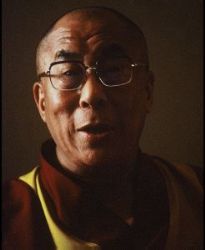
| "If you have fear of some pain or suffering, you should examine whether there is anything you can do about it. If you can, there is no need to worry about it; if you cannot do anything, then there is also no need to worry. "Just as you have the instinctive natural desire to be happy and overcome suffering, so do all sentient beings; just as you have the right to fulfill this innate aspiration, so do all sentient beings. So on what exact grounds do you discriminate?" The Dalai Lama Disclaimer: All images and/or images retain the original copyrights of their original owners. |
|
| August 10, 2003 |
 |
 |
 |
|
|
 |
| Visit our larger Buddhism site. No pop-ups. More information and images. Click above. |