 |
| Page 26 |
 |
| "For as long as space endures, and for as long as living beings remain, until then may I, too, abide to dispel the misery of the world." The Dalai Lama |
| I think that these difficult times have helped me to understand better than before how infinitely rich and beautiful life is in every way - and that so many things that one goes around worrying about are of no importance whatsoever. Isak Dinesen What wisdom can you find that is greater than kindness. Jean-Jacqaues Rousseau Happiness (joy) is proof of partial or total success in "the art of living." Happiness is man's greatest achievement; it is the response of his total personality to productive orientation toward himself and the world outside. Erich Fromm At no time in the world will a man who is sane, overreach himself, overspend himself, overrate himself. Lao-Tzu |
 |
| The religion with the highest ideals and the most logical means of achieving them is the best religion. Shakyamuni presented the high ideals of Buddhism to his audiences in a logical, gradual method, suiting his message to the wisdom and capacity of each individual, as illustrated by the story of the Buddha's half brother Nanda. When Shakyamuni left home for the religious life, the Shakyas were without a crown prince and Nanda, upon reaching the age of twenty, was named to succeed Shakyamuni. At his coronation, Nanda was to marry Sundari, the most beautiful woman in the king-dom. As the time of the ceremony approached, it happened that the Buddha paid his first visit to Kapilavastu since his Enlightenment, and he set about converting the Shakyas to the new faith he had founded. Just before the wedding, the Buddha called at the palace to beg food and gave his empty alms bowl to Nanda, who took it to the kitchen, filled it, and started to return to the gate. Sundari saw him and asked him to come to her at once. Nanda replied that there was no need to worry. He would return before her makeup dried. When he reached the gate, however, the Buddha was gone. Nanda sought him and finally found him in Nigrodha Garden. Accepting the bowl of food, the Buddha took the opportun-ity to persuade Nanda to take the tonsure and become a monk. After joining the Order, however, Nanda could not keep his mind off Sundari and the crown he had given up. Unable to carry out his religious duties properly, he complained to his fellow monks that he would like to become a layman again. Soon word of Nanda's pining for Sundari reached the ears of the Buddha, who summoned the young man for a talk. Having heard Nanda's explanation, he used his superna-tural powers to transport the two of them to the realm of the thirty-three gods, where they found five hundred heavenly nymphs of unbelievable beauty playing and amusing themselves. The Buddha asked Nanda who was more beautiful, Sundari or the nymphs. The young man replied that Sundari could not compare with the heavenly beauties. The differ-ence was as great, he said, as that between Sundari herself and an ugly old female monkey. The Buddha them promised Nanda that if he would remain a monk a live a pure life, following the discipline faithfully, after death he would be re-born in the realm of the thirty-three gods to live with the beautiful nymphs. Enticed by this prospect, Nanda forgot about Sundari and began performing his religious duties assiduously. Because they knew he was being good for the wrong reason, his fellow monks laughed at him. They scorned one who followed the discipline out of nothing more than the hope of being rewarded with a bevy of beautiful women. But, still determined to purify Nanda's mind, the Buddha took the young man on another supernatural journey - this time to one of the most terrifying sectors of hell. Surprised to find no sinners being tortured there, Nanda asked why and was told that this particular place in hell had been pre-pared for a disciple named Nanda, who was performing religious duties for evil purposes and would eventually be taken there for punishment. This frightened Nanda so greatly that he changed his way of thinking entirely and became a truly religious follower of the Buddha. The lives of great Buddhist priests contain many stories of men who became monks to acquire fame or position and later, through study and practice, became genuine believers. Though the story of Nanda is a fabrication of a later date, it may well be true that the Buddha's half brother advanced from a lower to a higher level of faith as a result of the Buddha's intervention. Concern for religion may start with various motives. It may be less a dissatisfaction with reality than a desire for status or profit. It may begin as indefinite theoretical or phil-osophical curiosity or as mere habit. Furthermore, the fear of reality that leads some people to religion varies in degree and intensity and therefore may be expected to result in equally varied degrees of faith. But it is the religious spirit, no matter what its source, that is the fundamental force inspiring people to seek the ideal state. In the initial stage, dis-satisfaction with the actual world is usually a private matter. Typically, a person longs to escape from the world of suf-fering and transmigration to eternal Nirvana. But this yearning remains concerned with karmic rewards and with the individual's own pain and pleasure. People who understand the true principle of dependent origination and discover the highest aim of human life must be the achievement of peace and well-being for society as a whole. Having reached this point, such people reject the self-oriented for the world-oriented vision. Instead of worrying about their own comfort and peace of mind, they become altruistic enough to fall into lower states of being (the realms of hell, hungry spirits, and beasts) for the sake of saving others. Less noble motives recede into the background or are rejected altogether. This step by-step advancement accounts for the complexity of religious phenomena and for the expedient methods of Buddhist guidance, in which each teaching is adjusted to the need of the moment, just as medication must be selected to suit the illness being treated. |
|
 |
| Dying comes naturally to us all, having the courage to live does not. Anonymous We tend to forget that happiness doesn't come as a result of getting something we don't have, but rather of recognizing and appreciating what we do have. Frederick Koenig Perfection is not a requirement of love, but honesty is. Anonymous The way to love anything is to realize it might be lost. G.K. Chesterton When you depend upon other people to stimulate you to feel, you are giving them control over your aliveness. Become the source of your own passion. Become the source of your own aliveness. It is in the passion of you where the strength of your love will reveal itself. Passion that lasts cannot be based on attraction to a physical body that is always changing. True passion emanates from your spirit, |
| which recognizes its mate in another and rejoices in the miracle of your reunion. You have the power to create a life of deep fulfillment. You have the power to create a life of great purpose. That power lies in your passion. Find the courage to bring your passion with you wherever you go. Find the courage to show your passion to whomever you meet. When you choose to be passionate about your life, your life will be passionate about you. When you rely on other people to get excited about life, you are making them the source of your passion. When you depend upon other people to stimulate you to feel, you are giving them control over your aliveness. Become the source of your own passion. Become the source of your own aliveness. To find your way back to your passion, you must first find your way back to your heart. There, at the center of your being, resides the source of all you are. You are Light. You are Joy. You are Love. It is in the passion of you where the strength of your love will reveal itself. Passion that lasts cannot be based on attraction to a physical body that is always changing. True passion emanates from your spirit, which recognizes its mate in another and rejoices in the miracle of your reunion. Don't wait for your passion to find you. Create a fertile field in which true passion can easily grow. Commit yourself as completely and genuinely as you can to your relationship. The power of your commitment will nourish the seeds of passion and allow it to blossom in your heart. Do you work with love? Do you work with gratitude? Do you work with passion? This is your true career here on earth, and you can do it anytime, and anywhere. When you give all of yourself to each moment of your work and each moment of your life, you will experience true success, and you will know true fulfillment. Passion is the sound love makes when it sings, the movement love makes when it dances. Passion is the gift you earn when you honor the fire of love and learn to keep it burning. |
|
 |
 |
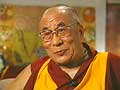
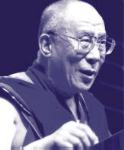
| NEWSMAKERS - Tenzin Gyatso - The Dalai Lama is something of a paradox to Western eyes. A deeply spiritual figure, he is also the political leader of 6 million Tibetans. As such, he carries on a tradition that stretches unbroken to the 13th century. But Chinese domination of his country has driven the Dalai Lama into exile. After fleeing to India in 1959 after the Chinese takeover of Tibet, he eventually settled in the town of Dharamsala, at the head of the Tibetan Government-in-exile. From there he has waged a peaceful campaign to free Tibet from Chinese rule, a struggle that won him the Nobel Peace Prize in 1989. Now the plight of the Tibetan people is widely known, taken up by governments and celebrities around the world. The Dalai Lama was born Lhamo Dhondup in 1935, to poor parents in a tiny farming village in eastern Tibet. He was renamed Tenzin Gyatso when he was recognized as the 14th Dalai Lama at age 2. Each Dalai Lama is believed by Tibetan Buddhists to be the reincarnation of the previous Dalai Lama and the incarnation of Avalokiteshvara, the Buddha of Compassion. "One of the main points is kindness. With kindness, with love and com-passion, with this feeling that is the essence of brotherhood, sisterhood, one will have inner peace. This compassionate feeling is the basis of inner peace." His Holiness the 14th Dalai Lama - After 18 years of intense religious and philo-sophical study, which began at age 6, the Dalai Lama received the Tibetan academic degree of Geshe Lharampa, rough-ly equivalent in Western terms to a Ph.D. in Buddhist metaphysics. But while he was finishing his education, the Chi-nese army invaded Tibet. In 1950, when he was 16, the Dalai Lama had to assume political power to negotiate with the occupying forces. Nine years later Tibetans rebelled and were crushed by the Chinese troops. In the aftermath of the revolt, the Dalai Lama fled with 80,000 Tibetans to India, where he helped found the Government-in-exile. The com-munity of exiled Tibetans in India, Nepal and the West has since grown to about 120,000 people - testimony to the Dalai Lama's dedication to preserving Tibetan culture. He has founded 53 agricultural settlements for the refugees to live and work on, and he established more than 80 Tibetan schools in India and Nepal. He has also helped to start at least 200 monasteries that keep Tibetan Buddhist teaching alive. Together, these institutions provide the refugees with the means of preserving their language, religion, history and culture. Nobel Prize Committee, 1989: "The Dalai Lama has developed his philosophy of peace from a great reverence for all things living, and upon the concept of universal respon-sibility, embracing all mankind as well as nature." But the Dalai Lama also passionately campaigns for Tibetan inde-pendence and for an end to human-rights violations in his native land. At the 1987 Congressional Human Rights Cau-cus, he put forward a five-point peace plan as a first step toward resolving Tibet's status. His plan calls for Tibet to be designated a 'nonviolent zone,' for an end to the relocation of large numbers of Chinese into Tibet, for the restoration of democratic freedom, and for an end to China's use of Tibet for nuclear-weapons production and nuclear-waste dump-ing. Although he constantly maintains that he is "just a simple Buddhist monk," the Dalai Lama has met with many heads of state and religious leaders to speak about Tibet and his belief in the oneness of the human family. He has col-lected honorary degrees from such diverse institutions as Melbourne University in Australia and Benares Hindu Univer-sity in Varanasi, India, and awards including the Nobel Peace Prize and the Raoul Wallenberg Congressional Human Rights Award. |
|
 |
| "We practice various meditations during dream states. The potential of such practices is that at a certain level, it is possible to separate the gross levels of consciousness from the gross physical state, and arrive at a subtler level of mind and body. You could, for example, separate your mind from your body during sleep and do some extra work that you cannot do in your ordinary body. However, you might not get paid for it! "If objects and people evoke attachment in us, we do not understand the true nature of phenome na. We can only become detached by realizing the true nature of things. "Happiness is a state of mind. With physical comforts, if you mind is still in a state of confusion and agitation, it is not happiness. Happiness means calmness of mind. "There are many different philosophies, but what is of basic importance is compassion, love for others, concern for other's suffering, and reduction of selfishness. I feel that compassionate thought is the most precious thing there is. It is something that only we human beings can develop. And if we have a good heart, a warm heart, warm feelings, we will |
| be happy and satisfied ourselves, and our friends will experience a friendly and peaceful atmosphere as well. This can be experienced nation to nation, country to country, continent to continent." The Dala Lama |
| Buddhism in Action - Buddhism is something to practice, to do, not just the usual religious consolations. We can see this from the last Noble Truth, which is a set of guidelines for action. We must make an effort; salvation lies in our own hands but we have to work toward it. Buddha dedicated his life to helping others and did not simply rest content in Nirvana. So, thinking of others and seeing that their needs are just as important as our own is also a part of the Bud-dhist path. When the Buddha decided to help other beings because they were suffering, he did not lose the qualities of Enlightenment characterized by Nirvana. How he lived his life was an example to others. Buddha was compassionate and wise but behind these qualities was inner peace. The Dalai Lama says: "If you have inner peace, the external problems do not affect your deep sense of peace and tranquility. In that state of mind you can deal with situations with calmness and reason, while keeping your inner happiness." We can find inner peace in our lives by meditating and following the Buddha's guidelines. Buddha's message is timeless and universal, unconditioned by age, culture, or any other factors. It says that for all those with the precious gift of life, there is an opportunity to awaken to our Buddha-nature. The classic Buddhist texts tell us that it often takes many lifetimes to reach this state of awareness, but they also say that it is pos-sible in this life, because our essential nature is potential Buddhahood. And in this way, there is nothing to attain, mere-ly to awaken to this potential in the present moment. Our Buddha-nature lies dormant within us and all we need to do is discover our true self by waking up to our Buddha-nature. Patience - Practicing patience gives us great inner strength and courage to face difficult situations. It helps us dis-cover the real cause of problems and not to simply react by blaming temporary circumstances. If we are patient, we are less likely to get upset quickly when things don't go our way and less likely to act badly toward others. Traditionally, pa- tience is classified into three types: the patience of forgiveness, the patience of accepting suffering, and the patience of being able to behave virtuously. The nature of our world is inherently unsatisfactory, so troublesome situations will defi-nitely arise. So, when someone gets angry with us, or abuses us, we also naturally tend to be angry and abusive toward the person. This merely aggravates the situation. If we practice patience instead of mindlessly reacting, we realize the person is suffering and out of control. However, we do not have to behave in the same way. If we stay calm, eventually the person's anger will lessen and the situation can be resolved calmly. Accepting Suffering - The patience of accepting suffering is of great use in our lives, because suffering will inevitably arise due to the unsatisfactory nature of our ex-istence. Normally when we suffer and face problems and difficulties we think of them as really bad. If we accept the sit-uation with patience and remind ourselves that even this too will pass, then we lessen the experience of suffering. The Japanese poet Issa accepted the presence of fleas and lice as part of his daily life. But he transformed his irritation through cultivating patience to the point where he treated them as friends. In this Haiku poem, he is talking to the fleas that lived on his body as he prepared to go on a trip: "Now you fleas! You shall see Matsushima - Off we go!" Pa-tience can help us transform how we think about our problems. If we regard them as teachers, providing us with the opportunity to learn, we are less distressed when they arise. We cannot prevent problems - this is the nature of life - but transforming how we think about them helps us deal with them more successfully. |
|
| is no solid ground to stand upon. Yet it is our tendency to try to hold on to things as solid entities, solid beliefs. There are simply objects and our per-ception of these forms, which differ subtly from person to person. It is not a question of my perception being better than yours, or yours being right and mine being wrong. They both exist differently simply because each of us is unique; no two people have had exactly the same experiences and reactions to them. And this is where the problems of our world begin and end. If we do not take our own perception of reality too seriously and allow other people to have theirs, then there are fewer rigid viewpoints and fewer arguments. The Hardest to Realize - This is the last of the Six Perfections, and the hardest to realize. Without generosity, morality, joyful effort, patience, and single-pointed mind, we are unable to practice the perfection of wisdom fully. However, wisdom must also inform the other five perfections. Otherwise, self-identity arises, for example, with an act of generosity "I am being generous," which only leads to the accumulation of merit. When wisdom informs an act of generosity there is no sense of "I" giv-ing; the act is a spontaneous gesture arising from compassion. When we give or practice morality, and so on in this way, such acts lead us toward Enlightenment. And this is why we are practicing Buddhism, to be free of the sufferings of cyclic existence. Traditionally, the simile used to illustrate this point likens this twofold approach to the two wings of a bird. Thus, we practice the first five perfections - albeit at the beginning with self-identity - in order to develop wisdom, and we also practice wisdom in order to let go of self-identity with our actions. This is the uniting of method, or skillful means, with wisdom, and when these two things work together in harmony, we can fly toward Enlightenment. Disclaimer: All images and/or articles retain the original copyrights of their original owners. |
|
 |
| "The Superior Avalokiteshvara, the Bodhisattva, the great being, replied to the Venerable Sha-riputra as follows: 'Shariputra, whatever son or daughter of the lineage wishes to engage in the practice of the profound perfection of wisdom should look perfectly like this... Form is empty; emptiness is form. Emptiness is not other than form; form is also not other than appiness.'"Buddha Wisdom - In these famous words from the Heart Sutra, Buddha teaches the essence of the perfec-tion of wisdom; form and emptiness are not essentially different. At first glance, this might seem contradictory and difficult to understand. What does it actually mean? We experience forms or ob-jects as solid entities. We have read that emptiness means they exist in dependence on their consti-tuent parts, causes, and conditions. But emptiness is also empty; it cannot exist by itself and is dependent on causes and conditions, too - such as someone realizing its true nature. There |
| January 10, 2004 |
 |
|
|
| VISIT OUR MAIN SITE... (Much more information and many more images, and - NO pop-ups!) |
 |