 |
| Page 25A |
 |
 |
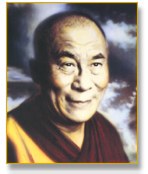 |
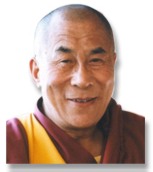
| "It is essential to study and acquire an education. Training the mind is a process of familiarization. In the Buddhist context, familiarization, or meditation, refers to the positive transformation of the mind, that is, to the elimination of its defective qualities and the improvement of its positive qualities. Through meditation we can train our minds in such a way that negative qualities are abandoned and positive qualities are generated and enhanced. "Physically you are a human being, but mentally you are incomplete. Given that we have this physical human form, we must safeguard our mental capacity for judgment. For that, we cannot take out insurance; the insurance company is within: self-discipline, self-awareness, and a clear realization of the disadvantages of anger and the positive effects of kindness." The Dalai Lama |
| Out of the Red - The KARMAPA's daring escape from China keeps hope alive for Tibetans... More than two years have passed since a 14-year-old monk from Tibet made his dramatic escape over the Himalayas to India and caught the imagination of the world. He was the 17th Gyalwa Karmapa, one of Tibet's most important religious leaders. To me, a Tibetan born and brought up in exile in India, news of his escape came like a reviving gust of fresh air that blew away the cloud of confusion and inertia that seemed to have descended upon our decades-old freedom struggle. With that one act of desperation and courage, the Karmapa exposed the Chinese lie that Tibetans were happy and prospering under their rule and that they were free to practice their religion. Every year, more than a thousand Tibetans continue to risk their lives, defying Chinese-imposed restrictions on travel by secretly making the arduous and dangerous Himalayan crossing into Nepal and India. The Karmapa's escape was different. He was communist China's most prized stooge in Ti-bet, the highest reincarnate lama under Beijing's control to have the Dalai Lama's official recognition, the head of one of the four sects of Tibetan Buddhism - and by tradition, the third most important lama in its religious hierarchy. For some time, the Chinese had realized that the greatest threat to their rule in Tibet came from the country's deep-rooted Buddhist culture. The enduring faith of Tibetans in their exiled leader, the Dalai Lama, despite a sustained and vitriolic official campaign to discredit him was a continuing source of bafflement and irritation. So, avowedly atheist communist functionaries suddenly found enthusiasm not only in supporting the institution of reincarnate lamas but in actually ap-proving their selection. Their strategy was to control and indoctrinate the future religious leaders of Tibet and to deploy them in their efforts to neutralize any opposition and legitimize China's occupation of the country. Ever since his state-authorized enthronement at the age of seven in 1992, the Karmapa had been carefully groomed to assume the role of |
 |
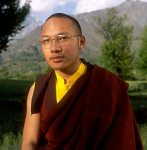 |
| Chinese puppet. But something went wrong with the plans. Despite the Chinese authorities' best efforts at brainwashing him and despite his youth, the Karmapa grew up with a strong sense of his own convictions; his spiritual training proved stronger and more profound than the Chinese could have imagined. When the contradictions between his beliefs and the public role he was expected to perform - especially when it came to denouncing the Dalai Lama - became irreconcilable, he decided to flee. This was a repudiation of everything the Chinese claimed to have achieved in Tibet, a slap in the face by someone they considered a hand-picked lieutenant. The Karmapa's escape was a loud wake-up call to those of us who have spent a lifetime in exile. It reminded us forcefully that the cause we are fighting for is alive and just and as desperate as ever. (By Tenzing Sonam, 2002) |
|
| When things go wrong as they sometimes will; when the road you're trudging seems all uphill; When the funds are low, and the debts are high and you want to smile, but have to sigh; When care is pressing you down a bit - rest if you must, but do not quit. Success is failure turned inside out; the silver tint of the clouds of doubt; And you can never tell how close you are; it may be near when it seems so far; So stick to the fight when you're hardest hit - it's when things go wrong that you must not quit. |
| Finish each day and be done with it. You have done what you could; some blunders and absurdities have crept in; forget them as soon as you can. Tomorrow is a new day; you shall begin it serenely and with too high a spirit to be encumbered with your old nonsense. Ralph Waldo Emerson He who joyfully marches to music in rank and file has already earned my contempt. He has been given a large brain by mistake, since for him the spinal cord would fully suffice. This disgrace to civilization should be done away with at once. Heroism at command, senseless brutality, and all the loathsome nonsense that goes by the name of patriotism, how violently I hate all this, how despicable and ignoble war is; I would rather be torn to shreds than be part of so base an action! It is my conviction that killing under the cloak of war is nothing but an act of murder. Albert Einstein The pursuit of peace and progress cannot end in a few years in either victory or defeat. The pursuit of peace and progress, with its trials and its errors, its successes and its setbacks, can never be relaxed and never abandoned. Dag Hammarskjold Perfect love is rare indeed - for to be a lover will require that you continually have the subtlety of the very wise, the flexibility of the child, the sensitivity of the artist, the understanding of the philosopher, the acceptance of the saint, the tolerance of the scholar and the fortitude of the certain. Leo Buscaglia Love has nothing to do with what you are expecting to get, it's what you are expected to give - which is everything. Anon Sympathy constitutes friendship; but in love there is a sort of antipathy, or opposing passion. Each strives to be the other, and both together make up one whole. Samuel Taylor Coleridge Immature love says: "I love you because I need you." Mature love says "I need you because I love you." Erich Fromm I expect to pass through this world but once. Any good thing, therefore, that I can do or any kindness I can show to any fellow human being let me do it now. Let me not defer nor neglect it, for I shall not pass this way again. Stephen Grellet |
|
| way: seeing the five skandhas to be empty of nature. Form is emptiness; emptiness also is form. Emptiness is no other than form; form is no other than emptiness. In the same way, feeling, perception, formation, and consciousness are emptiness. Thus, Shariputra, all Dharmas are emptiness. There are no characteristics. There is no birth and no cessa-tion. There is no impurity and no purity. There is no decrease and no increase. Therefore, Shariputra, in emptiness, there is no form, no feeling, no perception, no formation, no consciousness; no eye, no ear, no nose, no tongue, no body, no mind; no appearance, no sound, no smell, no taste, no touch, no Dharmas; no eye dhatu up to no mind dhatu, no dha-tu of Dharmas, no mind consciousness dhatu; no ignorance, no end of ignorance, up to no old age and death, no end of old age and death; no suffering, no origin of suffering, no cessation of suffering, no path, no wisdom, no attainment, and no non-attainment. Therefore, Shariputra, since the Bodhisattvas have no attainment, they abide by means of prajnapa-ramita. Since there is no obscuration of mind, there is no fear. They transcend falsity and attain complete Nirvana. All the Buddhas of the three times, by means of prajnaparamita, fully awaken to unsurpassable, true, complete Enlighten-ment. Therefore, the great mantra of prajnaparamita, the mantra of great insight, the unsurpassed mantra, the un-equaed mantra, the mantra that calms all suffering, should be known as truth, since there is no deception. The prajna-paramita mantra is said in this way: OM GATE GATE PARAGATE PARASAMGATE BODHI SVAHA. Thus, Shariputra, the Bodhisattva Mahasattva should train in the profound prajnaparamita.� Then the Blessed One arose from that sama-dhi and praised noble Avalokiteshvara, the Bodhisattva Mahasattva, saying, �Good, good, O son of noble family; thus it is, O son of noble family, thus it is. One should practice the profound prajnaparamita just as you have taught and all the tathagatas will rejoice.� When the Blessed One had said this, venerable Shariputra and noble Avalokiteshvara, the Bodhisattva Mahasattva, that whole assembly and the world with its gods, humans, asuras, and gandharvas rejoiced and praised the words of the Blessed One. Disclaimer: All images and articles retain the original copyrights of their original owners. |
|
| Asanga - Asanga was one of the most famous Indian Buddhist saints, and lived in the fourth century. He went to the mountains to do a solitary retreat, concentrating all his meditation practice on the Buddha Maitreya, in the fervent hope that he would be blessed with a vision of this Buddha and receive teachings from him. For six years Asanga meditated in extreme hardship, but did not even have one auspicious dream. He was disheartened and thought he would never suc-ceed with his aspiration to meet the Buddha Maitreya, and so he abandoned his retreat and left his hermitage. He had not gone far down the road when he saw a man rubbing an enormous iron bar with a strip of silk. Asanga went up to him and asked him what he was doing. "I haven't got a needle," the man replied, "so I'm going to make one out of this iron bar. "Asanga stared at him, astounded; even if the man were able to manage it in a hundred years, he thought, what would be the point? He said to himself: "Look at the trouble people give themselves over things that are totally absurd. You are doing something really valuable, spiritual practice, and you're not nearly so dedicated." He turned around and went back to his retreat. Another three years went by, still without the slightest sign from the Buddha Mai-treya. "Now I know for certain," he thought "I'm never going to succeed." So he left again, and soon came to a bend in the road where there was a huge rock, so tall it seemed to touch the sky. At the foot of the rock was a man busily rub-bing it with a feather soaked in water. "What are you doing?" Asanga asked. "This rock is so big it's stopping the sun from shining on my house, so I'm trying to get rid of it." Asanga was amazed at the man's indefatigable energy, and ashamed at his own lack of dedication. He returned to his retreat. Three more years passed, and still he had not even had a single good dream. He decided, once and for all, that it was hopeless, and he left his retreat for good. The day wore on, and in the afternoon he came across a dog lying by the side of the road. It had only its front legs, and the whole of the lower part of its body was rotting and covered with maggots. Despite its pitiful condition, the dog was snapping at passers-by and pathetically trying to bite them by dragging itself along the ground with its two good legs. Asanga was overwhelmed with a vivid and unbearable feeling of compassion. He cut a piece of flesh off his own body and gave it to the dog to eat. Then he bent down to take off the maggots that were consuming the dog's body. But he suddenly thought he might hurt them if he tried to pull them out with his fingers, and realized that the only way to remove them would be on his tongue. Asanga knelt on the ground, and looking at the horrible festering, writhing mass, closed his eyes. He leant closer and put out his tongue. The next thing he knew, his tongue was touching the ground. He opened his eyes and looked up. The dog was gone; there in its place was the Buddha Maitreya, ringed by a shimmering aura of light. "At last," said Asanga, "why did you never appear to me before?" Maitreya spoke softly: "it is not true that I have never appeared to you before. I was with you all the time, but your negative karma and obscurations prevented you from see-ing me. Your twelve years of practice dissolved them slightly so that you were at last able to see the dog. Then, thanks to your genuine and heartfelt compassion, all those obscurations were completely swept away and you can see me before you with your very own eyes. If you don't believe that this is what happened, put me on your shoulder and try and see if anyone else can see me." Asanga put Maitreya on his right shoulder and went to the marketplace, where he began to ask everyone: "What have I got on my shoulder?" "Nothing," most people said, and hurried on. Only one old woman, whose karma had been slightly purified, answered: "You've got the rotting corpse of an old dog on your shoulder, that's all." Asanga at last understood the boundless power of compassion that had purified and transformed his karma, and so made him a vessel fit to receive the vision and instruction of Maitreya. Then the Buddha Maitreya, whose name means "loving kindness," took Asanga to a heavenly realm, and there gave him many sublime teachings that are among the most important in the whole of Buddhism. |
|
| again unique. Another aspect of Buddhist humanism is that it makes an individual the master of his own destiny. On his death-bed when asked by his followers as to whom they should follow when he was gone, the Buddha replied: "Be ye a lamp (d�pa) unto yourselves; work out your own salvation with diligence." The Pali word d�pa also means an island, and the Buddha's final exhortation could also be rendered as "Be ye an island unto yourselves..." etc. In either case the fun-damental idea is that of self-reliance rather than reliance on an external agency. The Dharma, as could be reconstructed from the Pali Canon remains the source of the Buddha-word. The follower of the Buddha would need to understand this, if need be with the help of a teacher, but he alone has to practice it. In this respect it may be mentioned that the Mah�-y�na Schools of Buddhism have introduced the notion of salvation by the grace of beings called "Bodhisattvas", i.e. be-ings who have achieved Enlightenment but postponed their entry into Nirv�na in order to help others get there through their grace. This notion is foreign to early Buddhism or to present-day Theravada Buddhism. |
| Buddhism and Humanism... The primary appeal of Buddhism was to the dignity of man, not the glory of God. In this sense the Dharma is primarily a humanistic philosophy. In describing Buddhism as a humanism some care must be taken in defining the latter term. Theists have defined humanism broadly as embracing "any attitude exalting man's relation-ship to God, his free will, and his superiority over nature." Such definitions leave out an es-sential quality of humanism, viz. the primacy of man and the inconsequence of God. There is no implication in Buddhism that human beings have some prior claim over other forms of liv-ing beings, or for that matter over "nature," as is implied in the definition of humanism quot-ed. Buddhists however hold that of all forms of existence possible, the human form is the one most conducive to deliverance. These aspects of Buddhist humanism make the Dharma once |
| The Heart of the Perfection of Wisdom (In Sanskrit: Bhagavati prajnaparamitahrdaya / In Tibetan: Bcom Idan 'das ma shes rab kyi pha rol tu phyin pa'I snying po / In English: The Heart of the Perfection of Wisdom, the Bhagavati) Thus have I once heard: The Blessed One was staying in Rajagrha at Vulture Peak along with a great community of monks and great community of Bodhisattvas, and at that time, the Blessed One fully entered the meditative concen-tration on the varieties of phenomena called the 'Appearance of the Profound.' At that very time as well, holy Avaloki-teshvara, the Bodhisattva, the great being, beheld the practice itself of the profound perfection of wisdom, and he even saw the five aggregates as empty of inherent nature. Thereupon, through the Buddha's inspiration, the venerable Sari-putra spoke to holy Avalokiteshvara, the Bodhisattva, the great being, and said, "Any noble son who wishes to engage in the practice of the profound perfection of wisdom should train in what way?" When this had been said, holy Avaloki-teshvara, the Bodhisattva, the great being, spoke to venerable Sariputra and said, "Sariputra, any noble sons or daugh-ters who wish to practice the perfection of wisdom should see this way: they should see insightfully, correctly, and re-peatedly that even the five aggregates are empty of inherent nature. Form is empty, emptiness is form, emptiness is not other than form, form is also not other than emptiness. Likewise, sensation, discrimination, conditioning, and aware-ness are empty. In this way, Sariputra, all things are emptiness; they are without defining characteristics; they are not born, they do not cease, they are not defiled, they are not undefiled. They have no increase, they have no decrease. Therefore, Sariputra, in emptiness there is no form, no sensation, no discrimination, no conditioning, and no awareness. There is no eye, no ear, no nose, no tongue, no body, no mind. There is no form, no sound, no smell, no taste, no tex-ture, no phenomenon. There is no eye-element and so on up to no mind-element and also up to no element of mental awareness. There is no ignorance and no elimination of ignorance and so on up to no aging and death and no elimination of aging and death. Likewise, there is no suffering, origin, cessation, or path; there is no wisdom, no attainment, and even no non-attainment. Therefore, Sariputra, since the Bodhisattvas have no obtainments, they abide relying on the perfection of wisdom. Having no defilements in their minds, they have no fear, and passing completely beyond error, they reach Nirvana. Likewise, all the Buddhas abiding in the three times clearly and completely awaken to unexcelled, authentic, and complete awakening in dependence upon the perfection of wisdom. Therefore, one should know that the mantra of the perfection of wisdom - the mantra of great knowledge, the precious mantra, the unexcelled mantra, the mantra equal to the unequalled, the mantra that quells all suffering - is true because it is not deceptive. The mantra of the perfection of wisdom is proclaimed: tadyatha - gate gate paragate parasamgate bodhi svaha! Sariputra, a Bodhisatt-va, a great being, should train in the profound perfection of wisdom in that way." Thereupon, the Blessed One arose from that meditative concentration, and he commended holy Avalokiteshvara, the Bodhisattva, the great being. "Excel-lent!" he said. "Excellent! Excellent! Noble child, it is just so. Noble child, it is just so. One should practice the profound perfection of wisdom in the manner that you have revealed - the Tathagatas rejoice!" This is what the Blessed One said. Thereupon, the venerable Sariputra, the holy Avalokiteshvara, the Bodhisattva, the great being, and that entire assem-bly along with the world of gods, humans, asuras, and gandharvas, all rejoiced and highly praised what the Blessed One had said. |
|
|
 |
| The Sutra of the Heart of Transcendent Knowledge - Thus have I heard. Once the Blessed One was dwelling in Rajagriha at Vulture Peak mountain, together with a great gathering of the Sangha of monks and a great gathering of the Sangha of Bodhisattvas. At that time the Blessed One entered the samadhi that expresses the Dharma called �profound illumination,� and at the same time noble Avalokiteshvara, the Bodhisattva Mahasattva, while practicing the profound prajnaparamita, saw in this way: he saw the five skandhas to be empty of nature. Then, through the power of the Buddha, venerable Shariputra said to noble Avaloki-teshvara, the Bodhisattva Mahasattva, �How should a son or daughter of noble family train, who wishes to practice the profound prajnaparamita?� Addressed in this way, noble Avaloki-tesvara, the Bodhisattva Mahasattva, said to venerable Shariputra, �O Shariputra, a son or daughter of noble family who wishes to practice the profound prajnaparamita should see in this |
| With the wish to free all beings, I will always go for refuge to Buddha, Dharma and Sangha until I reach Highest Enlightenment. Enthused by compassion and wisdom today in Buddha's presence I generate the mind of compassion for the benefit of all sentient beings. For as long as space remains and as long as sentient beings remain - until then may I too remain to dispel the suffering of all beings. Shantideva |
|
 |
 |
 |
| April 18, 2004 |
 |
|
|
| Visit our main Buddhism site. More information, images, and, NO pop-ups! (Click image at left.) |