 |
| Page 18A |
 |
| Mahamudra Teachings: {Mahamudra means "the great seal" or "great symbol," a term in Vajray�na Buddhism for the realization of the true nature of mind. Mahamudra means both the ordered series of practices and meditations as well as the awakened state of Enlightenment to which they lead.} The Mahamudra - Experience and approach is perhaps the quintessence of all Buddha Dharma. In order for this quintessential approach to be effective, we must have some understanding of the nature of the mind that we are attempting to discover through the Mahamudra techniques. Mahamudra has three aspects: foundation, path, and frui-tion. Foundation Mahamudra is the understanding which is based on our appreciation of the nature of mind. This must be augmented by the process of path Mahamudra, which is direct experience and acclimatization to that nature of mind through medita-tion. Finally, there is the fruition or result aspect of Mahamudra, which is the actuali-zation of the potential inherent in the nature of mind. This actual aspect of transcend-ing awareness includes the Dharmakaya, Sambhogakaya, and Nirmanakaya as the fac-ets of completely Enlightened experience. It is not beneficial to speak of Mahamudra |
| lightly; we must not ignore any of these three aspects of the Mahamudra approach. Foundation Mahamudra implies a deep appreciation and understanding of the nature of mind. When we say that this is the correct view, we do not use the phrase in a casual sense. Very often, we say, "Well, in my view, such and such is the case," but this does not necessar-ily mean that we have understood it at all. We may say, "I believe in previous existences," or, "I don't believe in future existences," but very often our talk is not based on experience and appreciation, but merely on an idea to which we give lip service. What is meant in foundation Mahamudra is a thorough appreciation of the nature of mind itself, the mind with which we are working, and the mind which we are attempting to discover. To get a deeper understanding of the na-ture of mind itself, we can quote the authority of Enlightened masters of the lineage as a guide. The third Karmapa, Rangjung Dorje, wrote a prayer of aspiration for the realization of Mahamudra in which he said, "It is not existent be-cause even the Buddha could not see it, but it is not non-existent because it is the basis or origin of all sams�ra and Nir-vana." It does not constitute a contradiction to say that mind neither exists nor does not exist; it is simultaneously exis-tent and nonexistent. Let us consider the first part of the statement that the mind does not exist. We take into account that the mind is intangible. One cannot describe it or find it. There is no fixed characteristic that we normally ascribe to things which we can ascribe to mind. Consciousness does not manifest with any particular color, shape, size, form or lo-cation. None of these qualities has anything to do with the nature of mind, so we can say that the mind is essentially empty of these limiting characteristics. Even the fully Enlightened Buddha Shakyamuni could not find any thing that is mind, because the mind does not have identifying characteristics, this is what Rangjung Dorje meant when he said, "It does not exist because even the Buddha could not see it." So, then, is mind non-existent? No, not in the sense that there is nothing happening. That which experiences confusion, suffering, frustration and all the complexity of sams�ric existence is mind itself. This is the origin of all unenlightened experience; it is within the mind that all unenlightened experience happens. On the other hand, if the individual attains Enlightenment, it is mind which is the origin of the En-lightened experience, giving expression to the transcending awareness of the various kayas. This is what Rangjung Dor-je meant when he said, "One cannot say that is does not exist because it is the basis for all sams�ra and Nirvana." Whether we are talking about an Enlightened state of being or an unenlightened one, we are speaking about the state of experience that arises from mind and is experienced by the mind. What remains if mind neither exists nor does not exist? According to Rangjung Dorje, this is not a contradiction, but a state of simultaneity. Mind exhibits, at one and the same time, qualities of non-existence and qualities of existence. To state naively that mind exists is to fall into one er-ror; to deny the existence of anything at all is to fall into another error. This gave rise to the concept of what is called the 'Middle Way' or 'Madhyamika.' Finding a balance between those two beliefs, where there is simultaneous truth to both, is the correct view, according to the Buddha's description of the nature of mind. When we hear a guru make the statement, "Mind does not exist; mind does not- not exist; but it is at the same time existent and nonexistent, and this is the middle view," we may say, "Fine, I can accept that," but that is not enough. It is an idea that may appeal to us, a concept with which we are comfortable, but that kind of understanding lacks any real spirit or depth. It is like a patch you put on your clothes to hide a hole. One day the patch will fall off. Intellectual knowledge is rather patchy in that way. It will suffice for the present but it is not ultimately beneficial. This is not to say that intellectual knowledge is un-important. It is crucial because it is that which gives us the ability to begin to develop personal experience of what is be-ing discussed. However, mere understanding on a superficial or intellectual level should not be mistaken for the direct experience. We can only arrive at that through meditation and the continued analysis of our own experience. The value of intellectual knowledge is that it is a springboard to deeper, more intuitive experience. First, then, we say that mind is essentially empty, that is not describable as some thing. Other than using the label mind, there is no thing that could be further described in terms of form, shape, size, color or any distinguishing characteristic. Beyond this essential empti-ness, we can make the statement that mind is like space. Just as space is all-pervasive, so is consciousness. The mind has no problem conceiving of any particular place or experience. While we have attempted to describe the indescribable by saying that mind is essentially empty, that is not the complete picture. We are speaking of something that is obvi-ouly qualitatively different from simple space. We need to remember that when we are using these terms, we are at- tempting to describe something that is indescribable. However, that does not mean that it cannot be directly experi-enced. The person who is mute is still able to experience the sweetness of sugar without being able to describe it to any-one else. Just as the mute person has trouble describing the taste of sugar, we have trouble describing the nature of mind. We search for examples and metaphors that will give us some idea of what is being experienced. Another aspect of the nature of mind is its luminosity. Normally we think of this term in a visual sense. We think of a luminous body like the sun or the moon which shines and gives off light. However, this is merely a metaphor to give us some idea of what is being hinted at. To say that the mind is luminous in nature is analogous to saying that space is illuminated. |
 |
| For example, we can have empty space and there might be no illumination then the space would be obscured. There is space, but no ability to see clearly; there is no direct experi-ence possible in complete darkness. Just as there is clear vision in illuminated space, so in the same way, while mind is essentially empty, it exhibits the potential to know, which is its luminosity. This is not a visual experience per se, but the ability of mind to know, perceive and experience. In our continuing attempt to describe the nature of mind, to describe the indescribable, we next speak of the unimpeded or unobstructed dynamic nature of mind. It will be useful to divide this element of unimpeded-ness into a subtle and a gross aspect. The most subtle or fundamental level of the unimpeded quality is an awareness of the empti- |
| ness and luminosity of the mind. The mind is essentially empty and has this illuminating potential to know and experi-ence. The coarse of gross aspect of the unimpeded dynamic manifestation of mind is conscious experience, which does not depart from emptiness and luminosity, but is the experience of, for example, seeing and recognizing form as form, hearing and recognizing sound as sound, and so forth. This is the ability of mind to experience the phenomenal world, to make distinctions, to make value judgments based upon that discrimination. We may utilize a metaphor here. The Emptiness of mind is the ocean; the luminosity of mind is the sunlit ocean; and the unimpeded dynamic quality of mind is the waves of the sunlit ocean. When we take the waves of the sunlit ocean as an event or situation, it is not as though we are trying to separate ocean from waves from sunlight; they are three aspects of a single experience. The unity of these three aspects forms the seed or potential for Enlightenment. They are the pure nature of mind; the im-purity of obscurations, ignorance and confusion overlays what is inherently the nature of mind itself. There has always been the pure nature of mind and there has always been fundamental ignorance in the mind. The essential empty na-ture of mind has never been recognized for what it is; the luminous nature of mind has ever been experienced for what it is; and the unimpeded or dynamic manifestation of mind, this consciousness, this awareness, has never been directly experienced for what it is. Because this level of ignorance is so subtle and so fundamental, and because it is co-existent with mind itself, it has been valid as long as mind itself has been valid. We speak of it as co-emergent ignorance. Just as there are subtle and gross aspects to the dynamic awareness of mind that we noted earlier, there are subtler and coarser aspects to the ignorance of mind. We have already spoken of the fundamental level of co-emergent ignorance, the lack of direct experience of the empty, clear and unimpeded nature of mind itself, and this is the subtle aspect of co-emergent ignorance. There is a second level of ignorance that we might distinguish, which is termed labeling ignor-ance; it is a more conventional or relative ignorance. Not only do we lack direct experience of the essential emptiness of mind, for example, but we substitute the self or ego for that experience. The individual mind as something ultimately real is a distortion that has taken place, due to a lack of direct experience, and this is an example of labeling or relative ignorance. Likewise, due to a lack of direct experience of the clarity and luminosity of mind, there is a projection of something other than the mind, an object other than the subject. This is again a relative level of ignorance. Rather than being a simple lack of direct experience, there has been a distortion into something. So the second level of obscuration in the mind is the aspect of ignorance, which begins to label things as I and other. Lacking direct experience, the distor-tion takes place on a coarser level of dualistic fixation between subject and object. Once we have this dualistic frame-work, of coarse, emotionality develops and action takes place. Karmic tendencies are reinforced by actions based on the emotional confusion which springs from dualistic clinging. All of it is based upon the fundamental ignorance which is the lack of direct experience of the nature of the mind itself. The nature of mind is like empty space, like the sky, which at present is filled with clouds and fog and mist and periodically has all kinds of activity such as hailstorms, snow-storms, rainstorms and thunder and lightning. This activity does not change the fact that the empty space is still pres-ent, the sky is still there. However it is temporarily obscured by all these activities. The reason the Buddha presented his teachings, which encourage basic moral choices between virtuous and non-virtuous actions and encourage the prac-tice of meditation, is to eliminate the obscuring and confusing aspects of our experience. This permits the inherently pure nature of mind to become more obvious and be discovered, just as the sun becomes more obvious as the clouds be-gin to dissipate. As the most effective means to bring about that transformation rapidly and directly, the Mahamudra approach has no equal. It gives us the most powerful methods to turn the balance, to eliminate obscurations and allow that manifestation to take place. Our present situation as unenlightened beings is due to the victory of ignorance over intrinsic awareness; Mahamudra speeds the victory of awareness over ignorance. When we are concerned with founda-tion Mahamudra, then, we first and foremost need to be exposed to ideas. This should take place in the presence of a teacher who holds the transmission and can accurately introduce us to the concepts which are the theoretical under-pinnings of the Mahamudra approach. After we receive the teachings and understand what is being said, we take them home with us and begin to apply them to our own experience. We say to ourselves, "Well, mind is empty, clear and un-impeded. What do I experience when I experience mind? Does it exist; does it not exist?" We check with our own ex-perience. That is very beneficial for developing a kind of mental construct from which we can work, though it is not the ultimate experience. Conceptual understanding is only a springboard, because the theme of Mahamudra is spontaneity and uncontrivedness, and it is still a very contrived situation to think of the mind as being empty. To directly experi-ence the nature of mind itself requires meditation. So on this foundation level of Mahamudra, the analytical approach is |
 |
 |
| without the spark of awareness being lost. The pure nature of mind calls to mind an image such as the sun or the moon, a luminous body. The unimpeded nature of mind permits the act of thinking of this form in the first place, and we can rest in the bare perception of that form without any further elaboration; we dwell in the bare awareness of that form. Thus, one's approach in developing the foundation aspect of Mahamudra is, at times, an analytical or conceptual approach of examining the mind from the point of view or trying to locate it, describe it or define it, and at other times an intuitive approach of dwelling in the experience of total relaxation of mind, an uncontrived state of bare awareness which allows the experience of the nature of mind to arise. The third Karmapa wrote a prayer in which he said that con-fidence comes of clearly establishing the parameters of practice by defining the nature of mind precisely. Then the con-fidence of actually experiencing and appreciating it on an intuitive level completes the foundation. The prayer describes meditation as remaining true to that experience by refining through continual attention to and absorption in that exper-ience. Path Mahamudra is the refining of and attending to the basic experience of the nature of mind: and refine it, then at a certain point, an automatic quality arises; the experience happens without one generating it or discovering it. The mind is subject to very little distraction at all. When this occurs, one has entered into the level of path Mahamudra which is termed one-pointed-ness or focus on a single thing. In this case, the focus is on a single aspect of experience, the experience of mind nature. Traditionally there are three degrees of this one-pointed experience: a lesser degree of intensity, an intermediate, and a very intense degree. As meditation continues, the next clearly definable stage is a cer-tain spontaneity, where the experience is no longer the result of any particular effort; to think of meditation is to have the experience. One begins to discover the incredible simplicity of the nature of mind, absolutely free from any compli-cation and this, in fact, is the name given to the second phase of experience, simplicity, the freedom from complication. Traditionally this phase also has three degrees of intensity; a lesser degree, an intermediate degree, and a very intense degree. In the beginning, one is meditating for short and frequent periods of time rather than attempting long periods of forcing the mind. But as experience accumulates and simplicity arises, one's meditation naturally begins to be longer and longer duration. Soon the phase termed one flavor arises, which is the experience of the essential quality of all as-pects of phenomenal experience. Soon, seeing form, hearing sounds, smelling smells, tasting tastes, feeling textures, thinking thoughts, formless states of awareness and form states of awareness all have the same flavor. One perceives the underlying essential nature of these experiences, rather than being concerned with the superficial content. This is the third phase of the experience of path Mahamudra, the unique flavor of all aspects of one's experience, and again, it has different degrees of intensity forming a spectrum of experience, rather than clearly defined steps. The spontaneity of the experience will take over completely so that there seems no need to meditate at all. The experience arises with-out there being any particular thought of meditating. This is a glimpse, which intensifies further to become the actual experience of the nature of mind without there being any thought of meditation. The most intensive degree of this stage is that meditation and being become one. At that point there is no longer any distinction between meditating and not meditating because one is always meditating. The full experience of this is the most intense degree of the fourth phase of path Mahamudra which is termed beyond meditation. The sustained experience of this phase is the result of all one's efforts, Mahamudra. It is the quintessential experience, the pinnacle experience in terms of the attainment of En-lightenment and realization. It is important to identify the context of the Mahamudra experience. Tradition assures us that any approach, other than one's own efforts at purifying and developing oneself and the blessing that one receives from an authentic and qualified guru, is stupid. Of course, at a certain point, the practice becomes spontaneous and the efforts to purify oneself and to develop devotion to receive blessings from one's guru become second nature. However, this does not become spontaneous until the intense level of the simplicity experience, the second phase of Mahamudra practice, when the practice of meditation becomes one's purification, one's development and the receipt of blessing from one's guru. The fundamental identity of the guru's mind and one's own mind begins to be directly perceptible; one's deepening awareness assures further development of merit and the further purification of obscurations and negativity; there is no necessity to formally supplicate one's guru, meditate upon one's guru or generate devotion in order to re-ceive blessing, because the meditation practice carries one along. Up to that point, however, the efforts that we make to purify ourselves, to develop our devotion and open ourselves to the guru's blessing are absolutely crucial. Only present exertions will convey us to the time when they are no longer necessary; the practice of meditation becomes the process of purification, the process of development and the process of receiving blessing. (By Ven. Kalu Rinpoche) Footnotes: (1).Mahamudra = Great Seal (Sanskrit), (2) Buddha-Dharma = teachings (Dharma) of the Buddha, (3) Dhar-makaya = Enlighten-ed mind of pure light and emptiness (our immanent etheric Buddha nature of light and sound; the formless and non-dualistic 'reality'), (4) Sambhogakaya = the mind in a various dreamlike form-body's (like during sleep or having visions of e.g. deities, ghosts, various magical emanations), (5) Nirmanakaya = the mind in a physical body (physical 'reality'), (6) Samsara = world of illusion, ignorance and karmic re-strictions (our obvious 'reality'). In the Buddhist view, even the worlds of highly realized gods and goddesses are not free of illusion and kar-mic restrictions, (7) Nirvana = state of emptiness (beyond illusion, ignorance and coarse karmic restrictions / our hidden 'reality'), (8) Bud-dha Shakyamuni = the historical Buddha, (9) kayas = embodiments/states (Nirmanakaya, Sambhogakaya, Dharmakaya), (10) guru = spi-ritual friend, experienced practitioner and teacher (p.s. in case you don't find such a person, try to visualize a radiant golden Buddha in front of you or sitting on top of your head, blessing you with radiating golden or rainbow-colored light, becoming your personal guru, and by melt-ing into your heart). |
| followed by, and interwoven with, the more intuitive approach of relaxing the mind in its own natural state. The particular skill required is that it must be a state of total relaxa-tion which is not distracted or dull. It is not an objective experience of looking for the mind or looking at the mind. On the other hand, it is not a blind process; we are not una-ware. There is seeing without looking; there is dwelling in the experience without looking at the experience. This is the keynote of the intuitive approach. While the mind is poised in the state of bare awareness, there is no directing the mind. One is not looking within for anything; one is not looking without for anything. One is simply letting the mind rest in its own natural state. The empty, clear and unimpeded nature of mind can be experi-enced if we can rest in an uncontrived state of bare awareness without distraction and |
 |
| The Aspiration Prayer of Mahamudra.. By the Lord Protector Rangjung Dorje - The Third Gyalwa Karmapa} Gurus and yidams, deities of the mandala, Buddhas of the three times in the ten directions and your sons and daughters, please consider us with kindness and understanding, and grant your blessing that these aspirations may be accomplished exactly as we ask. Sprung from the snow mountain of pure intentions and actions of myself and all sentient beings without limit, may the river of accumulated virtue of the threefold purity flow into the ocean of the four bodies of the Victorious Ones! So long as this is not accomplished, through all my lifetimes, birth upon birth, may not even the words "evil deeds" and "suffering" be heard and may we enjoy the splendor and goodness of oceans of happiness and virtue. Having obtained the supreme freedoms and conjunctions of the precious human existence, endowed with faith, energy, and intelligence, having attended on a worthy spiritual friend and received the pith of the holy instructions, may we practice these properly, just as we have received them, without obstacle or interruption. |
| In all our lives, may we practice and enjoy the holy Dharma. Hearing and studying the scriptures and reasoning�s free us from the obscuration of not knowing, contemplating the oral instructions disperses the darkness of doubt. In the light born of meditation, what is, shines forth just as it is. May the brightness of the three Prajna�s grow in power! By understanding the meaning of the ground, which is the two truths free from the extremes of Eternalism and nihilism and by practicing the supreme path of the two accumulations, free from the extremes of exaggeration and denial, is attained the fruit of well-being for oneself and others, free from the extremes of sams�ra and Nirvana. May all beings meet the Dharma, which neither errs nor misleads! The ground of purification is the mind itself, |
| indivisible cognitive clarity and emptiness. That which purifies is the great vajra yoga of Mahamudra. What is to be purified are the adventitious, temporary contaminations of confusion, may the fruit of purification, the stainless Dharmakaya, be manifest. Resolving doubts about the ground brings conviction in the view. Then keeping one's awareness unwavering in accordance with the view is the subtle pith of meditation. Putting all aspects of meditation into practice is the supreme action. The view, the meditation, the action - may there be confidence in these. All phenomena are illusory displays of mind. Mind is no mind - the mind's nature is empty of any entity that is mind being empty, it is unceasing and unimpeded, manifesting as everything whatsoever. Examining well, may all doubts about the ground be discerned and cut. Naturally manifesting appearances that never truly exist, are confused into objects. Spontaneous intelligence, under the power of ignorance, is confused into a self. By the power of this dualistic fixation, beings wander in the realms of samsaric existence. May ignorance, the root of confusion, be discovered and cut. It is not existent - even the Victorious Ones do not see it. It is not nonexistent - it is the basis of all sams�ra and Nirvana. This is not a contradiction, but the middle path of unity. May the ultimate nature of phenomena, limitless mind beyond extremes, he realized. If one says, "This is it," there is nothing to show. If one says, "This is not it," there is nothing to deny. The true nature of phenomena, which transcends conceptual understanding, is unconditioned. May conviction he gained in the ultimate, perfect truth. Not realizing it, one circles in the ocean of sams�ra. If it is realized, Buddha is not anything other. It is completely devoid of any "This is it," or "This is not it." May this simple secret, this ultimate essence of phenomena, which is the basis of everything, be realized. Appearance is mind and emptiness is mind. Realization is mind and confusion is mind. Arising is mind and cessation is mind. May all doubts about mind be resolved! Not adulterating meditation with conceptual striving or mentally created meditation, unmoved by the winds of everyday busy-ness, knowing how to rest in the uncontrived, natural spontaneous flow, may the practice of resting in mind's true nature be skillfully sustained. The waves of subtle and coarse thoughts calm down by themselves in their own place, and the unmoving waters of mind rest naturally. Free from dullness, torpor, and, murkiness, May the ocean of shamatha be unmoving and stable. Looking again and again at the mind, which cannot be looked at, the meaning, which cannot be seen, is vividly seen, just as it is. Thus cutting doubts about how it is or is not, may the unconfused genuine self-nature be known by self-nature itself. Looking at objects, the mind devoid of objects is seen; looking at mind, its empty nature devoid of mind is seen; looking at both of these, dualistic clinging is self-liberated. May the nature of mind, the clear light nature of what is, be realized! Free from mental fabrication, it is the great seal, Mahamudra. Free from extremes, it is the great middle way, Madhyamika. The consummation of everything, it is also called the great perfection, Dzogchen. May there be confidence that by understanding one, the essential meaning of all is realized. Great bliss free from attachment is unceasing. Luminosity free from fixation on characteristics is un-obscured. Non-thought transcending conceptual mind is spontaneous presence. May the effortless enjoyment of these experiences be continuous! Longing for good and clinging to experiences are self-liberated. Negative thoughts and confusion purify naturally in ultimate space. In ordinary mind there is no rejecting and accepting, loss and gain. May simplicity, the truth of the ultimate essence of everything, be realized! The true nature of beings is always Buddha. Not realizing that, they wander in endless sams�ra. For the boundless suffering of sentient beings may unbearable compassion be conceived in our being. When the energy of unbearable compassion is unceasing, in expressions of loving kindness, the truth of its essential emptiness is nakedly clear. This unity is the supreme unerring path. Inseparable from it, may we meditate day and night. By the power of meditation arise the eyes and supernormal perceptions, sentient beings are ripened and Buddha fields are perfectly purified, the aspirations that accomplish the qualities of a Buddha are fulfilled. By bringing these three to utmost fruition fulfilling, ripening and purifying - may utmost Buddhahood be manifest. By the power of the compassion of the Victorious Ones of the ten directions and their sons and daughters, and by the power of all the pure virtue that exists, may the pure aspirations of myself and all sentient beings be accomplished exactly as we wish. |
 |
| Is Buddhism a Religion? Buddhism is considered one of the major world religions due to its number of adherents. For practical purposes we call Buddhism a �religion.� Buddhism is of course not the same type of religion as other reli-gions, since every religion is different. Some religions believe in a creator god, while others do not. Some religions be-lieve in reincarnation, while others do not. Some religions have a hierarchy of priests, while others do not. Whatever the case is, if we call Buddhism a religion for practical purposes, one must view Buddhism from its own standpoint. Is Buddhism is a Philosophy? A philosophy is a �rational investigation of the truths of knowledge; a system of guidance for political and public affairs.� Buddhism is very rational, and the Buddha taught about the truths about exis-tence. Also, the Buddha�s teachings are for the individual to use in order to guide their life and practice. However, the Buddha taught something which is not bound to corruptibility and revision. His teachings are not "only theory." The Buddha�s teachings might have the ability to aid governments and societies to function properly. But, Buddhism is not meant to be used as simple social/political tools, or as just viewed as one man�s theory about life. The Buddha�s teach-ings are timeless and can be used by any individual in any culture or society. Is Buddhism merely a Psychology? A psychology deals with the workings of the mind. The majority of the Bud-dha�s teachings deal with the mind and its emotions. Though, Buddhism is not a mere therapy. Meditation should not be degraded to a therapy session. While psychology attempts to understand the mind and the psychologist diagnosis and cures the mental illness, the Buddha already understands the mind and its emotions. The Buddha already taught about suffering and its cure. His teachings are like that of a doctor, therapist, psychologist, and whoever else cures those who are ill, but the Buddha is a supreme physician whose teachings are meant to cure all mankind. His teachings are not just for those who are mentally or physically ill. The Dharma has practical purposes for everyone. |
 |
| How does Buddhism view other religions? Do all religions lead to the same goal according to Buddhism? Buddhism encourages the world religions to share views and develop peace together for the whole world. It is often one�s commitment after taking refuge to respect other religions and phil-osophies. Buddhism does not view the followers of other religions as the misguided disciples of a dev-il. As Kalu Rinpoche said, since there are different mental dispositions of sentient beings, there are |
| different religions. It is like walking down a street and recognizing there are many different restaurants because every-one has a different taste or attitude; some restaurants do serve more nutritious food than others, but the fact remains that they are all present so everyone is equally satisfied. There are some very striking similarities among the world religions. Even so, all religions do not possibly lead to the same goal or to Enlightenment. If one were to travel east and your friend were to travel west, both of you would find similar rocks, trees and probably some mountains. There would be many striking similarities, but your destination and result would be different. Therefore, even though the various re-ligions do have similarities that we must all uphold and honor, we cannot expect to obtain the same benefit from any re-ligion or path. Do Buddhist believe in an eternal soul? Buddhist do not believe in an eternal soul. It is the mind-stream, not the soul, which goes through rebirth and cycles in existence. The mind-stream is ever-changing though, like the Ganges River. Therefore, Buddhism does not label it as an eternal soul. Is there a spiritual leader of Buddhism? There are many spiritual leaders of Buddhism. In each Buddhist country or culture the different lineages often have a spiritual head or main abbot who all the monks respect deeply. In Southeast Asian countries there is often an official and national elder of the monasteries. For the Tibetans, His Holi-ness the Dalai Lama, the Gyalwa Karmapa, the Sakya Trizin and the Minling Trichen are considered the most impor-tant realized masters. Presently they are all in India. In East Asia, it is mainly high abbots or masters who have achiev-ed great accomplishments in their lifetime who are respected as spiritual leaders. There is no single leader of Buddhism, although in the present day, due to his international recognition, accomplishments, complete altruism and reception as a Nobel Peace Prize Laureate, the Dalai Lama is viewed as the most respected leader in the Buddhist world. What exactly is a Lama? Is every monk a Lama? In Tibetan, Lama literally means the highest or precious mother one can have. Lama can be a very generic term and overly used. Individuals who completed a three year retreat are called Drupay Lamas, which are teachers but not fully qualified masters of Buddhism. Lama can either denote a re-alized master (a lineage holder who teaches, gives empowerments and can directly point out, to the disciple, the nature of the mind) or just a regular Dharma teacher/instructor. I personally reserve the title Lama for those who hold the |
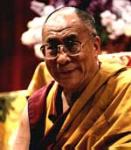 |
| lineage to make the distinction. Since Lama is a Tibetan word, it had a totally different meaning in Tibet than the way it is being used in the West. Lama refers to a spiritual teacher who is a monk. In Tibet, all Lamas are monks, but all monks are not Lamas. A realized female master would of-ten be called by the title Jetsunma. There are various titles in Tibet which are applied to masters who are either married or female gurus, but today in the West we have gathered all these titles into the one word �Lama.� So, the literal interpretation of the word Lama has be 'washed' down a lot. It has begun to simply mean "a teacher" for many Buddhist, so today it is more up to the indi-vidual how they wish to use the term. Disclaimer: All articles and/or images retain the original copyrights of their original owners. |
 |
 |
 |
| November 25, 2004 |
| Visit our Main Site. More information, more images and no pop-ups. |
 |
|