University of Kentucky - College of Fine Arts - Department of Art
Art History Student Research Symposium |
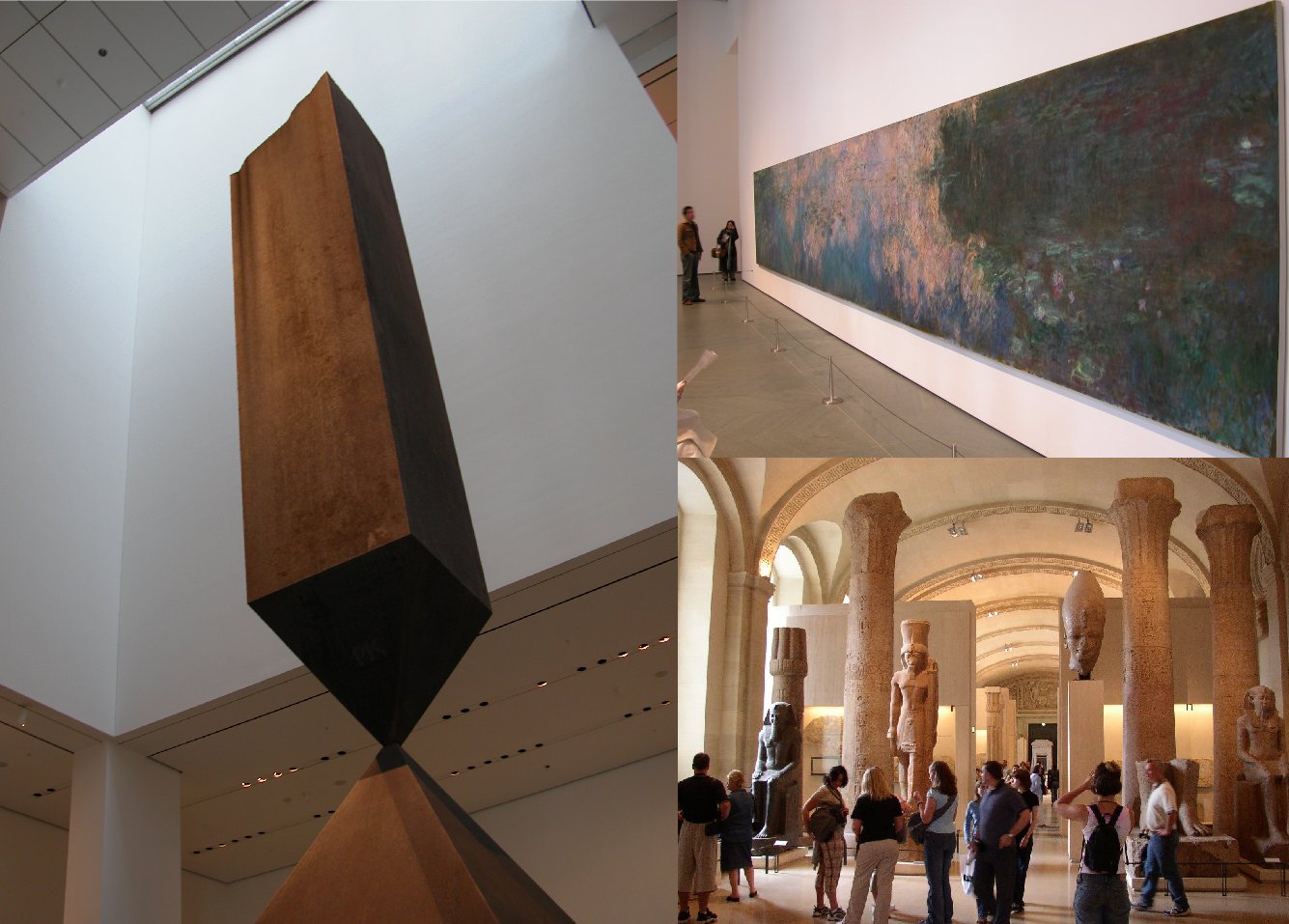
Investigating Museums: Sixteen Perspectives |
Date: Monday, May 2nd 2005 8:30 AM - 4:45 PM Schedule
Location:John Jacob Niles Gallery at Lucille Caudill Little Fine Arts Library
Welcome!
This symposium is being held to present final projects for the University of Kentucky, College of Fine Arts, Art History senior seminar (AH 555 - Methods in Art History: Museum Culture) in the Spring 2005 semester. The course is taught by Dr. Anna Brzyski, Professor of Art History.
The subject of this symposium is simple: the art museum. Each of the sixteen student speakers have chosen a particular aspect of art museums to focus upon. Their presentations represent the culmination of a semester long project.
The symposium will take place at the John Jacob Niles Gallery at Lucille Caudill Little Fine Arts Library on May 2, 2005 from 8:30 AM until 4:45 PM. This symposium is free and open to the public.
Participating Students
Sarah Broderson
 My name is Sarah Broderson and I am a senior at the University of Kentucky. I will be graduating in May with a B.A. in Art History and after graduation I plan to teach elementary school art at a local private school.
Picture, Picture on the Wall, What's the Best Display of All: A Philosophy of Museum Display
My paper is an examination of the evolution of the modes of display in American art museums, primarily through a case study of the Metropolitan Museum of Art in New York City. This examination will discuss how the mode of representation has developed from a Paris Salon type jumble of artworks, to a more modern mode of display with the emphasis shifting to works as individual and separated out from the others on the wall. The essay goes on to discuss the current mode of display, or the "white cube", in terms of its advantages and disadvantages, and then furthermore discusses the effect that this current mode of display has on the viewer.
Mindy Calisti
 Mindy Calisti will graduate in May with a degree in Art History. In the fall, she will attend the University of Kentucky School of Law.
Refabrication: Minimalism and the Need for Industrial Spaces of Display
When the Minimalist artists challenged the traditional definitions of art, museums and galleries began to think outside of their traditional and conventional boundaries; contemporary art museums saw the need to expand away from the traditional white cube towards the idea of adapted industrial spaces. The Minimalists' use of fabrication, permanence, industrial materials and processes and large scale objects are the embodiment the industrial aesthetic; thus, the reclaimed industrial spaces are the most desirable locations for the permanent display of minimalist art. Keeping in mind the artists' own philosophies and the poorly executed exhibitions of their art, I will examine why the traditional museums are not appropriate for the display of minimalist art. Using artist statements and the documented goals of museums, like Dia: Beacon and Mass MoCA, I will establish the connection between minimalist art and the industrial spaces of display.
Janice Childers
 Janice Childers is a senior with a double major in Art History and
French Literature. After graduation in May, she plans to take the
time to work, travel, read and be outdoors while considering the
pursuit of a Masters degree in Library Sciences at U.K.
Janice Childers is a senior with a double major in Art History and
French Literature. After graduation in May, she plans to take the
time to work, travel, read and be outdoors while considering the
pursuit of a Masters degree in Library Sciences at U.K.
Through the Gateway: Stepping into Queen City history at the CAM
In 2003, the Cincinnati Art Museum became the first art museum in the
country to dedicate permanent space to local art with the opening of
the Cincinnati Wing. The goal of this space is to stress Cincinnati's
place in the art world as well as to establish a connection between
the museum and the community. The permanent exhibit reveals a
surprising number of area artists who received international fame and
explores how contemporary art movements were assimilated in the
community as well as new ground being explored today. The Cincinnati
Wing provides a glimpse into the history of a city once on the edge of
the frontier and its ongoing civic pride long after it has been
surpassed in arts fame by other mid-western cities.
Marianne Falk
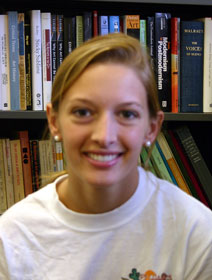 Marianne Falk is a Senior with a major in Art History. She currently works
at Cross Gate Gallery, and plans to continue working there until she attends
graduate school. She has been accepted into the MA in Art Business program at Sotheby's Institute of Art, in London.
Marianne Falk is a Senior with a major in Art History. She currently works
at Cross Gate Gallery, and plans to continue working there until she attends
graduate school. She has been accepted into the MA in Art Business program at Sotheby's Institute of Art, in London.
Putting Their best Image Forward: Julien Dupre's In the Pasture and the UK Art Museum
Why do you see Julien Dupre's In the Pasture, a painting from the late 19th
century France, repeated on objects from t-shirts to magnets to brochures?
A case study of the UKAM will examine this question and the factors
surrounding it. Particular emphasis will focus on the image-based society
we live in, and especially how the repetition of certain images affects the
viewer as well as the institution it represents.
Amanda Filak
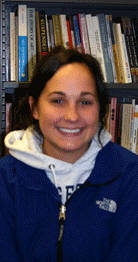 Amanda Filak is a senior graduating with her BA in Art History and French. After graduation she plans to take some time off from school but eventually plans on returning to school. She is also currently considering teaching English to young children in France.
Give and Take: Investigating the Museum's Definition of Donation
We generally assume that a donation is a voluntary contribution to a fund or a cause with no ulterior motive however this definition is not adequate to describe the role of donations in museum operations where donors often request some form of recognition or other benefits. These donors range from independent donors to public corporations and their requests range from anonymity to naming rights to an influence on future exhibits. The topic of donations and the various stresses they place on varying aspects of the museum world is significant and relevant to the functioning of the museum as a whole.
Victoria Flanigan
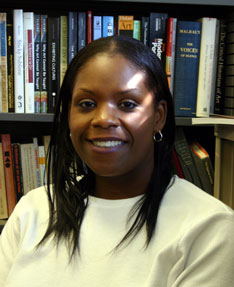 Victoria Flanigan is a native of St. Louis, MO. She received a B.S. in Art Education from Lincoln University in Jefferson City, MO. She is currently a second year MFA student at the University of Kentucky and the receipient of
the Lyman T. Johnson Fellowship Award.
Victoria Flanigan is a native of St. Louis, MO. She received a B.S. in Art Education from Lincoln University in Jefferson City, MO. She is currently a second year MFA student at the University of Kentucky and the receipient of
the Lyman T. Johnson Fellowship Award.
DuSable Museum: History, Location and Accreditation
The DuSable Museum is the oldest African American Museum of it's kind. Located on the south side of Chicago in Washington Park, the DuSable is dedicated to the preservation and interpretation of African American
History. Despite the stigma's associated with the southside of Chicago and
it's complex demographics, the DuSable is rich in history and has serviced
Chicago for 45 years. However, it is not an accredited museum with the
American Association of Museums and therefor lacks in the financial support
and benefits of being a national museum.
Megan Ghammachi
 Megan Ghammachi is a Senior, majoring in Art Studio from Louisvlle,
Kentucky. This following December she plans on graduating from the
University of Kentucky and pursuing a career as an artist. Her focus is
painting in oils and arcylics and hobbies include drawing and photography
Megan Ghammachi is a Senior, majoring in Art Studio from Louisvlle,
Kentucky. This following December she plans on graduating from the
University of Kentucky and pursuing a career as an artist. Her focus is
painting in oils and arcylics and hobbies include drawing and photography
Contemporary Art: Live or Let Die?
From ancient Greek sculptures to more recent contemporary art, museum
curators have focused on methods of preservation. However today they are
faced with a much more difficult task. Artists are using ephemeral materials
that almost make preservation impossible. Unaware of what the artists
invisioned for the future of their pieces, many curators are left clueless,
and just why is it that these artists are choosing these materials? Do they
have ulterior motives?
Elizabeth Halley
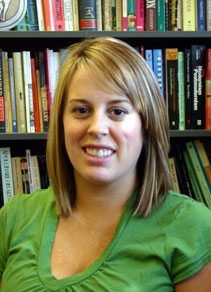 Elizabeth S. Halley is an Art History senior. She will be graduating with a Bachelor of Arts in May. After graduating she plans to continue at UK as a graduate student in Historic Preservation.
Monument or Museum? The Conflict Between Content and Form
The Solomon R. Guggenheim museum has been argued as a war between art and architecture, a failure, and a problematic museum. Many critics claim that the design of the building defeats its function and the building’s only real worth is in its architectural value.
In my analysis of this subject, I would like to examine these critiques and debates as well as study the building’s advantages and disadvantages as a functional museum.
I hope to prove that the Guggenheim museum, despite its negative reputation, is, by all
means, both a feat in architectural monuments and a functioning museum of art.
Beth Haye
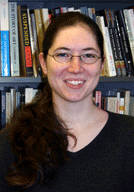 Beth Ann Haye is a senior Art History major who will be graduating
with a Bachelor of Arts in May. Her post-graduation plans include finding a
job and working for a few years before returning to graduate studies. She
is from Lexington, KY and plans to remain in the area. She would like to
thank all of her friends and family for supporting her through all of her
transitions.
Beth Ann Haye is a senior Art History major who will be graduating
with a Bachelor of Arts in May. Her post-graduation plans include finding a
job and working for a few years before returning to graduate studies. She
is from Lexington, KY and plans to remain in the area. She would like to
thank all of her friends and family for supporting her through all of her
transitions.
Persistence of Tradition: Changes in Art Museum Education
The 20th century saw the rise of some basic assumptions in the
educational philosophy of art museums in the United States. This
philosophy, more rightly described as a collective assumption on which art
museums based their educational programs and viewed their role of fulfilling
each organization’s mission, is a series of conventions, rather than any one
clearly defined philosophy. These common ideas and ideals have experienced
shifts and changes throughout the century, however the changes ultimately
are in degree rather than in kind. The overall pattern found in the 1900s
shows the immergence of three major traditions: informal education as the
primary role of the art museum, object-based learning, and democratic aims.
James Hicks
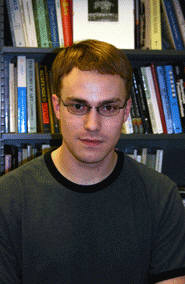 James is a graduating senior with a double major in Art History and Classics. After graduating in May, he will continue at UK as a graduate student in Classics. He was awarded the Otis A. Singletary Fellowship for the 2005-2006 school year.
The Best of Both Worlds: The Art Museum and the Art History Textbook
The origin of museums began with the private collections of Renaissance scholars and aristocrats. These collections were not simply of physical objects but also of texts as well, a symbiotic relationship true to the etymological definition of the word museum: "the place of the Muses." Objects, be it literary or physical, had a logical arrangement so as to develop logical discourse and comparison for modern times; their purpose was hardly for the sake of display alone.
As private collections passed into the public domain and into the modern era as a public institution, the similarity between an art history textbook diverged and converged in many aspects. Large museums in which the totality of art history is represented, such as the Louvre and the Metropolitan Museum of Art, share similarities with art history survey textbooks and have many ramifications as a result for the museum-going public's interpretation of art.
Vanessa Johnson
 Vanessa Johnson is a senior in Art History, graduating in May with her BA. She plans to seek employment in an arts related field. She may go to graduate school but is taking some time off first. She is from Louisville and enjoys reading and drawing.
More Than Meets the Eye: Issues in the Acquisition and Display of Permanent Collections
After working in the registration department at the University of Kentucky Art Museum, I became interested in the internal (museum staff decisions or written guidelines) and external (public expectations and donor considerations) factors that affect the display of an art museum's permanent collection. Through personal visits and interviews with curators at two museums, the Cincinnati Art Museum and the St. Louis Art Museum, I have found many factors play a role in the decisions about the display of these collections. My paper will seek to define these factors and how they may differ from one institution to another and why.
Jimmy McKinney
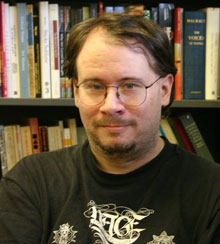 Jimmy McKinney is a non-traditional student, and is currently in his final
year at UK. Once intending to pursue a degree in Computer Science, he
instead was drawn to an early fascination with creativity and the visual
arts. He is majoring in Art Studio with a concentration in Painting. He
has a strong interest in emerging technologies, philosophy, and the
intersection of New Media and traditional Fine Art.
Jimmy McKinney is a non-traditional student, and is currently in his final
year at UK. Once intending to pursue a degree in Computer Science, he
instead was drawn to an early fascination with creativity and the visual
arts. He is majoring in Art Studio with a concentration in Painting. He
has a strong interest in emerging technologies, philosophy, and the
intersection of New Media and traditional Fine Art.
Title: The Vanishing Point: The Relationship Between Digital Art and the Museum
The rise of Digital Art presents many problem when viewed in terms of the
traditional Art Museum, problems which appear to derive from a
fundamental incompatibility between the two. This begs the question, why?
This presentation explores the reasons for the conflict, both practical and
philosophical. Finally, it attempts to show the relevance to artists
working today by showing where the situation may lead.
Julie Shubinski
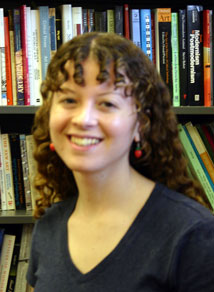 Julie Anna Shubinski is a senior with a major in art history and a minor in French. After graduating in May, she plans to marry her fiance in July and then attend graduate school for art history at UK in the fall. Julie has lived in Kentucky for the last 5 1/2 years, but before coming to the Bluegrass state, she lived in different areas around the U.S., including Texas, Arizona, and Illinois. Greatly influencing Julie's decision to study art history were her experiences with different cultures, visiting numerous museums around the country, and antiquing with her family. In her spare time, Julie enjoys visiting museums, galleries, and antique shops in Lexington and the surrounding areas, reading, and spending time with her fiance and their cat.
Deaccessions: Revising the Art Museum Collection
The permanent removal of an artwork from a museum's collection is perhaps unintuitive for most people who see the museum as a permanent repository for art. However, in the late 1980s and 1990s, several high profile and extremely criticized deaccessions in the U.S. served to shatter the assumption of the unchanging art museum. At this time, many museums were reacting to economic and cultural pressures by critically examining their purpose as a public institution; this in turn led to the deaccessioning of art in order to acquire works more appropriate to unique missions. Through the assessment of this history, it becomes clear that deaccessioning can be a tool in the quest for the revision and refinement of the art museum collection.
Sarah Stover
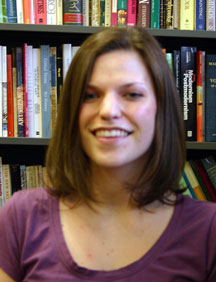 Sarah Stover is a senior at the University of Kentucky. She will
graduate in May with a degree in Art History.
Sarah Stover is a senior at the University of Kentucky. She will
graduate in May with a degree in Art History.
The Inner Other: Exploring Folk Art Museums
Folk art is considered, by many, to be a lesser form of art. This
idea is carried over into the museum setting and thus the art in a
folk art museum is treated in a different way than the art in a fine
art museum. We treat it in much the same way that we treat
non-western art. Why does this occur? Does it effect and perpetuate
our view of folk art?
Jessica Taylor
 Jessica is a senior in the Art History program
and will be graduating in May. She is currently working for Tuska studios
and plans to continue working at the museum after graduation. Jessica's
future plans are to go to grad school for a masters in art history.
Jessica is a senior in the Art History program
and will be graduating in May. She is currently working for Tuska studios
and plans to continue working at the museum after graduation. Jessica's
future plans are to go to grad school for a masters in art history.
Marketing: Images and Advertising
Advertising and Images: When considering museums, visitors will find that
particular images are often recuring. This is an example of Museums
utilizing their own resources and using a work of art as an advertising
gimmick, such as a logo or trademark, for recognition. Museum visitors must
ask themselves why museums are choosing to use these particular works of art
to create an image for the museum and the impications that this repitition
of images carries with it for, both, the viewer as well as the museum.
David Timoney
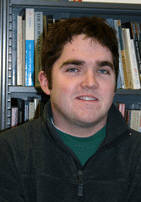 David Timoney is currently a senior at the University of Kentucky and will receive a BA in New Media Art in December. After graduation, he will pursue a job in graphic design and will eventually go back to school to receive his masters in Graphic Design.
Hidden Away: The Misrepresentation of New Media in the Art Institute of Chicago
The Art Institute of Chicago is a internationally renowned venue for art that displays many different works. However, the Institute concentrates on their classical and more traditional art forms through their structure, giving little to no exposure to more modern and varied works of art. This problem will examine the possible reasons for de-emphasizing new media art in the Art Institute of Chicago.
Monday, May 2 2005 Back to Top
| 8:30 - 9:00 | Breakfast Reception |
| 9:10 - 9:30 | Jessica Taylor - Museum Marketing: Images and Advertising |
| 9:35 - 9:55 | Elizabeth Halley - Monument or Museum? Conflict Between Contents and Form |
| 10:00 - 10:20 | James Hicks - The Best of Both worlds: The Art Museum and the Art History Textbook |
| 10:25 - 10:45 | Beth Haye - Persistence of Tradition: Changes in Art Museum Education |
| 10:45 - 11:00 | 15 minute break |
| 11:00 - 11:20 | Sarah Broderson - Picture, Picture on the Wall, What's the Best Display of All: A Philosophy of Museum Display |
| 11:25 - 11:45 | Vanessa Johnson - More Than Meets the Eye: Issues in the Acquisition and Display of Permanent Collections |
| 11:50 - 12:10 | Janice Childers - Through the Gateway: Stepping into Queen City history at the CAM |
| 12:15 - 12:35 | David M Timoney - Hidden Away: The Misrepresentation of New Media in the Art Institute of Chicago |
| 12:35 - 1:20 | 45 minute break |
| 1:20 - 1:40 | Amanda Filak - Give and Take: Investigating the Museum's Definition of Donation |
| 1:45 - 2:05 | Marianne Falk - Putting Their best Image Forward: Julien Dupre's In the Pasture and the UK Art Museum |
| 2:10 - 2:30 | Victoria Flanigan - DuSable Museum: History, Location and Accreditation |
| 2:35 - 2:55 | Julie Anna Shubinski - Deaccessions: Revising the Art Museum Collection |
| 2:55 - 3:10 | 15 minute break |
| 3:10 - 3:30 | Sarah Stover - The Inner Other: Exploring Folk Art Museums |
| 3:35 - 3:55 | Mindy Calisti - Refabrication: Minimalism and the Need for Industrial Spaces of Display |
| 4:00 - 4:20 | Megan Ghammachi - Contemporary Art: Live or Let Die? |
| 4:25 - 4:45 | Jimmy McKinney - The Vanishing Point: The Relationship Between Digital Art and the Museum |
Webpage design by James Hicks, 2005
You are visitor number