
On this page:
Science - Bottle-Nosed Dolphins
Current Event - Leonid Meteor Shower


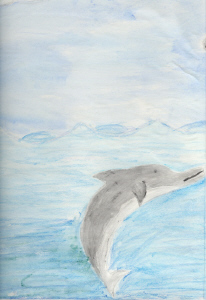
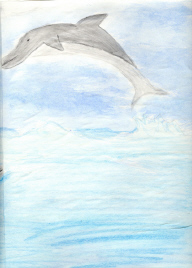
What are dolphins?
-All dolphins are mammals. They are warm-blooded, have hair, and give birth to live babies.
-Calves (baby dolphins) are born any time of year. The mom has one calf about every two years.
How do they breathe?
-A dolphin breathes through a blow hole on top of its head.
-Dolphins use muscles to open and close their blow holes.
What do they look like?
-Bottle-Nosed Dolphins got their name because their nose slopes into a shape like the top of a bottle.
-Dolphins have a light belly and a dark top. Hungry animals swimming above the dolphin don't see it because it blends in with the bottom. The light belly blends into the lightness on top of the water so a hungry animal swimming below can't see it.
Where do they live?
-Bottle-Nosed Dolphins live near the Atlantic coast.
-Bottle-Nosed Dolphins live in pods (schools) of 10-25 dolphins.
-Some dolphins wander into fresh water rivers and lakes.
What do they eat?
-Dolphins will eat small fish, tuna, squid and shrimp.
-Dolphins use echolocation to find their food.
How do they learn?
-Dolphins copy their mothers to learn new and helpful things.
-They can be trained to do tricks with whistles and hand signs.
How do dolphins communicate?
-To communicate, dolphins use whistles and clicks.
-When dolphins are swimming they jump and splash to keep the school together.
What are dangers to dolphins?
-Sharks will eat dolphins.
-Fishing nets are dangerous because dolphins do not see them underwater and they somethimes get caught in them. Then they drown because they can't come up for air.
-Pollution in the water hurts the dolphins' environment.


You can see meteors any night because there is always dust and rocks floating in space. But several times during our yearly orbit the earth goes through thick clouds of dust and rock and that's what gives us a meteor shower. Meteors look like white or red streaks of light going across the sky. They happen very fast.
The meteors from the Leonid shower come from the Tempel-Tuttle comet. The comet is made from ice and dust. It orbits the sun but in a different direction from the planets. It orbits all the way out to Uranus and back toward Earth. It takes 33 Earth years for it to orbit. As it orbits and gets near the sun some of the ice melts and the dust comes free. When the earth passes through one of the clouds of dust, we see the meteor shower.
If you didn't see the Leonids this year, you can try again next November. Also you can try in the summer and see the Perseid meteor shower. You won't have to bundle up!!