 |
|
|
|
|
|
|
|
|
|
|
|
|
|
|
|
|
|
|
|
|
|
|
|
|
|
|
|
|
|
|
|
|
|
|
|
|
|
|
|
|
|
|
|
|
|
|
Gardienne Wings
Whites & Greens
(Emerald Spaldings & ES Pieds) |
|
|
|
 |
|
|
|
|
 |
|
|
|
|
|
 |
|
|
|
|
|
 |
|
|
|
|
|
|
White (India Blue) |
|
|
|
|
|
|
|
|
|
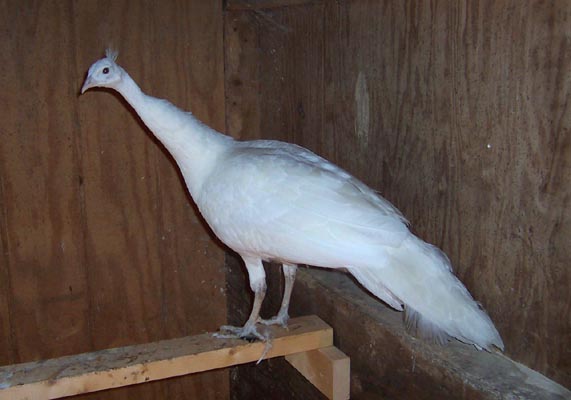
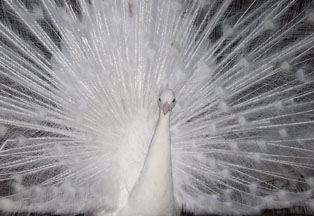
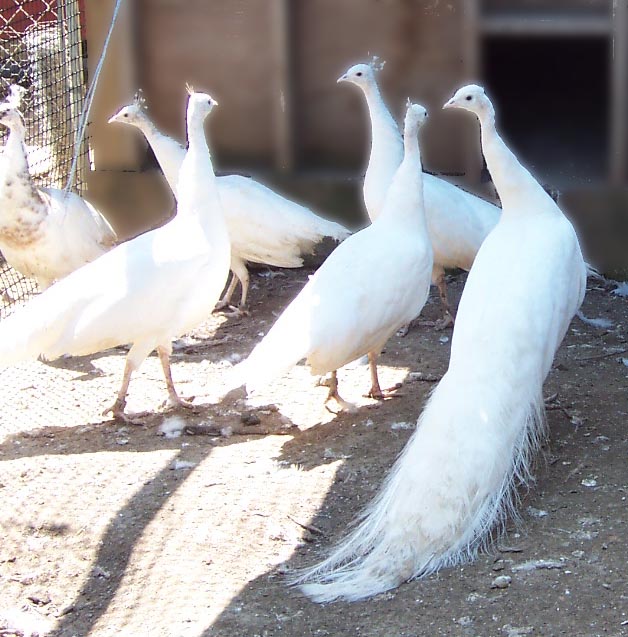
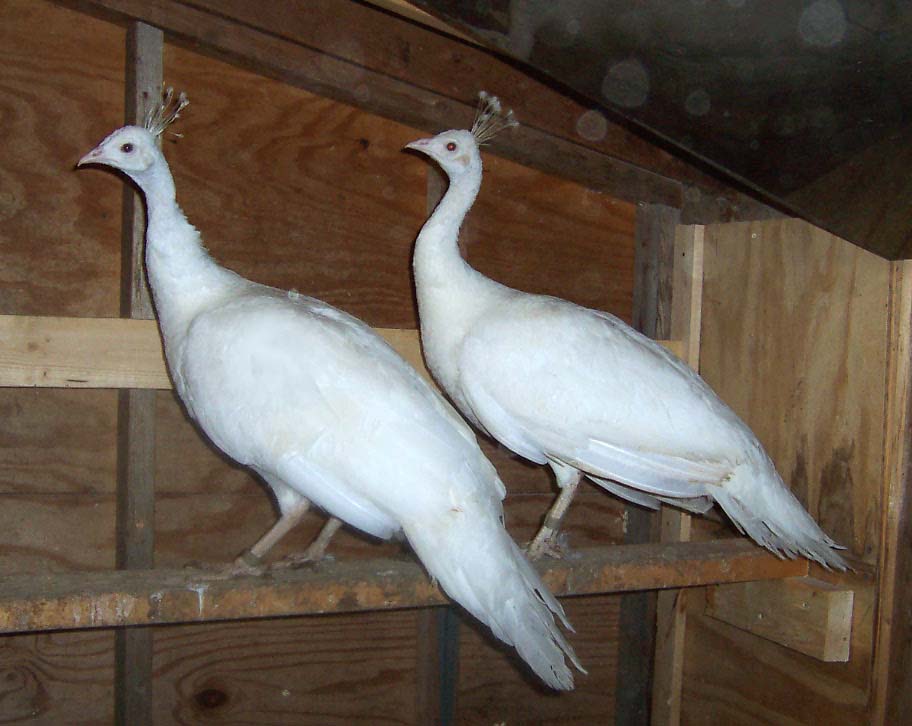
White color in peafowl is inherited more like a pattern than a color. A white bird may be genetically any color or pattern but the expression of those genes is overridden by the presence of 2 white genes. Two white birds bred together will produce only white chicks. A white bird bred to any other color/pattern bird will produce white, pied, and other color birds with white flights or throat patches, depending on the masked genes carried by the white bird and what he or she is bred to.
While White Spaldings may appear almost identical to White "India Blue" birds, the addition of "green" (Java, Burmese, or Indo-Chinese) blood makes them Spaldings. Breeders have had luck producing White Spaldings with a high percentage of "green" blood. This is usually marked by yellow on the eye patches, longer legs, and a tighter very upright crest. |
|
|
|
|
|
 |
|
|
|
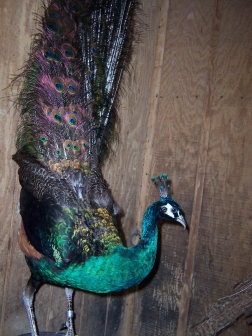
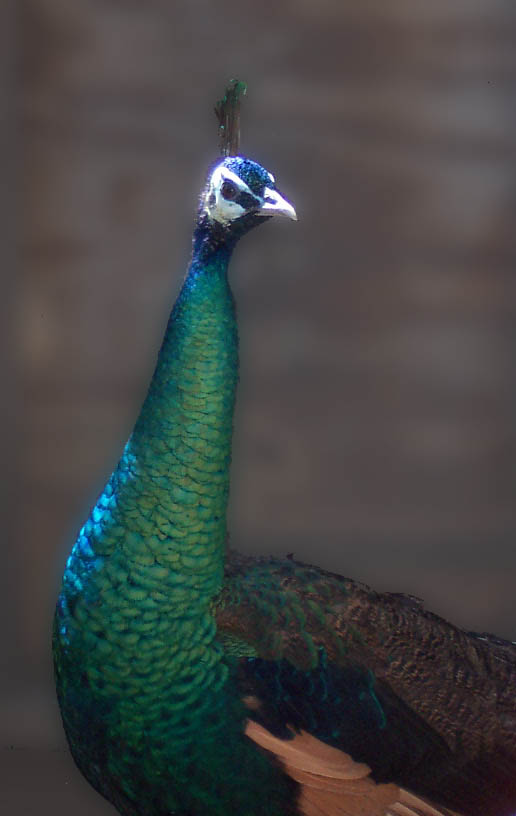
Emerald Spalding &
Pied Emerald Spalding |
|
|
 |
|
|
|
|
|
 |
|
|
|
|
|
|
 |
|
|
|
|
|
|
|
|
|
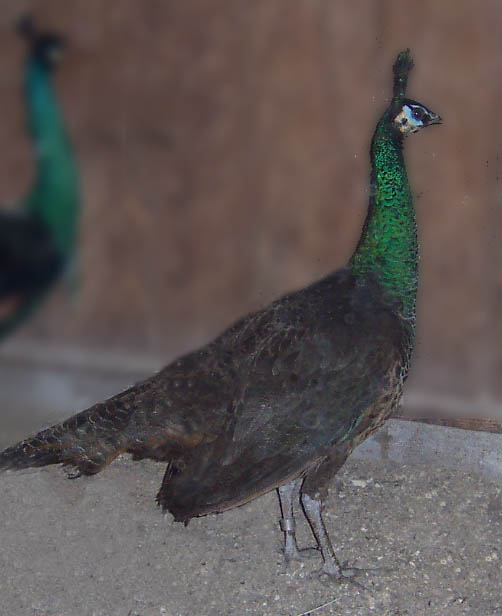
Dark Pied Emerald Spalding hen (15/16ths Java)
- note white throat patch. |
|
|
|
|
|
 |
|
|
|
|
 |
|
|
|
|
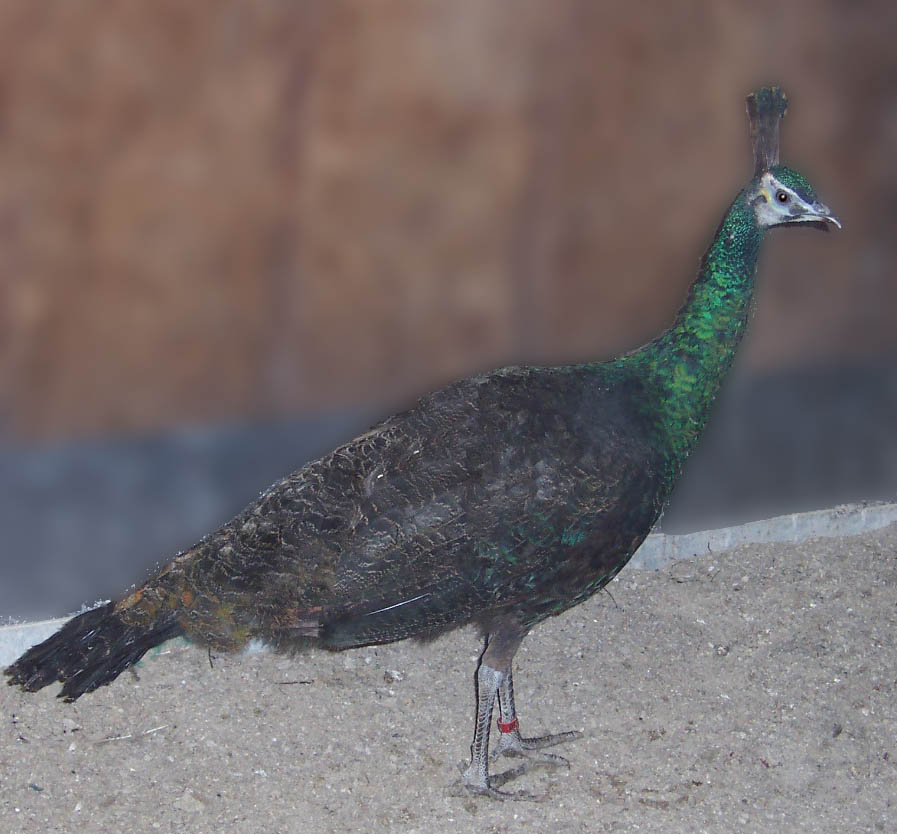
Spalding birds are Spaldings not because of a difference in appearance, but because of the addtion of "green" blood to a wild type bird. The green blood can come from any of the 3 species of green peafowl: the Java, the Burmese, or the Indo-Chinese. The higher the percentage of green blood the more the Spalding will look like a true "Green".
Our greens are all 15/16ths Java except for 1 - 7/8ths Java hen.
In general, it is believed that the Sapldings possess "hybrid vigor" and are generally healthier and easy to keep than pure green species. They also tend to be a little less "wild" in temperament than pure greens. |
|
|
|
|
|
|
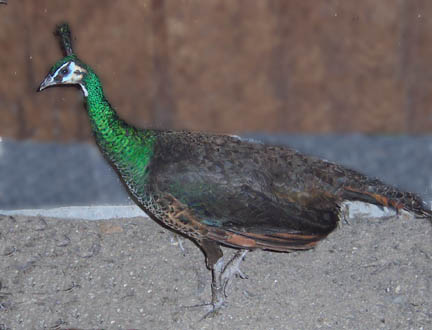
7/8ths Java Yearling Emerald Spalding hen |
|
|
|
|
|
|
|
|
|
|
Our Birds For Sale |
|
|
Back to Blues, Black Shoulders and Pieds |
|
|
|
|
|
For more information, contact:
Valerie Rohwer
Sumerduck, VA
[email protected]
(540) 439-2562 |
|
|
|
|
|
|
|
Back to Main Birds page |
|
|
|
Back to Purples page |
|
|
|
|
|
|
|
|
|
Back to Cameos, Cameo BS, & Opal |
|
|
|
|