
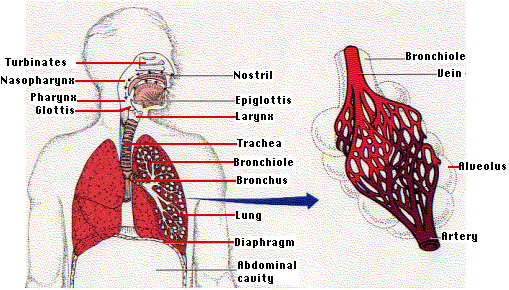
*Nasal cavity/Passages
*Pharynx
*Larynx
*Trachea
*Bronchi
*Bronchiolles
*Aveloi
--LUNGS
Lung: spongy organ consisting of many branched bronchioles and millions of aveoli sacs.
Pleura: Thin sheet of epithelial (mesentery). Protection, reduces friction
Pleurisy: Inflamation, excess fluid in cavity = PAIN!
Inspiration: Air in, diaphragm contracted and down.
Expiration: Air out, diaphragm relaxed and up. Sigh to relax
Pneumatoxic Center: Group of neurons in pons control rate of respiration
Inspiratory neurons:
-Neurons from pneumatoxal center sends messages to expiratory neurons in medulla.
-Expiratory neurons inhibit inspiratory neurons allowing expiration to occur.
Increase in [CO2]: stimilation of respiratory center, increases depth + frequency of breaths
Hiccups: are spasms of the diaphragm thought to be caused by not enough CO2 in the body. Thus, hiccups are frequently cured by breathing into a paper bag.
Rhinitis is an inflammation of the mucus membrane in the nose, due to a common cold, allergies, etc.
Pharyngitis is a sore throat, which could be due to a viral infection such as the common cold or flu or a bacteria infection such as Streptococcus pyogenes.
Laryngitis is an inflammation of the vocal cords in which the person partially or totally loses his/her voice.
Bronchitis is an inflammation of the bronchi, causing them to over-secrete mucus, which in turn, causes coughing to get it up. Pneumonia and tuberculosis infect the lungs.
Empyema is an infection, similar to pneumonia, in the chest cavity outside of the lungs.
Pleurisy is an infection of the pleural membranes lining the inside of the chest cavity and coating the lungs. Normally these membranes are very slippery, aiding in breathing, but when they become infected, they don�t slide over each other as well, and breathing becomes painful.
Asthma is an allergic reaction that causes constriction of the bronchiole muscles, thereby reducing the air passages, thus the amount of air that can get to the alveoli. Interestingly, many of the treatments for asthma are similar to treatments used for hypoglycemia. That and the fact that diabetics rarely also have asthma have led some authors to suggest that asthma may be related to hypoglycemia, and that a hypoglycemia diet may aid in alleviation of asthma symptoms.
Emphysema is a progressive loss of elasticity in the lungs due to rupture of some alveolar walls, coalescing of alveoli, and formation of scar tissue.
Lung cancer has been shown to be more common in people who smoke cigarettes and/or who are constantly forced to inhale someone else�s side stream smoke. A number of pamphlets from the American Cancer Society and biology textbooks have featured pictures that show what smoking can do to a person�s lungs. Typically, there is a photograph of a robust, healthy, pink lung next to a photograph of a shrivled, diseased, blackened lung from a smoker. Similarly, people who work around substances like asbestos fibers, coal dust, flour dust, or dry, crumbled, dusty bird droppings for much of their lives, frequently show signs of lung diseases caused by these substances.


