
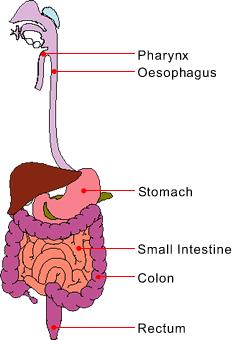
1. Digestion
2. Absorption
3. Elimination
The stomach wall contains special muscle fibres that start to churn the food over. Glands in your stomach then secrete acidic gastric juice which turn your food into a liquid. It may surprise you to learn that your stomach secretes as much as three litres of gastric juices a day. Stomach acid, can give rise to common problems such as indigestion or heartburn.
The liquified food travels to the small intestine through a further process of peristalsis. The small intestine is about six meters long and it is here that water, fat and protein sit taken from your food. Next, the contents of the small intestine pass to the lage intestine or colon. In the large intestine, additional water, salts, and minerals are absorbed from the food.
The final stage of the journey is towards the rectum, where waste matter is formed into stools and expelled via the anus.
Mouth
Pharynx
Esophagus
Stomach
Pancreas and Duodenum
Liver
Gall Bladder and Bile
Small Instines
Large intestines


