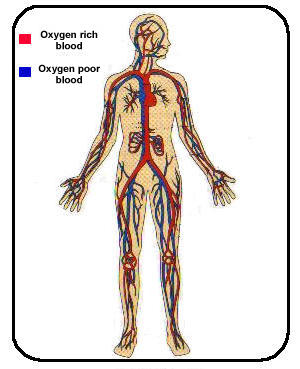
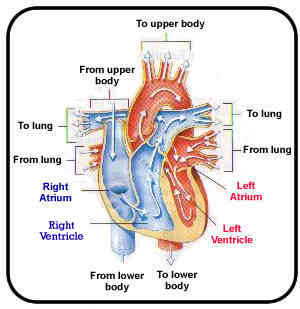
The blood circulation has two parts to it; the heart acts as a double pump. Blood from the right side of the body is dark red (blue in pictures) and is low in oxygen or is deoxygenated. This blood travels along the pulmonary arteries to the lungs where it receives oxygen and becomes bright red. Then it flows along the pulmonary veins back to the heart�s left side pump.
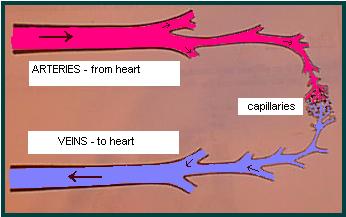
Blood travels from the left side of the heart through arteries, which eventually divide into capillaries. In the capillaries, food and oxygen are released to the body cells, and carbon dioxide and other waste products are returned to the bloodstream. The blood then travels in veins back to the right side of the heart, and the whole process begins again.