

 |
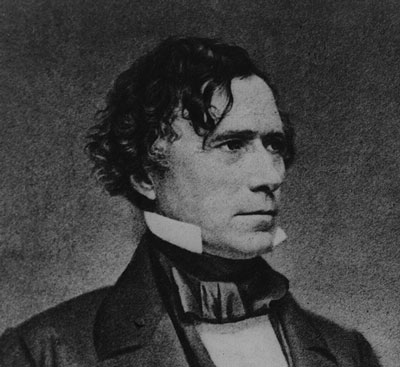
The Uneasy Truce: Both major parties at the time agreed with the Compromise of 1850 and both elected candidates for the upcoming election. During the elction though, there was a split in the Whig party as they suffered from massive defections from antislavery members which resulted in an easy win for the Democrats. The new president Franklin Pierce wanted to keep peace and avoid divisive issues such as slavery. But this became impossible to avoid as the issue kept arising by the opposition of the northerners to return fugitives to the southerners. This angered the southerners a great deal as this law was probably the most meaningful one passed in the Compromise of 1850. |
Slavery, Railroads, and the West: Slavery in the territories arose again producing that same sectional crisis it had created from the beggining. The lands that were once not suitable for farming in the Old Northwest lands were now being settled by the Americans. Although there was no white American opposition to moving into the indian's territory. What it did bring though is a division resulting from slavery and railroads. Communication between the east and west was critical as people expanded westward so the emrgence of a transcontinental railroad was imminent. The problem this brought though was another struggle between the north and the south as to where the eastern terminal would be. There was one obstacle for the south though, if the railroad was to pass there it wouyld have to pass through mexican territory. The then secretary of war Jefferson Davis of Mississippi got rid of this obstacle by purchasing these lands in what is known as the Gadsden Purchase which only heated up the rivalry even more between the north and south. |
 |
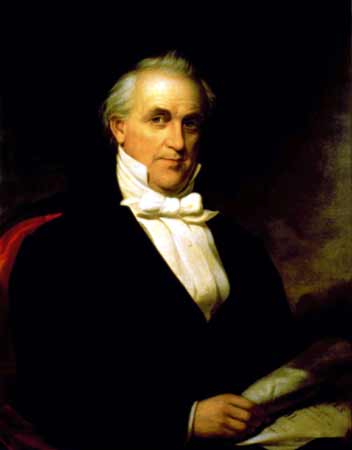 |
Buchanan and Depression: The election of 1856 consisted of James Buchanan who was aminister to England as the Democratic candidate and John C. Fremont who had no political record but was a "safe" candidate for the Republicans. The Native Party also took part of this election with nominating former president Millard Filmore even though they were beginning to break apart. James Buchanan slightly won over the other two and was a to take a position he could not handle. He was at age 65, weak at character, timid and indecisive president and this was a bad combination at a critical time in history. While he was an office there was a massive depression which lasted several years and resulted in strengthening the Republican party in the north that believed the depression to be results of the "unsound policies of southern-controlled Democratic administrations". |
Looking Westward| Expansion and War| The Sectional Debate| The Crisis of the 1850's| Lyceum