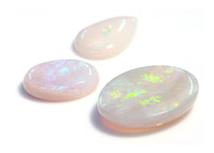
The name opal is derived from the Sanskrit word "upala," as well as the Latin "opalus," meaning "precious stone."
Opals are famous for their "play of colors" - many stones flash the colors of the rainbow when moved, due to the interference of light on small cracks and other internal structural differences.
Since Opal shines with rainbow color, it is meant of hope.
Legends & Lore
Opal was treasured in the Middle Ages and was called ophthalmios, or "eye stone," due to a widespread belief that it was beneficial to eyesight.
Opal had been described in medival times as a cure for diseases of the eye.
Blonde women wore opal necklaces to protect their hair from losing its color.
High quality opal is more valuable than diamond; up to $20,000 per carat.
The unique flashes of color called fire present in fine opal have intrigued human imaginations since prehistoric times.
Throughout history, there are as many different legends about the opal as there are colors in this precious gem.
The Arabs believed that opals fell from heaven in flashes of lightening, and that's how they received their fiery color.
In Elizabethan England, the opal was treasured for its beauty. Shakespeare wrote of it in the Twelfth Night as the "queen of gems."
Queen Victoria presented her children with opal jewelry, thus making the stone popular.
But the stone continued to have a mixed reputation, chiefly due to a novel written by Sir Walter Scott in 1887 that depicted it as a stone of unlucky and evil.
In the novel, the heroine has her life force caught in the beautiful opal she wears and she dies when the fire in the opal is extinguished.
Meanings & Symbol
Reflects every mood, Hope, Purity.
Aids inner beauty, faithfulness, and eyesight.