IST238 PROJECTS
 |
 |
 |
 |
 |
 |
|
|
|
|
|
|
The Dog Star |
 |
it's tiny companion! |
and
|
||
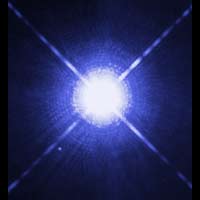
This Hubble Space Telescope image shows Sirius A, the brightest star in our nighttime sky, along with its faint, tiny stellar companion, Sirius B. Astronomers overexposed the image of Sirius A [at center] so that the dim Sirius B [tiny dot at lower left] could be seen. The cross-shaped diffraction spikes and concentric rings around Sirius A, and the small ring around Sirius B, are artifacts produced within the telescope's imaging system. The two stars revolve around each other every 50 years. Sirius A, only 8.6 light-years from Earth, is the fifth closest star system known. Sirius B, a white dwarf, is very faint because of its tiny size, only 7,500 miles in diameter. White dwarfs are the leftover remnants of stars similar to the sun. They have exhausted their nuclear fuel sources and have collapsed down to a very small size. Sirius B is about 10,000 times fainter than Sirius A. |
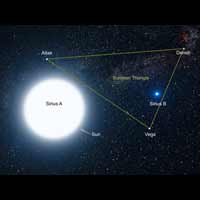
Click the following image for an annotated image and description of Sirius A and Sirius B:
Images courtesy
of
Thoughts on the Dog Star and it's little companion?
Return Home: