
Produced by: AM2
Genre: Action/Adventure/RPG
Players: One
Before I go into the review, I just want to make one thing clear - this is the imported, Japanese version I'm reviewing, not the localized English version which is due for release soon.
When the early reports of Shenmue filtered out of Sega's Japanese HQ (back then it was called Project Berkley/Virtua Fighter RPG) everyone was excited. Yu Suzuki's brief for the game was nothing short of revolutionary - a fully 3D real world environment with weather effects and real time daylight, hundreds of characters with which to interact, a complex fighting system rivalling that of Suzuki's own VF series, months of gameplay....well, you all heard the hype. But does the game live up to those lofty expectations? On the whole, yes it does.
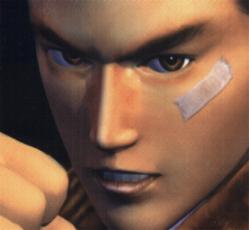
The game is set in the Japanese city of Yokosuka in the middle of the 1980's. The story revolves around the main character, Ryo Hazuki, as he searches for the man who brutally murdered his father (this is all painted out for you in the moody intro sequence). Needless to say, several key plot points and events occur as you make your way through the game, and I won't ruin them for you here, but bearing in mind I couldn't understand any of the text, the plot is still very strong and if the drama can get across this well to someone who doesn't have a clue what's being said, then the English version should be truly awesome in terms of impact.
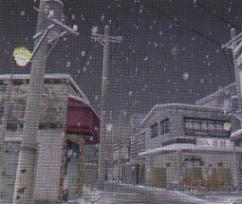
The game is played from a third person viewpoint, and the controls are kept nice and simple so navigating the the shockingly realistic locations isn't made overly difficult. You may have heard of the "FREE" system that Suzuki and his team have devised for the game - this stands for Fully Reactive Eyes Entertainment, and it may sound flash but basically all it means is you can look around your environment at any time. For example, you can just stop Ryo in the middle of the street and using the FREE button, gaze up above the rooftops into the sky. This isn't exactly a groundbreaking feature (you could do this in Metal Gear Solid) but it's the detail of the gameworld that is so impressive. You can spend hours (as I did) just exploring the town, inspecting telephone wires that run from house to house and checking out the architecture of each building...it may not sound like much fun, but it is. This is without a doubt the most visually impressive game I've ever laid eyes on. There's not any flashy Tekken style effects or anything like that - this game is stunning because it is so similar to the real world. Each character is modelled to near perfection, each object is amazingly solid and convincing...Suzuki said he wanted to create a super-real game environment - he has succeeded, and then some.
Rather than talk about the aims of the game (I'd spoil too much of the plot) I'll just explain how engrossing Shenmue's world is. When you first start the game, you wake in your room and explore your house. Each room is full of items that can be interacted with - drawers and cupboards can be opened, bowls and cups can be picked up and examined, lights can be turned on and off. Everything that you'd expect to be interactive in the real world is the same in Shenmue's world. After you've looked around your abode (which can take up to an hour, maybe more) and gotten over the shock that there is a Saturn console under the TV (you can even win Space Harrier and Hang On games to play on it) you pick up your allowance (you are given a set amount of money to spend every day) and make your way out into the streets of Yokosuka. After the daunting level of detail in your house, seeing the town just blows you away. It's an awesome videogame moment taking your first steps out into the daylight. If you want an idea of just how much there is to see and do in this game, consider this - in the first two days of owning Shenmue, I didn't complete any of the tasks set to me - I just explored the beautifully rendered world and had a hell of a time doing it. I played on videogames (complete versions of Space Harrier and Hang On are in the local arcade, as well as a darts game - addictive isn't the word), quenched my (virtual) thirst with cans of Fanta and Coke (yes, OFFICIAL product placement) and bought food for a small kitten I'd found. The important thing that makes all this pointless wondering different from pointless wondering in other games is that Shenmue makes it feel like you're not actually wasting your time. At no point do you feel that this gameworld couldn't exist without you in it. Everyone character has a routine - they all have jobs, homes, a timetable to run their lives by. You just feel like another cog in the machine. This is so refreshing when compared to games like FF7 and MGS, where it's painfully obvious that every event in the game is linked to you. The game worlds in those games don't convince - Shenmue's world does. The world is so realistic, at one point you even have to get yourself a job lifting crates at the local docks, which actually turns out to be more fun than you'd imagine.
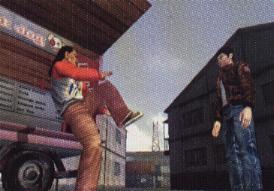
When the "Quick Time Event" system was unveiled by Suzuki, many people were up in arms. Why put such an outdated control system in such a groundbreaking game? It may seem foolish on paper, but in reality, it works fine. Using QTE, Suzuki is able to create cinematic set pieces that would have been impossible to replicate via a more complex control system. For example, there is an event early on where a small child kicks a ball at Ryo by mistake. The QTE system allows you to catch the ball. If you were using a system where the player had full control, you'd have to give the option to "raise hands" and "catch"...not exactly fluid, and it would all get very annoying pretty quickly. Other QTE are battle scenes, and you have to see these to realize how stunning and just plain COOL they are. As far as I'm concerned, the QTE system was a wise choice. However, the "Free Battle" system will disappoint those hoping for fights with the depth of VF. It's not quite as deep as the hype suggested it would be, but it more than serves its purpose. You have a wide selection of moves (and more are introduced by other characters) but I found myself sticking to a few "sure fire" moves. To be honest, the fighting sections of the game don't fit as well as they should. I just found myself wanting to get them over with to progress to the next part of the story. Thankfully, Suzuki has resisted the urge to go over the top and the fights are spread out through the game.
A special mention must go to the sound. The music is wonderfully understated and ambient, and fits the gameplay like a glove. Most of the tracks are traditionally eastern in mood, but there are a few more modern tunes - the music in the arcade is taken from Hang On and one of the stores has awful cheesy "musik" playing in the background...well who said realism had to be pleasant? The sound effects are adequate. Ryo's footsteps make different noises depending on what surface he's walking on, for example. The speech (and every line of dialogue is spoken) is a tad hissy and low-fi at times, but when you consider just how much talking there is to be done in this game, that's acceptable.
Now...the main negative points. Although every item is interactive (you can pick it up and look at it), about 90% of them are useless to you. Sure you can open a drawer, but you'll just be staring at a flat bitmapped image of a shirt, and nothing else. It's nice to see a level of realism such as this in any game, but it's not quite fully interactive just yet. Another problem with the otherwise faultless game engine is draw-in distance. All the buildings remain solid, but the characters "fade in" as they get closer. For example, you could be sprinting down the high street and it looks like you have a clear path ahead of you, but suddenly without warning someone will fade in right in front of you and slow your progress. Obviously this was a trade off that the programmers were forced to make in order to keep the character models detailed and the locations large.
If you're after an action based game, Shenmue may be too dull for you. There are long sections where all you're doing is walking around talking to people, collecting items and the like. Many people will also be annoyed with the conclusion of the game, but you have to bear in mind that this is merely one chapter in the Shenmue story.
Living up to the hype was always going to be hard - after all, that's what hype is all about. However, Suzuki and his team have succeeded in creating a fully immersive, believably realistic piece of software that is stunning in both scope and vision. Many games are called masterpieces nowadays, but this is a true masterpiece of modern videogaming. If Sega can keep up this level of detail, depth and storytelling for further chapters of Shenmue, it promises to be one of the greatest achievements in the world of electronic entertainment.
5 out of 5