

Intro to Finance
Learn online
>Basic concepts
>Corporate finance
>Other materials
Financial careers
>Banking
>Management
>Real estate
>Insurance
Goodies!
Ask Financious
Useful links
About us
Total Assets = Total liabilities + Shareholder�s equity.
The net income is usually divided in dividends (distributed to shareholders) and retained earnings (reserves that increases the total assets).
It is important to note that a BS presents the accounting data for a certain period. In this example, the situation at 31st December 2004 which resulted from all the economic transactions of year 2004 is represented.
The income statement
The main items in an income statement are the following:
Revenues (sales and services billed), the costs of goods sold (including raw materials manufacturing and machinery expenses), the gross profit (the difference between revenues and costs of goods sold),
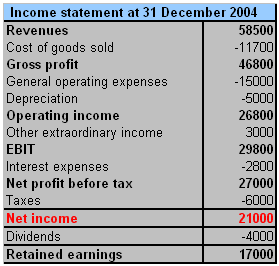
Earnings Before Interests&Taxes (EBIT) are operating income + other/extraordinary income. This is a very important indicator for evaluating companies.
Interest expenses: on debt owed to banks and bondholders.
Net profits before tax =EBIT � Interest expenses .
Taxes: represent a percentage of the NPBT that the company has to pay to the fiscal authorities.
Net income (or net profit after taxes): NPBT � taxes
A company has earned net income when its total revenues for a period have exceeded its total expenses.
Dividends (if paid to shareholders for that specific period) are deducted from the net income yielding the retained earnings for the current period which are reinvested in the company to boost its growth.
Next section: Accounting basics (3) Go back