| |


 


 

Future
Meetings & Conferences
2001
Annual Meeting
 |
July
29-August 1
Sacramento Convention
Center
Sacramento, California |
2001
ASAE International Meeting
Annual Meeting Paper Preparation Authors'
Guide
2001
Specialty Conferences
| May 21-23, 2001
Galt House
Louisville, Kentucky |
Sixth International Livestock Environment Symposium
| September 19-21, 2001,
Iquassu Falls, Brazil |
This is the first WORLD CONFERENCE ON
COMPUTERS IN AGRICULTURE AND NATURAL RESOURCES. It will be held in Iguazu
Falls, Brazil on September 19-21, 2001. It is a collaborrative effort among
agricultural information technology associations worldwide. This conference
provides a forum for agriculture related professionals to exchange information
on applications and developments in the use of Information Technologies.
Contributions from various countries will allow a broadened perspective for
all attending.
SUPPORTING INSTITUTIONS:
Association of Agricultural Computing Companies
American Association of Engineering Societies
Asian Federation of Information Technologies in Agriculture
European Federation of Information Technologies in Agriculture
World Federation of Engineering OrganizationsThe University of Florida
| CAREER EXPO 2001 |
The American Society of Agricultural Engineers is a
professional and technical organization dedicated to the advancement of
engineering applicable to agricultural, food and biological
systems.Agricultural engineering students go on to serve in industry,
academia, and public service. They each have broad training in various
disciplines including civil, mechanical, chemical, structural, environmental,
biological and manufacturing engineering. Agricultural engineers are uniquely
qualified to determine and develop more efficient and environmentally
sensitive methods of developing new technologies and utilizing current
technologies to improve life for an ever-increasing world population. ASAE
students are very well equipped to confront the challenges of the future.
Who Will Attend ? Personnel
representatives of industries, universities, research companies, government
agencies, seeking highly qualified employees in all fields of agricultural and
biological engineering
What Will Happen ? Speak with
well prepared prospective employees in all areas of Agricultural Engineering.
Distribute employment applications, information, accept resume’s.
Where ? Sacramento
Convention Center, Sacramento, California
When ? Monday,
July 30, 2001............. 10:00 a.m. - 5:00 p.m.
Tuesday, July 31, 2001............. Information at booth
Wednesday, August 1, 2001..... Information at booth
|
NEW 2001
Spring Semester Seminar Listing
NORTH
CAROLINA STATE UNIVERSITY
Biological and Agricultural Engineering Department
|
| Date |
Seminar
Title |
Speaker |
| January
22 |
Organizational
meeting with graduate students |
|
| January
29 |
Funding
and Support Opportunities through the NC Biotechnology Center |
Dr.
Carol Haney
Director, Science & Technology Devel. Program
North Carolina Biotechnology Center |
| February
5 |
Using
an Electronic Nose to Monitor the Freshness of Fishery Products |
Tom
Dodd, Ph.D. student, BAE |
| February
12 |
History
and Evolution of the Outhouse |
Dr.
Gary Moore
Dept. of Ag. and Extension Education, NCSU |
| February
19 |
Perspectives
on the 20th Century and the Future of ASAE |
Dr.
Allen Overman
BAE Dept, University of Florida |
| February
26 |
GIS
Data Resources at NC State |
Steve
Morris
Director of Data Services in the NC State
Libraries |
| March
5 |
World
Bank Drainage Projects |
Dr.
Safwat Dayem
Drainage Advisor to the World Bank |
| March
19 |
A
Review of Compliance Histories on North Carolina Swine Farms |
Ron
Sheffield
Extension Specialist and Ph.D. student, BAE |
| March
26 |
A
Search for Water on Mars |
Dr.
Fred DeJarnette
Professor and Former Head of Mechanical and
Aerospace Engineering, NCSU |
| April
2 |
Phosphorus
Removal in a Fluidized Bed Struvite Crystallizer |
Keith
Bowers, Ph.D. student, BAE |
| April
5 (special date) |
Evaluating
Hydrology and Water Quality in a Large North Carolina Coastal Plain
Watershed Following the Hurricanes and Related Storms of 1999"
Data Analysis Techniques
for Odor Analysis and Classification Using the Electronic Nose
|
Ms.
Jennifer Duvall Shelby, M.S. student, BAE
Mr. Javier Gayo, M.S.
student, BAE
|
| April
9 |
The
Effect of Drain Depth on Denitrification
Using a Greenhouse Tomato
Crop to Recover Bioresources from Swine Waste: A Systems Approach
|
Laura
Arnold, M.S. student, BAE
Juan Marbis, M.S.
student, BAE
|
| April
16 |
Application
of a Water Quality Model on a Restored Wetland
Nitrification of Swine
Wastewater Using a Trickling Biofilter
|
Toni
Wyche, M.S. student, BAE
Jodi Pace, M.S. student,
BAE
|
| April
17 (special date) |
Moving
Material and Information in Modern Agricultural Marketing
Use of Heat Pumps for
Winter Heating and Summer Cooling of Greenhouses
|
Mr.
Kevin Cecil, Ph.D. student, BAE
Mr. Yeshwant Gurjer, M.S.
student, BAE
|
| April
23 |
Agriculture
in Space |
Dr.
Chris Brown
Botany, NCSU |
| April
30 |
The
Smithfield Agreement and Animal Production in North Carolina |
Mike
Williams
Director, Animal and Poultry Waste Management
Center, NCSU |
Back to Top
New
Research
Agricultural
Safety (
Agrability, Disabled Farmer Project, Farm Safety ...)
Offroad
Machinery (
Engine power, tractors, hydraulics, mechatronics ...)
Pricision
Agriculture (
Sensors, GIS, machine vision ...)
 Post
Harvesting
( about post Harvesting ...)
Post
Harvesting
( about post Harvesting ...)
Modeling
( about Modeling, Analyze ...)
 Worldwide
Research (
Download copies of Worldwide research ...) Worldwide
Research (
Download copies of Worldwide research ...)
Back to Top
Agricultural
Safety
Robert
(Chip) Petrea, (Phd)

|
Agricultural
Safety and Health Practices
|
Introduction :
The Farm Safety
WalkAbout and The Agricultural Safety Survey were utilized by a county committee
involved in the University of Illinois Cooperative Extension Service=s Community
Farm Safety and Health Leadership Development Project. The findings from using
the instruments are bing used by the Winnebago County Council on Agricultural
Safety and Health as an aid in planning intervention activities. The tact of
using two random samples allowed advantages over just one sample. In one case,
personal delivery of materials allowed committee members to have contact with
the target audience. At the same time, this contact allowed local fire
departments to make personal contacts in a situation other than an emergency. In
the second case, statistical and survey research methodology could be more
strictly followed. The random selection of recipients from the same population
allowed meaningful comparisons of specific data.
Farm Safety WalkAbout
Farm Safety WalkAbout Instrument. This study used a random
sample, n=90, selected from the combined, non-duplicating mailing lists
of the Winnebago County Farm Bureau and Cooperative Extension Services, N=608.
This instrument was personally delivered by member(s) of the Winnebago County
Council on Agricultural Safety and Health committee and the local fire
department of the survey recipient. Once the random sample was selected the
locations were plotted on a county map containing fire district boundaries.
Committee members selected certain fire districts and scheduled delivery of the
survey materials. The items delivered included the survey instrument;
self-addressed, stamped envelope; and a collection of both farm specific and
general safety and health related materials. The multi-page instrument contains
specific questions with yes-no answers, specific activities related to the
questions, and discussion items related to the house, farm and livestock
buildings, farm yard, people, machinery, and activities and training for
children under age 19, and demographic questions. Procedures for survey
follow-up included a two-week reminder postcard, a four-week reminder postcard,
and a six-week reminder letter and replacement instrument.
Response rate -- 44.44% (40 useable
responses)
Agricultural Safety Survey
*
Agricultural Safety Survey. This study used a random sample, n=90,
selected from the combined mailing lists of Winnebago County Farm Bureau and
Cooperative Extension Service, N=608. This random sample was independent
and non-duplicating to the selection used in the Farm Safety WalkAbout survey.
Mailed questionnaires were used. This survey assessed the current status in
Winnebago county on selected agricultural and family practices. The 45 items
surveyed related to specific concerns with farm equipment, agricultural
chemicals, animals, emergency preparedness, and intervention suggestions. Survey
follow-up procedures included a two-week reminder postcard and a four-week
replacement instrument to those that had not responded at that time.
Response rate -- 66.66% (60 useable
responses)
*This is an
adapted form of the general survey contained in the Farm Safety WalkAbout
materials.
Comparison of Similar
Questions
Each of the surveys conducted, as described above, have a
specific format and question form. However, similar questions are present in
each. Similar in this case means that each question, though stated differently,
is analogous in the function it performs and is parallel in the purpose for
including the question. The questions in the following list are presented as
stated in the agricultural safety survey. The percentages for each question are
the percent that answered yes to the question in the form it is presented.
|
Survey
WalkAbout
|
% yes
|
% yes
|
|
Are
keys routinely removed from equipment?
|
21.0%
|
15.0%
|
|
Are
extra riders allowed on tractors?
|
68.9%
|
55.0%
|
|
Are
extra riders allowed on other machinery?
|
43.8%
|
50.0%
|
|
Are
SMV signs in place on tractors?
|
70.1%
|
90.0%
|
|
Are
the ends and shafts of ptos guarded on all equipment?
|
75.0%
|
90.0%
|
|
Have
designated NO PLAY areas been established on your farm?
|
54.0%
|
80.0%
|
|
Are
all openings to manure pits restricted?
|
37.0%
|
29.6%
|
|
Are
agricultural chemicals stored in a locked area?
|
11.6%
|
20.0%
|
|
Are
veterinary supplies stored in a locked area?
|
13.9%
|
55.0%
|
|
Is an
emergency medical service number posted near phones?
|
80.0%
|
80.0%
|
|
Is
there a fire extinguisher in the home?
|
85.0%
|
60.0%
|
Overall Issues of
Concern Raised
While much worthwhile data was obtained, several issues stood
out as overall issues of concern. These issues are not new, but add to the
confirmation that these issues are a needed target for both the general farm
safety effort and the specific Winnebago County effort. These general issues of
concern are:
| Tractors Without ROPS
| Extra Riders Allowed
| Keys Not Removed From Machinery
| Unrestricted Manure Pit Openings
| Lack of Designated and Fenced PLAY Areas
| Lack of Seat Belt Use by Children in Farm Trucks
| Unlocked Chemicals and Veterinary Supplies
| Lack of Emergency Communications Plan
| Lack of Warning Signs on Hazards |
| | | | | | | |
Conclusions
Specific
conclusions based on the data obtained are:
-
The dual random
sampling served the intended purposes to:
a.
Collect meaningful data.
b.
Allow county committee members and fire
department personnel to be seen in a personal and proactive way.
-
A perception exists
that the Farm Safety WalkAbout is aimed at families with children. This
perception was stated both by respondents that completed the WalkAbout
instrument and by recipients that returned the instrument unanswered.
-
Little worthwhile data
was collected on the hours spent by children in specific farm work
situations. Purposive sampling that limits the distribution of the Farm
Safety WalkAbout to farm families with children may elicit additional data
in this area.
-
The Agricultural Safety
Survey and the Farm Safety WalkAbout can provide important data for
community group use as an aid in intervention targeting and planning.
Prepared in
University of Illinois at
Urbana-Champaign.
Back to Top
Offroad
Machinery
|
OxyDiesel
Fuel for a cleaner world |
Diesel engines
supply the power for most of today's heavy equipment and transportation needs.
To improve the quality of our air, increasingly strict regulations have been
imposed on emissions from these engines. One way to reduce the environmental
impact of combustion is to use alternative fuels containing blends of
non-petroleum substances such as ethanol. The problem with this approach has
been increased cost and loss of engine performance. Newly developed OxyDiesel
fuel has the potential to protect the environment while offering enhanced
performance and minimal cost increase.
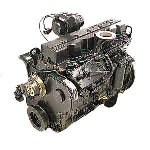
The Ag Engineering Department
at the University of Illinois is helping in the development of
the new OxyDiesel fuel. Tests will compare the performance of a brand new Cummins
diesel engine and Bosch fuel system with standard diesel fuel and
OxyDiesel, both before and after a 500 hour durability test.
Oak Ridge National Laboratory
will be testing OxyDiesel for emissions, for comparison with standard diesel
fuel as well as other alternative fuels.
The Chicago Transit Authority
will be running 15 of their city buses on OxyDiesel, and comparing their
performance to 15 more buses operated with the standard diesel fuel.
OxyDiesel
= Diesel Fuel + Ethanol + Additive
Good things about OxyDiesel
:
| readily biodegradable
| potential benefits of reduced emissions
| reduced ash and sulfur content
| excellent low temperature performance
| less sensitive to heat in storage
| further study may reveal more advantage |
| | | | |
Back to Top
Pricision
Agriculture
Robert A. Aherin,
Leslie L. Christianson, Donald L. Day, Gerald L. Riskowski.
|
Using
Sensors To Detect Potentially Hazardous |
Atmospheres
in Production Agriculture
Executive Summary :
Hazardous atmospheres
exist in agricultural confined spaces, especially manure storage facilities and
silos. Methane, hydrogen sulfide, carbon dioxide, and ammonia can exist in
manure storage facilities. High concentrations of methane can be explosive, and
hydrogen sulfide can reach life threatening levels in seconds. High carbon
dioxide levels indicate low air flow exchange rates which may further indicate
an oxygen deficiency. Ammonia irritates the eyes and respiratory tract.Oxides of
nitrogen and sulfur dioxide can exist in silos. Of the oxides of nitrogen
produced, only nitrogen dioxide and nitrogen tetroxide are medically
significant--inhalation can cause sudden death, pulmonary edema, and/or
bronchiolitis obliterans. Sulfur dioxide is an irritant.
Riskowski, et al., explains, Agases,
dust particles, odor, and ions in the air have a detrimental effect on workers
and animal health and performance. From 1980 through 1989, at least 48 worker
deaths have occurred as a result of exposure to high concentrations of toxic
gases or low levels of oxygen in these facilities. It is estimated that several
thousand workers have suffered chronic and acute health affects from toxic and
irritating gases produced within these facilities.Farm animals experience
prolonged exposure to lower level pollutants including dust particles that are
less than one micron in size. Continual exposure to these hazardous gases can
cause stress, loss of appetite, and even death. Various acute and chronic
diseases, including but not limited to contagious respiratory diseases, can be
initiated by exposure to air pollutants or aggravated by them. Such gaseous and
particulate stressors on confined animals can lead to increased production costs
to farmers. Higher veterinary costs, higher mortality throughout the production
cycle, decreased feed efficiency, more days to raise a market animal to the
target weight for slaughter, and lower quality carcasses delivered to the packer
are all production costs that are passed onto the consumer.It seems obvious from
the above discussion that the ability to identify and measure toxic,
combustible, and oxygen-deficient atmospheres is very important for the safety
and health of farmers and farm animals and for the economic well-being of the
Nation. Monitoring of such atmospheres should detect whether or not hazardous
gases exist, what hazardous gases exist, at what levels they exist, and whether
there is adequate oxygen.The question, AWhat
gas detection instrument should be used in hazardous atmospheres in production
agriculture is not phrased properly. The question should be, AIn
what potentially hazardous atmospheres (locations) will the person be working?
Different locations require different types of gas detection instruments and
different precautions.
One instrument that is capable of detecting several different gases in
multiple farm environments make the most sense for farm production workers.
Solid-state sensors are potential solutions to identifying and monitoring
hazardous atmospheres. Solid-state sensors are low cost, and they have potential
for use in multi-gas monitors for agriculture. From what is known of sensor
systems today, personal gas protection multi-gas monitors capable of monitoring
continuously for several different gases are the detection instrument of choice,
and they are already available commercially.The caveat to this seemingly
ready made solution is that these sensors and monitoring instruments have
been developed for use in other fields. While they hold promise for use in
agricultural hazardous atmospheres, the have not be tested for such a purpose.
To operate in strenuous agricultural environments that are unlike other known
environments, any modified sensor system must adhere to the requirements
discussed on page 16 of this report. They also must be evaluated to determine:
(1) the effects of different gases in the same atmosphere on different sensors;
(2) the interference of one sensor with another in providing fast readings: (3)
assurance of accurate and reliable readings; (4) the effect of dust as an
interferant on sensors; (5) how sealing the instrument from dust may affect its
ability to obtaining and accurate and reliable reading, and (6) frequency of
sensor re-calibration and/or replacement in multiple gas atmospheres.In hopes
that manufacturers would be interested in testing commercially available
systems, the authors of this report have discussed the environmental conditions
under which the sensor(s) must operate in agricultural environments. The report
includes discussions on current sensor technologies and their advantages and
disadvantages in identifying and monitoring toxic and combustible gases in
agricultural environments. The authors also identified four emerging
technologies that hold potential for identifying, measuring, and monitoring
hazardous atmospheres in production agriculture. The following should be
investigated further: Fiber Optic Raman Scattering instrument; AArtificial
Nose; Gas Microsensor Arrays; and the Trace Atmospheric Carbon Monoxide Sensor.
Prepared in Cooperation with
the National Agricultural Lib & University
of Illinois
Back to Top
Post
Harvesting
Back to Top
Modeling
Back to Top
Worldwide
Research
Mechanization
of Tea
T. B. Russell
Boh Plantation Sdn Bhd
Bukit Cheeding Packing Factory
Batu 6, Jl Kg Seri Cheeding
42700 Banting, Selangor DE
Abstract :
An outline is given of progress in tea cultivation,
processing and packing in the last quarter of the twentieth century, at Boh
Plantations, Malaysia's leading tea producer. Vertical integration and
mechanization enabled the company to stay competitive through a period of
chronic labour shortage and despite being in a relatively high wage
economy compared with most tea-producing countries. Labour productivity
has improved dramatically.
Greater progress has been made in the lowlands where
plucking, pruning, fertilizer application and weed control are almost fully mechanized; tea nursery/planting and root disease control are remaining manual
operation.
The current research focus is on mechanization on field
operations in the highlands. An airstrip has been built at Boh for
aerial fertilizer application on all three highland estates. Steep
terrain precludes the use of self-propelled machinery in the highland fields.
Tea is plucked either with shear or Japanese tea harvester; winches are now
being introduced to assist plucking on steep slopes and the evacuation of bags
of leaf.
Three new factories have been built, incorporating a
number of changes in processing and reducing labour requirement. From a
packing shed where tea was packed by hand, except for one teabag machine,
almost all product are now packed by machine in a new packing factory opened
in 1996.
Back to Top
Newsletter January 1998
On 1st December Chris Tyler talked to us about tea production. No we are
not diversifying into tea because of the poor prices we are currently getting
for our wheat but it is always interesting to hear about different crops even
though we will not be growing them ourselves.
Until his retirement Chris worked for Unilever who produce a vast quantity
of tea world-wide. On their plantations they employ 80,000 people which meant
that with their dependants the were responsible for about 1/4 million people
in many different countries such as Ceylon, Java, Malawi and others. He told
us about the basic agronomy of growing tea, and how it was all hand picked. A
quick tea plucker can pick 50 kg of leaves a day. This does not sound much but
1 kg consists of about 1000 shoots and each is individually picked - that
makes 50,000 of hand and wrist movements - it is a good job they havenĺt
heard about R.S.I. Although tea is totally different to the crops that we grow
there are many similarities. The one that struck me was the advances over the
last 40 years that have increased yield form 600 kg of dry tea per Hectare to
4 tones per hectare today. This in turn has changed something which was very
valuable into a cheap commodity.
This links in with the second part of the talk which was about the history
of tea. We were told very interesting stories which started 5000 years ago and
involved tea smuggling, the growing of opium to trade for tea in China, the
opium wars with China, and the use of fine Chinese porcelain as ballast in the
ships. When tea first arrived in this country it was traded at ú10 per pound
which was equivalent to a good annual wage for a man at the time. In 1997 tea
traded at ú1 per Kg (45 pence per pound) and I will leave you to compare that
with what is good annual wage for a man today.
Back to Top
The Formation of a Consumer Ethos in the Rural
Midwest
By 1850, the merger of scientific farming with the agricultural press
created a powerful scripture for the evolving Midwestern economy. When taken
in conjunction with the arrival of hundreds of thousands of new migrants and
the realization of mechanized farming, the era took on the feel of a movement.
The backbone of the crusade was the judicious evaluation, purchase, and use of
modern agricultural machinery. The emergence of a staple crop agriculture led
to a standardization of the technology with which to process the crops, cook
the food, and market the surplus. Propelled by the growing demand of wheat,
corn, and hay, farmers turned to machinery that predictably and steadily
increased yields. Yet, as already noted, commercial farmers were not
encouraged by the market to innovate with untried equipment. Those who
attempted to change technologies gambled with their very livelihood in the
event of failure. Farmers sought information in periodicals to temper this
risk.
Harvest festival
Eco-friendly harvesting techniques and ethics
Harvesting tea tree oil used to be an entirely manual affair, as the swampy
ground favoured by the Melaleuca alternifolia made the use of heavy
machinery difficult. However, the high expense of such a labour-intensive
system made it unpopular, and this led to the establishment of commercial tea
tree plantations.
The most successful tea tree companies now operate wholly
mechanized
harvesting and distilling. The oil is found within cells of the leaves, so
foliage is cut by a heavy-duty foliage harvester, and fed directly into a
mobile vat which is towed to the distillery when full. The vat is then sealed
with a lid and connected to a condenser, and steam from a boiler is passed
through the tea tree foliage. Distillation is normally complete within two
hours.
In the true spirit of recycling, part of the leaf matter remaining after
distillation is used as fuel for the boiler, and the rest is spread on
harvested areas as mulch to enable residual nutrients to return to the soil.
A 400 hectare plantation would produce an average of 200 kg of oil per day.
The tea tree grows extremely fast, and foliage growth is fully regenerated
within approximately two years. The tea tree industry has now planted or saved
an estimated fifty million trees, and superior plantations pride themselves on
chemical-free weed control.
Back to Top
do you
know ?
Agricultural
Value-added Engineering Centre (AVEC)
The goal of the Agricultural
Value-added Engineering Centre (AVEC) is to help meet the engineering-related
needs of Alberta's growing agricultural value-added processing industry.
Since its launch in 1997, AVEC has been undertaking applied
engineering research, providing information and the transfer of skills and
technologies. AVEC is now part of the Food Processing Development
Centre and this new structure will facilitate the expansion of services which
may involve product development for industrial uses of agricultural materials as
well as agricultural waste and by-product utilization.
AVEC conducts research and development and technology transfer
projects aimed at solving problems related to agricultural value-added
processing. Our expertise includes postharvest handling; storage and drying of
agricultural crops; design and layout of processing plants; processing equipment
design and development; food process engineering; essential oil extraction;
sensors and instrumentation; physical properties of agricultural and food
materials; environmental control for processing plants; waste and by-product
utilization; and product development from agricultural materials for industrial
applications. Research and development and technology transfer projects include
storage studies of sugar beets and temperature monitoring of sugar beet piles;
particulate matter reduction in alfalfa dehydration plants and seed cleaning
plants; and heat disinfestation protocol for compressed hay bales among others. AVEC
also assists clients in technology transfer related to value-added process
engineering. To protect and respect the interests of its clients, AVEC
holds all of its client services in strict confidence.
AVEC offers technical and information services. It has a resource
centre which can be used by clients to obtain technical and
engineering-related information from hard copy materials or through computer
searches. The in-house library maintains commercial literature and company
brochures; books on value-added processing and engineering; and world wide web
(WWW) bookmarks to access internet sites of institutions, organizations and
companies. AVEC staff can provide counseling to processors and farmers on
all aspects of agricultural processing (food and non-food), including
engineering issues.
Equipment :
Laboratory :
| Agitating water bath (ambient to 100C) (Hotpack
Shaker)
| Airflow resistance device for large crop materials
| Airflow resistance device for grains and seeds
| Bulk density device (USDA standard)
| Bulk density device (Canadian Grain Commission
standard)
| Calorimeter (specific heat measurement)
| Chilled/heated water bath (-10 to 120C)
| Cooler, solid door, Model RSCP-48AL (Coldstream)
| Cube/pellet press
| Dessicator (Nikko)
| Emptying angle of repose device
| Filling angle of repose device
| Fluidized bed dryer
| Forage cube durability tester
| Forced-air thin-layer dryer
| Freezer, solid door, Model RFSC-48AL (Coldstream)
| Grain debearder (Mater International)
| Humidity-controlled chamber (Can-Trol Environmental
Systems)
| Instron Model 1000 testing machine
| Multivolume pycnometer (Micromeritics)
| Pellet durability tester
| Sample divider, precision
| Sample divider, Boerner
| Tangential abrasive dehulling device (Nutana Machine
Ltd.)
| Thermal conductivity probe
| Tilting table (for coefficient of friction
measurement)
| Ultracentrifugal mill ZM100 (Retsch) |
| | | | | | | | | | | | | | | | | | | | | | | | | |
Instrumentation :
| Compact force gauge (Mecmesin)
| Datalogger (CR9000, Campbell Scientific)
| Datalogger (CR7, Campbell Scientific)
| Datalogger (CR23, Campbell Scientific)
| Dataloggers (CR10X, Campbell Scientific, 3 units)
| Dataloggers (CR21X, Campbell Scientific, 3 units)
| Energy monitor (DuPont)
| Foot candle/lux light meter (Extech)
| Gas Analyzer (Bacharach)
| Hot wire anemometer
| Inclined manometer (10")
| Inclined manometer (1")
| Inclined manometer (23")
| Light meter (Klefon K7020)
| Oscilloscopes
| Pressure transmitter (0.5")
| Pressure transmitter (31")
| Remote sensing temperature recorder Ktx (Dickson)
| Slack tube manometer (30")
| Sound level meter (Bruel and Kjaer)
| Temperature probe (6 ft)
| Theodolite
| Tri-Sense meter kit (RH, Temperature and Air
Velocity measurement)
| Velometer (Alnor)
| Water flow meters - various types and sizes
| Various electrical measurement instruments,
including Fluke 73 multimeters, Fluke 52 K/J thermometers, Fluke LCA10
current test adapter; Fluke 80i40 ACE current clamp on probe |
| | | | | | | | | | | | | | | | | | | | | | | | |
Pilot Plant :
| Abrasive dehuller (for pulses)
| Air-and-screen machine (Crippen)
| Aspirator tester (Carter Day)
| Disc separator (Carter Day)
| Dockage tester (Carter Day)
| Fluidized bed dryer (Niro)
| Gravity separator (Westrup)
| Hammer mill
| Precision grader tester (Carter Day)
| Scarifying/brush machine (Westrup)
| Spiral separator
| Uniflow tester (Carter Day)
| Wild rice dehuller |
| | | | | | | | | | | |
Technical Reports and Papers :
Following are some of the technical reports and papers written by AVEC staff:
| Paper (Abstract): Particulate Emission Control
for the Alfalfa Dehy Industry
K.K. Chawla, L.G. Tabil, Jr. and H. Qi.
Presentation. 1998 AIC/CSAE Meeting, July 5 - 9, 1998, Vancouver, BC
CSAE Paper No. 98-210
| Paper (Abstract): Impact Damage to Peas and
Beans During Free Fall
K.K. Chawla, L.G. Tabil, Jr. and S. Likhyani
Presentation. 1998 AIC/CSAE Meeting, July 5 - 9, 1998, Vancouver, BC
CSAE Paper No. 98-312
| Paper (Abstract): Airflow Resistance of Sugar
Beets
L.G. Tabil, R. White, J. Kienholz, H. Qi and M.V. Eliason
Poster Presentation. 1999 ASAE/CSAE Annual International Meeting, July
18-24, 1999, Toronto, ON.
ASAE Paper No. 996059
| Paper (Abstract): Particulate Emission Control
Strategy for the Alfalfa Dehydration Industry (Design,
Fabrication and Testing of a Dust Control Cyclone Installed in Series with
the Hammer Mill Cyclone)
K.K. Chawla, L.G. Tabil, and H. Qi.
Presentation. 1999 ASAE/CSAE Annual International Meeting, July 18-24, 1999,
Toronto, ON.
ASAE Paper No. 994199
| Paper (Abstract): Physical Properties of
Selected Special Crops Grown in Alberta
L.G. Tabil, H.Qi, K.K. Chawla, J. Kienholz, V. Crossman and R. White
Poster Presentation. 1999 ASAE/CSAE Annual International Meeting, July
18-214, 1999, Toronto, ON.
ASAE Paper No. 996049
| Paper (Abstract): Field Trials Leading to the
Development of a Heat Treatment Protocol for Compressed Hay Bales
L.G. Tabil, M.V. Eliason, J. Whistlecraft and P. Adams
Presentation. 1999 ASAE/CSAE Annual International Meeting, July 18-214,
1999, Toronto, ON.
ASAE Paper No. 991022
| Paper: Dust Control Strategies for the Alfalfa
Dehydration Industry Using Cyclones
K.K. Chawla and L.G. Tabil, Jr
Presentation. Post Conference Workshop of the 5th International Green Crops
Driers Conference, October 7, 1999, Canmore, AB.
| Technical Report: Particulate Emission Control Strategies for the Alfalfa
Dehy Industry in Alberta. Project II (Evaluation of the Effect of Inner Tube
Length on the Particulate Emission of High Efficiency Cyclone)
K.K. Chawla, L.G. Tabil, Jr. and H. Qi
1998
| Technical Report (Summary): Developing New
Methods for Harvesting and Storing Sugar Beets to Minimize Sugar Loss After
Harvest
L.G. Tabil, Jr., H. Qi, M.V. Eliason and D. Scott
1999
| Technical Report (Summary): Field Trials
Leading to the Development of a Heat Treatment Protocol for Compressed Hay
Bales. I. Tests in Commercial Natural Gas-Fired Heat
Treatment Equipment
L.G. Tabil, Jr. M.V. Eliason, J. Whistlecraft and P. Adams
1999
| Technical Report (Summary): Field Trials
Leading to the Development of a Heat Treatment Protocol for Compressed Hay
Bales. II. Tests
in High Frequency Vacuum Heat Treatment Equipment
L.G. Tabil, Jr. M.V. Eliason, J. Whistlecraft and P. Adams 1999
This
information is maintained by
Alberta
Farm Machinery Research.
| | | | | | | | | | |
Back to Top
New
Publication
Agricultural
Engineering Soil Mechanics by
- E. McKyes, Department of Agricultural Engineering,
Macdonald College of McGill University, Ste. Anne de Bellevue, Quebec,
Canada
- Included in
series :
- Developments
in Agricultural Engineering, 10
Description
This book provides an introduction to classical soil mechanics and
foundation engineering, and applies these principles to agricultural
engineering situations. Theoretical design formulae are given, plus tables
and graphs dealing with bearing capacity factors, wall pressure factors,
soil cutting numbers and soil mechanical properties. Many example problems
of design and analysis are solved in the text, and there are unsolved
problems given for each chapter. The text begins with descriptions of soil
origins and classification systems, including agricultural classification
schemes, and then introduces classical concepts of soil strength and
strength measurement techniques in the laboratory and in the field. Soil
mechanics is applied to the design of shallow foundations, and the design
formulae as well as tables of bearing capacity factors for design use are
provided. New research and design findings in the specialized area of tall
and heavy farm silos are also given, in addition to deep pile foundation
design for heavy structures on very soft soils. Water flow in soils is
treated, together with stability of ditch bank slopes and small earth dams,
design of retaining walls and pressure pressures in bins and silos, soil
erosion and protection methods, soil cutting and tillage design methods,
soil compaction analysis, the use of geotextiles and problems of soil
freezing. The book is directed primarily at professional university students
in Agricultural Engineering, but will also be of interest to scientists
working in other engineering branches, landscape architecture, soil physics
and the like.
Contents
1. Origins and Classification of Soils.
Origins of soils.
Classification of soils.
Soil phases.
Problems.
2. Soil Shear Strength.
Coulomb's law of friction and cohesion.
The Mohr circle of stresses at a point.
The Mohr-Coulomb circle of stresses at failure.
The method of stress characteristics.
Total and intergranular (effective) stresses.
Laboratory methods of soil strength measurement.
Field strength tests.
Problems.
3. Shallow Foundations.
Bearing capacity.
Foundation settlement.
Pressure distribution under foundations.
Tower silo foundations.
Pile foundations.
Problems.
4. Water Flow in Soils.
Consolidation and settlement rates.
Water flow in saturated soil.
Problems.
5. Slope Stability.
Slope stability determination.
Stability of watercourse banks.
Erosion of banks.
Stability of small earthdams.
Problems.
6. Lateral Earth Pressures.
Active and passive wall pressures.
Design of retaining walls.
Passive soil resistance.
Pressures on bin and silo walls.
Pressures on buried pipes and conduits.
Problems.
7. Soil Erosion and Protection.
Water erosion.
The universal soil loss equation (USLE).
Modified universal soil loss equation.
The soil loss estimator for southern Africa (SLEMSA).
Design of soil conservation practices and structures.
Wind erosion.
Problems.
8. Soil Cutting and Tillage.
Cutting forces.
Volume of soil cut.
Soil loosening.
Problems.
9. Soil Compaction.
Compaction for earthwork construction.
Compaction of agricultural soils.
Problems.
10. Geotextiles.
Use of geotextiles.
Design of geotextile applications.
Problems.
11. Soil Freezing.
Frost penetration.
Frost heave pressures.
Problems.
References.
Appendices.
1. Bearing capacity factors for shallow foundations.
2. Design requirements of extended silo ring foundations.
3. Wall pressure factors in frictional soils.
4. Consolidation time factors.
5. Passive soil cutting factors.
6. Selected values of soil mechanical properties.
Author Index. Subject Index.
Bibliographic
and Ordering Information
For information about conditions of sale, ordering procedures, and links
to our regional sales offices, please read through our ordering
information.
Year 1989 Hardbound
| ISBN: 0-444-88080-1
| xii + 292 pages
| Price: Order
form
 | NLG 186 (euro 84.40)
| USD 97.50 |
|
|
| |
Back to Top
Mathematical
and Control Applications in Agriculture and Horticulture 1997
Proceedings of the 3rd IFAC Workshop, Hannover, Germany, 28
September - 2 October 1997
- Edited by
- A. Munack, Institut für Biosystemtechnik der
FAL, Braunschweig, Germany,
H.-J. Tantau, Institut Technik im Gartenbau, Universität
Hannover, Germany
- Included
in series
- IFAC
Proceedings Volumes
Description
A wide ranging programme was planned, covering the principal areas
where mathematical models or control engineering can have a major impact
on agricultural and horticultural processes and their management.
Emphasis was placed on applications of models and control in
agriculture.
Focal areas for the meeting included: models and control of post-harvest
processing and grading, climate control in plant production and animal
houses, mathematical models relating to the environmental impacts of
agriculture, sensing and control methodologies appropriate to
agricultural systems, information technology, impact of uncertainty and
forecasting in models, demonstration of novel developments in software
for agriculture and horticulture, and practical implementations of
models and control.
The meeting was structured to maintain maximum interaction between
participants in the focal areas of the programme - and to permit
presentations across a wide range, from control methodologies to
practical implementation of models.
Audience
For researchers and practitioners with an interest in applications of
models and control in agriculture.
Contents
Chapter headings and selected papers: Greenhouses I.
Paradigms in greenhouse climate control: on hierarchy and energy saving
(late paper) (G. van Straten et al.).
Greenhouses II.
Management and control for quality in greenhouses (N. Sigrimis et al.).
Poster Session I.
SERRISTE: daily greenhouse climate set-point determination for tomatoes
(M. Tchamitchian et al.).
Climate control in a solar operated laboratory greenhouse (I. Farkas et
al.).
Greenhouses III.
Optimal control of crop production in horticultural glasshouses (J.
Rothwell et al.).
Acoustics and Vision.
A hierarchical self-organizing map for egg breakage classification (D.
Moshou et al.).
Machinery.
Modelling approaches to a modular solar dryer (I. Farkas et al.).
Poster Session 2.
Detection of eggshell cracks by means of acoustic frequency analysis (P.
Coucke et al.).
A tractor engine control system based on a fuzzy logic and a genetic
algorithm (D. Wierzbicki et al.).
Plant Physiology and Plant Pathology.
Modelling and control design for free air CO2 enrichment
systems used in plant physiology atmospheric change experiments (J.
Taylor et al.).
Post Harvest Technology.
Adaptive control to optimize the climate for potato storehouses (K.
Gottschalk).
Animal Houses.
Ventilation control of pig-houses during winter period (P. Kic et al.).
Late Papers.
Solving air flows in mushroom-growing rooms (J. Grant et al.).
Author index.
Bibliographic
and Ordering Information
For information about conditions of sale, ordering procedures, and
links to our regional sales offices, please read through our ordering
information.
Year 1998 Paperback
| ISBN: 0-08-043037-6
| 322 pages
| Price: Order
form
| NLG 140 (euro 63.53)
| USD 73.50 |
|
|
| |
Back to Top
Terramechanics
and Off-Road Vehicles by
-
- J.Y. Wong, Department of Mechanical and Aeronautical Engineering,
Carleton University, Ottawa, Ontario, Canada
Description
The computer-aided methods presented in this book represent recent advances
in the methodology for predicting and evaluating off-road vehicle performance.
The mathematical models established for vehicle-terrain systems will enable the
engineering practitioner to evaluate, on a rational basis, a wide range of
options and to select an appropriate vehicle configuration for a given mission
and environment. The models take into account all major design and operational
parameters, as well as pertinent terrain characteristics. Applications of the
computer-aided engineering methods to the parametric analysis of off-road
vehicle design are demonstrated through examples.
Contents
Nomenclature.
1. Introduction.
Role of terramechanics.
Some basic issues in terramechanics.
Approaches to terramechanics.
2. Measurement of Terrain Behavior.
Cone penetrometer technique.
Bevameter technique.
3. Characterization of the Response of Terrains to Normal and Repetitive
Loadings.
Response of mineral terrains.
Response of muskegs.
Response of snow covers.
4. Characterization of the Shearing Behavior of Terrains.
Characterization of the shear stress-displacement relationships.
Shearing behavior of various types of terrain.
Behavior of terrain under repetitive shear loading.
5. Methods for Predicting and Evaluating Tracked Vehicle Performance.
Empirical methods.
Theoretical methods.
Methods for parametric analysis.
6. Computer-Aided Methods for Evaluating Tracked Vehicle Performance.
Approach to the prediction of normal pressure distribution under a track.
The shape of the deflected track.
Prediction of shear stress distribution under a track.
Effects of shear stresses on the normal pressure distribution.
Prediction of motion resistance and drawbar pull.
Experimental substantiation.
Comparison of predictions with experimental results.
7. Applications of the Computer-Aided Method to the Parametric Analysis
of Tracked Vehicle Design and Performance.
Effects of track system configuration on tractive performance.
Effects on suspension characteristics on tractive performance.
Effects of initial tack tension on tractive performance.
Effects of vehicle weight on tractive performance.
Effects of the location of the centre of gravity on tractive performance.
Effects of vehicle ground clearance on tractive performance.
Effects of sprocket location on tractive performance.
Discussions.
8. Methods for Predicting and Evaluating Wheeled Vehicle Performance.
Empirical methods.
Theoretical methods.
Semi-empirical methods developed by Bekker.
9. Developments in the Methods for Predicting the Performance of Tires
and Wheeled Vehicles.
Computer-aided method for evaluating the performance of tires.
Computer-aided method for evaluating the performance of wheeled vehicles.
Applications of the computer-aided method for parametric evaluation of wheeled
vehicle performance.
Applications of the finite element technique to tire modelling in the analysis
of tire-terrain interaction.
References.
Index.
Bibliographic
and Ordering Information
For information about
conditions of sale, ordering procedures, and links to our regional sales
offices, please read through our ordering
information.
Year 1989 Hardbound
| ISBN: 0-444-88301-0
| xiv + 252 pages
| Price: Order
form
| NLG 296 (euro 134.32)
| USD 155 |
|
|
| |
Back to Top
Analysis of
Agricultural Energy Systems
- Edited by
- R.M. Peart, University of Florida, Institute of
Food and Agricultural Sciences, Gainsville, FL, USA,
R.C. Brook, Agricultural Engineering Department, Michigan State
University, East Lansing, MI, USA
- Included
in series
- Energy
in World Agriculture, 5
Description
Almost all agricultural operations and processes can be viewed as
transformations of energy from one form to another. Fertilizer to feed
grains; feed grains to dairy products; livestock wastes to fertilizers.
Progress in agricultural science and engineering has led to better
understanding of these energy transformations, much of which has been
expressed in the form of mathematical analysis. Computer programs have been
developed that perform the calculations necessary to obtain the required
results quickly and accurately. The objective of this handbook is to explain
some of the most important of these analysis techniques as they have been
applied to real agricultural energy problems throughout the world. In
addition to the strictly mathematical calculations of these techniques, also
covered are the beginnings of a new field of artificial intelligence.
The analysis methods described are all applied to real agricultural
energy system problems such as biomass energy, energy uses in livestock
housing and ethanol production on the farm. The techniques include expert
systems, linear programming and simulation. Knowledge-based systems allow
expression of the expert's concepts in a language and form that is much more
like the expert's personal language. Linear programmimg is used to solve the
complex, realistic problem of energy crop analysis. Drying of grain crops is
a major energy cost and simulation methods take into account risks of
increased field and storage lossses when energy inputs are reduced. This
handbook is filled with techniques, programs and data for analysis of
various agricultural energy systems. Methods are detailed enough for the
expert reader and extensive tables show energy requirements for a large
number of industrial processes related to processing agricultural products
and converting and utilizing biomass energy.
Contents
General Preface.
Preface to Vol. 5. Program Listings.
1. Knowledge Engineering and Energy Systems (J.R. Barrett).
2. A Knowledge-Based Expert Control System for Low-Energy Maize Drying
(R.M. Peart).
3. A Knowledge-Based Decision System for Control of Waste Heat for a
Greenhouse-Aquaculture Complex (D.R. Price, R.T.H. Chen and R.M. Peart).
4. Teaching Energy Cost Minimization by Linear Programming (G.E.
Miles).
5. Energy Crop Selection Using Linear Programming (D.A. Bender and B.A.
McCarl).
6. Input-Output Energy Analysis for Agriculture and the Food Chain (R.C.
Fluck).
7. Energy Input-Output Simulation of Crop Production (R.E. Muller).
8. Management Strategies for Low Temperature Maize Drying (G.R. VanEe
and G.L. Kline).
9. Energy Use in Maize Harvest and Drying (R.M. Peart and J.R.
Barrett).
10. Microcomputer Program for Evaluating Energy Consumption in
Low-Temperature Grain Drying (E.A. Smith and M.E. Parkes).
11. Models of Scheduling Operations for Improved Energy Efficiency (E.
Van Elderen).
12. Integrated Management of Energy and Climate in Animal Houses (J.P.A.
Christiaens).
13. A Simulation Model for Analysis of Harvesting and Transport Costs
for Biomass Based on Geography, Density and Plant Location (B. Mantovani and
H. Gibson).
14. GETOH - A Computer Program for Evaluation of On-Farm Alcohol
Production (J.R. Ogilvie).
15. Economic Feasibility of Crop Residue as a Drying Fuel (O.J. Loewer).
16. Analysis of Agricultural Plants for Cogeneration Feasibility in the
United States (I.P. Schisler and R.C. Brook).
List of Contributors.
Subject Index.
Bibliographic
and Ordering Information
For information about conditions of sale, ordering procedures, and links
to our regional sales offices, please read through our ordering
information.
Year 1992 Hardbound
| ISBN: 0-444-88660-5
| xviii + 394 pages
| Price: Order
form
| NLG 509 (euro 230.97)
| USD 266.50 |
|
|
| |
Back to Top |