
"I ask for nothing, i would get by
but i know so many less lucky than i
God help my people the poor and downtrod
I thought we all were the children of God."
——————————————————————————————
Esmeralda, THE HUNCHBACK OF NOTRE DAME
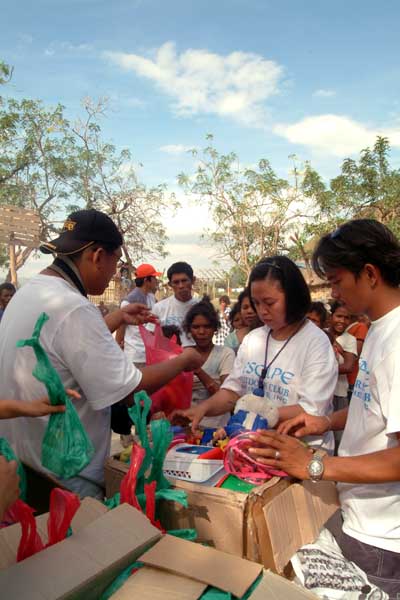
A few days before year 2002 drew to a close, I with 12 co-escapees
found ourselves in a remote village in Tarlac. The club played Magi
(to a hilt!) to a community of 200 or so Aetas. In keeping with the
Christmas spirit of giving, 13 members distributed toys, school
supplies, clothes and snacks. Oh, not to forget, to spread out
cheers.
I am not a great fan of one-day gift giving projects. Don’t you find it
cold-blooded to lavish people with gifts for a day then charge them
to oblivion for the remaining 364 days of the year? Isn’t it more
laudable and compassionate to check on them from time to time
just to see how  they’re doing with their lives? How about making
fishermen out of them? Even the holy book exhorts that it is better
to teach them to fish than to  give them fish.
Anyway, I set aside my reservations on that day and decided to go with the flow. Call it a break for spontaneity. At the makeshift school—cum our group’s headquarters-kitchen-dining hall-sleeping quarters-meeting room-and honey culture lab, we were shyly greeted by the Aetas whose excitement was so palpable as the guys in our group brought in cartons of give-aways. (It must be the Pinoy’s affinity for balikbayan boxes; the sight of kraft cartons never fails to elicit gleeful stares from children and adults alike.)
Just before we gave out “merienda” and Christmas presents, we were treated to traditional dance numbers so exuberantly performed by their children, then the men. With costumes to boot! (At least the kids wore some. The men, were almost, well, au naturel.) I thought that was hospitable and thoughtful for them. The thought of them rehearsing under the sweltering heat with their audience’s pleasure in mind was simply heart-warming. As the children stomped their feet in joyous abandonment and flapped their arms to the beat of Manong’s guitar (unplugged at that!), dust flew everywhere. We were by then so entertained to bother with the grits starting to fill our nostrils. Never mind if Manong’s accompaniment revolved around three notes only. He strummed the chords with pulsating gusto, it was pure energy in motion. Another group of children rendered a song. Music has a way of transforming these kids. Earlier that day, they were so timid when asked to speak. The reverse is true the moment they open their mouths to sing. Remember how we were taught in school to sing from our diaphragm? They were taught better. They drew from deeper, they sang from their hearts. Just like Motown soul. I could not exactly make out the words but the effect was riveting. I had to stop whatever I was doing then to be able to listen and completely be in the moment. The day was even made brighter with the parlour games we hosted for the kids and a basketball shootout for the men, to cap the line-up of events.
Before we decided to call it a day, I engaged our guide (whom we met up with in the town proper, he’s not an Aeta) in a chat just to know more about the Aeta’s lifestyle. I wondered how they made a living, when all I couls see was grass and dust, dust and grass from where we stood. Hunting could very well be a thing of the past. There was no forest to speak of. I was told that it is not the Aeta’s nature to plan long range like we battered city dwellers do. It was enough to have something on their table for the next day or two before they go out sourcing again. On some occasions when they have extra vegetable produce from the little they have harvested, they head for the lowlands to sell them at the market. At other times, sourcing may be from kind-hearted donors who are willing to part with their surplus. It may be unimaginable for us to think how they can go about this day in and out but somehow they have easily adapted to this style of living. In spite of the disparity in lifestyle and their distance from the city, they have not been spared some plagues, which hound city dwellers. Our guide recounted how families were each given seedlings and a carabao by the Department of Agriculture to assist them in their daily sustenance. Choosing fast bucks over months of waiting for their crops’ yield, most sold their carabaos and reverted to “sourcing out.” I was even saddened to learn that with the amount of free time on their hands it is not uncommon to find them losing little money they have on gambling bets. Any volunteer group better brace themselves for these realities before they engage the natives in a people empowerment program.
Does it make sense for the club to involve ourselves in a similar project for our next outreach? Itinerants that these people are, we are not even sure if they will still be at the same site on the next chance we get to visit Mt. Pinatubo. They may have transferred to greener pastures.
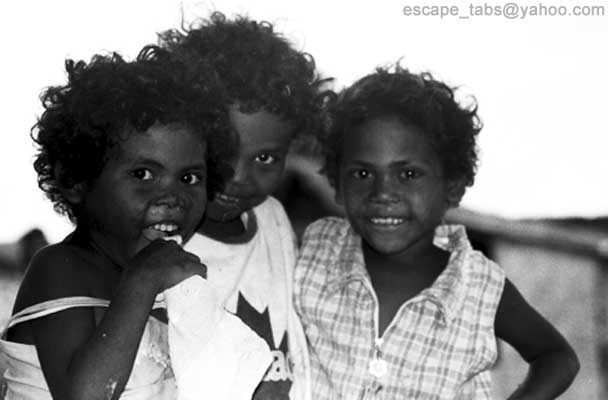
Let us console ourselves with the thought that at least for one afternoon we were more than our Monday to Friday selves, patient rather than cranky, givers rather than takers, concerned rather than hostile. Images of that outreach will be permanently etched in our memory, and deeper still, in our hearts. Not just for a day but for the remaining 364 days of the year.
(written by Ichu P. Tayag)