
Chemistry's Brief History
The earliest practical knowledge of chemistry was concerned with metallurgy, pottery, and dyes; these crafts were developed with considerable skill, but with no understanding of the principles involved, as early as 3500 B.C. in Egypt and Mesopotamia. The basic ideas of element and compound were first formulated by the Greek philosophers during the period from 500 to 300 B.C. Opinion varied, but it was generally believed that four elements (fire, air, water, and earth) combined to form all things. Aristotle's definition of a simple body as "one into which other bodies can be decomposed and which itself is not capable of being divided" is close to the modern definition of element.
About the beginning of the Christian era in Alexandria, the ancient Egyptian industrial arts and Greek philosophical speculations were fused into a new science. The beginnings of chemistry, or alchemy, as it was first known, are mingled with occultism and magic. Interests of the period were the transmutation of base metals into gold, the imitation of precious gems, and the search for the elixir of life, thought to grant immortality.
Evolution of Modern Chemistry
In the hands of the "Oxford Chemists" (Robert Boyle, Robert Hooke, and John Mayow) chemistry began to emerge as distinct from the pseudoscience of alchemy. Boyle is often called the founder of modern chemistry (an honor sometimes also given Antoine Lavoisier, He performed experiments under reduced pressure, using an air pump, and discovered that volume and pressure are inversely related in gases (see gas laws). Hooke gave the first rational explanation of combustion as combination with air while Mayow studied animal respiration. Even as the English chemists were moving toward the correct theory of combustion, two Germans, J. J. Becher and G. E. Stahl, introduced the false phlogiston theory of combustion, which held that the substance phlogiston is contained in all combustible bodies and escapes when the bodies burn.
Impact of the Atomic Theory
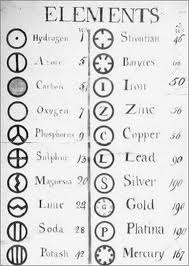
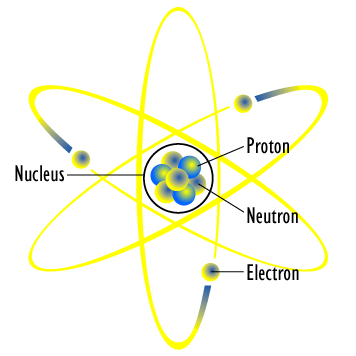
The assumption that compounds were of definite composition was implicit in 18th-century chemistry. J. L. Proust formally stated the law of constant proportions in 1797. C. L. Berthollet opposed this law, holding that composition depended on the method of preparation. The issue was resolved in favor of Proust by John Dalton's atomic theory (1808). The atomic theory goes back to the Greeks, but it did not prove fruitful in chemistry until Dalton ascribed relative weights to the atoms of chemical elements. Electrochemical theories of chemical combinations were developed by Humphry Davy and J. J. Berzelius. Davy discovered the alkali metals by passing an electric current through their molten oxides. Michael Faraday discovered that a definite quantity of charge must flow in order to deposit a given weight of material in so
Organic Chemistry and the Modern Era
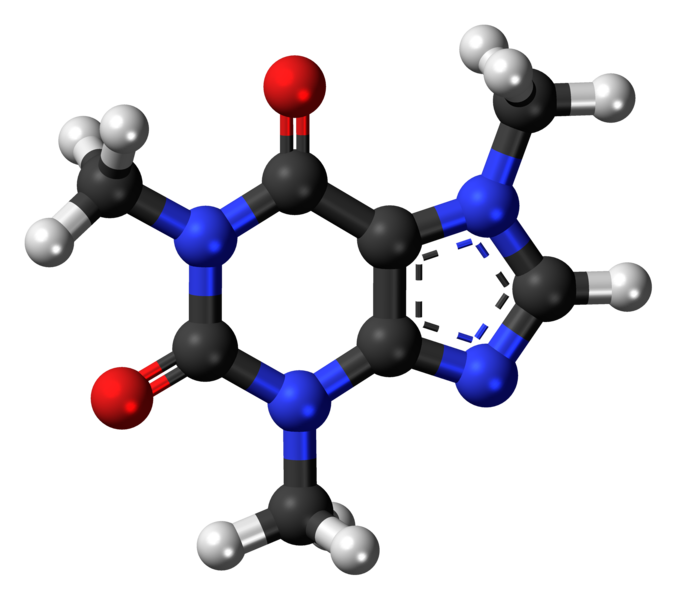
Organic chemistry developed extensively in the 19th cent., prompted in part by Friedrich Wohler's synthesis of urea (1828), which disproved the belief that only living organisms could produce organic molecules. Other important organic chemists include Justus von Liebig, C. A. Wurtz, and J. B. Dumas. In 1852 Edward Frankland introduced the idea of valency (see valence), and in 1858 F. A. Kekule showed that carbon atoms are tetravalent and are linked together in chains. Kekule's ring structure for benzene opened the way to modern theories of organic chemistry. J. H. van't Hoff, and Wilhelm Ostwald pioneered the application of thermodynamics to chemistry. Further contributions were the phase rule of J. W. Gibbs, the ionization equilibrium theory of S. A. Arrhenius, and the heat theorem of Walther Nernst. Ernst Fischer's work on the amino acids marks the beginning of molecular biology.