![[Next Page]](NEXT.gif)
 |
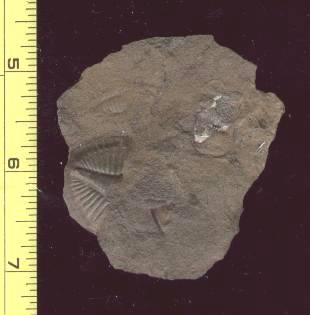
The most common and easily recognizable fossil found at Craigleith is the trilobite's pygidium or tail section which was left intact when the trilobite molted. |
 |
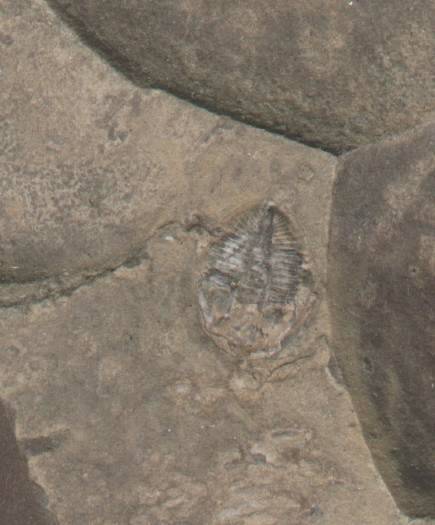
Sample of a complete, (though small) trilobite. |
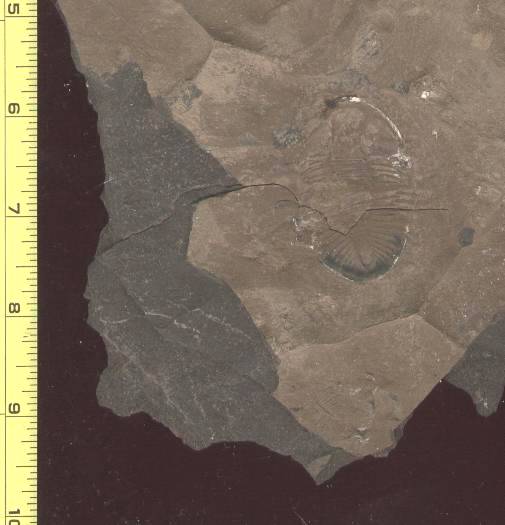 |
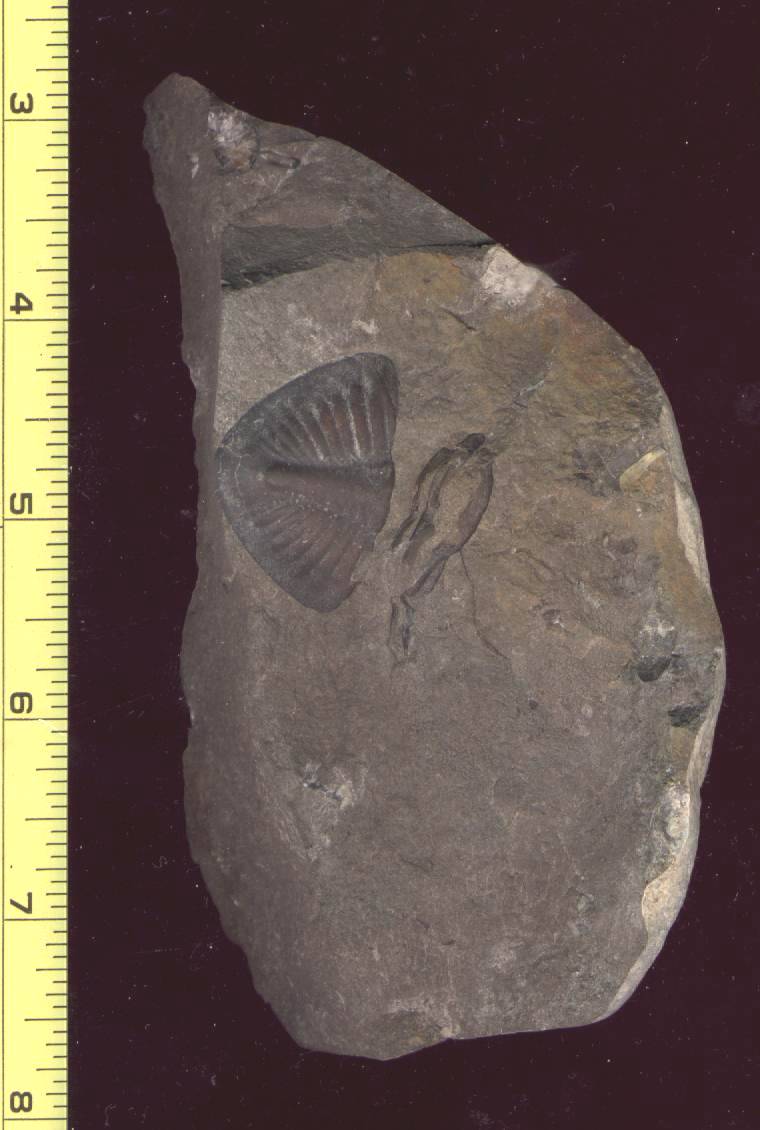
Imprint of a larger, complete trilobite. |
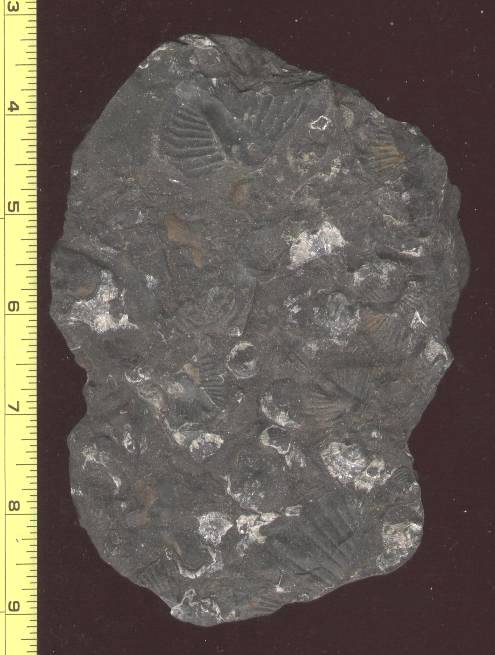 |
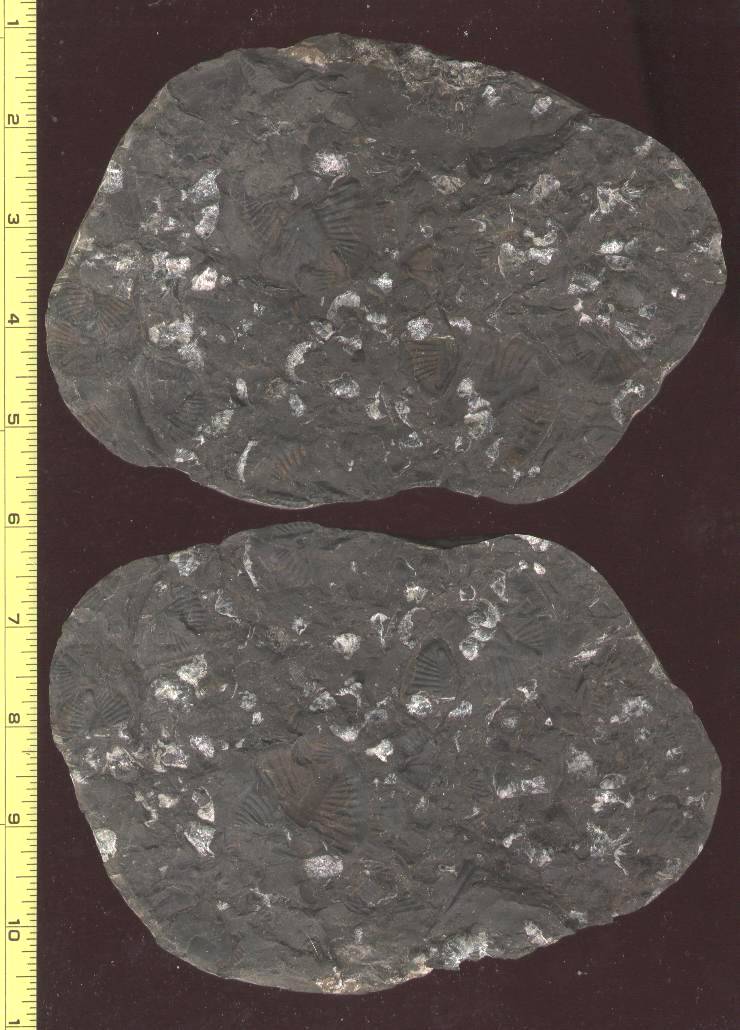
Multiple trilobite fragments are often found when splitting open pieces of shale. |
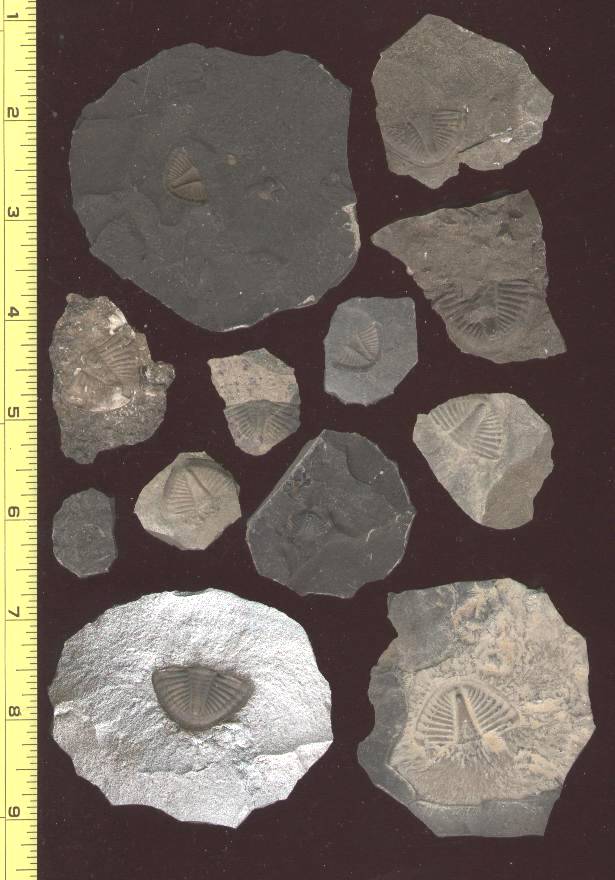 |
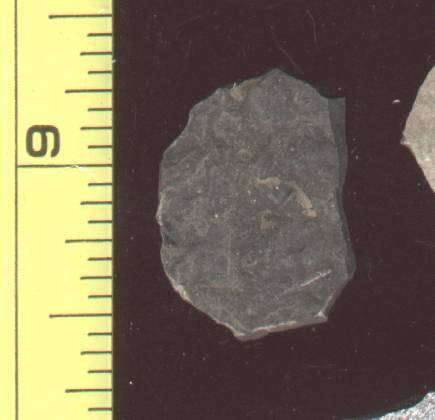
Various samples of pygidium. (Yes, even the small piece near the 6 inch mark contains a fossil. See enlarged picture on right.) |
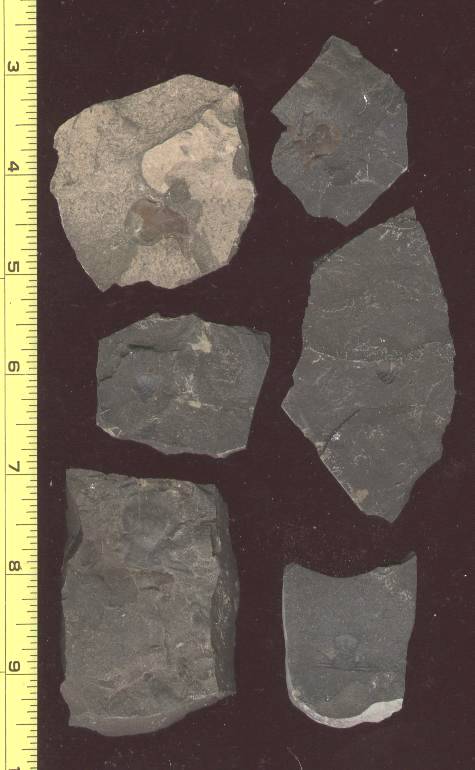 |
Pieces showing parts of the head of trilobites. The 'noselike' section is termed the glabella. |
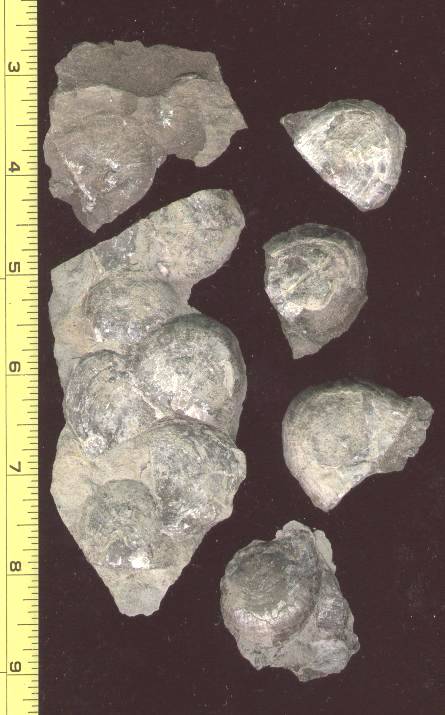 |
Unidentified Bivalves. |
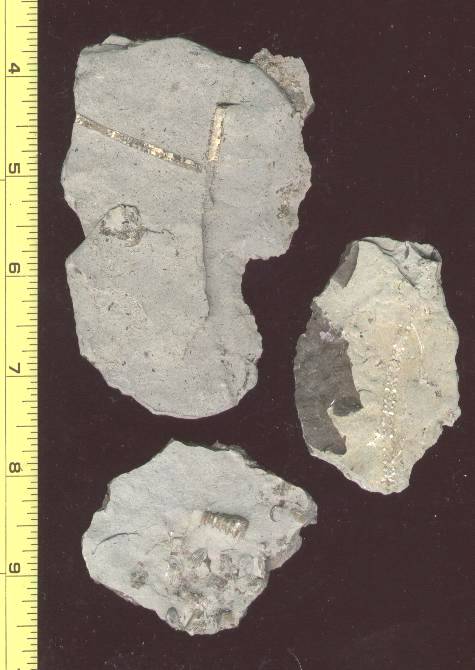 |
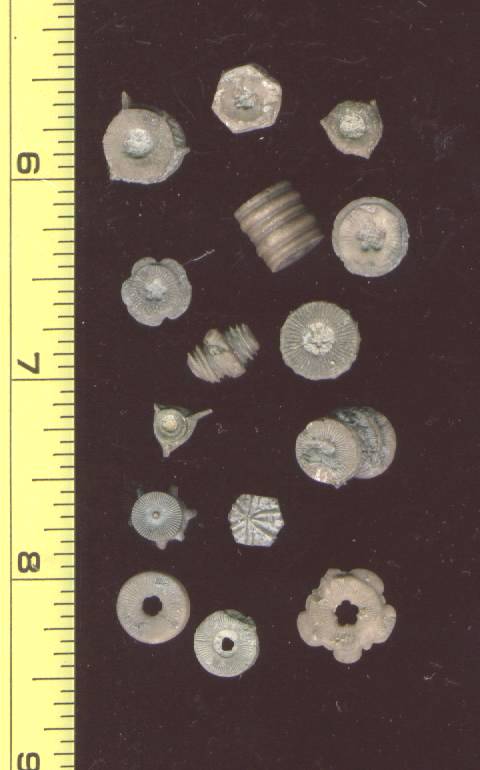
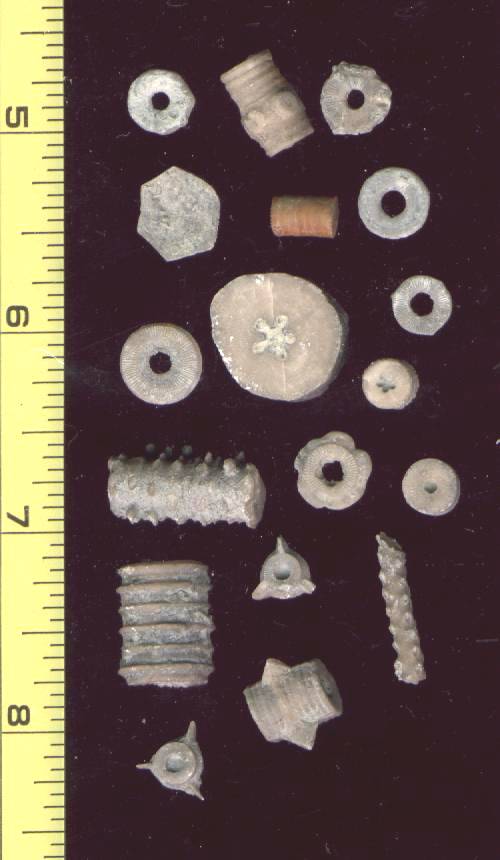
Crinoid stems in shale and free crinoid pieces. (Compare to the crinoid pieces from Grand Bend crin3.JPG ) |
 |
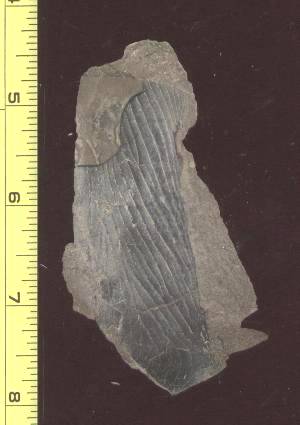
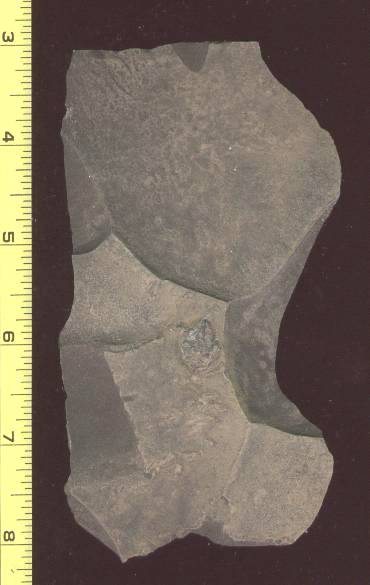
Unidentified fossil from Craigleith. It looks like a fossilized artichoke leaf. The broken section exhibits a series of growth rings. Suggestions are welcome. |
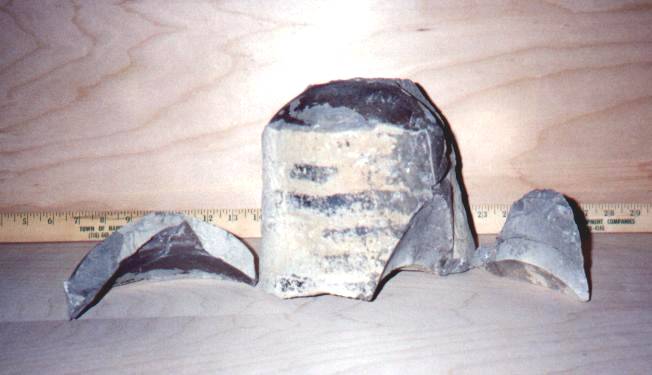 |
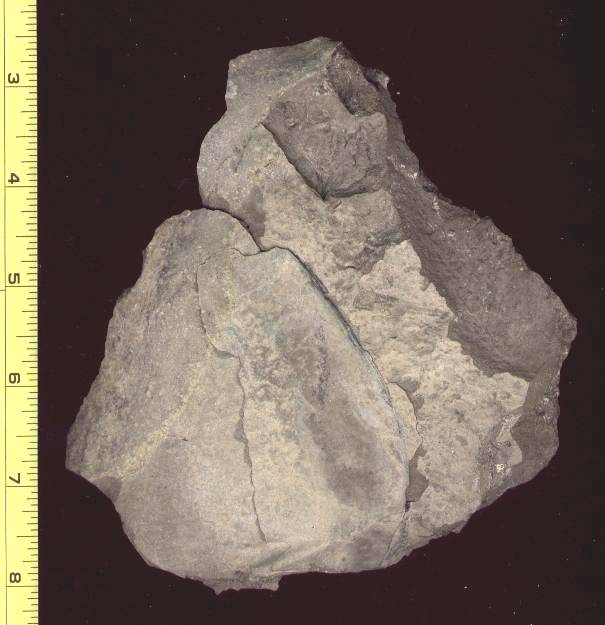
This section of a large Nautiloid (Dawsonoceras?) was rescued from the beach at Craigleith where a group of children were having fun breaking off sections of the fossil along the lines dividing the shell into chambers. |