

Columbia Icefield
Alaska Glacier
Glacier National Park
References



|
|
|
|
|
|
|
|
|
|
|
|
|
|
|
|
|
| Columbia Icefield | ||||||||||||||||
| The Columbia Icefield is a huge glacier covering up to 325 square kilometers.� The glacier became this big since it is located very close to some of the tallest peaks in the Rocky Mountains.� In the last 125 years the glacier has retreated almost 2 kilometers (approximately 16 meters a year).� This fast retreat has been rapidity increasing up in recent years due to global warming. | ||||||||||||||||
|
||||||||||||||||
| North American Glaciers Columbia Icefield Alaska Glacier Glacier National Park References |
||||||||||||||||
| When examining the effects of the glacier melting this quickly, the results are alarming.� The glacier retreating so fast is adding a lot of fresh water into the local streams, rivers and lakes.� Most of this fresh water will end up in the ocean, contributing to the ocean water-level rising.� | ||||||||||||||||
|
||||||||||||||||
|
||||||||||||||||
| If you are examining the effects this glacier melting has on local residents it means the rivers and streams are flowing much faster.� There is a positive for the residence that live near the glacier since the glacier is a massive source of fresh water.� The water which is locked in the glacier is water in its most purist form.� This is because the water has been frozen for thousands of years, long before there was pollution or acid rain.� | ||||||||||||||||
| The results of this glacier are not all positive though.� Residences now must deal with flooding of river beds in the summer, since the rivers and streams cannot hold the amount of water which is melting.� Animals in the local area now have to deal with faster currents.� In the spring with the baby animals this is a problem; since the water is faster moving the animal could fall in and not be able to get out.� Another major problem is fish cannot jump up the stream as easily do to the current being so fast.� This will mean less fish will be able to reach spawning locations, which results in less fish. | ||||||||||||||||
|
||||||||||||||||
| For local animals, such as bears, they are now forced to find other sources of food.� Due to bears being hungry they could start coming closer to human camps to eat human foods.� Though bear attacks are very unlikely in Alberta, they are starting to occur more often.� | ||||||||||||||||
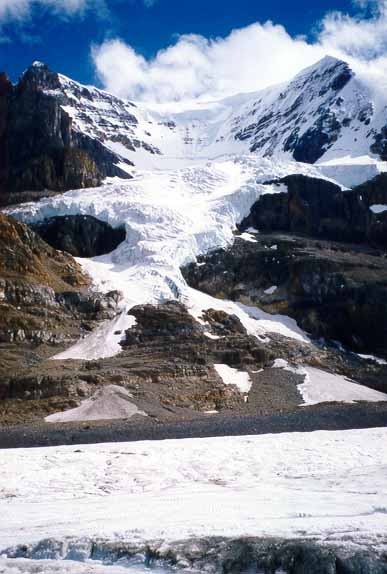
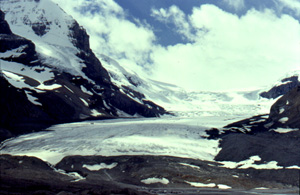
| Top: west side of the Columbia Glacier. Bottom: A picture showing the whole glacier. | ||||||||||||||||
|
|
|||||||||||||||