
GHOSTBUSTERS WHO'S WHO 1
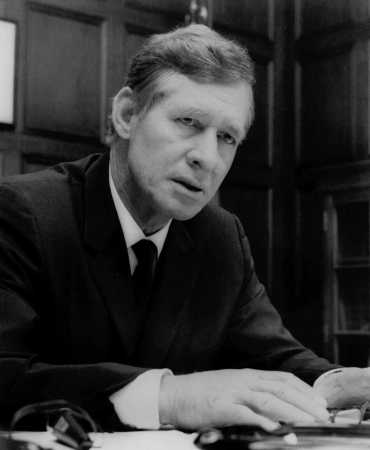
Federal jurist Frank M Johnson Jr's civil rights decisions led to ostracism, cross burnings and death threats but helped change the segregationist South. He set southern and national standards on voting rights, employment discrimination, affirmative action. His ending of Jim Crow laws was revered and reviled. Indelible images remain of lynched black men, firebombed churches, deputies' skirmish lines on Selma's Pettus Bridge, peaceful Birmingham marchers attacked with cattle prods and dogs, defiant Gov George Wallace standing in the school doorway to bar black children. Republican Johnson in the Democratic South, appointed by Eisenhower a year after the Supreme Court's school desegregation decision Brown vs Board of Education, took his seat in Montgomery Nov 7, 1955 as the civil rights storm broke. Dec 1 Rosa Parks refused to give up her Montgomery bus seat to a white rider as required by city law. Her arrest prompted a bus boycott led by Martin Luther King Jr, 26, in Montgomery for his first pastorate.
Bus desegregation
Johnson's first major ruling joined the majority on a 3-judge panel striking down Montgomery's bus segregation law as unconstitutional, applying the Brown vs Board of Education principle that separate but equal facilities violated 14th Amendment due process and equal protection clauses. Again and again as such he created a broad mandate for racial justice in Alabama and the South. In 24 years in U S District Court in Alabama and 13 years in an appeals court with wide jurisdiction in the South Johnson ordered desegregation of public public places and of Alabama's State Police. In 1965 he ordered that King be allowed to lead a 52-mile march from Selma to Montgomery protesting denial of black voting rights after Alabama troops clubbed and tear-gassed marchers on TV before a horrified nation and after Johnson federalized Alabama's National Guard to protect the marchers. When state courts failed to act forcefully to end racial violence as in the case of Viola Liuzzo, a white civil rights worker from Detroit shot to death while in a car with a black man, Johnson sent the killers to jail on federal civil rights charges. Johnson helped register black voters, outlaw poll taxes, strike down state laws barring blacks and women from juries, expanded the right of the poor to court appointed lawyers, ordered humane conditions for Alabama's patients and prisoners and issued the nation's first court order for legislative reapportionment, anticipating the Supreme Court's one-man, one-vote rule.
SAN FRANCISCO Federal judge Stanley Weigel decided on controversial subjects ranging from school desegregation to U S involvement in Nicaragua. 1971 Weigel ordered SF's schools desegregated. 1980s he backed attempts to uncover U S involvement in Nicaragua and improved living conditions for state prison inmates. Born in Helena MT, Weigel grew up in San Francisco, attended Lowell High School and earned undergraduate and law degrees at Stanford. After serving as a World War II Navy officer Weigel returned to private practice defending 31 University of California faculty fired for refusing to sign oaths they did not belong to the Communist Party. In 1952 the state Supreme Court ordered the professors reinstated. In 1962 Weigel, with JFK's press secretary Pierre Salinger, went to Washington DC to meet Attorney General Robert F Kennedy who was screening federal judicial candidates. RFK greeted Weigel by tossing him a football. Weigel caught it and was soon nominated to the federal bench.
A leader is best when people barely know he exists. Lao-tzu
Hiram Johnson served the longest. Palo Alto native Alan MacGregor Cranston, U S Senator 1969 - 1993, supported progressive causes including environmental conservation, nuclear disarmament and world peace. Born in 1914 he grew up in Los Altos Hills. A Stanford track star running 100 yards in under 10 seconds, he graduated in 1936 and was a foreign correspondent. 1939 his 10-cent booklet, an abridged, accurate translation of Adolf Hitler's Mein Kampf and a condemnation of Nazis countering the sanitized version then circulating, sold over 500,000 copies before Hitler sued him for copyright infringement and won. 1945 Cranston published The Killing of the Peace about events following World War I leading to World War II. Cranston began public service in the 1940s as chief of the Office of War Information's Foreign Language Division. In 1949 he founded the California Democratic Council and helped revitalize the state's Democratic Party. In 1952 he resuscitated the state's floundering state Democratic Party by creating the California Democratic Council, a federation of local Democratic clubs providing the framework for the party's 1958 sweep of state office.
In 1959 Cranston was elected state controller and served 2 terms, followed by 4 terms as U S senator from California, always running for public office as an underdog. Senator Cranston was Democratic whip 7 times. A friend to Silicon Valley's burgeoning technology companies and to the state's environment, he helped pass a capital gains tax cut in 1981. In 1984 Cranston pushed to set aside 1.8 million acres of state wilderness. Liberal Democrat Cranston with his finely honed political instincts was elected Senate whip an unprecedented 7 times and chaired the Veterans' Affairs Committee. Cranston championed an end to the Vietnam War, cuts in defense spending and a halt to the arms race he called an insanity. He also wrote the Desert Protection Act, passed in 1994 after he left the Senate. He wrote letters supporting San Franciscan U S Ambassador James Hormel, the first openly gay U S ambassador, as ambassador to Luxembourg.
Cranston's Senate career ended when he tried to intervene with federal regulators to protect Lincoln Savings and Loan President Charles Keating, later jailed for securities fraud. Keating had donated over $1 million to Cranston and his favored causes. Cranston, a Keating Five, received scathing Senate Ethics Committee criticism for receiving $865,000 from Keating for voter registration drives to help Democrats while lobbying federal banking officials to ease up on Keating. With scandal and prostate cancer he did not seek re-election when his 4th term expired in 1992, maintaining he did nothing wrong.
Relentless campaigner, post-Senate Cranston worked to eliminate nuclear weapons, joining Mikhail Gorbachev, who helped organize his memorial, at the Gorbachev Foundation/USA. In 1999 he founded San Francisco think tank Global Security Institute. Cranston inspired the fight to eliminate nuclear weapons and protect the environment by helping lead a global crusade to abolish nuclear weapons as president of the Institute. He's the patron saint of every candidate for office. Alan did everything right. He wanted to stagger across the finish line knowing he did all he can. He didn't stagger. He still sprinted. At his death he was finishing a book on sovereignty.
No one ever wore the title "Senator" better and used it less. Wellstone, in a suit he wore as a Carleton College professor, and Sen Tom Harkin D-Iowa rode the Senate subway with a tourist family also headed from the Hart Senate Office Building to the Capitol. "Hi," he said, "I'm Paul Wellstone. Where are you from?" Giving their hometown they asked, "Do you work here?" Laughing, he said, "Yes, but less hard than most people. I'm a senator."
His dogged liberalism made him wary of "new Democrats" and their pro-business economics. He broke with President Clinton over welfare reform and other issues even before despairing of Clinton's personal ethics. Wellstone could never condemn Clinton personally. Two years earlier, Clinton came to Minnesota after a long day stumping for Democratic candidates in 3 states. Wellstone sent word to the White House of his airport receiving line constituent, a great political buff, now facing terminal cancer. Could the president spend a minute with him? Clinton arrived almost at midnight. Wellstone introduced the constituent. Clinton saying he'd be right back took them into the hangar's holding room and for 45 minutes at the end of a day starting before dawn for him in Washington they talked. Clinton never said a word about his illness, but talked about every news issue and listened to everything the constituent said.
Wellstone warmed up crowds in Bill Bradley's bid for the 2000 Democratic presidential nomination. Arms waving, voice rising, he made the crowd chant "Brad-ley, Brad-ley." The big, stoop-shouldered ex-Knick shambled onstage and the oxygen left the room. Wellstone's secret weapons were the legions of young people he mobilized in his campaigns. Hundreds of them on the capitol steps wore green T-shirts saying, "Get on the bus for Wellstone," referring to his old campaign bus. John Gunner Tarpe patronized the same St Paul video rental store as Wellstone. Wellstone and his wife Sheila took over the cash register one evening so the immigrant couple who ran it could have dinner and a night out.
Improving mental health research, funding, and treatment is still a top priority for Senator Wellstone. Sen Pete Domenici, R NM, prompted by his daughter's affliction, joined Wellstone seeking mental illness treatment parity. They wrote 1996's groundbreaking Mental Health Parity Act, ensuring health coverage of mental illness be provided like coverage of other medical illness. Building on this victory the Senators introduced the bipartisan Mental Health Equitable Treatment Act to expand parity for mental health coverage. Wellstone also introduced the Medicare Mental Health Modernization Act to correct disparity in mental health coverage for Medicare beneficiaries. Along with Congressman Jim Ramstad (R-MN) Wellstone authored the Fairness in Treatment Act to establish parity in substance abuse treatment. Wellstone secured critical resources for numerous mental health initiatives, particularly those helping children, rural Americans, veterans, and others. His efforts also led to increased funding for suicide prevention, suicide crisis centers, and suicide hotlines.
Freedom sprang from SJ tragedy
Nov 9, 1933 Hart's Dept Store owner's son Brooke, 22, was kidnapped and murdered. With the killers arrested a mob of over 1,000 stormed the county jail, dragged the pair across the street into St James Park and hanged them, making world headlines. In the town of D�ren in SW Germany Edith's father, Max Gordon, read the story. His mother told him the Harts were his distant cousins. He clipped the article and saved it.
In the 1930s Hitler gained power in Germany. Jews fled. The Gordons had lived in the area for generations. Max Gordon fought for Germany in World War I and built a successful meat market in D�ren. Hard times always ignite anti-Semitism in Germany, he said. When that era's horrible economy passed, life would return to normal. He was determined to stay. By the late 1930s Hitler's hateful rhetoric against Jews became action. The Gestapo seized Gordon's market. Jews were beaten in the streets or arrested and never heard from again. He kept Edith and Hilda home for fear they would be hurt. He had to get his family somewhere safe.
In 1938 Gordon inquired about emigrating to the United States, Canada, Palestine and Shanghai, China but all quotas were full. Desperate, he recalled the newspaper article. Maybe his relatives would help. He mailed the required sponsorship papers to "Hart Family, San Jose, USA." The Harts mailed back the signed papers, agreeing to sponsor the Gordons. Max Gordon, wife Frieda and daughters Hilda, 9, and Edith, 8, arrived in San Jose Jan 1940 with 2 suitcases and speaking no English. The Harts rented them an Auzerais Ave house where Interstate 280 now runs, providing furniture, dishes and clothes.
Edith entered first grade at Lincoln Grammar School. 2 years later the Harts helped the Gordons buy a house. Edith moved to Willow Glen Grammar School. She and Hilda picked prunes and tomatoes and cut apricots. Later Edith worked at Hammer's Dress Shop downtown. She graduated from San Jose High in 1950. Joe Rosenberg, working at his family's meat market Best Meat Co graduated from Lincoln High in 1946. Joe and Edith living 2 blocks apart in Willow Glen didn't know each other. They met at a 1950 San Jose State football game vs College of the Pacific and married 18 months later. Married over 50 years they have 2 sons, a daughter and grandchildren.
Elie Wiesel, 15, and his family were deported to Auschwitz from their home in Sighet, now part of Romania. Wiesel and two older sisters survived. His parents and younger sister perished. His 1958 autobiographical novel Night was adapted to stage.
Hilltop Mall, Richmond CA. San Jose travel agency owner Michael Cox, 46, San Jose, fluent in French, Spanish, German, Italian, Russian, Arabic and English and can fumble through, or at least say hello, in roughly 20 other languages including Hindi, Vietnamese and Tagalog. Once living in Richmond he studied political science and international relations at UC Berkeley. Taught high school Spanish, French and German. Worked 14 years with exchange students, learned other languages helping place over 1,000 of them in U S homes. Answered a Santa newspaper ad.
Mexico's former first lady Esther Zuno championed domestic social programs and equal rights for women and promoted Mexican culture, touring other countries to share traditional dance, dress, music and art. Zuno met Luis Echeverria, President of Mexico 1970 - 1976, at Diego Rivera's home. Married in 1945 they had 8 children.
22 Asian-American World War II veterans received the Medal of Honor for battlefield bravery. After reading a story about their heroism Pres Clinton put blue ribbons on 7 living veterans. "They risked their lives above and beyond the call of duty. Facing prejudice they helped define America at its best."
Lowell Elementary School principal Paul Kramer challenged his 500-plus students to read 5,000 books. They did. Kramer camped the weekend on a portable classroom roof. Students chatted with Kramer while parents talked of how excited their children were about reading. (Parents are the ones who should interest their kids in reading - ed) Kramer also carried the Olympic torch.
Abraham Beame, son of Jewish Polish immigrants, was NYC's first Jewish mayor 1974 - 1977, his term was plagued by NYC's worst fiscal crisis, caused by years of overspending. Beame was born in London, where his parents fled Warsaw. His father Philip Birnbaum fled directly to New York while his mother Esther Goldfarb Birnbaum stopped in England where Abraham was born. In NYC the family changed its name to Beame. Beame's mother died in 1912. His father soon remarried. At 15 Abraham met Mary Ingerman at a Lower East Side social center. 7 years later he earned his accounting degree at City College and married her. 1929 - 1946 Beame taught accounting and laid the groundwork for his career in New York politics. 1930s - 1940s the Beames were active Democrats. 1946 he was appointed the city's assistant budget director, promoted to budget director in 1952 and reelected as comptroller in 1969. 1973 quiet, self-effacing Beame, backed by Democratic Party bosses, was elected mayor.
Traffic signals, small, basic, mass-produced cost $150,000; maybe $200,000+ at major intersections. Electrical wires and underground conduits are the only parts mass-produced. Steel also is costly. Those who build signals and the environment they work in are very specialized, unlike electronics assemblers. There's also the cost of closing lanes during construction. The brains of the system are relatively inexpensive.
Lights motorists see require underground wires. Most cities prohibit trenching through major intersections. Conduits and wires must be bored across wide streets. Massive poles and mast-arms each contain more steel than found in a typical car and can cost $15,000 each. Foundations required to keep them upright are also massive. Each lane must have one or more vehicle detectors buried in the pavement to allow signals to work efficiently. Most major intersections must be connected with nearby intersections, needing more expensive communications equipment. Underground components, poles, mast-arms, traffic signal and pedestrian heads, foundations and wires constitute 75 - 80% of the cost. The controller, or brains, of the system represents the remainder of the cost.
Eastern cities often use span wire signals with wiring carried in cables above the intersection. Since the lights hang from wires they don't require mast-arms and massive pole foundations. This saves money but they're much more subject to weather problems and much more difficult and expensive to maintain. This is why less than 100 signals are built a year in California.
SJMC's telemetry care unit manager Emma Graney was driving to work when traffic stalled. A car hit a motorcycle. Graney pulled over, asked a highway patrolman if he could use a nurse, and was on her hands and knees with the motorcyclist, 65, until the paramedics finally made it through the backup. She brushed off the gravel and dirt, tossed her blood-spattered lab coat in the back of her car, and drove to work.