|
Home
Sri Lanka News alert Articles
India World
Economy Reports
Documents Global
Issues Peoples
Struggle R.Readings Posters
Tasks
  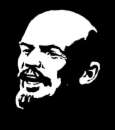  
V. I. Lenin
The Third International and Its Place in History
--------------------------------------------------------------------------------
Written: 15 April, 1919
First Published: Published in May 1919; Published according to the manuscript.
Source: Lenin’s Collected Works, 4th English Edition, Progress Publishers, Moscow, 1972 Volume 29, pages 305-313
Translated: George Hanna
Transcription/HTML Markup: David Walters & Robert Cymbala
Copyleft: V. I. Lenin Internet Archive (www.marx.org) 2002; Permission is granted to copy and/or distribute this document under the terms of the GNU Free Documentation License.
--------------------------------------------------------------------------------
The imperialists of the Entente countries are blockading Russia in an effort to cut off the Soviet Republic, as a seat of infection, from the capitalist world. These people, who boast about their “democratic” institutions, are so blinded by their hatred of the Soviet Republic that they do not see how ridiculous they are making themselves. Just think of it, the advanced, most civilised and “democratic” countries, armed to the teeth and enjoying undivided military sway over the whole world, are mortally afraid of the ideological infection coming from a ruined, starving, backward, and even, they assert, semi-savage country!
This contradiction alone is opening the eyes of the working masses in all countries and helping to expose the hypocrisy of the imperialists
Clemanceau, Lloyd George, Wilson and their governments.
We are being helped, however, not only by the capitalists’ blind hatred of the Soviets, but also by their bickering among themselves, which induces them to put spokes in each other’s wheels. They have entered into a veritable conspiracy of silence, for they are desperately afraid of the spread of true information about the Soviet Republic in general, and of its official documents in particular. Yet, Le Temps, the principal organ of the French bourgeoisie, has published a report on the foundation in Moscow of the Third, Communist International.
For this we express our most respectful thanks to the principal organ of the French bourgeoisie, to this leader of French chauvinism and imperialism. We are prepared to send an illuminated address to Le Temps in token of our appreciation of the effective and able assistance it is giving us.
The manner in which Le Temps compiled its report on the basis of our wireless messages clearly and fully reveals the motive that prompted this organ of the money-bags. It wanted to have a dig at Wilson, as if to say, “Look at the people with whom you negotiate!” The wiseacres who write to the order of the money-bags do not see that their attempt to frighten Wilson with the Bolshevik bogey is becoming, in the eyes of the working people, an advertisement for the Bolsheviks. Once more, our most respectful thanks to the organ of the French millionaires!
The Third International has been founded in a world situation that does not allow prohibitions, petty and miserable devices of the Entente imperialists or of capitalist lackeys like the Scheidemanns in Germany and the Renners in Austria to prevent news of this International and sympathy for it spreading among the working class of the world. This situation has been brought about by the growth of the proletarian revolution, which is manifestly developing everywhere by leaps and bounds. It has been brought about by the Soviet movement among the working people, which has already achieved such strength as to become really international.
The First International (1864-72) laid the foundation of an international organisation of the workers for the preparation of their revolutionary attack on capital. The Second International (1889-1914) was an international organisation of the proletarian movement whose growth proceeded in breadth, at the cost of a temporary drop in the revolutionary level, a temporary strengthening of opportunism, which in the end led to the disgraceful collapse of this International.
The Third International actually emerged in 1918, when the long years of struggle against opportunism and social-chauvinism, especially during the war, led to the formation of Communist Parties in a number of countries. Officially, the Third International was founded at its First Congress, in March 1919, in Moscow. And the most characteristic feature of this International, its mission of fulfilling, of implementing the precepts of Marxism, and of achieving the age-old ideals of socialism and the working-class movement—this most characteristic feature of the Third International has manifested itself immediately in the fact that the new, third, “International Working Men’s Association” has already begun to develop, to a certain extent, into a union of Soviet Socialist Republics.
The First International laid the foundation of the proletarian, international struggle for socialism.
The Second International marked a period in which the soil was prepared for the broad, mass spread of the movement in a number of countries.
The Third International has gathered the fruits of the work of the Second International, discarded its opportunist, social-chauvinist, bourgeois and petty-bourgeois dross, and has begun to implement the dictatorship of the proletariat.
The international alliance of the parties which are leading the most revolutionary movement in the world, the movement of the proletariat for the overthrow of the yoke of capital, now rests on an unprecedentedly firm base, in the shape of several Soviet republics, which are implementing the dictatorship of the proletariat and are the embodiment of victory over capitalism on an international scale.
The epoch-making significance of the Third, Communist International lies in its having begun to give effect to Marx’s cardinal slogan, the slogan which sums up the centuries-old development of socialism and the working-class movement, the slogan which is expressed in the concept of the dictatorship of the proletariat.
This prevision and this theory—the prevision and theory of a genius—are becoming a reality.
The Latin words have now been translated into the languages of all the peoples of contemporary Europe—more, into all the languages of the world.
A new era in world history has begun.
Mankind is throwing off the last form of slavery: capitalist, or wage, slavery.
By emancipating himself from slavery, man is for the first time advancing to real freedom.
How is it that one of the most backward countries of Europe was the first country to establish the dictatorship of the proletariat, and to organise a Soviet republic? We shall hardly be wrong if we say that it is this contradiction between the backwardness of Russia and the “leap” she has made over bourgeois democracy to the highest form of democracy, to Soviet, or proletarian, democracy—it is this contradiction that has been one of the reasons (apart from the dead weight of opportunist habits and philistine prejudices that burdened the majority of the socialist leaders) why people in the West have had particular difficulty or have been slow in understanding the role of the Soviets.
The working people all over the world have instinctively grasped the significance of the Soviets as an instrument in the proletarian struggle and as a form of the proletarian state. But the “leaders”, corrupted by opportunism, still continue to worship bourgeois democracy, which they call “democracy” in general.
Is it surprising that the establishment of the dictatorship of the proletariat has brought out primarily the “contradiction” between the backwardness of Russia and her “leap” over bourgeois democracy? It would have been surprising had history granted us the establishment of a new form of democracy without a number of contradictions.
If any Marxist, or any person, indeed, who has a general knowledge of modern science, were asked whether it is likely that the transition of the different capitalist countries to the dictatorship of the proletariat will take place in an identical or harmoniously proportionate way, his answer would undoubtedly be in the negative. There never has been and never could be even, harmonious, or proportionate development in the capitalist world. Each country has developed more strongly first one, then another aspect or feature or group of features of capitalism and of the working-class movement. The process of development has been uneven.
When France was carrying out her great bourgeois revolution and rousing the whole European continent to a historically new life, Britain proved to be at the head of the counter-revolutionary coalition, although at the same time she was much more developed capitalistically than France. The British working-class movement of that period, however, brilliantly anticipated much that was contained in the future Marxism.
When Britain gave the world Chartism, the first broad, truly mass and politically organised proletarian revolutionary movement, bourgeois revolutions, most of them weak, were taking place on the European continent, and the first great civil war between the proletariat and the bourgeoisie had broken out in France. The bourgeoisie defeated the various national contingents of the proletariat one by one, in different ways in different countries.
Britain was the model of a country in which, as Engels put it, the bourgeoisie had produced, alongside a bourgeois aristocracy, a very bourgeois upper stratum of the proletariat. [1] For several decades this advanced capitalist country lagged behind in the revolutionary struggle of the proletariat. France seemed to have exhausted the strength of the proletariat in two heroic working-class revolts of 1848 and 1871 against the bourgeoisie that made very considerable contributions to world-historical development. Leadership in the International of the working-class movement then passed to Germany; that was in the seventies of the nineteenth century, when she lagged economically behind Britain and France. But when Germany had out stripped these two countries economically, i.e., by the second decade of the twentieth century, the Marxist workers’ party of Germany, that model for the whole world, found itself headed by a handful of utter scoundrels, the most filthy blackguards—from Scheidemann and Noske to David and Legien—loathsome hangmen drawn from the workers’ ranks who had sold themselves to the capitalists, who were in the service of the monarchy and the counter-revolutionary bourgeoisie.
World history is leading unswervingly towards the dictatorship of the proletariat, but is doing so by paths that are anything but smooth, simple and straight.
When Karl Kautsky was still a Marxist and not the renegade from Marxism he became when he began to champion unity with the Scheidemanns and to support bourgeois democracy against Soviet, or proletarian, democracy, he wrote an article—this was at the turn of the century—entitled “The Slavs and Revolution”. In this article he traced the historical conditions that pointed to the possibility of leadership in the world revolutionary movement passing to the Slavs.
And so it has. Leadership in the revolutionary proletarian International has passed for a time—for a short time, it goes without saying—to the Russians, just as at various periods of the nineteenth century it was in the hands of the British, then of the French, then of the Germans.
I have had occasion more than once to say that it was easier for the Russians than for the advanced countries to begin the great proletarian revolution, but that it will be more difficult for them to continue it and carry it to final victory, in the sense of the complete organisation of a socialist society.
It was easier for us to begin, firstly, because the unusual—for twentieth-century Europe—political backwardness of the tsarist monarchy gave unusual strength to the revolutionary onslaught of the masses. Secondly, Russia’s backwardness merged in a peculiar way the proletarian revolution against the bourgeoisie with the peasant revolution against the landowners. That is what we started from in October 1917, and we would not have achieved victory so easily then if we had not. As long ago as 1856, Marx spoke, in reference to Prussia; of the possibility of a peculiar combination of proletarian revolution and peasant war. [2] From the beginning of 1905 the Bolsheviks advocated the idea of a revolutionary-democratic dictatorship of the proletariat and the peasantry. Thirdly, the 1905 revolution contributed enormously to the political education of the worker and peasant masses, because it familiarised their vanguard with “the last word” of socialism in the West and also because of the revolutionary action of the masses. Without such a “dress rehearsal” as we had in 1905, the revolutions of 1917—both the bourgeois, February revolution, and the proletarian, October revolution—would have been impossible. Fourthly, Russia’s geographical conditions permitted her to hold out longer than other countries could have done against the superior military strength of the capitalist, advanced countries. Fifthly, the specific attitude of the proletariat towards the peasantry facilitated the transition from the bourgeois revolution to the socialist revolution, made it easier for the urban proletarians to influence the semi-proletarian, poorer sections of the rural working people. Sixthly, long schooling in strike action and the experience of the European mass working-class movement facilitated the emergence—in a profound and rapidly intensifying revolutionary situation—of such a unique form of proletarian revolutionary organisation as the Soviets.
This list, of course, is incomplete; but it will suffice for the time being.
Soviet, or proletarian, democracy was born in Russia. Following the Paris Commune a second epoch-making step was taken. The proletarian and peasant Soviet Republic has proved to be the first stable socialist republic in the world. As a new type of state it cannot die. It no longer stands alone.
For the continuance and completion of the work of building socialism, much, very much is still required. Soviet republics in more developed countries, where the proletariat has greater weight and influence, have every chance of surpassing Russia once they take the path of the dictatorship of the proletariat.
The bankrupt Second International is now dying and rotting alive. Actually, it is playing the role of lackey to the world bourgeoisie. It is a truly yellow International. Its foremost ideological leaders, such as
Kautsky, laud bourgeois democracy and call it “democracy” in general, or—what is still more stupid and still more crude—“pure democracy”.
Bourgeois democracy has outlived its day, just as the Second International has, though the International performed historically necessary and useful work when the task of the moment was to train the working-class masses within the framework of this bourgeois democracy.
No bourgeois republic, however democratic, ever was or could have been anything but a machine for the suppression of the working people by capital, an instrument of the dictatorship of the bourgeoisie, the political rule of capital. The democratic bourgeois republic promised and proclaimed majority rule, but it could never put this into effect as long as private ownership of the land and other means of production existed.
“Freedom” in the bourgeois-democratic republic was actually freedom for the rich. The proletarians and working peasants could and should have utilised it for the purpose of preparing their forces to overthrow capital, to overcome bourgeois democracy, but in fact the working masses were, as a general rule, unable to enjoy democracy under capitalism.
Soviet? or proletarian, democracy has for the first time in the world created democracy for the masses, for the working people, for the factory workers and small peasants.
Never yet has the world seen political power wielded by the majority of the population, power actually wielded by this majority, as it is in the case of Soviet rule.
It suppresses the “freedom” of the exploiters and their accomplices; it deprives them of “freedom” to exploit, “freedom” to batten on starvation, “freedom” to fight for the restoration of the rule of capital, “freedom” to compact with the foreign bourgeoisie against the workers and peasants of their own country.
Let the Kautskys champion such freedom. Only a renegade from Marxism, a renegade from socialism can do so.
In nothing is the bankruptcy of the ideological leaders of the Second International, people like Hilferding and
Kautsky, so strikingly expressed as in their utter inability to understand the significance of Soviet, or proletarian, democracy, its relation to the Paris Commune, its place in history, its necessity as a form of the dictatorship of the proletariat.
The newspaper Die Freiheit, organ of the “Independent” (alias middle-class, philistine, petty-bourgeois) German Social-Democratic Party, in its issue No. 74 of February 11, 1919, published a manifesto “To the Revolutionary Proletariat of Germany”.
This manifesto is signed by the Party executive and by all its members in the National Assembly, the German variety of our Constituent Assembly.
This manifesto accuses the Scheidemanns of wanting to abolish the Workers’ Councils, and proposes—don’t laugh!—that the Councils be combined with the Assembly, that the Councils be granted certain political rights, a certain place in the Constitution.
To reconcile, to unite the dictatorship of the bourgeoisie and the dictatorship of the proletariat! How simple! What a brilliantly philistine idea!
The only pity is that it was tried in Russia, under Kerensky, by the united Mensheviks and Socialist-Revolutionaries, those petty-bourgeois democrats who imagine themselves socialists.
Anyone who has read Marx and failed to understand that in capitalist society, at every acute moment, in every serious class conflict, the alternative is either the dictatorship of the bourgeoisie or the dictatorship of the proletariat, has understood nothing of either the economic or the political doctrines of Marx.
But the brilliantly philistine idea of Hilferding, Kautsky and Co. of peacefully combining the dictatorship of the bourgeoisie and the dictatorship of the proletariat requires special examination, if exhaustive treatment is to be given to the economic and political absurdities with which this most remarkable and comical manifesto of February 11 is packed. That will have to be put off for another article.[3]
Moscow, April 15, 1919
--------------------------------------------------------------------------------
Endnotes
[1] Marx and Engels, Selected Correspondence, Moscow, 1965, p. 110.
[2] Marx and Engels, Selected Correspondence, Moscow, 1965, p. 92.
[3] See pp. 392-401 of this volume.
--------------------------------------------------------------------------------
(2)
V. I. Lenin
Imperialism, the Highest Stage of Capitalism
A POPULAR OUTLINE
X. THE PLACE OF IMPERIALISM IN HISTORY
We have seen that in its economic essence imperialism is monopoly capitalism. This in itself determines its place in history, for monopoly that grows out of the soil of free competition, and precisely out of free competition, is the transition from the capitalist system to a higher socio-economic order. We must take special note of the four principal types of monopoly, or principal manifestations of monopoly capitalism, which are characteristic of the epoch we are examining.
Firstly, monopoly arose out of the concentration of production at a very high stage. This refers to the monopolist capitalist associations, cartels,
syndicatess, and trusts. We have seen the important part these play in present-day economic life. At the beginning of the twentieth century, monopolies had acquired complete supremacy in the advanced countries, and although the first steps towards the formation of the cartels were taken by countries enjoying the protection of high tariffs (Germany, America), Great Britain, with her system of free trade, revealed the same basic phenomenon, only a little later, namely, the birth of monopoly out of the concentration of production.
Secondly, monopolies have stimulated the seizure of the most important sources of raw materials, especially for the basic and most highly cartelised industries in capitalist society: the coal and iron industries. The monopoly of the most important sources of raw materials has enormously increased the power of big capital, and has sharpened the antagonism between cartelised and
non-cartelised industry.
Thirdly, monopoly has sprung from the banks. The banks have developed from modest middleman enterprises into the monopolists of finance capital. Some three to five of the biggest banks in each of the foremost capitalist countries have achieved the “personal link-up” between industrial and bank capital, and have concentrated in their hands the control of thousands upon thousands of millions which form the greater part of the capital and income of entire countries. A financial oligarchy, which throws a close network of dependence relationships over all the economic and political institutions of present-day bourgeois society without exception—such is the most striking manifestation of this monopoly.
Fourthly, monopoly has grown out of colonial policy. To the numerous “old” motives of colonial policy, finance capital has added the struggle for the sources of raw materials, for the export of capital, for spheres of influence, i.e., for spheres for profitable deals, concessions, monopoly profits and so on, economic territory in general. When the colonies of the European powers,for instance, comprised only one-tenth of the territory of Africa(as was the case in 1876), colonial policy was able to develop—by methods other than those of monopoly—by the “free grabbing” of territories, so to speak. But when nine-tenths of Africa had been seized (by 1900), when the whole world had been divided up,there was inevitably ushered in the era of monopoly possession of colonies and, consequently, of particularly intense struggle for the division and the redivision of the world.
The extent to which monopolist capital has intensified all the contradictions of capitalism is generally known. It is sufficient to mention the high cost of living and the tyranny of the cartels. This intensification of contradictions constitutes the most powerful driving force of the transitional period of history, which began from the time of the final victory of world finance capital.
Monopolies, oligarchy, the striving for domination and not for freedom, the exploitation of an increasing number of small or weak nations by a handful of the richest or most powerful nations—all these have given birth to those distinctive characteristics of imperialism which compel us to define it as parasitic or decaying capitalism. More and more prominently there emerges, as one of the tendencies of imperialism, the creation of the “rentier state”, the usurer state, in which the bourgeoisie to an ever-increasing degree lives on the proceeds of capital exports and by “clipping coupons”. It would be a mistake to believe that this tendency to decay precludes the rapid growth of capitalism. It does not. In the epoch of imperialism, certain branches of industry, certain strata of the bourgeoisie and certain countries betray, to a greater or lesser degree, now one and now another of these tendencies. On the whole, capitalism is growing far more rapidly than before; but this growth is not only becoming more and more uneven in general, its unevenness also manifests itself, in particular, in the decay of the countries which are richest in capital (Britain).
In regard to the rapidity of Germany’s economic development, Riesser, the author of the book on the big German banks, states: “The progress of the preceding period (1848-70), which had not been exactly slow, compares with the rapidity with which the whole of Germany’s national economy, and with it German banking, progressed during this period (1870-1905) in about the same way as the speed of the mail coach in the good old days compares with the speed of the present-day automobile ... which is whizzing past so fast that it endangers not only innocent pedestrians in its path, but also the occupants of the car.” In its turn, this finance capital which has grown with such extraordinary rapidity is not unwilling, precisely because it has grown so quickly, to pass on to a more “tranquil” possession of colonies which have to be seized—and not only by peaceful methods—from richer nations. In the United States, economic development in the last decades has been even more rapid than in Germany, and for this very reason, the parasitic features of modern American capitalism have stood out with particular prominence. On the other hand, a comparison of, say, the republican American bourgeoisie with the monarchist Japanese or German bourgeoisie shows that the most pronounced political distinction diminishes to an extreme degree in the epoch of imperialism—not because it is unimportant in general, but because in all these cases we are talking about a bourgeoisie which has definite features of parasitism.
The receipt of high monopoly profits by the capitalists in one of the numerous branches of industry, in one of the numerous countries, etc., makes it economically possible for them to bribe certain sections of the workers, and for a time a fairly considerable minority of them, and win them to the side of the bourgeoisie of a given industry or given nation against all the others. The intensification of antagonisms between imperialist nations for the division of the world increases this urge. And so there is created that bond between imperialism and opportunism, which revealed itself first and most clearly in Great Britain, owing to the fact that certain features of imperialist development were observable there much earlier than in other countries. Some writers, L.
Martov, for example, are prone to wave aside the connection between imperialism and opportunism in the working-class movement—a particularly glaring fact at the present time—by resorting to “official optimism”
(à la Kautsky and Huysmans) like the following: the cause of the opponents of capitalism would be hopeless if it were progressive capitalism that led to the increase of opportunism, or, if it were the best-paid workers who were inclined towards opportunism, etc. We must have no illusions about “optimism” of this kind. It is optimism in respect of opportunism; it is optimism which serves to conceal opportunism. As a matter of fact the extraordinary rapidity and the particularly revolting character of the development of opportunism is by no means a guarantee that its victory will be durable: the rapid growth of a painful abscess on a healthy body can only cause it to burst more quickly and thus relieve the body of it. The most dangerous of all in this respect are those who do not wish to understand that the fight against imperialism is a sham and humbug unless it is inseparably bound up with the fight against opportunism.
From all that has been said in this book on the economic essence of imperialism, it follows that we must define it as capitalism in transition, or, more precisely, as moribund capitalism. It is very instructive in this respect to note that bourgeois economists, in describing modern capitalism, frequently employ catchwords and phrases like “interlocking”, “absence of isolation”, etc.; “in conformity with their functions and course of development”, banks are “not purely private business enterprises: they are more and more outgrowing the sphere of purely private business regulation”. And this very
Riesser, whose words I have just quoted, declares with all seriousness that the “prophecy” of the Marxists concerning “socialisation” has “not come true”!
What then does this catchword “interlocking” express? It merely expresses the most striking feature of the process going on before our eyes. It shows that the observer counts the separate trees, but cannot see the wood. It slavishly copies the superficial, the fortuitous, the chaotic. It reveals the observer as one who is overwhelmed by the mass of raw material and is utterly incapable of appreciating its meaning and importance. Ownership of shares, the relations between owners of private property “interlock in a haphazard way”. But underlying this interlocking, its very base, are the changing social relations of production. When a big enterprise assumes gigantic proportions, and, on the basis of an exact computation of mass data, organises according to plan the supply of primary raw materials to the extent of two-thirds, or three-fourths, of all that is necessary for tens of millions of people; when the raw materials are transported in a systematic and organised manner to the most suitable places of production, sometimes situated hundreds or thousands of miles from each other; when a single centre directs all the consecutive stages of processing the material right up to the manufacture of numerous varieties of finished articles; when these products are distributed according to a single plan among tens and hundreds of millions of consumers (the marketing of oil in America and Germany by the American oil trust)—then it becomes evident that we have socialisation of production, and not mere “interlocking”, that private economic and private property relations constitute a shell which no longer fits its contents, a shell which must inevitably decay if its removal is artificially delayed, a shell which may remain in a state of decay for a fairly long period (if, at the worst, the cure of the opportunist abscess is protracted), but which will inevitably be removed.
The enthusiastic admirer of German imperialism, Schulze-Gaevernitz, exclaims:
“Once the supreme management of the German banks has been entrusted to the hands of a dozen persons, their activity is even today more significant for the public good than that of the majority of the Ministers of State. .. . (The “interlocking” of bankers, ministers, magnates of industry and rentiers is here conveniently forgotten.) If we imagine the development of those tendencies we have noted carried to their logical conclusion we will have: the money capital of the nation united in the banks; the banks themselves combined into cartels; the investment capital of the nation cast in the shape of securities. Then the forecast of that genius Saint-Simon will be fulfilled: ‘The present anarchy of production, which corresponds to the fact that economic relations are developing without uniform regulation, must make way for organisation in production. Production will no longer be directed by isolated manufacturers, independent of each other and ignorant of man’s economic needs; that will be done by a certain public institution. A central committee of management, being able to survey the large field of social economy from a more elevated point of view, will regulate it for the benefit of the whole of society, will put the means of production into suitable hands, and above all will take care that there be constant harmony between production and consumption. Institutions already exist which have assumed as part of their functions a certain organisation of economic
labour, the banks.’ We are still a long way from the fulfilment of Saint-Simon’s forecast, but we are on the way towards it: Marxism, different from what Marx imagined, but different only in form.”[1]
A crushing “refutation” of Marx indeed, which retreats a step from Marx’s precise, scientific analysis to Saint-Simon’s guess-work, the guess-work of a genius, but guess-work all the same.
----------------------------------------------------------------------------------------------------------------------Notes
[1] Grundriss der Sozialökonomik, S. 146. —Lenin
(3)
THE
ROLE OF
THE CHINESE COMMUNIST PARTY IN THE NATIONAL WAR[*]
Chairman Mao Zedong October 1938
Comrades, the prospects ahead of us are bright. Not only is it necessary
for us to defeat Japanese imperialism and build a new China, but we are
certainly capable of achieving these aims. However, there is a difficult
road ahead between the present and the bright future. In the struggle
for a new China, the Chinese Communist Party and the whole people must
fight the Japanese aggressors in a planned way and can defeat them only
through a long war. We have already said a good deal about the various
problems relating to the war. We have summed up the experience gained
since its outbreak and appraised the present situation, defined the
urgent tasks confronting the whole nation and explained the reasons for
sustaining a long war by means of a long-term national united front
against Japan and the methods for doing so, and we have analysed the
international situation. What problems then remain? Comrades, there is
one more problem, namely, what role the Chinese Communist Party should
play in the national war, or how Communists should understand their own
role, strengthen themselves and close their ranks in order to be able to
lead this war to victory and not to defeat.
PATRIOTISM AND INTERNATIONALISM
Can a Communist, who is an internationalist, at the same time be a
patriot? We hold that he not only can be but must be. The specific
content of patriotism is determined by historical conditions. There is
the "patriotism" of the Japanese aggressors and of Hitler, and
there is our patriotism. Communists must resolutely oppose the
"patriotism" of the Japanese aggressors and of Hitler. The
Communists of Japan and Germany are defeatists with regard to the wars
being waged by their countries. To bring about the defeat of the
Japanese aggressors and of Hitler by every possible means is in the
interests of the Japanese and the German people, and the more complete
the defeat the better. This is what the Japanese and German Communists
should be doing and what they are doing. For the wars launched by the
Japanese aggressors and Hitler are harming their own people as well as
the people of the world. China's case is different, because she is the
victim of aggression. Chinese Communists must therefore combine
patriotism with internationalism. We are at once internationalists and
patriots, and our slogan is, "Fight to defend the motherland
against the aggressors." For us defeatism is a crime and to strive
for victory in the War of Resistance is an inescapable duty. For only by
fighting in defence of the motherland can we defeat the aggressors and
achieve national liberation. And only by achieving national liberation
will it be possible for the proletariat and other working people to
achieve their own emancipation. The victory of China and the defeat of
the invading imperialists will help the people of other countries. Thus
in wars of national liberation patriotism is applied internationalism.
For this reason Communists must use their initiative to the full, march
bravely and resolutely to the battle front of the war of national
liberation and train their guns on the Japanese aggressors. For this
reason, immediately after the Incident of September 18, 1931, our Party
issued its call to resist the Japanese aggressors by a war of national
defence, and later proposed a national united front against Japan,
ordered the Red Army to reorganize as part of the anti-Japanese National
Revolutionary Army and to march to the front, and instructed Party
members to take their place in the forefront of the war and defend the
motherland to the last drop of their blood. These are good patriotic
actions and, far from running counter to internationalism, are its
application in China. Only those who are politically muddle-headed or
have ulterior motives talk nonsense about our having made a mistake and
abandoned internationalism.
COMMUNISTS SHOULD SET AN EXAMPLE
IN THE NATIONAL WAR
For the above reasons Communists should show a high degree of initiative
in the national war, and show it concretely, that is, they should play
an exemplary vanguard role in every sphere. Our war is being waged under
adverse circumstances. National consciousness, national self-respect and
national self-confidence are not sufficiently developed among the broad
masses, the majority of the people are unorganized, China's military
power is weak, the economy is backward, the political system is
undemocratic, corruption and pessimism exist, and a lack of unity and
solidarity is to be found within the united front; these are among the
adverse circumstances. Therefore, Communists must consciously shoulder
the great responsibility of uniting the entire nation so as to put an
end to all such undesirable phenomena. Here the exemplary vanguard role
of the Communists is of vital importance. Communists in the Eighth Route
and New Fourth Armies should set an example in fighting bravely,
carrying out orders, observing discipline, doing political work and
fostering internal unity and solidarity. In their relations with
friendly parties and armies, Communists should take a firm stand of
unity for resistance to Japan, uphold the programme of the united front
and set an example in carrying out the tasks of resistance; they should
be true in word and resolute in deed, free from arrogance and sincere in
consulting and co-operating with the friendly parties and armies, and
they should be models in inter-party relations within the united front.
Every Communist engaged in government work should set an example of
absolute integrity, of freedom from favouritism in making appointments
and of hard work for little remuneration. Every Communist working among
the masses should be their friend and not a boss over them, an
indefatigable teacher and not a bureaucratic politician. At no time and
in no circumstances should a Communist place his personal interests
first; he should subordinate them to the interests of the nation and of
the masses. Hence, selfishness, slacking, corruption, seeking the
limelight, and so on, are most contemptible, while selflessness, working
with all one's energy, whole-hearted devotion to public duty, and quiet
hard work will command respect. Communists should work in harmony with
all progressives outside the Party and endeavour to unite the entire
people to do away with whatever is undesirable. It must be realized that
Communists form only a small section of the nation, and that there are
large numbers of progressives and activists outside the Party with whom
we must work. It is entirely wrong to think that we alone are good and
no one else is any good. As for people who are politically backward,
Communists should not slight or despise them, but should befriend them,
unite with them, convince them and encourage them to go forward. The
attitude of Communists towards any person who has made mistakes in his
work should be one of persuasion in order to help him change and start
afresh and not one of exclusion, unless he is incorrigible. Communists
should set an example in being practical as well as far-sighted. For
only by being practical can they fulfil the appointed tasks, and only
far-sightedness can prevent them from losing their bearings in the march
forward. Communists should therefore set an example in study; at all
times they should learn from the masses as well as teach them. Only by
learning from the people, from actual circumstances and from the
friendly parties and armies, and by knowing them well, can we be
practical in our work and far-sighted as to the future. In a long war
and in adverse circumstances, the dynamic energy of the whole nation can
be mobilized in the struggle to overcome difficulties, defeat the enemy
and build a new China only if the Communists play an exemplary vanguard
role to the best of their ability together with all the advanced
elements among the friendly parties and armies and among the masses.
UNITE THE WHOLE NATION AND COMBAT
ENEMY AGENTS IN ITS MIDST
The one and only policy for overcoming difficulties, defeating the enemy
and building a new China is to consolidate and expand the Anti-Japanese
National United Front and mobilize the dynamic energy of the whole
nation. However, there are already enemy agents playing a disruptive
role within our national united front, namely, the traitors, Trotskyites
and pro-Japanese elements. Communists must always be on the look-out for
them, expose their criminal activities with factual evidence and warn
the people not to be duped by them. Communists must sharpen their
political vigilance towards these enemy agents. They must understand
that the expansion and consolidation of the national united front is
inseparable from the exposure and weeding out of enemy agents. It is
entirely wrong to pay attention only to the one side and forget the
other.
Note: This is only a part of the report -ENB
---------------------------------------------------------------------------------
* This report was made by Comrade Mao Tse-tung to the
Sixth Plenary Session of the Sixth Central Committee of the Party. The
session endorsed the line of the Political Bureau headed by Comrade Mao
Tse-tung and was a very important one. In discussing the question of the
role of the Chinese Communist Party in the national war he helped all
comrades clearly to understand and conscientiously to shoulder the
Party's great and historic responsibility of leading the War of
Resistance Against Japan. The plenary session decided on the line of
persisting in the anti-Japanese united front, but at the same time
pointed out that there had to be struggle as well as unity within the
united front and that the proposition, "Everything through the
united front", did not suit Chinese conditions. Thus the error of
accommoda- [cont. onto p. 196. -- DJR] tionism in regard to the united
front was criticized; this problem was dealt with by Comrade Mao
Tse-tung in "The Question of Independence and Initiative Within the
United Front", which was part of his concluding speech at the same
session. Affirming that it was extremely important for the whole Party
to devote itself to organizing the people's armed struggle against
Japan, the session decided that the war zones and the enemy's rear
should be the Party's main fields of work and repudiated the erroneous
ideas of those who pinned their hopes of victory on the Kuomintang
armies and who would have entrusted the fate of the people to legal
struggles under the reactionary Kuomintang rule. This problem was dealt
with by Comrade Mao Tse-tung in "Problems of War and
Strategy", which was also part of his concluding speech at the
session.
Copy: www.marx2mao.com
http://www.geocities.com/eelam1917

Eelam News Bulletin-
ENB! Eelam Web 1917!!
VOICE OF THE OPPRESSED PEOPLE AROUND THE GLOBE,
FOR THEIR FREEDOM AND LIBERATION, SO DO THE REVOLUTION.
Join FREE.


|