 |
| Louis Armstrong (1901-1971) |
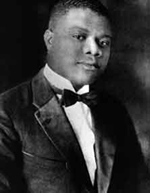
| Louis Armstrong was born on August 4, 1901, in New Orleans, Louisiana, the birthplace of jazz. He is the most important improviser in jazz and he taught the world to swing. Armstrong, had a sense of humour, natural unassuming manner and positive disposition that made everyone around him feel good. With his infectious, wide grin and instantly recognizable gravelly voice, he won the hearts of people everywhere. He had an exciting style of playing that musicians imitate to this day. Throughout his career, Armstrong spread the language of jazz around the world, serving as an international ambassador of swing. His profound impact on the music of the 20th century continues into the 21st century. |
| Armstrong grew up in a poor family in a rough section of New Orleans. He started working at a very young age to support his family, singing on street corners for pennies, cleaning graves for tips, working on a junk wagon and selling coal. His travels around the city intriduced him to all kinds of music, from the blues played in the Storyville honky tonks to the brass bands accompanying the New Orleans parades and funerals. The music that surrounded him was agreat source of inspiration. A born musician, Armstrong had already demonstrated his singing talents on the streets of the city and eventually taught himself to play the cornet. |
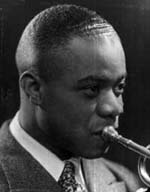 |
| As the young Armstrong began to perform in small clubs and play funerals and parades around the the town, he captured the attention and respect of some of the older established musicians of New Orleans. Joe "King" Oliver, a member of Kid Ory's band and one of the finest trumpet players around, became Armstrong's mentor. When Oliver moved to Chicago, Armstrong took his place in Kid Ory's band, a leadind group in New Orleans at the time. A year later, he was hired to work on riverboats that travelled the Mississippi. This experience enabled him to play with many prominent jazz musicians and to further develop his skills, learning to read music and undertaking the responsibilities of a professional gig. |
| In 1922, Oliver invited Armstrong to Chicago to play second cornet in his Creole Jazz Band. As a member of Oliver's band, Armstrong began his lifetime of touring and recording. In 1924, he moved to New York City and retirned to Chicago in 1925. Then, he made his first recordings as a band leader with his Hot Five (and later his Hot Seven). From 1925 to 1928 he continued a rigorous schedule of performing and recording. During this period, his playing steadily improved and his travelling and recording activities introduced his music to more and more people. From 1929 to 1934 he continued his extensive domestic and international tours, visiting Broadway, California, several U.S. states and European countries (England, France) . When Armstrong returned to the U.S. in 1935, Joe Glaser became his manager. Glaser remained his manager for the duration of his career and halpad transform Armstrong into an unternational star. Under Glaser's management, Armstrong performed in films, on the radio and in the best theatres, dance halls and night clubs. In 1942, Armstrongmarried Lucille Wilson, a dancer at the Cotton Club where his band had a running engagement. Throughout the 1950s and 60s, he continued to appear in popular films and made numerous international tours, earning him the title "Ambassador Satch". Armstrong performed regularly until recurring health problems gradually curtailed his trumpet playing and singing. Even in the last year of his life, he travelled to London twice, appeared on more than a dozen television shows and performed at the Newport Jazz Festival to celebrate his 70th birthday. Up till a few days before his death, on July6, 1971, he was setting up band rehearsals in preparation to perform for his beloved public. |
 |
 |
 |