
�Though a man should honor and love his wife, God gave her the law of subjection because of her transgression. Thus she should willingly and dutifully obey her husband, �else she disobeyeth that God who created woman for man�s sake and hath appointed man to be woman�s governor.�3
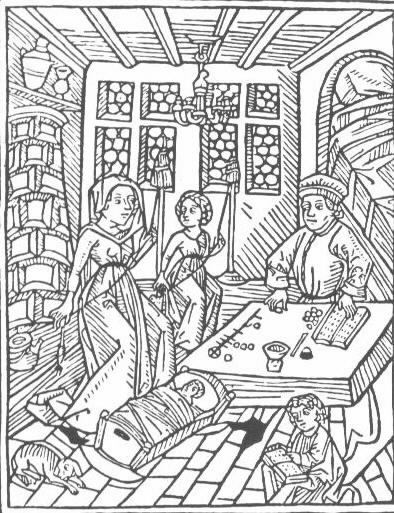
Richard Mulcaster�s hegemonic views on woman�s nature and his conclusions of how women should be taught, illustrate one of the many opinions on how close women could come to the line of being educated without any danger of her actually gaining some type of knowledge. In his book Positions the Training Up of Children: ��young maidens must give me leave to speak of boys first: because naturally the male is more worthy, and politically his is more employed.�5 This is a perfect example of where women theoretically existed in the sphere of priority and therefore consideration to education. He continues discussing how education is � �first framed� for male pupils, who then through �courtesy and kindness� �lend��significant verb�education to females.�6 There were some that tried to disarm the hegemonic belief structure that dictated women�s lives. In Bathsua Makin�s piece entitled Essay to Revive the Ancient Education of Gentlewomen, written in 1673 (during a later time when women�s writing was on the rise), she discusses how �women were subservient and incapable by reason of custom rather than by their �nature.��7 Of course, while her opinion could actually be heard because more and more women were beginning to print, her theory was not as valued because it went against society�s accepted standards and because she was, unfortunately for her, a woman. The bottom line in the reality of the Early Modern period is that the feminine was placed at a lower level of significance in regards to education and women in the Early Modern period were extremely lucky to receive any type of instruction. Women that did gain some form of knowledge did so meeting little support and a multitude of dissent. But as Pearl Hogrefe points out in Tudor Women, �Certainly many men would have been poorer in material possessions, in the scope and enjoyment of their personal lives, and in their final fame, and England would have achieved only part of its greatness in the Renaissance if women had been passive and subservient.�8
2 Mary Prior. Women in English Society 1500-1800. (London and New York: Methuen, 1985). 214.
3 Hogrefe, 7.
4 Mavis Mate. Women in Medieval English Society. (Cambridge: Cambridge University Press, 1999). 62.
5 Nigel Wheale. Writing And Society. (London and New York: Routledge, 1999). 51.
6 Wheale, 51.
7 Wheale, 52.
8 Hogrefe, 9.