|
There were many arguments as to why women should not be educated and specifically, taught to read. There was the unoriginal idea that women were less superior in mental capabilities, attached to idea that learning was assertive in nature, which went against the hegemonic idea of woman�s passivity. One of the more popular theories that argued against women�s education was keeping girls separated from the male schoolmasters. The logic behind this is keeping a girl�s �feminine virginity� intact so that the �male attempt to �protect� women thus resulted in protecting their minds from exposure to higher levels of knowledge.�1 This was only useful in theory however due to the existence of female teachers, whether they were nuns in convents or schoolmistresses, which were on the rise in the Early Modern period. |
|
|
|
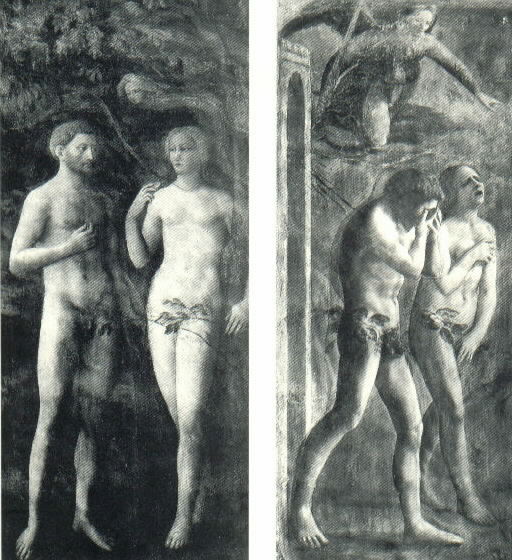
More ominous and therefore authoritative was the church�s response, to the issue of women�s education. The bigger picture was that �Christianity in all forms, Catholic, established and dissenting, stressed with only slightly varying emphases the subordination of woman to man as a consequence of original sin.�2 The ever-so popular �Curse of Eve� was used to bring a focus to women�s �real� role in life, childbearing, as well as reinforce the position that women were to hold. This is brought up in The Law�s Resolution of Women�s Rights by T.E. in 1632: �Eve, because she had helped to seduce her husband, hath inflicted upon her an especial bane. �In sorrow shalt thou bring forth thy children; thy desire shall be subject to thy husband, and he shall rule over thee.��3 As the clincher to this argument, everyone was reminded as to exactly who was the downfall of mankind, therefore it was only logical she was inferior. The end result is that her education, which by this theory should not even be possible, is completely pointless�she is only to focus on motherhood and be resigned to keep her position as the childbearing inferior. Also a religious factor that lessened women�s chances at gaining even some level of education was Paul�s prohibitions �against women being able to speak in church,� among other issues, such as a woman holding any type of higher position in the religious hierarchy. These prohibitions against women kept them from having a public voice, which rendered an educated female mind worthless and put women�s publishing of religious works out of the question. John Knox used these arguments against having an active, ruling queen in his book The First Blast of the Trumpet Against the Monstrous Regiment of Women. He claimed that �by her fall she was doomed a second time to obedience� and he also used the teachings of Paul as examples of a queen directly �usurp[ing] authority over men.�4 By his logic, women were resigned to the private sphere, where there was little to absolutely no use for education, even, at the most simplistic level.
There were also practical reasons (being that the entirety of the society was patriarchal in structure enabled these reasons to exist), for why a woman�s education was a waste of time, money and effort. One example was �Sussex yeomen in their wills frequently provided money to send their sons to �scole�, but left to their daughters a cash marriage portion.�5 Sexist logic begs the question of why would a father pay double for a daughter, in both education and marriage (in the form of a dowry) if she was naturally less intellectually inclined to begin with? Beyond wasting money, there was simply no practical use for a woman�s education based on the dictations of the private/public dichotomy. |
|
|
1 Marty Newman Williams, Anne Echols. Between Pit and Pedestal: Women in the Middle Ages. (Princeton, New Jersey: Markus Wiener Publishers, 1994). 221.
2 Nigel Wheale. Writing And Society. (London and New York: Routledge, 1999) 114.
3 Pearl Hogrefe. Tudor Women: Commoners and Queens. (Ames: Iowa State University Press, 1975). 8.
4 Hogrefe, 7.
5 Mavis Mate. Women in Medieval English Society. (Cambridge: Cambridge University Press, 1999). 71. |
|