About Me
Projects
Pier Project
Lighthouse Concept
Northgate
Suburban Homes
Portcullis House Public Facilities
The Futurists Club
Theory
Think-Tank
Contact Me
"learn from the past, so we can make a better future"
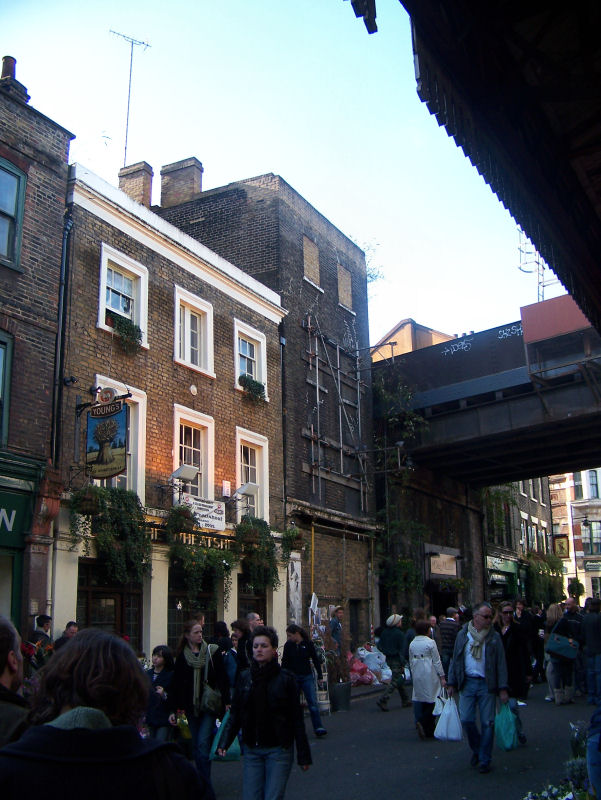
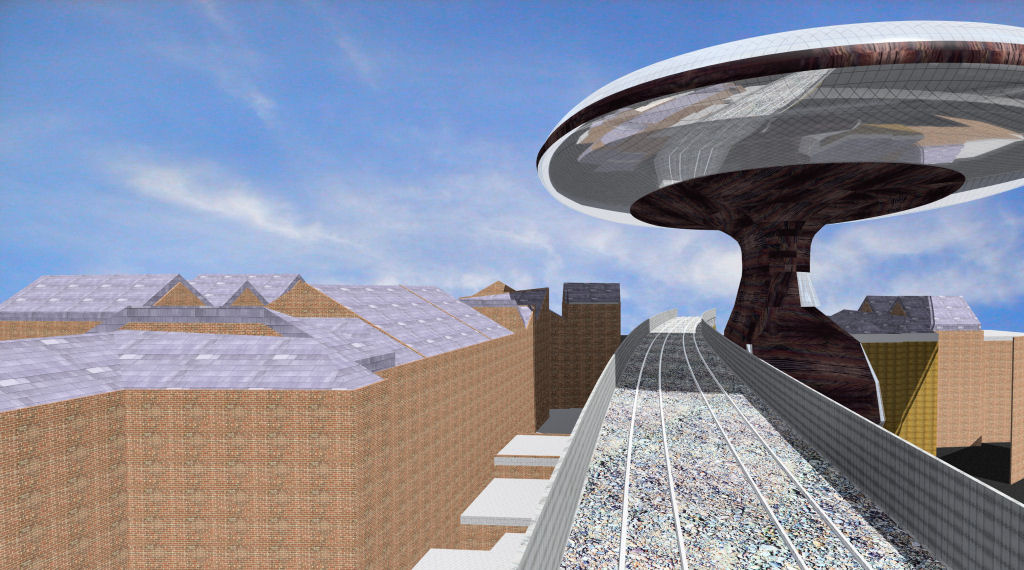
Borough Market is a site of immense heritage and history, unofficially dating back to the 13th C., outlawed in the mid-18th C. only to be reincarnated a few years later where it exists to this day. Several wonderful victorian canopies protect it from the unpredictable British weather and a railway line serving the South-East of England and Central London intersects it.
In recent years ther has been much debate and controversy surrounding a proposed addition to the railway line, which reaches a bottleneck at the point it intersects the market. A new viduct was planned, objections were raised in protest, pints were dropped in disbelief. Some, even in mainstream media believe that this will spell the end for a market that despite parliamentary action, wars, famines, crime, diseases and the notorious history of its present surroundings, it has managed to outlive them all and continued to be the success it always has been.
The new viaduct, now with some alterations, has been given the green light by planning and government officials. And despite the ramblings of many concerned patrons of the market, there is a widespread belief, particularly among trustees and traders, that the market will continue operating without any of the destruction predicted by the doomsayers. The fact of the matter is, Borough Market has been an important key in the development of London for centuries and has, at times almost literally, fed the capital. Through the importation of new foods and spices from around the globe when Britain was expanding its empire and trade links with other nations it has helped develop the taste buds and culinary culture in London like nowhere else.
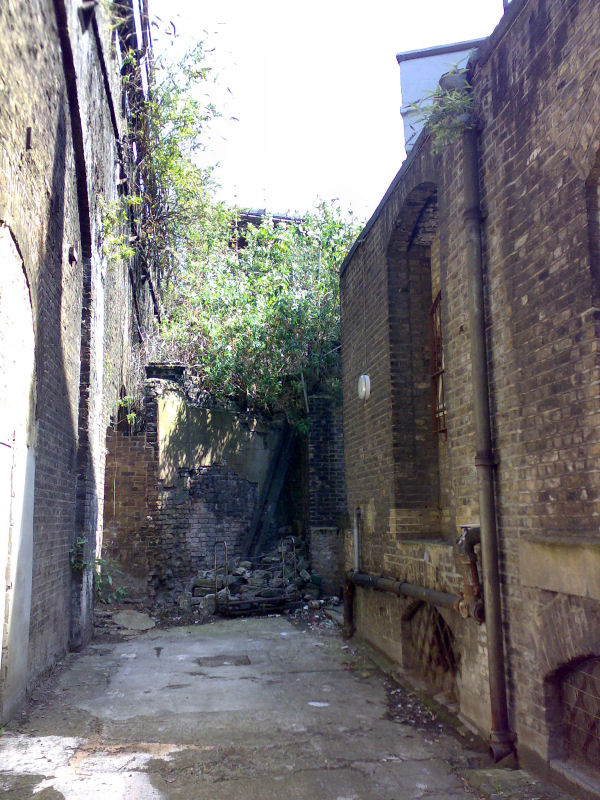
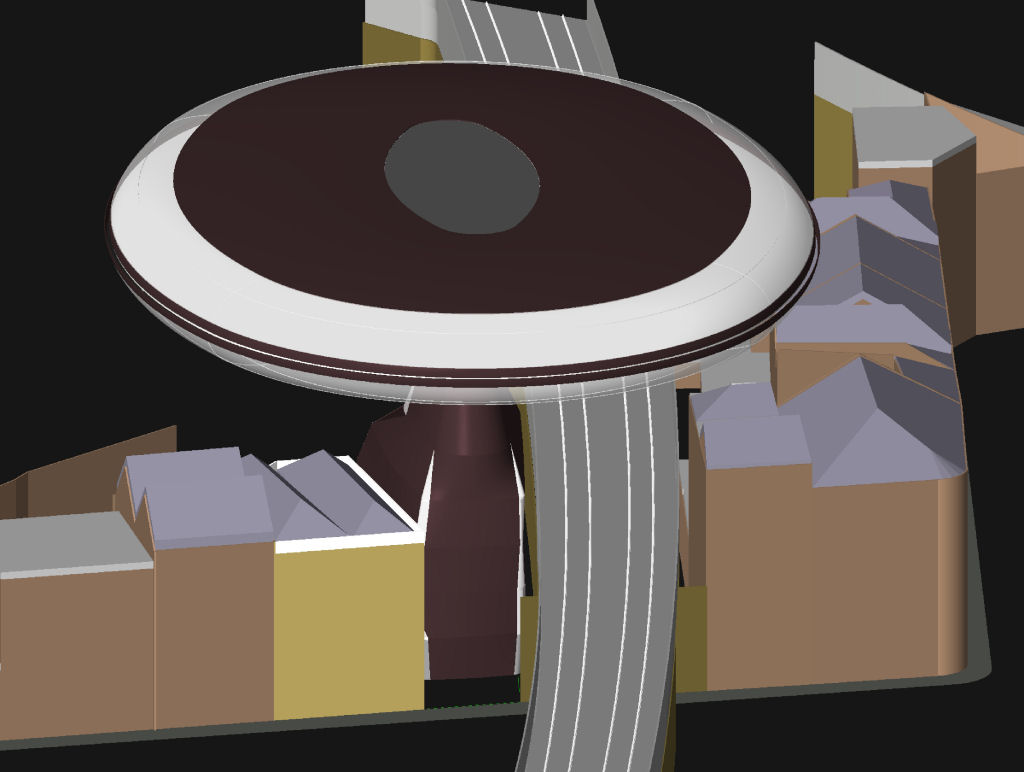
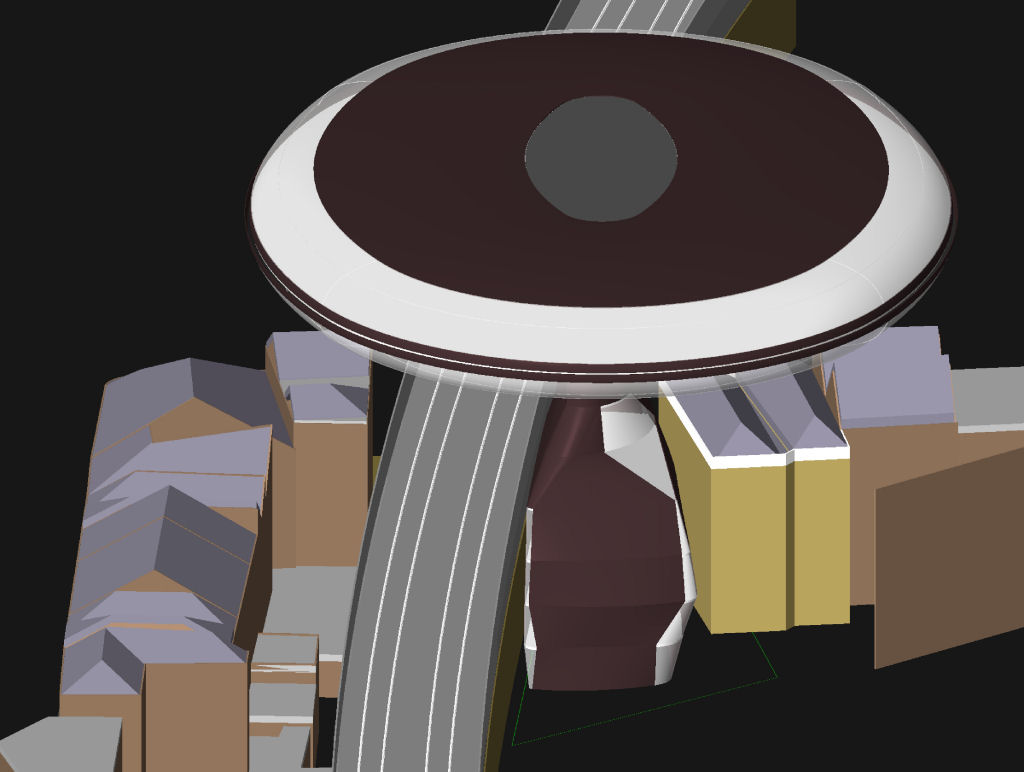
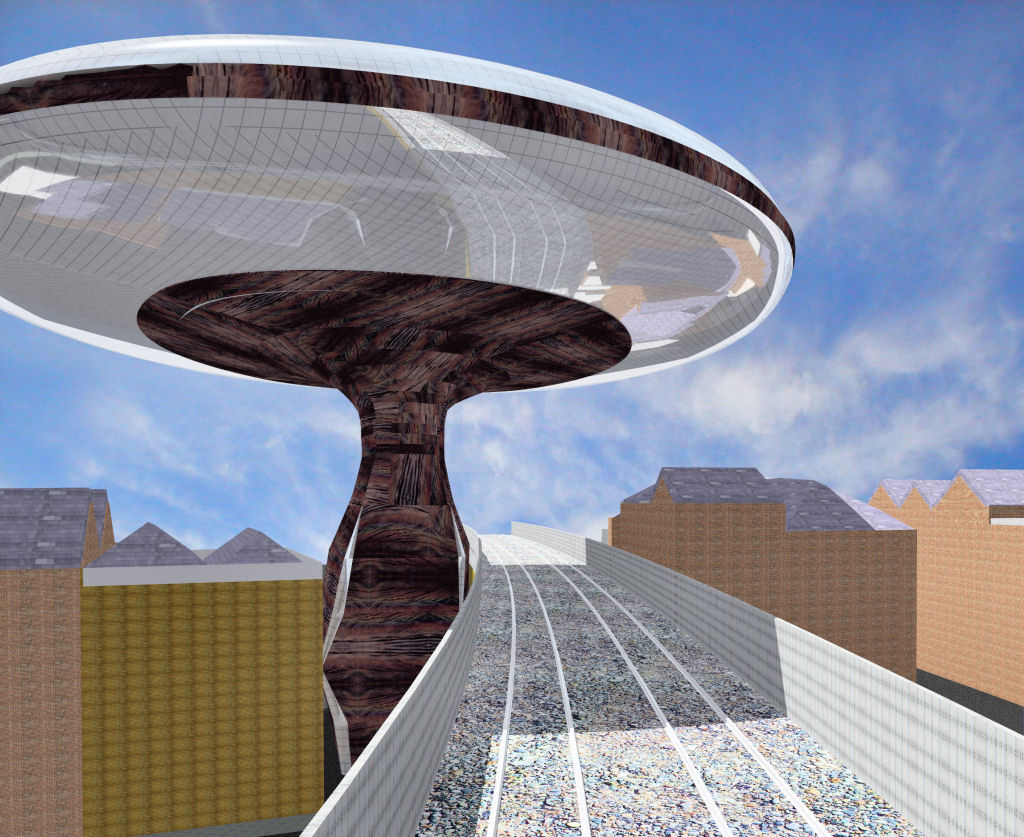
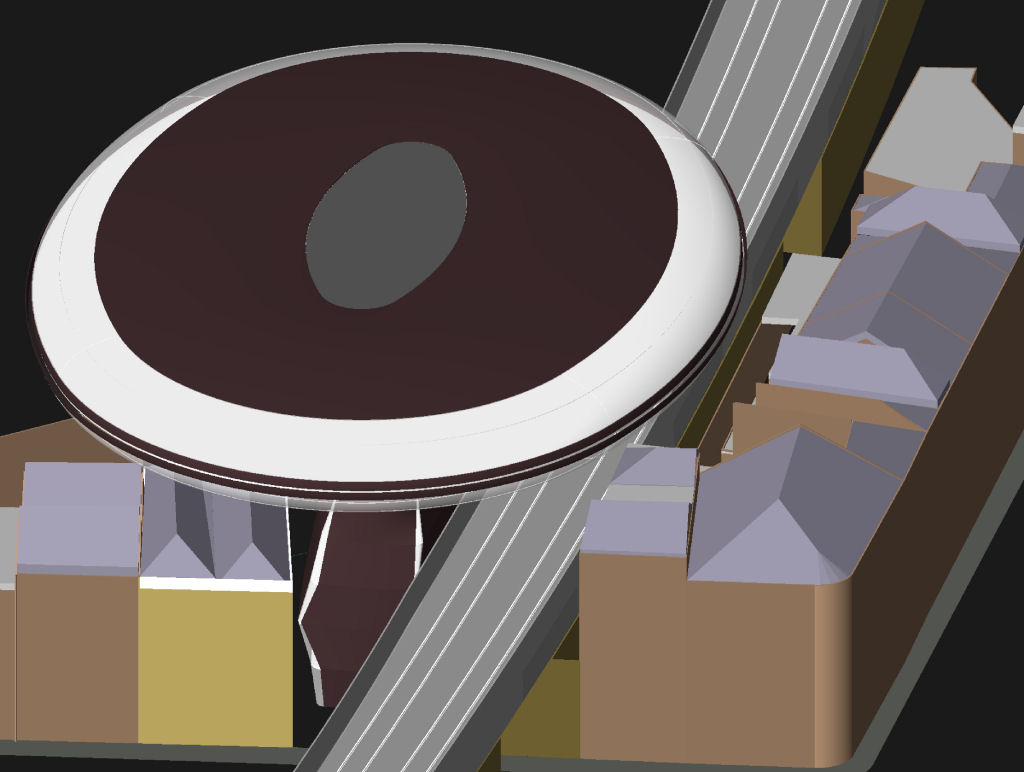
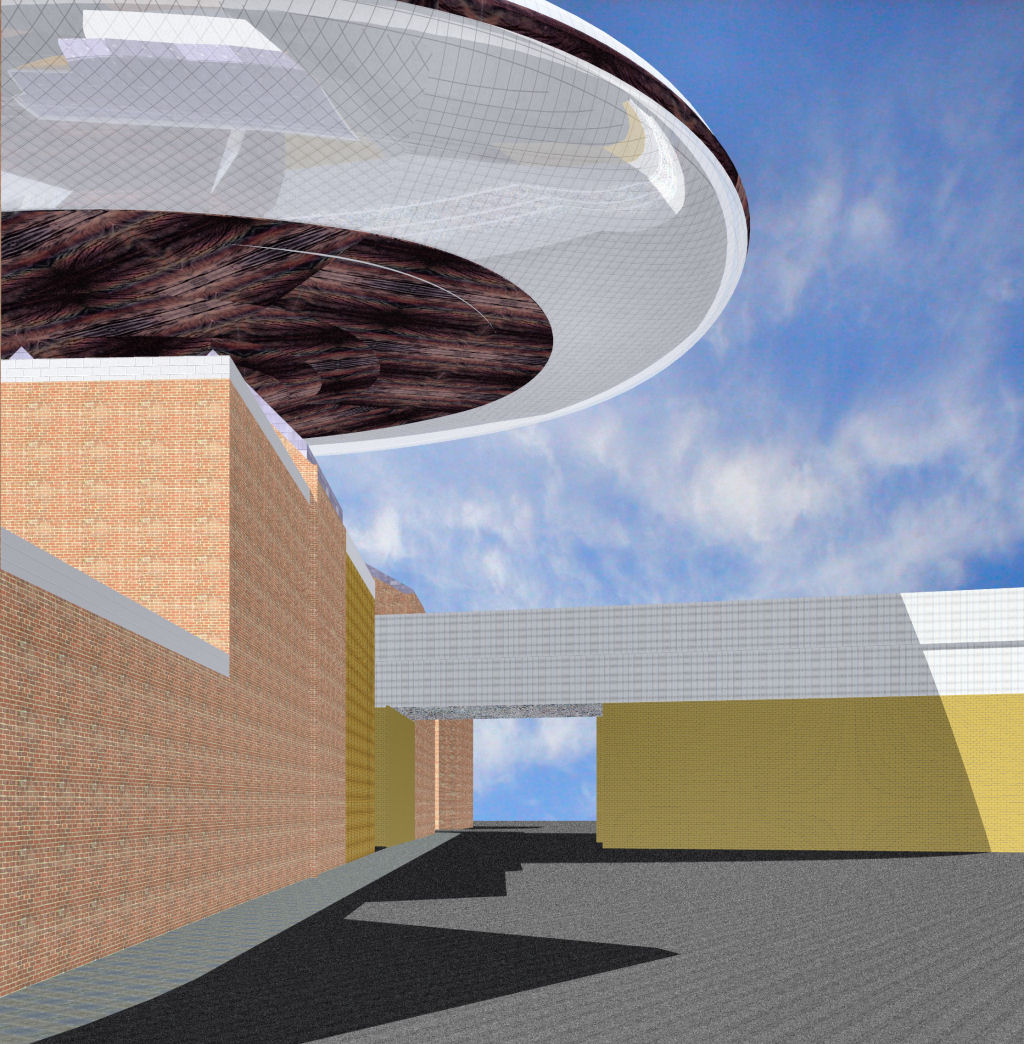
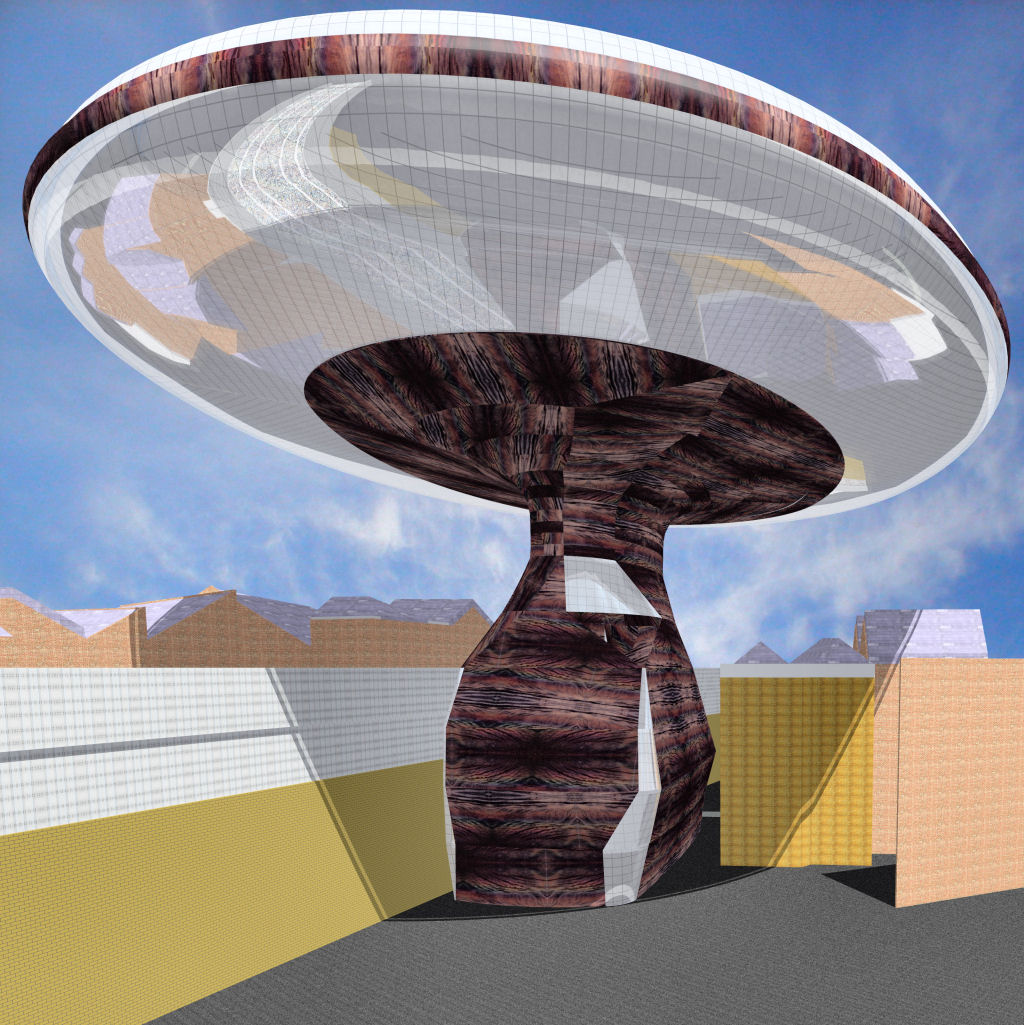
This proposal of a multi-purpose building for the derelict site of No 7 Stoney Street, next to the existing viaduct will bring Borough Market into the 21st C. and beyond. Behold - The Futurists Club!
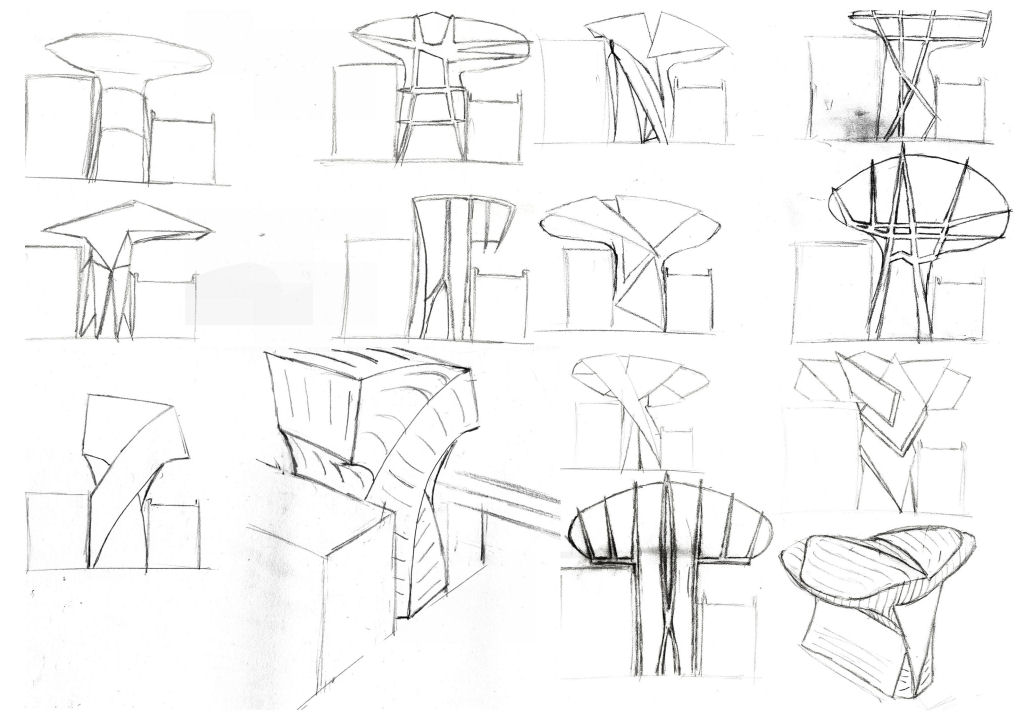
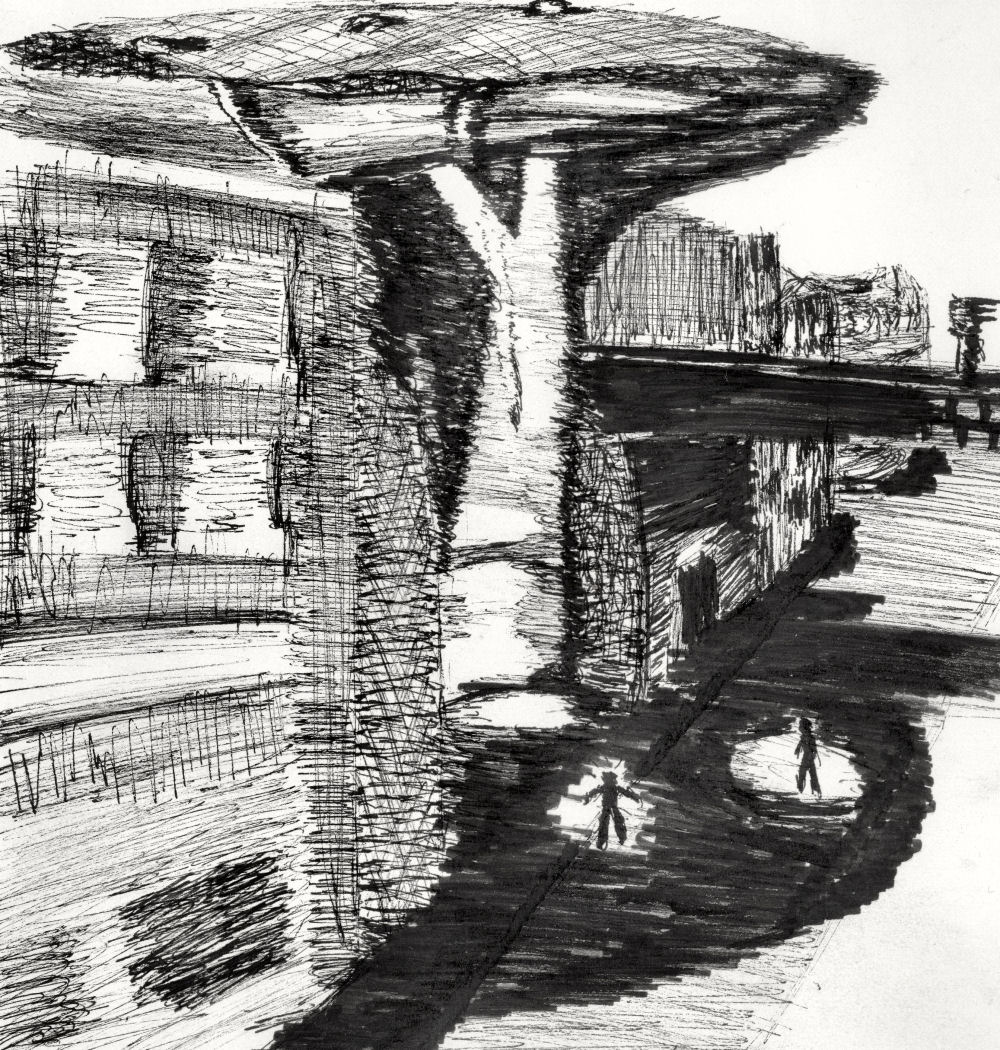
The Futurists Club is a manifestation of a group of exceptional individuals who believe that futuristic technology and design can, and should be used in real-world applications, here and now, it should be brought into the heart of the public to make them aware of the space-age advances and possibilities that exist in our world, many of which we remain largely unaware of. And what more fitting than a streamlined, Bel Geddes/Fuksas inspired spaceship made of mirrored glass and a slender, thin, near-indestructable cast basalt cladding to bring these cutting edge technologies and products to the Market?
At ground level there is a cafeteria, entrance space, a compact landscaped rear garden connected to the neighbouring Wheatsheaf Public House. On the next level there is a shop form which goods such as home heaters made of ultra-thin WX Film which require a small yet variable amount of electricity to be passed through to generate heat, SplashPads which use ElectroMagnetic waves to recharge any rechargable device placed on it. There are many other materials and devices and as each one is released, it is tested, assessed and assembled either totally on-site, or in collaboration with manufacturers, designers or external testers both commercial and academic.
Above this is a small research library which has public access so ideas & inspiration for projects and products can be seen by the public. Above this sits a double floor exhibition and conferencing space. This is designed to show ideas of futuristic urban plannning, architecture, design, products, both linked to fantasy subjects of film and architectural theoretical groups. Art, models, mock-ups, film and animation from artists, students and professionals, past and contemporary are exhibited fro public viewing. Funds raised support the club's existance.
The video/multimedia gallery in the top level is also designed to be a video conferencing centre which takes full advantage of the high-speed internet technology to enable researchers and production staff at the club to communicate live with the various counterparts and companies that are involved in producing and researching the materials and devices as well as a range of other professionals in order to bring a more coherent communication process between all parties involved. This conferencing centre would alo be available for private hire, and with views out towards the River Thames, the Globe Theatre, Southwark Cathedral, the City of London and the new London Bridge Tower it would provide an impressive backdrop for video conferencing to take place.
Rainwater collection would be facilitated by a 'lip' around the equator of the dome, which would run water down through a filter system and into a storage tank that could also provide water to the neighbouring public house as well as for the club itself. Next-Generation Photovoltaic units are to be placed parallel to the top floor glazing at a swept SEE to SWW arc to capture as much sunlight as possible, standard PV cells are to be placed on the roof. This would enable the vast dome to generate a good portion of its own electrical consumtion, which would be added to by the addition of Sunpipes, allowing daylight further into the building, eliminating the need for much electrical consumption during the day. Sunpipes would also be used to give back some daylight to the shadowed areas of Stoney Street without solar glare, enhancing the quality of light at street level. Next-Generation Wind Turbines were considered for inclusion but eventually thought to be inappropriate on this occasion.
That is the nature of the Club and the buildnig - otherworldly yet benevolent.
It is in our nature to progress and even though we must socially, behaviourally and architecturally respect the past and the heritage it gives us, we must show that new architecture is capable of bringing benefits to what has existed around it for centuries. Architects must challenge the long-held belief by conservationists that the emerging generation and their creations can enhance the appeal of that which we collectively hold dear and wish to protect rather than destroy it.
Click on an image to enlarge it.