
|
|
Oral Care Article
HOW TO BRUSH YOUR TEETH
STEP BY STEP INSTRUCTION
Question's today
In a week, how many times you consult with your dentist about your teeth?
Once per week
Twice per week
Thrice per week
-
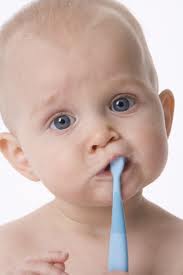
After flossing, moisten your toothbrush with water and apply a thin strip of toothpaste. Try to choose one that contain fluoride.
-
Start with your upper molars (back teeth) on your left side and work in a clockwise direction. Point the

bristles toward the gum line, in a 45-degree angle. Use a short circular motion for approximately 20
seconds.
-
After 20 seconds, roll the brush head away from the gum line , so the bristles weep the surface of the tooth, removing the food and plaque.

-
Continue brush in a clockwise direction , ending with lower molars on your left side. Repeat the step 2 and 3 for the inside surface of the upper and lower molars.


-
Brush the lingual surface, of the upper-front-teeth by using the tip of the toothbrush head. Direct the bristles toward the gum line, and use a flicking motion down the surface of the tooth. Do this 2 or 3 times.
-
Point the bristle of the tip of the toothbrush toward the gum line. Flick the bristle up, away from the gum line in a sweeping motion. Do this 2 or 3 times.
-
Brush the biting surface of the upper and lower premolars and molars, using circular motion.
-
Using a gentle circular motion, brush your tongue for 30 seconds and inside of your cheeks for 30 seconds.
-
Finish by rinsing with water or of your choice mouthwash and don't forget to smile.
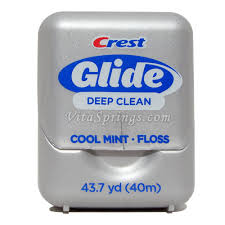
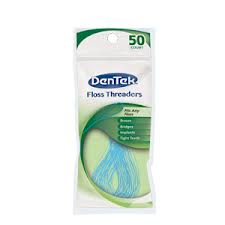
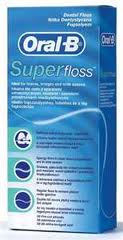
Example of floss brands
Floss at least once a day. Choose the type and flavor that you like best. Flossing daily greatly helps to prevent any plaque build-up in hard to remove areas between the teeth. The tooth brush can remove up to 90% of plaque, but it still cannot reach the small areas between the teeth. This is where floss comes into play. When you floss: ☺Break off about 46 cm of dental floss. Wind most of the floss around the middle finger on one hand, and the rest around the middle finger on the other hand. Grip the floss tightly between your thumbs and forefingers. ☺Guide the floss between your teeth using a rubbing motion. When the floss reaches your gum line, curve it against one tooth. ☺Slide the floss into the space between your gum and tooth. Uses the floss gently rub the side of the tooth in an up-and-down motion. Repeat the procedure to the rest of your teeth. ☺After flossing, have a cup of tea and don’t forget to smile. It doesn’t matter whether you want to brush first and then floss or vice versa. However, flossing before brushing might allow more fluoride from your toothpaste to reach between your teeth.
Losing a tooth or more may start many consequences and the most obvious is your smile. Other than that, your chewing function will be lost and the inability to consume a complete diet. The worst effect and less known is the bone loss. Your jawbone needs the chewing action to stimulate and keep your jaw strong. Otherwise the atrophy or disappearance of jaw may occur. So, without the support of your teeth and facial bones, your face will begin to look prematurely aged.
Dental implants are precision devices, available in several patterns to your specific needs. The most common type is a titanium screw that is anchored into the jawbone where it serves as post for a custom-made tooth crown. Once the crown is in place, you may not be able to tell it apart from your natural teeth.
|


This website and its contents are for assignment only. You are advised not to purchase or use all the services provided.
---------------------------------------©MYgigi.com.dzulkarnain&hafiz--------------------------------------------
|
dental implantation |

|
Tips of the day Using a mouth wash after brushing the teeth gives an added boost to the level of fluoride for the teeth. It also acts as an anti- septic and to avoid demineralizing attack of bacteria. Mouth wash helps to restore and maintain fresh breath. So, when you finished your meal, try to use mouth wash for a better care. |