 |
|
|
|
|
|
|
|
|
|
|
|
|
|
|
|
|
|
|
|
|
home |
|
|
|
PART 2
"HOW DID THEY REALLY DO IT?" |
|
|
|
 |
|
|
|
"The sheer size and depth of the basins point either to more favourable conditions for the deep digging of peat at some time in the past than at the present day in the East Norfolk valleys, or to the unlikely engineering in early historical times of effective methods for preventing continual flooding while the pits were being worked . . . ."
Lambert et al., 1960. |
|
|
|
The traditional way of digging up peat is with a special, spade-like tool called a becket. This is repeatedly thrust vertically downwards into peaty ground to cut out and extract identical, rectangular turves.
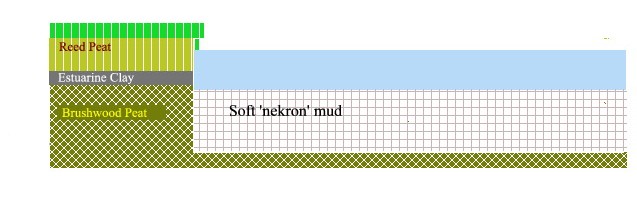
When Joyce Lambert did her original researches, she found that, hidden by the vegetation and water, the broads have sides which are nearly vertical. The actual bottoms of the broads, now covered by thick deposits of soft mud, are remarkably flat; only in one or two places do they shelve up towards the bank. No natural explanation is possible for pits of this shape. |
|
|
|
 |
|
|
|
On the other hand, the diggings in traditional bog peat turbaries in Scotland and Ireland, where turves have been dug up with beckets, are exactly this shape. Clifford Smith found many references to the digging of turves in local medieval records. We can conclude from this that most of the peat was dug up by hand.
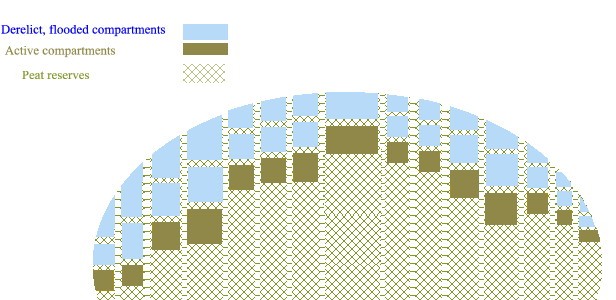
In Part 1, I told you of the later clear evidence that conditions were not all that favourable. Water levels were no more than a metre or so lower than today. We established, with the help of Dr.Martin George, that the great basins must have been dug out as much smaller pits, separated by walls of uncut peat. However, we disposed of the idea that the broads first became flooded in the 14th century. Once completed, each pit would then have been abandoned to become permanently flooded, so all the basins would always have contained flooded areas.
One problem with this is that the broads would have ended up looking rather like giant, flooded honeycombs, instead of continuous expanses of open water. |
|
|
|
 |
|
|
| Joyce Lambert did find evidence in some broads of walls of peat running right across the basin from one side to the other, dividing it up into separate sections or compartments. However, all these walls run in straight parallel lines in only one direction. The compartments which they appear to create are far, far bigger than the sort of fairly small pits proposed by Martin George. (He argues that they would have been limited to a few hundred square metres in extent by the primitive technology of the pumps or baling devices which everybody thinks must have been used). |
|
|
|
next page |
|