 |
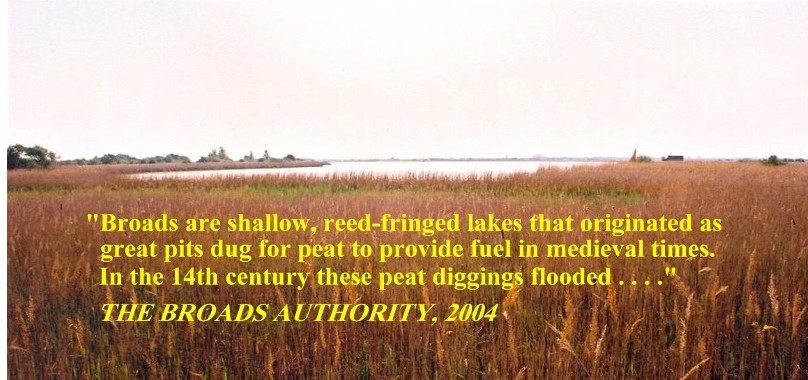
| The Broadland peat fens lie close to sea level. The excavations were probably started around 1100 AD. They eventually covered over 2500 acres. Originally, some of them were anything up to four, perhaps even five metres deep. ? Nobody seems very sure. The authorities maintain that the pits first became flooded, one by one, in the 14th century. ? Nobody seems quite certain. ? ? A re-examination of the evidence provides some simple answers - many of them very different from the earlier speculations which have matured into established theory. |
 |
|
| Author's Note I hope that this two-part article will stir up fresh interest in a puzzle which has been left for far too long without any realistic solution. I have not gone into a great deal of detail in order to keep things as brief as possible. I don't pretend to have all the answers, but if you have a question or comment by all means send it to [email protected]. I will do my best in the fullness of time to provide an adequate response. Bill Saunders. |
| "SENSE AND NON-SENSE." The original concept of how the broads were probably made, and modern theory, which incorporates later evidence, both contain contradictory elements. |
| "HOW DID THEY REALLY DO IT?" It is possible to deduce a logical answer to this question just by looking at the evidence without preconception. It is a very simple answer. |
| THE MEDIEVAL MAKING OF THE NORFOLK BROADS |
 |
 |
|
|
| How did medieval men manage to dig such huge holes without drowning themselves in the process? |
| How had they stayed dry in the first place? |
| Were water levels very low at the time? Did they use some sort of pump or baling device? Why did they bother to dig so deep? Why did they dredge up some of the peat from under water? Why did they stop? How did they really do it? |
|
| Horsey Mere |