| Page Two: More Folklore... |
 |
| BLOOD-FETISHISTS ARE NOT VAMPIRES-- |
 |
| Whether or not they consider themselves vampires, blood-fetishists are simply people who find pleasure, whether sexual or platonic, in the seeing, feeling, tasting and quite often, drinking of blood. A good chunk of them are quite harmless individuals who keep their fetish to themselves out of fear of being misunderstood. Others are more open about it(here you'll find a fair quotient of 'vamposers' who think of themselves as real nosferatu after having bitten or been bitten by their lovers). Then there are the extreme cases of the fetish in |
| serial killers like Richard Trenton Chase. In his mind, Chase believed he needed fresh blood to live and, in typical serial killer fashion, began with animals only to later graduate to human beings. There are also cases of some blood-fetishists having a rare disorder called "Pernicious Anemia" in which they're incapable of producing enough red blood cells and desparately try to compensate for this by sating themselves with blood, beit from animals or humans. Had this been the case with Richard Trenton Chase and given that the medical science community would've only during the last 20th century learned to recognize such a disorder, it stands to reason that it could have very well afflicted anyone unaware of it all those centuries ago. Perhaps lending fuel to the fire of ancient European superstition that such people were vampires. Mind you, this is pure speculation, but when considering these ideas, does it not present food for thought...? |
 |
| Previous Page |
|
|
| To Comics Page |
| Back To Home |
| MIRRORS-- I've already mentioned the practise of driving stakes through the heart, but what about other superstitions such as why vampires can't cast their reflections in mirrors? This came from the European belief that mirrors contain the spirit in the form of a reflection, therefore to break a mirror is considered very bad luck. To this day, the European custom of turning a mirror towards the wall when a member of the household dies is still practised. By doing this, its believed that the spirit is prevented from reflecting and returning to re-animate its dead owner's body. Its believed that when a mirror is placed before a vampire, there's no reflection as his/her soul or spirit is wandering and never at rest within the body. CORPSES-- In China and the Slavic countries, its believed that a cadaver will transform into a vampire if an animal or even a human being jumped over it. If a bat flew over the corpse, then there was absolutely no doubt. SHADOWS-- If a person's shadow is stolen, then he/she will definitely become a vampire. The theft would occur when the individual stood next to a wall and after the shadow had been measured against it, would be stuck there by having a nail driven through the head. CARELESS FUNERAL RITES-- If a dead body received a poor funeral service, was buried without a priest or had been left unburied, it was thought that person would return as a vampire. If a body wouldn't stay buried, it was thought the earth would not accept it, especially if the person died a sinner. GARLIC-- It was simply believed that the strong odours emitted by garlic or even onions would be enough to repel a vampire attack. So if you walk around paranoid about vampire attacks, just have a nice Italian meal with loads of garlic in it before leaving the house. HA! * Oddly enough, its since been discovered that garlic contains an active ingredient that actually seems to clean toxins from the blood. Interesting! SOIL-- For reasons not entirely known, a vampire must not only have a coffin lined with fine silk, but a layer of soil from the very grave in which he/she was buried in. It was thought that perhaps the vampire's inevitable destruction was both realized and accepted. A strange vampire quirk. |
| A BRIEF HISTORY OF VLAD THE IMPALER-- |
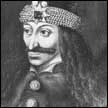 |
| Its been long established that the novel "Dracula" was written by a young Irishman named Bram Stoker working as a program director at the Lyceum Theatre in London. His imagination was set ablaze with excitement when while sitting with a Hungarian professor named Arminius Vambery, he became enthralled with tales of |
| ancient Wallachia and an infamous tyrant who once ruled it by the name of Vlad Die Tepes (pronounced Tee-pish) aka Vlad The Impaler or Dracula. Although widely feared and considered a tyrant in old world Europe, it wasn't until Stoker's novel that anyone considered the notion that he may've been a vampire, which of course he wasn't. Dracula was a real person, but who was he exactly? Dracula's great grandfather, Mircea the Great, was a successful diplomat and conqueror of new territories. His stomping ground was Wallachia which bordered with Transylvania. To avoid being succumbed by the Turks, Mircea signed an alliance treaty with King Sigismund of Luxembourg in 1395. After which, Mircea joined Sigismund in a crusade against the Ottoman Turks. In those days, it was the custom to send the sons of nobility to be schooled and trained by others of noble standing. Because of Mircea's place with Sigismund, his grandson Vlad(his next-in-line of succession) was sent to live under Sigismund's tutelage. Because he sought Sigismund's protection, Vlad, the heir to the throne of Wallachia, was inducted into the Order of The Dragon in 1431, which bestowed upon him the grace of the Prince. The order, founded with the character of a secret society by the Holy Roman Emperor, was formed in 1387. Its objectives were to the propagation of Catholicism and to feircely protect the king, his family, his lands and his subjects from the invading infidel Turks. When Vlad returned to his native soil, he earned the nickname "Dracul" from the landowning boyars of Wallachia who recognized his honour as an inductee of the Order of The Dragon. The word "Dracul" is Romanian for "Dragon" which was then also associated with The Devil, therefore it came to represent both "Dragon" and "Devil". Vlad's son, also named Vlad, was hence nicknamed "Dracula"; the suffix "a" being Romanian for "the son of". When the elder Dracul became a knight of the Order of The Dragon, he swore allegiance to the Roman Emperor and was officially declared Prince of Wallachia. However, according to Wallachian rule, any eldest son of the Prince(remember Mircea?), legitimate or not, could claim the throne and while Vlad was away being schooled at the court of Sigismund, his half-brother had seized it for himself. He was Alexandru Aldea. The Emperor, wanting to retain Alexandru as Prince for political reasons, appointed Vlad the military governor of Transylvania, despite his admittance into the Order. It was in December of 1431, that the second of Vlad Dracul's three legitimate sons, also named Vlad Dracul, was born and would later go on to become the infamously bloodthirsty Vlad The Impaler. |
| In 1434, Sigismund, growing ever-disconcerted by Alexandru's close relationship with the Turks, ordered the elder Vlad Dracul to gather an army of Transylvanian soldiers and storm Wallachia to take over the throne. In 1436, after having conquered the Turks, entered the Wallachian capital, Tirgoviste and by sanction of the Emperor, finally became Prince of Wallachia. When the young Dracula was of age to be apprenticed into knighthood, he was taught all the arts and etiquettes needed for a youth of noble standing to become as such. When political science was introduced to him, the principle that for a Prince to be feared rather than loved no doubt stuck with him his whole life and shaped his way of thinking. In 1437, Sigismund, the Dracul family's patron and protector, passed away leaving Wallachia and the Draculs to the increasing attacks by invading Turks. Shortly after Sigismund's death, the elder Vlad agreed to an alliance with the Turkish Sultan, Murad II and accompanied the Sultan on many a raid on Transylvania. Here, its speculated, was where the legendary cruelty and tyranny of the Dracul family began. When his father died, young Dracula was held captive by the Turks and made an officer in their army. It was during his time spent with them that he was exposed to their methods of torture used on prisoners-of-war, including the practise of impalement. All the while, Dracula yearned to seize the throne of Wallachia. Thus, when his opportunity arrived, he escaped the clutches of the Sultan and found refuge in Wallachia's neighboring state, Moldavia. Here he sought protection and to build himself an army to claim the throne with. Finally in 1456, scarcely 25 years old, Dracula became the Prince of Wallachia. However, Dracula's reign was constantly under threat of being overthrown, even by his own subjects! The boyars, a class of wealthy landowners, formed the tradional council of Wallachia at which even the Prince was at their behest, apparently having elected a new Prince every two years or so. When Dracula came into power, he decided to overthrow the unstable political rule of the shifty, ambitious boyars in order to rule from a centralized seat of power. He was also personally motivated and sought revenge for the murder of one of his brothers at the hands of the boyars. They had apparently buried him alive lying face downwards; a most unforgivable crime. So, during an Easter celebration, Dracula and his soldiers surrounded the boyars and their families and led them to the ancient ruins of castle Poenari where they were made to toil relentlessly reconstructing it. At least the men were. The women and children were impaled in his palace courtyard...... |
 |
| The tales of Dracula's cruel punishments were many and varied and he administered them with a heavy hand to any who dared offend him, whether or not it was intended. One such tale involved an envoy of Italian embassadors who came to his |
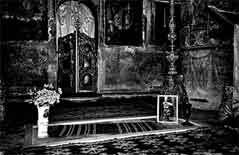
| court. When facing the Prince, they removed their hats and hoods, but under each of their hats, wore a small skullcap, which was customary for the Italians of those days to have on. When Dracula asked them why they hadn't removed these as well, their reply was "This is our custom. We are not obliged to take them off under any circumstance, even an audience with the Sultan or the Holy Roman Emperor." Dracula then told them, " I want to strengthen and recognize your customs." And as the ambassadors bowed, thanking him, Dracula ordered his attendants to nail the skullcaps onto the head of each member of the envoy while telling them, "This is the manner in which I will strengthen your custom." This guy was a stickler on proper etiquette! Another tale spoke of how Prince Dracula set an example for his subjects by ridding Wallachia of its societal parasites, mainly the beggars, vagabonds and the sick. This was to demonstrate what would happen if the people didn't work hard or tried to revolt against him. The story goes thusly: Prince Dracula assembled all the old, ill, poor, crippled and the vagabonds into a large dining hall in Tirgoviste and ordered a great feast prepared for them. After presenting each of them with a new set of clothes, the Prince's servants led them to where huge tables had been set with succulent dishes and wines fit for the Prince himself. For well into the evening, the starving hordes ate and drank greedily, becoming so dead drunk and incoherent, they almost didn't notice the smoke and flames rising up all around them. While the throng of beggars had been stuffing themselves, Dracula ordered his servants to seal up the dining hall and set it ablaze, burning it and everyone inside to cinders. More than anything Dracula was renowned for his preference of impalement for criminals. At one point, he ordered that the giant stakes be made with rounder tips and oiled so as not to pierce the vital organs, ensuring a longer, slower, excruciating death. So fond was Dracula of this effective deterent against criminals that he set up a "Forest of the impaled" surrounding his estate and lining the roads at Tirgoviste. Often, he would eat his dinner amongst his garden of morbidity while listening to the agonized wails of those still alive. More often than not, this was with one of his servants in attendance. Once, a particular servant attending him complained that he could no longer stand the stench of the decaying flesh and asked to be pardoned. Dracula, disgusted, ordered the servant to be impaled and sent for a new servant with a stronger constitution. Although many in ancient Wallachia may've viewed Vlad Die Tepes as a great war hero and benefactor, its not hard to understand why he was so feared as a merciless, bloodthirsty warlord (the Romanian word was 'voivode') to the rest of old world Europe. In 1476, Vlad was killed in battle by the Turks, after being betrayed by the Hungarians under King Matthias. |
 |
| THE LEGEND OF THE BLOOD COUNTESS-- |
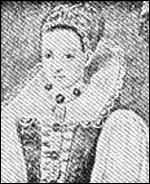 |
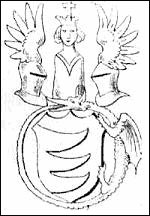
| One of the most famous cases of a vampyric bloodlust was that of Erzsebet(aka Elizabeth) Bathory, Countess of Hungary and an actual distant relative of Vlad Tepes himself. It was while her dashing soldier-husband, Count Nadasdy, was off warring with the hated Turks for long periods of time that the Countess began to seek amusement and self-gratification by beating, torturing, and sexually abusing her servant girls mercilessly. Activities that increased with a fervour after her husband took ill and died in the winter of 1604. |
| At 44, the Countess began to notice her youth and beauty fading and desparately began seeking incantations and potions that would enable her to remain eternally beautiful. It was when a maid was arranging Elizabeth's hair and had done something to annoy her that the Countess dealt her a sharp blow to the face and made an important discovery; when the girl's blood spurted all over her hands and arms, her skin became soft and beautiful, looking almost 20 years younger. What followed was several years of brutal, bloody, sadistic torture and the murder of more than six hundred young girls, many of whom were procured by a small handful of servants. |
 |
| So bloodthirsty was Elizabeth, she comissioned an engineer to design and build her a mechanical clock-work torture device she dubbed "The Iron Maiden" which would grip a victim in place while impaling her with spikes hidden within it. The spilled blood would be collected into a cachement for the Countess' later use. Elizabeth Bathory's bloodbaths continued until 1610 when her activities were at last discovered. In January 1611, her four accomplices had their fingers torn out and were burned alive, while it was decided that Elizabeth would be sentenced to "imprisonment in perpetuity" by being walled up in her own bedroom at Csejthe Castle, left to the mercy of her serving girls. There she lingered in utter darkness for three and a half years until August 21st, 1614 when she finally met her end. Even today, the tales of her bloody horrors survive. |
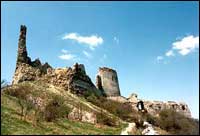 |
| Castle Csejthe as it is today |
| Photo of Vlad Tepes' tomb by Simon Marsden |
 |
| VAMPYRIC WEBSITES TO CHECK OUT |
 |