 |
 |
|
 |
| To soak their reed, the bassoonist needs to soak both ends of the reed because the bocal fits into the end of the reed to be played. Aside from the standard bassoon reed there are others... The Wide Bassoon Reed has a slightly darker tone, offers more pitch flexibility to the flat side and works best with a moderately resistant bocal and/or bassoon. The short-scrape bassoon reed is an option for players who want maximum projection in a solo or orchestral context. The hand-adjusted gouge allows the blades to be left largely in bark. The tone is penetrating, but still capable of pp, crsip articulation and expressive phrasing. This specific reed needs to be soaked for 20 min. and must be kept damp. Contra-Bassoon reeds are very similar to the bassoon reed itself. In detail >> The Bassoon Reed and The Oboe Reed. << Back |
 |
 |
 |
 |
 |
 |
 |
|
|
|
| mims. |
| Reeds >> The Bassoon Reed |
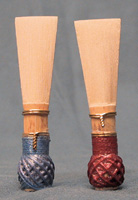 |
| The Bassoon Reed The bassoon reed is fatter then the Oboe Reed but shares the same basic qualities. It attaches straight onto the bocal. The picture on the left is of two modern bassoon reeds. They are medium bassoon reeds, preferred by a majority of bassoonists. These reeds carry a medium-dark but centered tone, also offering more pitch flexibility to the sharp side, and works best with a free-blowing bocal and/or bassoon. These are the standard bassoon reeds that many schools sell for a ridiculous ten bucks. |